
✅ Medically reviewed
Knee osteoarthritis treatment starts with one blunt fact. Damaged cartilage cannot simply grow back. That sounds grim, yet better movement, calmer pain and fewer flare-ups are realistic goals. More than 10 million people in the UK live with arthritis, and the knee is a common target. Some patients explore Arthrosamid injection London as a non-surgical route. Others first ask about Arthrosamid injection cost UK before booking anything. Both questions deserve straight answers, and this guide supplies them.
What Is Knee Osteoarthritis, and Why Does It Hurt?
Osteoarthritis is the most common form of arthritis in the UK. In the knee, it affects the whole joint, not only the cartilage. Doctors once blamed simple wear and tear. Current research shows a fuller picture, involving inflammation, bone changes and muscle strength.
How a Healthy Knee Moves
Knees carry body weight, absorb shocks and never ask for a day off. Smooth cartilage covers the ends of the thigh bone and shin bone. A soft lining called the synovium produces fluid that lubricates the joint. Ligaments, tendons and muscles keep everything steady.
Cartilage has no blood supply. It therefore repairs itself very slowly.
What Changes Inside an Arthritic Knee
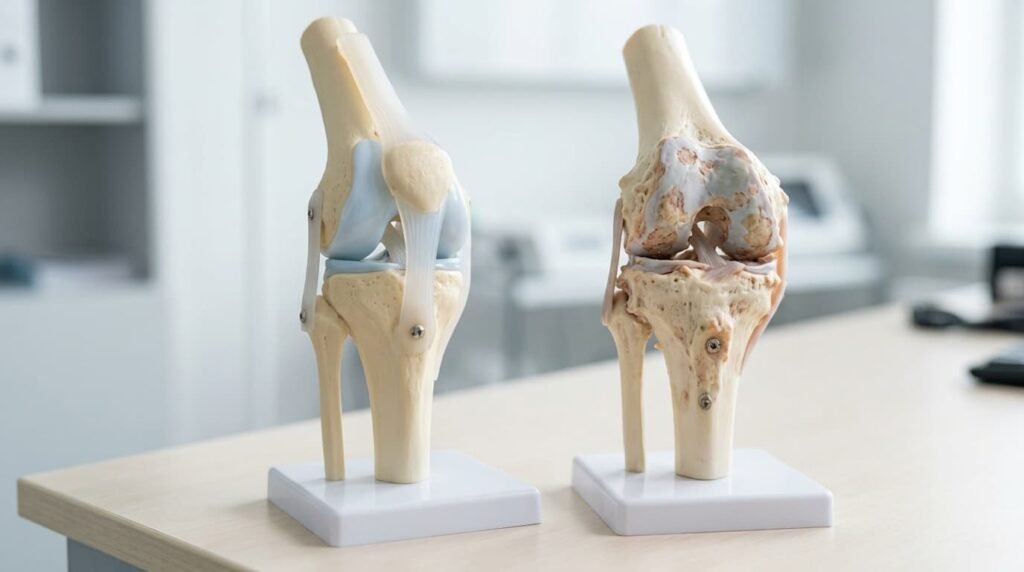
Cartilage breakdown starts quietly. The surface thins and develops rough patches. The synovium becomes irritated and makes extra fluid, so the knee looks puffy and feels tight.
The body then tries to repair the damage by growing extra bone. These bony lumps are called bone spurs. They can narrow the joint space and limit bending.
Pain does not always match what a scan shows. Some people with severe changes feel little. Others with mild changes struggle daily.
Causes and Risk Factors Behind Knee Osteoarthritis
No single cause explains every case. Several risk factors usually work together.
Age, Genes and Sex
Risk rises after the age of 45. Family history matters, because inherited traits affect cartilage quality and joint shape. Women develop knee osteoarthritis more often than men, especially after menopause.
Body Weight and Joint Load
The knee carries several times body weight with every step. Extra weight raises that load. Body fat also releases chemicals that feed low-level inflammation throughout the body.
Weight shapes surgical choices too, and many patients ask about the knee replacement weight limit.
Injury, Work and Muscle Strength
A past ligament tear, meniscus injury or fracture raises risk years later. Jobs that involve kneeling, squatting or heavy lifting add strain. Weak thigh muscles leave the joint less protected, and muscle loss often arrives with ageing.
Knee Osteoarthritis Symptoms Worth Recognising
Symptoms usually build over months or years. Early signs are easy to dismiss as “just getting older”.
The Typical Daily Pattern
- Pain that rises with walking, stairs or standing up after sitting
- Morning stiffness, usually shorter than 30 minutes
- Swelling or a warm, tight feeling after activity
- Grinding or creaking sounds, called crepitus
- A knee that feels weak or occasionally gives way
Stiffness lasting longer than 30 minutes may signal inflammatory arthritis. Persistent stiff joints therefore deserve a proper medical check.
When Symptoms Flare
Osteoarthritis flare-ups bring a sudden spike in pain and swelling. Overuse, poor sleep and stress commonly trigger them. Gentle movement, heat or ice, and pacing usually settle a mild flare within days.
A hot, red, rapidly swelling knee, especially with fever, needs urgent medical care.
How Clinicians Diagnose Knee Osteoarthritis
An accurate osteoarthritis diagnosis shapes every later decision.
The Clinical Examination
Diagnosis often starts with a conversation and a physical check. The clinician asks about pain patterns, old injuries and daily limits. Next comes an examination of swelling, movement and alignment.
NICE guidance allows a clinical diagnosis without scans in people aged 45 or over with typical activity-related pain.
X-ray and MRI Scans
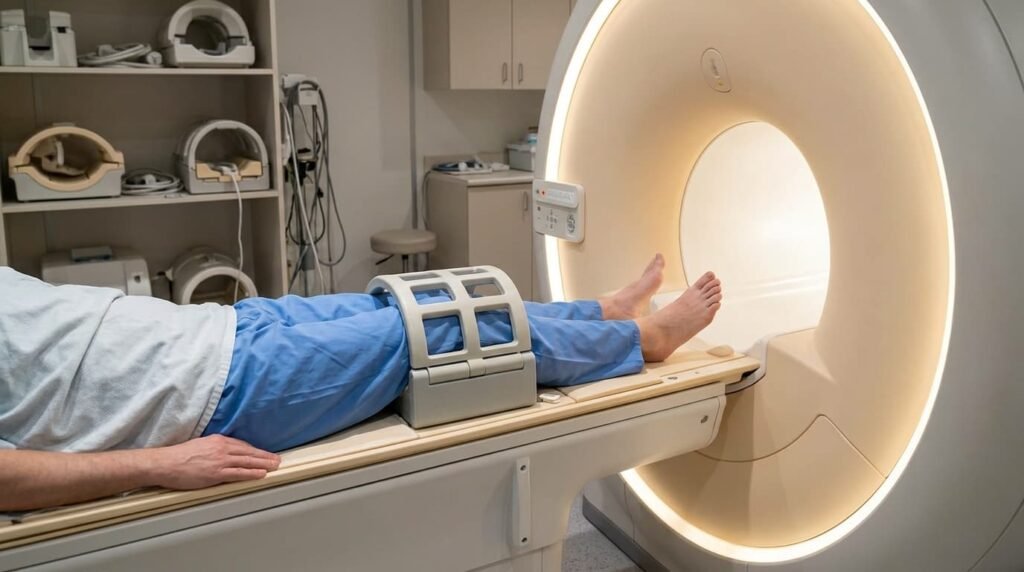
X-rays show narrowed joint space and bone spurs. A knee MRI scan reveals soft tissue, such as the meniscus and ligaments, which X-rays miss. Scans are not always necessary. They help when symptoms look unusual, or surgery is under discussion.
Knee Osteoarthritis Treatment: Everyday Non-Surgical Care
NICE places self-management first. Exercise, weight management and education form the base of every plan. Medicines and injections then add support.
Exercise and Physiotherapy
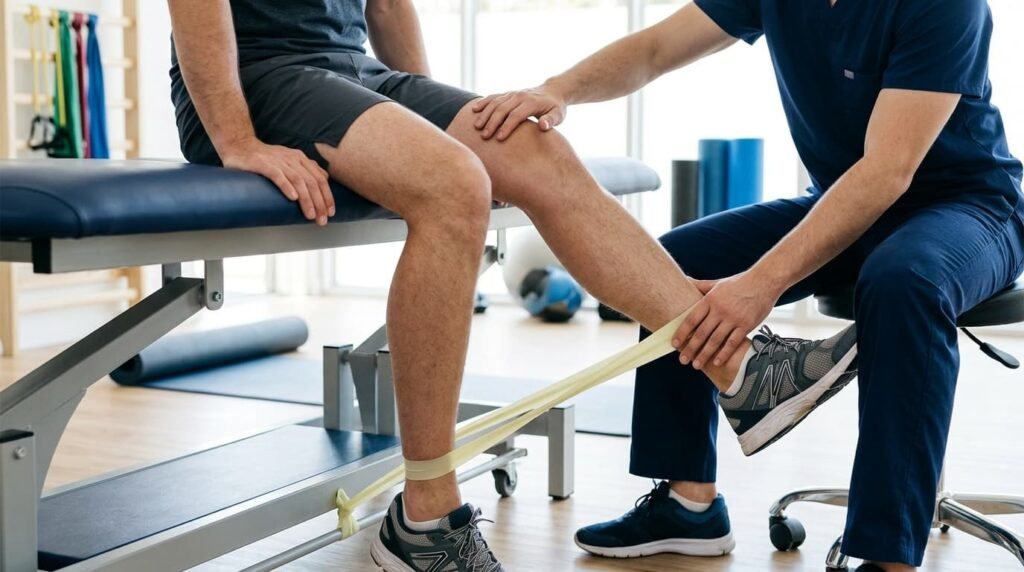
Movement feels illogical when a knee hurts. Yet regular exercise is the best-evidenced way to ease knee pain. Strong thigh muscles absorb load that would otherwise reach the joint. Movement also circulates synovial fluid, which feeds the cartilage.
Useful options include:
- Quadriceps and hamstring strengthening
- Cycling and swimming
- Gradual walking programmes
- Balance work and gentle stretching
Yoga also helps many patients keep flexibility, provided poses avoid deep knee bending. A physiotherapist can set a safe starting level. Knee osteoarthritis exercise should feel challenging, never sharp.
Weight Management
Losing even a modest amount of weight lowers knee load. Research suggests each kilogram lost removes several kilograms of pressure per step. Slow, steady change beats crash diets. GPs and dietitians can build safe plans.
Weight management for knee pain also improves energy and sleep.
Pain Relief and Medicines
Medicines manage symptoms. They do not repair cartilage.
NICE recommends topical NSAIDs, applied as gels, as the first medicine for knee pain. Oral NSAIDs may follow, usually at the lowest dose for the shortest time, with stomach protection. Paracetamol offers little benefit for osteoarthritis. Opioids carry notable risks and rarely help.
Medicines work best as helpers, not as the whole plan.
Braces, Heat, Massage and Walking Aids
Walking sticks and supportive footwear reduce daily strain. A knee brace for osteoarthritis may steady a painful joint. Heat relaxes tight muscles, while ice calms swelling. Gentle massage can ease surrounding muscle tension.
Drug-free habits, such as pacing and good sleep, support the knee between treatments.
Injection-Based Options Between Self-Care and Surgery
Injections sit between everyday care and surgery in most knee osteoarthritis treatment plans. Each type works differently. Each suits different patients.
Corticosteroid Injections
A corticosteroid knee injection calms inflammation. Relief usually starts within days and may last several weeks. Doctors limit repeat doses because frequent steroid injections carry risks. NICE supports them for short-term relief.
Hyaluronic Acid and PRP
A hyaluronic acid injection adds lubricating gel to the joint. The body gradually absorbs it. NICE does not recommend routine use, although some private clinics still offer it.
PRP uses a concentrate from the patient’s own blood. PRP for knee osteoarthritis attracts strong interest, but trial results vary.
Why Injections Sometimes Disappoint
Injections fail more often in advanced arthritis, where little cartilage remains. Timing, technique and patient selection also matter.
A disappointing first attempt does not close the door on other options.
Arthrosamid Hydrogel for Persistent Knee Osteoarthritis
How the Hydrogel Works
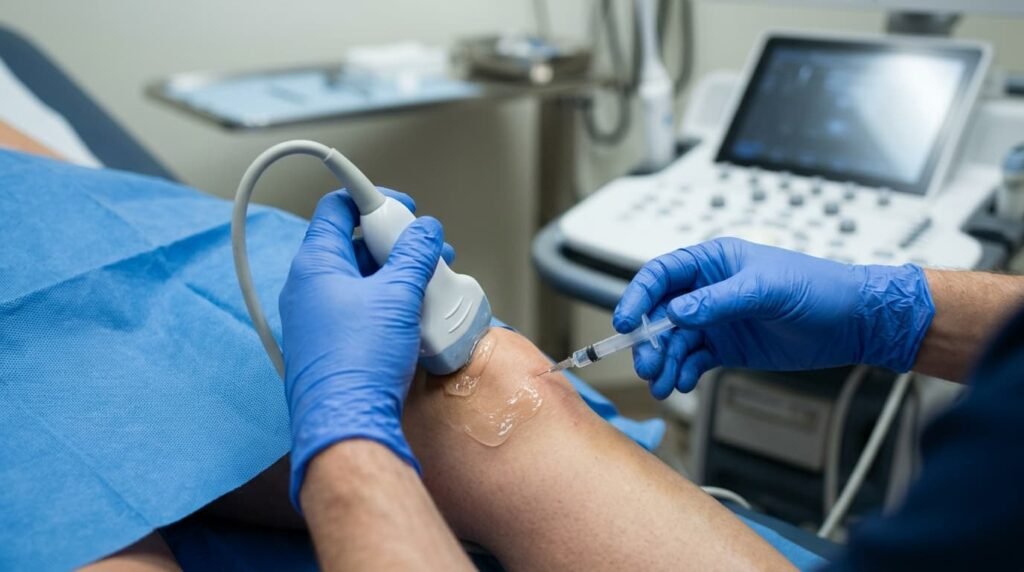
Arthrosamid hydrogel is a sterile gel made of 97.5% water and 2.5% polyacrylamide. Unlike hyaluronic acid, it does not biodegrade. After injection, it integrates with the synovial lining. There, it provides structural cushioning inside the joint.
Arthrosamid does not reverse joint damage or cure arthritis. Its aim is a calmer joint and easier movement.
The procedure takes about 30 minutes. A doctor uses ultrasound guidance and local anaesthetic. Patients go home the same day.
Who May Suit This Treatment
Suitable patients usually have confirmed knee osteoarthritis and persistent pain. Physiotherapy, medicines or earlier injections have not given enough relief.
What Patients Report and What Risks Exist
Many patients notice gradual improvement over several weeks. Clinic experience suggests benefit builds over four to twelve weeks. Real patient experiences vary, so honest expectations matter.
Side effects include temporary swelling, tenderness and mild discomfort. Infection is rare.
Results vary, and no injection guarantees avoiding knee replacement.
Mr Syed Nadeem Abbas explains pain sources, synovitis and hydrogel action in short educational videos on the Dr SNA Clinic YouTube channel.
Arthrosamid Injection Cost UK: What Shapes the Price
Price matters in any knee osteoarthritis treatment decision. Private clinics set their own fees, so quotes differ.
Factors Behind the Fee
- Initial consultation and suitability assessment
- Imaging, such as X-ray or MRI, if needed
- The clinician’s training and experience
- Clinic location and facilities
- Follow-up and aftercare
Always request a written quote that lists every item. Hidden extras erode trust faster than a squeaky knee.
Weighing Cost Against Repeat Treatments
Repeated short-acting injections add up over time. Surgery brings hospital costs, rehabilitation and time off work. Cost alone should not drive the choice. Suitability, safety and realistic outcomes matter more.
Choosing a Clinic
Patients comparing Arthrosamid injection providers should check qualifications, GMC registration and injection experience. Ultrasound guidance and a clear consent process are good signs.
Surgery and Knee Replacement Alternatives
When Replacement Becomes Reasonable
Doctors consider knee replacement when pain and stiffness limit daily life despite non-surgical care. Both total and partial replacements exist. Recovery takes months. Risks include infection, blood clots and persistent stiffness. BMI thresholds vary between NHS areas.
Arthroscopy and Other Procedures
Keyhole washout and debridement are not recommended for knee osteoarthritis. Evidence shows little benefit for pain or function.
Knee Replacement Alternatives
Knee replacement alternatives include structured exercise, weight loss, injections and hydrogel treatment. Each aims to delay or avoid surgery in suitable patients.
Daily Habits That Protect Knees Over Time
Arthritis prevention cannot guarantee a pain-free future. Good habits still lower risk and ease symptoms.
- Change position every 30 to 45 minutes
- Warm up before exercise
- Choose cushioned, supportive shoes
- Pace busy days with short rests
- Keep thigh muscles strong
Frequently Asked Questions
What is the best knee osteoarthritis treatment in the UK?
No single option suits everyone. Most plans combine exercise, weight management, medicines and, where suitable, injections. A clinician matches the plan to symptoms and scan findings.
Can knee osteoarthritis be reversed?
Cartilage does not regrow in any proven way. Symptoms, however, often improve with the right care. Strong muscles and a healthy weight make a real difference.
Does exercise make knee osteoarthritis worse?
Appropriate exercise does not damage the joint. It usually reduces pain and stiffness. A physiotherapist can adjust intensity.
How long does an Arthrosamid injection last?
Trial data suggest many patients keep benefit for years. Individual results vary. Follow-up reviews help track progress.
Is Arthrosamid injection cost UK the same everywhere?
No. Fees depend on the clinic, consultation, imaging and aftercare. A written quote avoids surprises.
Are knee replacement alternatives worth trying first?
For many patients, yes. Non-surgical care carries lower risk and keeps surgery available later. A specialist can advise when replacement becomes sensible.
Knee osteoarthritis treatment works best when exercise, weight care, medicines and the right injection form one plan. Mr Syed Nadeem Abbas offers private assessments for patients who want expert, non-surgical guidance.
Read more: Radiotherapy for Arthritis Calms Painful Joints Using Very Low Doses of Radiation
Read more: New Treatments for Knee Osteoarthritis Offer UK Patients a Wider Range of Non-Surgical Pain Relief


