
✅ Medically reviewed
Radiotherapy for arthritis uses very small doses of radiation to calm inflammation in painful joints. German doctors refined the technique over many decades, and European clinics still use it today. Interest is now rising in the UK and the United States. Patients want an option that sits between tablets and surgery.
The doses are far smaller than those used in cancer care, and each visit is quick and painless. Radiotherapy does not cure arthritis. It targets the inflammation that often drives pain and stiffness in worn joints.
What Radiotherapy for Arthritis Involves
Most people link radiotherapy with cancer. That link is understandable, yet the technique has a wider purpose.
Why Radiation Can Treat a Non-Cancerous Condition
Radiation oncologists treat several benign conditions with low doses. Arthritis is one of them. The aim is not to destroy cells. The aim is to quieten overactive inflammation in and around the joint. A focused beam reaches the joint and limits exposure to nearby tissue.
German specialists wrote the protocols that many centres still follow. Doctors in the United States are now revisiting those protocols after decades of limited use.
How the Dose Compares With Cancer Treatment
Breast cancer courses commonly deliver 40 to 50 Grey. Prostate cancer courses commonly deliver 70 to 80 Grey. Radiotherapy for arthritis delivers about 3 Grey in total. That is a small fraction of a cancer dose. Comparing the two is like comparing a candle with a floodlight.
The total arrives in small fractions over a short course, not in one blast.
Grey is the unit that measures absorbed radiation dose. A higher number means more energy absorbed by tissue. Cancer courses need high numbers because they must destroy tumour cells. Arthritis courses stay low because they only need to settle inflammation.
How Low Dose Radiation Eases Joint Inflammation
Beyond Osteoarthritis Wear and Tear
Doctors once described osteoarthritis wear and tear as a purely mechanical problem. Newer research shows a fuller picture. Inflammation in the joint lining and surrounding tissues drives much of the pain.
Low dose radiation therapy arthritis research points to inflammation as the main target. The treatment appears to influence inflammatory pathways and immune cells. Specialists therefore describe it as anti-inflammatory rather than destructive.
What Happens Inside the Joint
Inflamed joints contain overactive immune cells and chemical signals. Low doses appear to dampen that activity. Less inflammation means less swelling and tenderness. Calmer tissue then moves more comfortably.
How Radiotherapy Differs From Painkillers
Painkillers mask pain signals for a few hours. Anti-inflammatory tablets reduce inflammation but act on the whole body. Radiotherapy targets one joint and delivers its effect through a short course. That local approach avoids the stomach and kidney effects linked to long-term tablets.
Why Relief Builds Gradually
Pain relief rarely appears on day one. Inflammation settles slowly, so pain scores drift down rather than drop overnight. Many patients notice slow improvement over several weeks. Specialists usually review progress after about three months. A second course may follow when relief falls short.
Which Joints Respond to Radiotherapy for Arthritis
Knees, Hands, Feet and Shoulders
Clinicians mainly treat arthritis in the knees, hands, feet and shoulders. These joints sit away from vital organs, so accurate targeting is easier. Hip and spine arthritis may qualify in selected older adults. Hands and feet often need small, precise fields. Shoulder treatment needs careful positioning to protect nearby tissue.

Radiotherapy for knee arthritis has attracted more research than treatment of any other joint. Knees are simply the best studied.
Why Rheumatoid and Psoriatic Arthritis Fall Outside
Radiotherapy is not used for rheumatoid and psoriatic arthritis. The immune system drives those conditions, and they need rheumatology care. The evidence for radiotherapy covers osteoarthritis, so clinicians stay within it.
Does Low Dose Radiotherapy Work for Knee Osteoarthritis?
What Randomised Trials Show
Large case series report improvement in roughly 70 to 80 per cent of patients. Those series cover several joints, with knees well represented. Randomised trials give firmer proof than case series.
Low dose radiotherapy knee osteoarthritis trials now come from Germany, Iran, South Korea and Russia. Several sham-controlled studies reported better pain and function after radiotherapy than after placebo. One 2025 trial reported less knee pain in about 70 percent of treated patients. The placebo group improved in about 40 percent.
Why the Dutch Trial Still Matters
A Dutch sham-controlled trial from 2018 found no significant difference between radiotherapy and placebo. Critics still cite it. Later trials have reported benefit, so the overall picture looks more favourable today. Researchers still call for larger studies and longer follow-up.
What the Evidence Cannot Yet Prove
Trials differ in dose, follow-up length and patient selection. Those differences make direct comparison difficult. One long-term trial reported slower structural change on MRI after treatment. That finding is early and needs confirmation.
Pain relief is the proven benefit, while joint protection remains a promising idea. Patients should treat claims about halting arthritis with caution.
Kellgren-Lawrence Grade 2 or 3 Gives the Best Odds
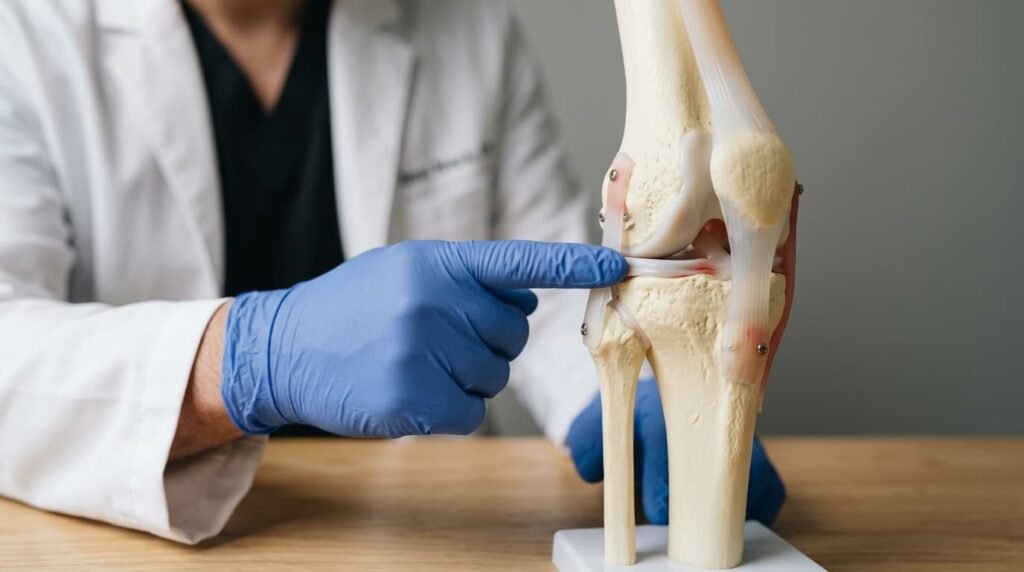
Radiologists grade knee X-rays on the Kellgren-Lawrence scale. Grades 2 and 3 describe mild-to-moderate joint changes. Patients in these grades tend to respond best.
Benefit falls in end-stage disease with little joint space left. A knee MRI scan adds detail about cartilage and soft tissue. That detail helps specialists judge the whole joint.
Who Makes a Good Candidate for Radiotherapy for Arthritis
Typical Candidates
Some patients want non-surgical knee osteoarthritis treatment after simpler measures fall short. Specialists usually consider radiotherapy for patients who:
- Have persistent knee pain despite exercise and physiotherapy
- Struggle with walking, stairs or sport
- Feel unready for an operation
- Want to delay an operation for as long as possible
Assessment usually starts with a clinical examination and recent X-rays. The specialist checks pain pattern, mobility and earlier treatments. Medical history matters too, including any previous radiation to the same area.
Radiotherapy for osteoarthritis suits this middle ground. It is not a first-line treatment. Radiotherapy sits beside basic care, not instead of it. Exercise and weight management continue throughout.
How Specialists Weigh Risk and Benefit
Age shapes the balance. Older adults gain from a very low long-term risk. Younger patients face a longer window for any late effect. Pain severity matters as well. Severe daily pain strengthens the case for treatment, while mild symptoms often settle with exercise.
When Anti-Inflammatory Tablets Are Not an Option
Some patients cannot take anti-inflammatory tablets because of stomach ulcers or kidney problems. Radiotherapy is one of the alternatives to anti-inflammatory drugs for them.
Patients Unlikely to Benefit
Results fall in advanced arthritis, where little cartilage remains. Replacement surgery is often more suitable at that stage. Younger patients need extra caution, because long-term risk matters more over several decades.
What to Expect During Treatment
The Planning Scan
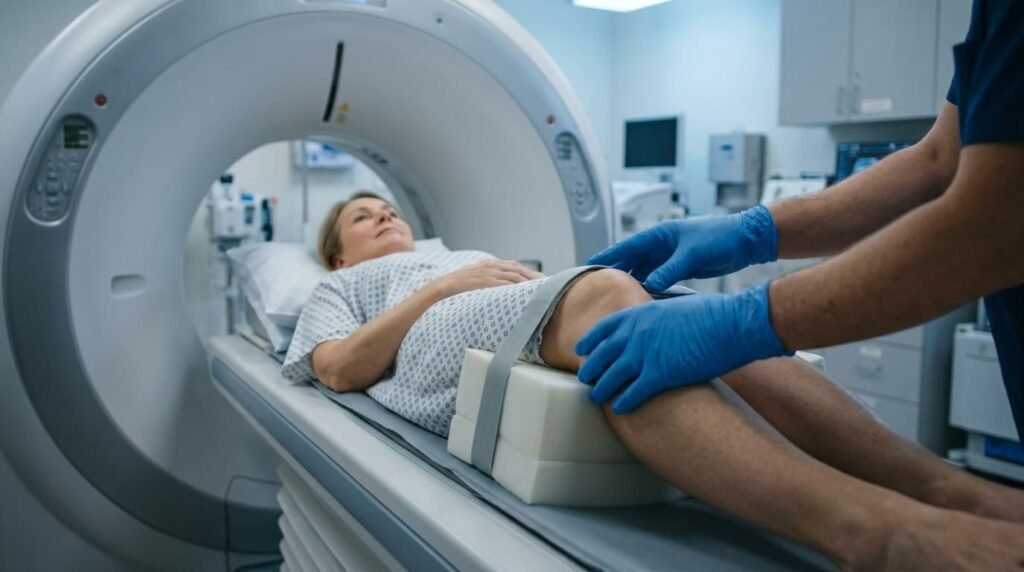
A CT scan maps the joint first. The team then defines the exact treatment area. Planning keeps the beam on the joint and away from healthy tissue.
Preparing for the First Visit
Loose clothing helps staff reach the joint. Patients can eat normally and take usual medicines unless told otherwise. Writing questions down beforehand saves time during the consultation.
Six Sessions Over Two to Three Weeks
A typical course uses six sessions across two to three weeks. Each session lasts about ten minutes or less. Patients feel nothing during treatment. The experience resembles having an X-ray.
Most patients drive themselves home and carry on with normal activities. Patients are not radioactive afterwards.
Review After Three Months
The specialist reassesses pain and movement about three months later. A second course may help when relief is limited. Some patients become eligible for re-treatment if pain returns years later.
A simple pain diary makes comparison easier. Gentle movement, such as yoga, keeps the joint mobile between reviews.
Supporting the Joint During and After Treatment
Daily habits still influence results. Weight loss reduces the load through the knees with every step. Strengthening the thigh muscles improves joint support. Supportive footwear spreads impact more evenly. Pacing activity avoids flare-ups from sudden overload.
Is Radiotherapy Safe for Osteoarthritis?
Dose, Side Effects and Comfort
The dose is small, and side effects are uncommon. Mild skin irritation, no worse than gentle sunburn, occurs rarely. The treatment needs no anaesthetic and no hospital stay.
Who Delivers the Treatment
A clinical oncologist usually prescribes the dose. Radiographers deliver each session on a linear accelerator. Physicists check every plan before treatment begins. These checks keep the dose accurate and the beam tight on the joint.
The Long-Term Cancer Question
Radiation exposure carries a theoretical risk of later cancer. Secondary cancers usually appear ten years or more after exposure. At arthritis doses, specialists consider this risk very small.
Older adults have a particularly reassuring safety profile. Clinicians weigh the balance more carefully in younger patients. No medical treatment is entirely risk-free.
Questions Worth Asking a Specialist
- What does the X-ray grade suggest about likely benefit?
- How does age change the long-term risk assessment?
- What happens if relief falls short?
Where Radiotherapy Sits Among Other Treatments
Osteoarthritis pain relief rarely comes from one treatment alone. Most patients combine several approaches over time.
Combining Treatments Sensibly
Radiotherapy rarely replaces everything else. Patients often continue physiotherapy, strengthening and weight management. Some also use pain tablets at the lowest effective dose. The team coordinates timing so each treatment can be judged fairly.
Injections Before Radiotherapy
Many patients try injections first. PRP injections use concentrated platelets from the patient’s own blood. Some patients turn to radiotherapy when injections give only short-term relief.
Alternatives to Knee Replacement
Radiotherapy is one of several alternatives to knee replacement. Another option is a hydrogel injection placed into the joint.
A specialist assessment compares each option against X-ray grade, symptoms and personal goals.
When Surgery Remains the Better Choice
Joint replacement surgery remains the most dependable option for end-stage disease. Surgery also suits patients with severe deformity or constant pain. Eligibility rules vary, and BMI thresholds affect access in the UK.

Radiotherapy may delay surgery for some patients, but it will not suit everyone.
Myths About Radiotherapy for Arthritis
“Patients Become Radioactive”
The beam switches off when the session ends. Patients leave without any radioactive material in the body. Contact with family and children stays safe.
“Radiotherapy Only Treats Cancer”
Radiation oncologists have treated benign conditions for decades. Arthritis is one of the longest-standing examples.
“One Course Cures Arthritis”
Radiotherapy reduces inflammation and pain. The underlying joint changes remain. Pain may return over time, which is why re-treatment exists.
“The Dose Is Dangerous”
The dose sits far below cancer levels. Specialists still weigh risk carefully, particularly in younger adults.
Practical Points for Patients in the UK
Radiotherapy knee arthritis UK services are limited, and referral routes differ between providers. Patients should confirm that a clinical oncologist leads the treatment. A written plan should state the dose, the number of sessions and the review date.
Patients should bring recent X-rays, a medication list, and records of earlier treatments to any consultation. Those documents speed up assessment. A clear goal, such as walking further or climbing stairs, helps the team judge success.
Radiotherapy for arthritis works best as part of a wider plan. Specialists who deliver non-surgical orthopaedic treatment usually assess the whole joint first. Patients who prefer visual explanations can watch video content on the Dr SNA Clinic YouTube channel.
Frequently Asked Questions
What is radiotherapy for arthritis?
It is a short course of very low-dose radiation aimed at an inflamed joint. The goal is to reduce inflammation and ease pain. It mainly treats osteoarthritis in joints such as the knees, hands, feet and shoulders. It does not cure the underlying condition.
Does radiotherapy hurt?
Treatment is painless, and patients feel nothing during each session. The comfort level resembles having an X-ray. Mild skin redness occurs rarely. Most patients return to normal activity straight away.
How long does pain relief take?
Relief usually builds gradually over several weeks. Specialists often reassess progress at about three months. Some patients need a second course if improvement is limited. Results vary from person to person.
Can radiotherapy replace joint replacement surgery?
Radiotherapy is not a replacement for surgery. It suits mild-to-moderate disease where surgery feels premature. Advanced, end-stage arthritis usually responds better to an operation. A specialist can judge which route fits each knee.
Which patients should avoid radiotherapy?
Patients with those immune-driven conditions fall outside current use. End-stage osteoarthritis also tends to respond poorly. Younger patients need careful risk discussion because radiation effects can appear years later. A specialist reviews each case individually.
Is radiotherapy available in the UK?
Availability is limited, and providers differ in how patients reach treatment. A referral from a GP or orthopaedic specialist often starts the process. Patients should ask who leads treatment and how follow-up works. A written plan removes most confusion.
Radiotherapy for arthritis offers a short, painless course aimed at joint inflammation. Evidence supports benefit for mild-to-moderate knee osteoarthritis, though larger studies continue. The treatment suits patients who have tried basic measures and want to avoid or delay surgery. Safety looks reassuring at these doses, with extra caution in younger patients.
Mr Syed Nadeem Abbas, a non-surgical knee and joint pain specialist, assesses each patient before recommending a treatment plan.
Read more: Muscle Loss and Knee Osteoarthritis Are Closely Linked in Later Life
Read more: Arthrosamid Patient Experiences Reveal What Knee Relief Actually Looks Like


