
✅ Medically reviewed
New treatments for knee osteoarthritis are moving from research labs into UK clinics at a steady pace. About 8.5 million people in the UK live with osteoarthritis, and the knee is a common site. In England, roughly one in five adults over 45 has knee osteoarthritis. Cartilage wear cannot be reversed, so most care aims to ease pain and keep joints moving.
Current options range from exercise and injections to joint replacement. Each option has gaps, which explains the steady flow of new research. Recent progress includes a hydrogel injection, regenerative procedures and a promising drug trial from Leeds. The hydrogel reached UK patients in 2021, when it launched at the British Orthopaedic Association congress.
Why Knee Osteoarthritis Needs Better Options
What Happens Inside an Arthritic Knee
Articular cartilage covers the ends of the bones and acts as a shock absorber. With age, injury or heavy load, that layer thins and roughens. The joint lining then becomes inflamed, and the bone beneath starts to change. Pain, stiffness and swelling follow, along with a grinding feeling on movement.
Osteoarthritis is a whole-joint condition, not simply wear and tear. Weak thigh muscles raise the load on the joint, and muscle loss in later life makes this worse. Knees carry the whole body all day and rarely receive any credit.
Where Current Care Falls Short
Painkillers help in the short term but carry side effects with long use. Exercise and weight control work well, yet progress takes months. Injections can settle a flare, though relief often fades. Joint replacement suits advanced disease, and the right plan shifts as joint damage advances.
This gap drives the search for new treatments for knee osteoarthritis that last longer and protect the joint. Better osteoarthritis knee pain relief remains the main goal for patients and researchers alike.
How New Knee Osteoarthritis Treatments Reach Patients

Trial Phases and Approvals
A new therapy starts in the laboratory and then moves through three trial phases. Phase 1 checks safety in small groups. Phase 2 tests whether the treatment works and finds a suitable dose. Each phase can take years, so promising drugs reach clinics slowly.
Devices follow a different route. They need a conformity mark, such as the CE mark, based on safety and performance data. Medicines face review by the MHRA, the UK regulator.
Who Funds the Research
Knee osteoarthritis research UK funding comes from bodies such as the NIHR and Versus Arthritis. The NIHR Leeds BRC osteoarthritis programme sits within the centre’s musculoskeletal disease theme. Industry partners add trial capacity and manufacturing skills.
Non-Surgical Knee Arthritis Treatment Options Available Today
Most patients start with measures that need no operation. NHS and NICE guidance places exercise, weight management and pain relief first. Specialists often add injections when those steps fall short. These established steps remain the base on which new treatments for knee osteoarthritis are built.
Exercise, Weight and Medicines
Strengthening the thigh muscles reduces the load on the joint. Weight loss lowers that load further with every kilogram shed. Topical anti-inflammatory gels often come before tablets, because gels carry fewer risks. Walking aids, braces and insoles also help some patients. Physiotherapy adds structure and tracks progress. A physiotherapist can adjust exercises as symptoms change.
Steroid Injection Knee Side Effects and Limits
Corticosteroid injections calm inflammation quickly. Relief usually lasts weeks rather than months. Common problems include a short pain flare, skin thinning or lightening, and a temporary rise in blood sugar. Doctors also limit how often the same joint receives them.
Steroids suit short-term flare control, not long-term joint protection. Each osteoarthritis pain injection carries a different balance of benefit and risk.
Viscosupplementation Knee Injections and PRP
Viscosupplementation uses hyaluronic acid to improve lubrication inside the joint. Patients often call these gel shots for knee pain. The gel breaks down naturally, so repeat injections are common. NICE guidance does not currently recommend hyaluronic acid injections for osteoarthritis.
Platelet-rich plasma uses a concentrate from the patient’s own blood. Evidence varies between studies, and results differ from patient to patient.
Arthrosamid Injection UK Offers a One-Off Hydrogel Option
How the Hydrogel Works
Arthrosamid is an injectable hydrogel made of 97.5 per cent water and 2.5 per cent cross-linked polyacrylamide. The gel is non-biodegradable, so the body does not absorb it. A hydrogel injection for knee osteoarthritis adds cushioning rather than medicine. Studies suggest the gel integrates into the joint lining.
Regulators granted Arthrosamid a CE mark for symptomatic knee osteoarthritis in 2021. Among new treatments for knee osteoarthritis, the hydrogel reached UK clinics ahead of drugs still in trials.
Who Counts as a Suitable Candidate
Clinics usually reserve Arthrosamid for adults with mild to moderate knee osteoarthritis. Every candidate first receives a history, examination and imaging review. Inflammatory arthritis, active infection and pregnancy usually rule the treatment out.
What Happens During an Arthrosamid Knee Injection

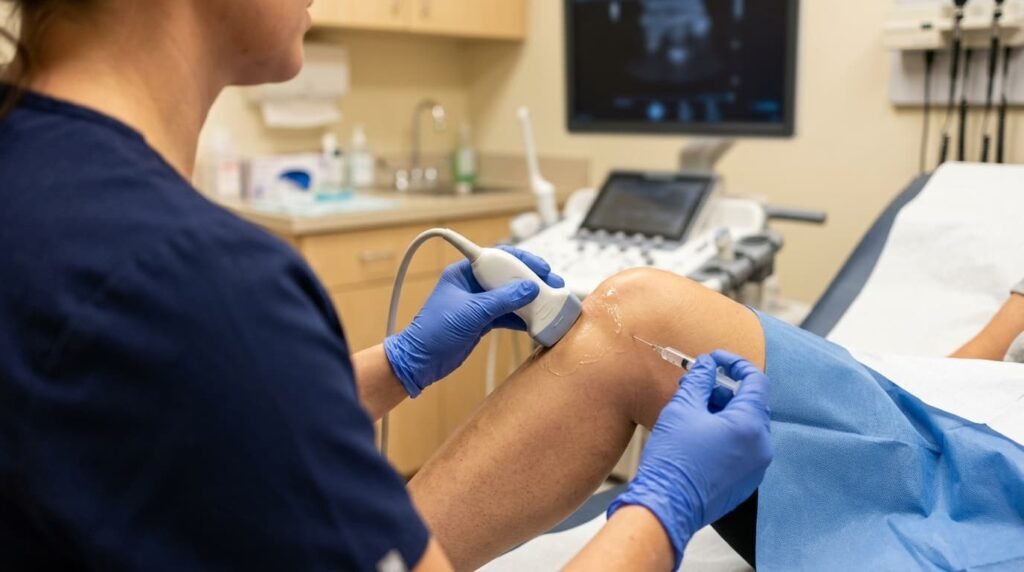
An Arthrosamid knee injection takes place in a clinic treatment room. The clinician cleans the skin and numbs the area with local anaesthetic. Ultrasound then guides the needle into the joint space. The injection takes minutes, and a plaster covers the site afterwards.
Some clinics prescribe antibiotics beforehand to lower infection risk. Patients usually go home the same day. A gradual return to activity and prompt review of a hot, red or swollen knee protect the result.
Arthrosamid Side Effects and Safety
Most side effects are mild and short-lived. Patients may notice pain, swelling or a feeling of fullness for a few days. A small number develop a post-injection flare lasting longer.
Infection and allergic reaction are rare but possible, so clinics use sterile technique. Systematic reviews of polyacrylamide hydrogel knee treatment report no long-lasting adverse events in published studies. A video on the Dr SNA Clinic YouTube channel can add visual context for patients who prefer watching to reading.
Arthrosamid vs Hyaluronic Acid
Hyaluronic acid breaks down over months, which explains the need for repeat courses. Arthrosamid does not degrade, so a single treatment aims to last longer. A retrospective cohort study compared polyacrylamide hydrogel with hyaluronic acid and corticosteroids.
Retrospective data carry limits, so larger randomised trials remain valuable.
How Long Arthrosamid Lasts and What Reviews Report
Duration depends on the patient. Early trial data show benefit at one year, and follow-up extends to five years. Arthrosamid reviews from patients describe improved mobility, though individual results differ. Published patient experiences add real-world context alongside the trial data.
NHS Access, Clinic Choice and Costs
Arthrosamid NHS availability varies by area, and many patients currently access treatment privately. A GP or local trust can confirm what is offered nearby. Arthrosamid London clinics often work with orthopaedic specialists and ultrasound guidance.
Arthrosamid injection cost varies between clinics, so a written quote helps comparison. Any knee hydrogel injection UK patients consider should come from a regulated, GMC-registered practitioner.
Device and Regenerative Options Still Under Study
Many new treatments for knee osteoarthritis in this group remain experimental or have limited UK access. Each one needs specialist advice before any decision.
Cooled Radiofrequency and Implants
Coolief knee treatment uses cooled radiofrequency energy to quieten pain signals from nerves around the joint. Specialists usually consider it when injections fail, and surgery is unsuitable. Reported relief varies between patients.
The FDA cleared the MISHA knee system in 2023. This implantable shock absorber targets mild to moderate disease. UK access should be confirmed with a specialist.
Electrical Stimulation and Fat Injection
The Bioness L300 Go knee device is a wearable unit that stimulates thigh muscles during movement. Evidence in osteoarthritis remains limited.
Fat injection knee arthritis research is at an early stage. University of New Mexico researchers reported encouraging early results with a patient’s own fat tissue. Larger trials must confirm benefit and safety.
Stem Cell Treatment for Knee Osteoarthritis
Early studies inject cells derived from bone marrow or fat into the joint. Some trials report pain improvement. However, standard protocols, long-term data and regulatory approval remain lacking.
Patients with advanced arthritis tend to respond less predictably to injectable therapies. Clinics that promise guaranteed cartilage regrowth deserve caution.
Autologous Chondrocyte Implantation
Surgeons take a small sample of the patient’s cartilage cells. Laboratory teams grow those cells, and surgeons return them to the damaged area. The cells then form new cartilage. Versus Arthritis funded research that helped develop the procedure.
The technique suits younger patients with a localised cartilage defect, not widespread osteoarthritis.
A New Drug for Osteoarthritis Has Completed Phase 2 Testing

Drug development offers the clearest route to new treatments for knee osteoarthritis that go beyond symptom control. Researchers at the NIHR Leeds Biomedical Research Centre and the University of Leeds led an international study. Professor Philip Conaghan, who directs the Leeds centre, led the work.
Neurotrophin-3 and the LEVI-04 Approach
The drug blocks a pain-signalling protein. Neurotrophin-3 osteoarthritis research is still young, and the therapy is described as first-in-class. Levicept Ltd, a UK-based biotechnology company, partnered on the study. The Levicept LEVI-04 trial reached its main outcome at week 17.
Phase 2 Trial Knee Osteoarthritis Results From Leeds
The randomised, double-blind study enrolled 518 participants with painful knee osteoarthritis. Sites spanned Europe and Hong Kong. Participants received placebo or one of three doses every four weeks until week 16.
The Lancet published the results in March 2026. More than half of treated participants reported at least a 50 per cent pain reduction. More than a quarter reported a 75 per cent reduction. Researchers reported no rise in serious adverse events compared with placebo.
Disease Modifying Osteoarthritis Drugs: What Is Missing
To date, no disease-modifying osteoarthritis drugs have regulatory approval for knee use. Existing medicines only ease symptoms. Preliminary data from 2025 suggested the Leeds drug may also affect bone structure. Those findings need confirmation.
Bone Marrow Lesions Knee Researchers Measure
Bone marrow lesions are MRI-detected areas of bone fibrosis and microfractures. They are common in osteoarthritis and linked with pain. Radiologists also describe similar signals as bone marrow oedema knee findings.
An MRI scan shows these changes where plain X-rays cannot. One study reported fewer patellofemoral lesions after a single Arthrosamid treatment.
What Comes Next for Trial Drugs
Larger phase 3 trials will test durability and identify the patients who benefit most. Any new knee osteoarthritis treatment must prove its worth in larger, longer studies first. Patients interested in trials can ask a specialist about current studies.
How to Prevent Knee Osteoarthritis From Progressing
Daily Habits That Protect the Joint
No habit guarantees protection, yet several measures slow progression. Maintaining a healthy weight reduces the load on each knee. Weight also shapes BMI rules for knee replacement in the UK.
Strength training supports the joint, particularly the quadriceps and hip muscles. Low-impact activity such as swimming or cycling keeps the joint moving without heavy impact. Stopping smoking and sleeping well also support joint health. Cushioned, supportive footwear reduces impact on hard surfaces. Consistent daily habits matter more than occasional bursts of effort.
Knees respond better to a steady routine than to one heroic weekend.
Signs That Need Prompt Medical Review
Some symptoms need quick assessment. A hot, red and swollen knee with fever can signal infection. Sudden locking, a knee that gives way and night pain also deserve review. Early assessment of persistent pain broadens treatment options.

Frequently Asked Questions
Which new treatments for knee osteoarthritis are available in UK clinics now?
Arthrosamid, a non-degradable hydrogel, is available through specialist clinics. Steroid, hyaluronic acid and platelet-rich plasma injections are also in routine use. Stem cell procedures and drug therapies remain in research. A consultation clarifies which option fits the stage of disease.
Can a new knee osteoarthritis treatment reverse cartilage damage?
No approved option currently restores lost cartilage. Injections and exercise ease symptoms and improve function. Cartilage repair surgery can help selected patients with a localised defect. Research into disease-modifying drugs continues.
Is Arthrosamid safer than a steroid injection?
Safety profiles differ, so direct claims of superiority are unwise. Steroids carry known risks such as skin changes and temporary blood sugar rises. Arthrosamid side effects are mostly mild swelling or pain, with rare infection. Clinicians weigh these risks against each patient’s history.
Does Arthrosamid work for everyone with knee pain?
No treatment works for every patient. Arthrosamid suits mild to moderate osteoarthritis, and results vary with disease stage. Advanced bone-on-bone disease often needs other options. A specialist assessment confirms suitability.
How to prevent knee osteoarthritis from getting worse?
Weight management, strength training and low-impact exercise form the foundation. Early assessment helps, since earlier stages offer more options. Persistent pain, swelling or locking warrants specialist review. Consistent routines outperform short bursts of effort.
New treatments for knee osteoarthritis now span hydrogel injections, regenerative research and promising drug trials. Established steps still form the base of care, and Arthrosamid adds a longer-acting injectable choice for suitable adults. Drug results from Leeds look encouraging but need larger trials.
Mr Syed Nadeem Abbas is a non-surgical knee and joint pain specialist. A consultation can confirm which option suits the stage of disease in each knee.
Read more: Gel Injections For Knee Pain A Non-Surgical Option For Osteoarthritis Symptoms
Read more: Knee Pain Treatment Options That Actually Relieve Discomfort


