✅ Medically reviewed
Water on the knee describes a joint that has gathered more fluid than it needs. The knee looks puffy, feels tight, and bends less easily than usual. Many people shrug it off as a minor strain. Sometimes that is right. Other times, the swelling points to injury, arthritis, crystals or infection.
The fluid is only a symptom, and the cause decides the treatment. This guide explains the signs, the common causes, safe home care and the red flags that need same-day help. It also shows how UK patients can get a swollen joint assessed.
What Is Water on the Knee?
Water on the knee is a symptom, not a disease. The joint always holds a small amount of fluid, which keeps movement smooth. Problems start when the knee makes too much of it.
How the Knee Makes Fluid
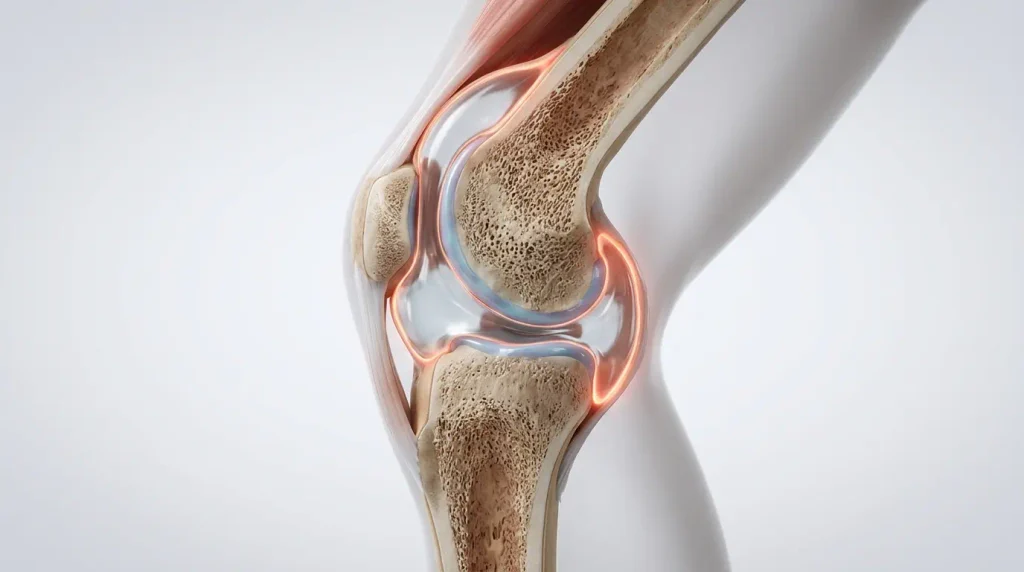
A thin lining called the synovial membrane produces joint fluid. Injury or inflammation irritates this lining. The lining then pumps out extra fluid, and the knee swells. The fluid may look clear, bloody or cloudy. Each appearance gives doctors a clue about the cause.
Knee Effusion Is a Clue, Not a Diagnosis
Doctors call this problem knee effusion. The term describes the swelling, not the reason behind it. Fluid on the knee can follow a twisted joint, an arthritis flare or an infection. Each cause needs a different plan. Naming the swelling is easy, but finding the trigger is the real task.
Water on the Knee: Symptoms to Spot Early
Symptoms vary with the cause. Some people notice a puffy joint within hours. Others see slow changes over several weeks.
Common Signs of a Fluid-Filled Joint
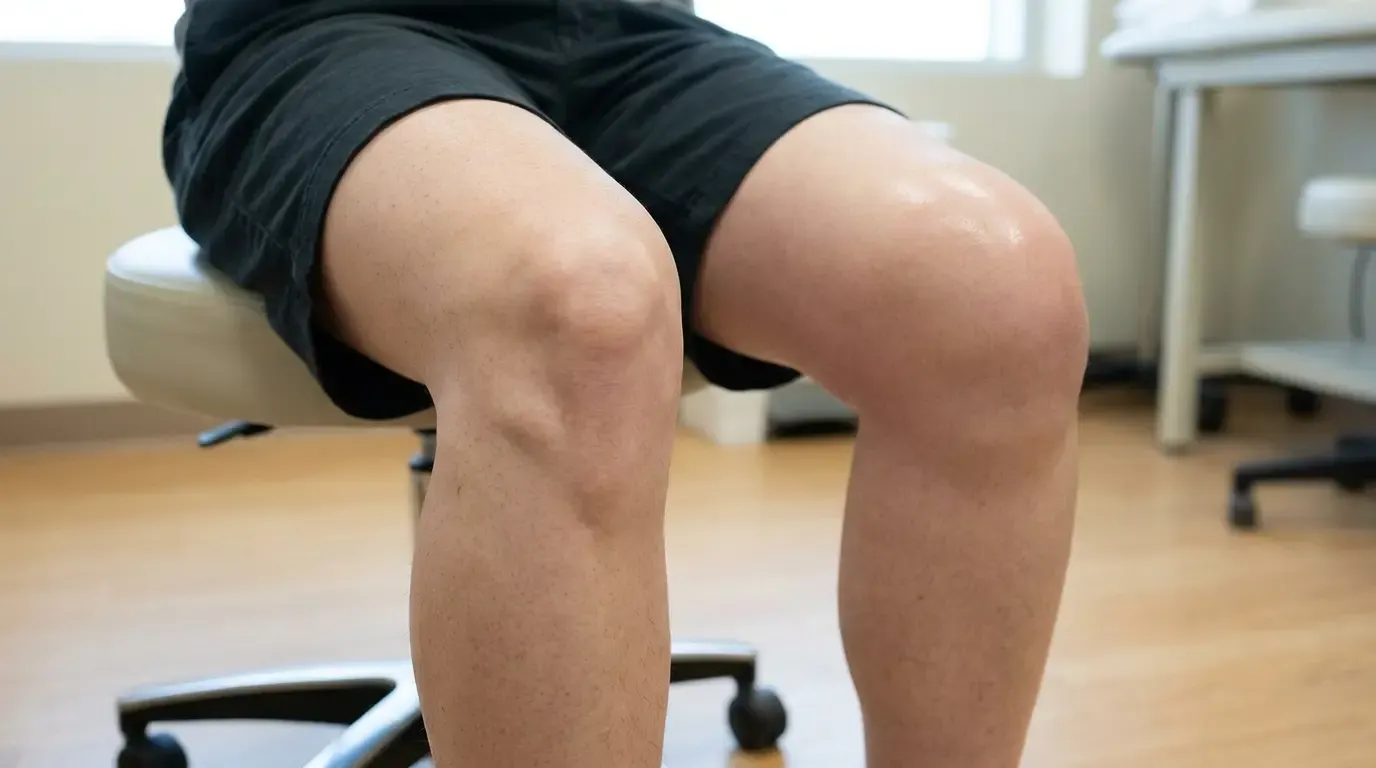
- Visible puffiness: The knee looks rounder, especially around the kneecap.
- Tightness: The joint feels full, as if packed with water.
- Stiffness: Bending or straightening the knee takes extra effort.
- Aching: Pain builds on stairs, long walks or extended standing.
- Warmth: The skin feels hotter than the other knee.
Comparing both knees side by side makes the difference easier to spot. Spotting water on the knee early also speeds up the right care.
Swollen Knee No Pain: Does Painless Swelling Matter?
Painless swelling still deserves attention. Slow, mild puffiness often comes from osteoarthritis or a cyst. These problems may ache very little at first. A knee that stays puffy for two weeks needs an assessment, even when pain is mild. Swelling that keeps returning deserves the same attention.
Knee Swelling Causes: What Sits Behind the Fluid?
Water on the knee has many triggers, and timing offers useful clues. A sudden change after a fall points one way. A slow, recurring change points another. A doctor still needs to confirm the cause.
Injury and Knee Swelling After Injury
Swelling that appears within hours of an injury may mean bleeding inside the joint. Doctors call this hemarthrosis. Ligament tears and fractures are common culprits. Swelling that builds over a day or two after a twist often points to the meniscus. Meniscus tear symptoms include catching, clicking, locking and a knee that gives way. Bleeding inside the joint needs prompt assessment, so waiting rarely helps.
Knee Osteoarthritis and Recurring Swelling
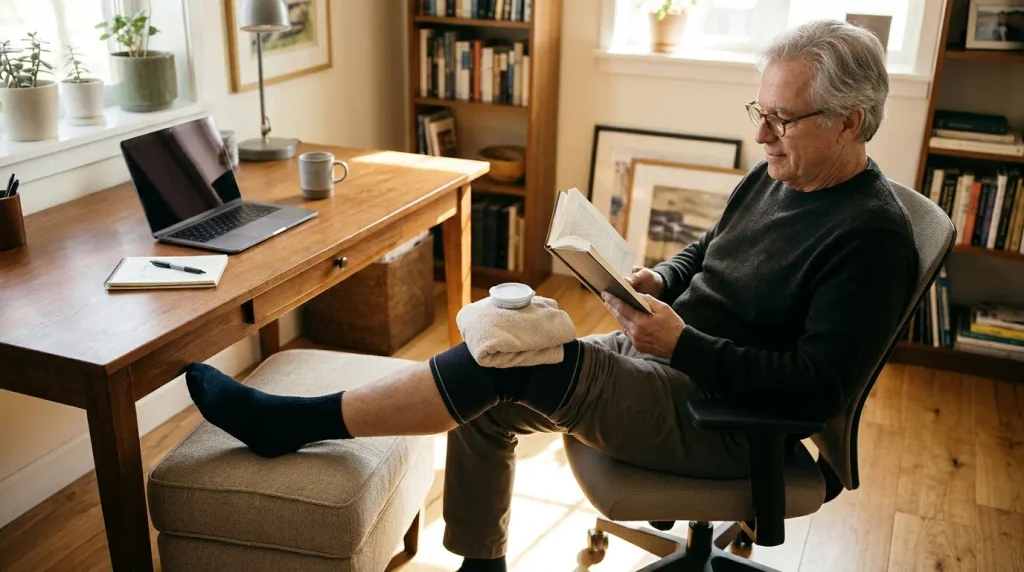
Knee osteoarthritis is a leading reason for swelling that comes and goes. Cartilage wears thin, the joint lining becomes irritated, and extra fluid follows. Water on the knee from osteoarthritis tends to be mild to moderate. Stiffness after rest usually eases within 30 minutes of moving.
Mr Syed Nadeem Abbas explains synovitis in a video series on the Dr SNA Clinic YouTube channel. Synovitis is the inflamed lining behind much of this swelling.
Gout in Knee and Pseudogout: Crystal Trouble
Gout in knee joints brings sudden, fierce pain with heat and redness. Attacks often strike at night. Uric acid crystals trigger the flare, and drinking alcohol can set one off in some people.
Pseudogout works similarly. Calcium crystals collect in the joint instead. Older adults face the highest risk. Both conditions can mimic infection, so a hot joint needs urgent review.
A sudden, hot, swollen joint should never wait for a home remedy.
Baker’s Cyst and Knee Bursitis
A Baker’s cyst forms behind the knee. The bulge feels tightest when the leg straightens. Underlying arthritis or a cartilage problem often drives it.
Knee bursitis affects small fluid-filled cushions around the joint. Repeated kneeling irritates the sac at the front of the kneecap. Pes anserine bursitis causes pain on the inner side of the knee.
Inflammatory Arthritis
Swelling in several joints with long morning stiffness hints at rheumatoid arthritis. Rheumatologists manage this condition with medicines that calm the immune system.
Hot Swollen Knee and Other Red Flags
Most cases are not emergencies. A few are. Spotting them early protects the joint, and sometimes life.
Septic Arthritis Knee: Why Speed Matters
Heat, redness and severe pain around a swollen joint may signal infection. Septic arthritis knee cases can damage cartilage quickly. Fever and feeling unwell raise the concern. Infection can still occur without a fever. Same-day medical help is the safe choice.
A replaced knee changes the picture. New swelling, warmth or pain around an artificial joint needs urgent contact with the surgical team.
Other Signs That Need Same-Day Advice
- The leg cannot take weight after an injury.
- The knee looks visibly deformed.
- The calf turns swollen, warm or painful on one side, which may signal a blood clot.
- Blood-thinning medicines raise the risk of bleeding into the joint.
- Diabetes or a weakened immune system raises infection risk.
Call 999 for Breathlessness or Chest Pain
Sudden breathlessness, chest pain or coughing up blood may signal a clot in the lung. Call 999 immediately.
Water on the Knee Home Remedies for Mild Swelling
Mild swelling after a minor knock often settles with simple care. This plan suits only knees with no red flags. A worsening knee needs medical help.
How to Get Rid of Water on the Knee Safely
Use the R.I.C.E. method for the first two to three days.
- Rest: Avoid running, jumping and twisting movements.
- Ice: Apply a wrapped ice pack for 15 to 20 minutes every two to four hours.
- Compression: Wear a snug elastic support, and loosen it if tingling or numbness starts.
- Elevation: Raise the leg on pillows, ideally above heart level.
Never place ice directly on bare skin. The knee is not a cocktail, and frostbite makes a poor garnish.
Heat or Ice for Swollen Knee: Which Comes First?
Ice comes first. Cold limits swelling and dulls pain in the early days. Heat can increase fluid, so skip it on a hot or freshly injured joint. Once swelling settles, gentle warmth eases leftover stiffness.
Walking and Gentle Movement
Short, gentle walks usually help. Movement keeps the thigh muscles active and eases stiffness. Stop if pain or puffiness rises. Long walks should wait until the swelling drops. A leg that cannot bear weight needs urgent review.
Pain Relief and Things to Avoid
Paracetamol suits many adults. Ibuprofen gel or tablets reduce inflammation but do not suit everyone. Ask a pharmacist first about asthma, stomach ulcers, kidney disease, heart disease or blood thinners. Drug-free approaches, such as pacing and strengthening, support recovery too.
Avoid heat and firm massage in the first two days. Squeezing an inflamed joint like a sponge only irritates it.
Daily Habits During Recovery
Small habits protect a recovering joint. Take stairs slowly, and use the handrail. Avoid deep squats and long spells of kneeling. Break up desk work with short walks every hour. At night, rest the leg on a pillow to limit fluid pooling. Choose cushioned, supportive shoes, since poor footwear adds strain to the knee.
How Doctors Find the Cause of Knee Swelling
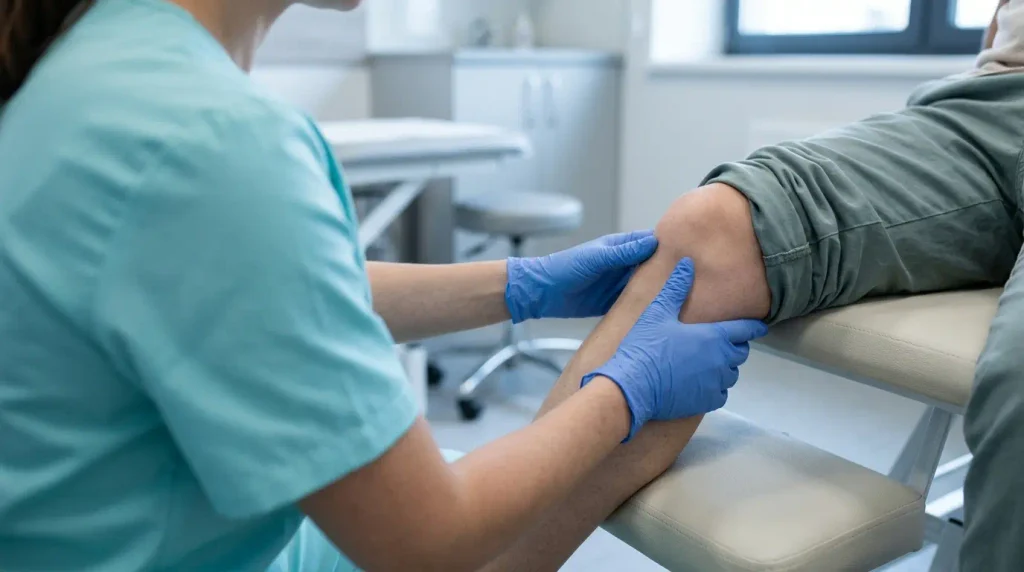
Doctors start with a conversation. They ask about timing, injuries, earlier knee problems and medicines. A hands-on examination follows. The doctor compares both knees, checks warmth and tests how far the joint bends. Gentle pressure around the kneecap shows where fluid has gathered.
Examination and Tests
A careful clinical examination often points to the cause before any scan. Doctors then choose tests to match the clues:
- X-ray: Shows bone changes, fractures and signs of osteoarthritis.
- Ultrasound or MRI: Reveals fluid collections, cysts and damage to ligaments, tendons or cartilage.
- Blood tests: Check for inflammation, infection and conditions such as rheumatoid arthritis.
Joint Aspiration: What It Can and Cannot Do
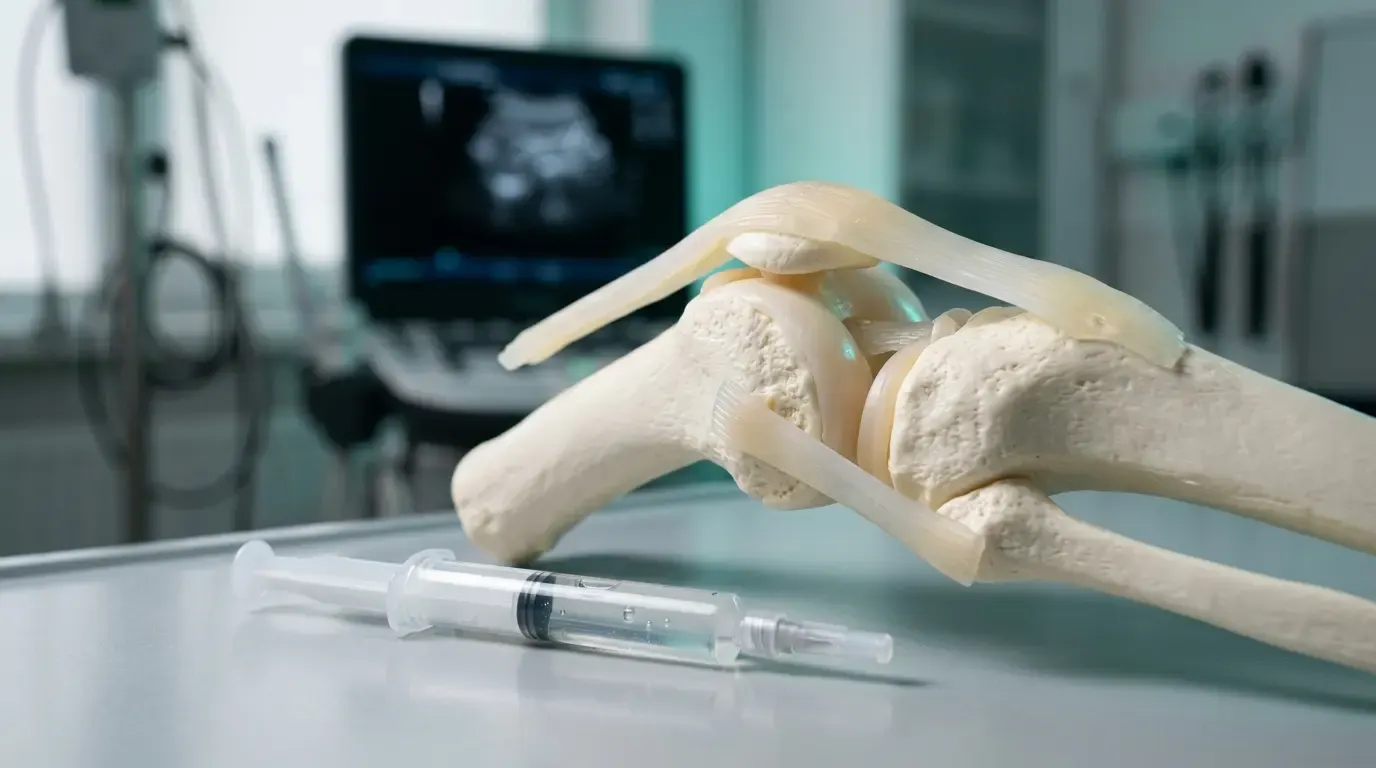
Joint aspiration uses a needle to draw fluid from the knee. It relieves pressure and pain. A laboratory can then check the sample for infection, inflammation or crystals. Removing fluid does not cure the cause. The swelling can return if the trigger remains.
Water on the Knee Treatment Options by Cause
Treatment of water on the knee follows the diagnosis. No single approach fits every swollen joint.
Matching Treatment to the Trigger
- Injuries: Rest, a knee support and physiotherapy restore strength and movement. Serious injuries may need surgery.
- Crystal arthritis: Anti-inflammatory medicines settle attacks. Long-term tablets can lower uric acid in recurrent gout.
- Joint infection: Hospital care with antibiotics and drainage is urgent.
- Inflammatory arthritis: A rheumatologist prescribes medicines that control inflammation.
Managing Osteoarthritis-Related Swelling
Exercise, physiotherapy and weight management form the base of care. Strong thigh muscles protect the joint. Topical anti-inflammatory gels may ease pain. A steroid injection can calm a flare, though relief often lasts only weeks.
Some patients still struggle despite these steps. For suitable patients, an Arthrosamid injection offers a non-surgical option. Arthrosamid is a hydrogel placed inside the joint under ultrasound guidance. It aims to ease osteoarthritis pain and improve movement. It does not cure arthritis or reverse joint damage. A specialist assessment confirms suitability.
Knee replacement remains a later option for severe cases.
How Long Does Fluid on the Knee Last?
Water on the knee after a minor knock may settle within days. Sprains and strains often improve in about two weeks. Larger injuries take weeks or months. Crystal arthritis flares usually ease over days to weeks with treatment. Osteoarthritis swelling comes and goes over a longer period. Any knee still puffy after two weeks needs a proper assessment.
What Makes Swelling Come Back?
Returning swelling suggests the underlying problem is still active. Osteoarthritis, meniscus injury, gout and inflammatory arthritis are common reasons. Rushing back to sport before the knee recovers also triggers it. Gradual increases in activity reduce that risk. Repeated swelling deserves a diagnosis, not just another ice pack.
Getting a Swollen Joint Assessed in the UK
The GP is a sensible first stop. A GP can examine the joint, arrange tests and refer onward. Many areas offer self-referral to an NHS musculoskeletal physiotherapy service. NHS 111 gives advice when urgency feels unclear. Private assessment with a physiotherapist or specialist offers another route.
Red-flag symptoms should skip the queue. A hot, painful joint with fever needs urgent care through NHS 111 or an emergency department. Waiting for a routine appointment risks lasting joint damage.
Preparing for the Appointment
Short notes make the appointment far more productive. Useful details include:
- When the swelling started, and whether it came suddenly or slowly
- Any injury or change in activity beforehand
- Pain, stiffness, warmth or trouble moving the joint
- Triggers and relievers
- All medicines, especially blood thinners
Protecting the Knee Long Term
Strong thigh and hip muscles share the load. Healthy weight management reduces strain on the joint. Kneepads protect people who kneel for work or hobbies. Gradual increases in exercise protect a recovering knee.
Frequently Asked Questions
Is walking good for a swollen knee?
Gentle walking usually helps once the first swelling calms. Movement keeps the thigh muscles active and reduces stiffness. Short walks suit most people, but long distances should wait. A knee that cannot bear weight needs urgent medical review.
Why does my knee keep swelling up?
Repeated swelling suggests the underlying cause has not settled. Osteoarthritis, a meniscus injury, gout and inflammatory arthritis are common reasons. Returning to activity too early after an injury can also trigger it. A clinician can examine the joint and arrange tests to find the cause.
Can needle drainage stop the swelling for good?
Aspiration removes fluid and relieves pressure quickly. The fluid can return if the cause remains untreated. Laboratory tests on the sample often guide the next step. Treating the underlying problem gives the lasting benefit.
How to get rid of water on the knee fast?
No shortcut works for every cause. Mild cases respond to rest, ice, compression and elevation within days. Persistent or severe swelling needs a doctor, who may drain the joint or treat the trigger. Heat and firm massage should wait.
Is a hot swollen knee an emergency?
Often, yes. A hot, painful, swollen joint may signal infection, especially with fever or feeling unwell. Same-day medical advice is the safe choice. Infection can occur without a fever.
Does knee swelling always mean arthritis?
No. Injuries, gout, bursitis, cysts and infections can all cause swelling. Arthritis is one possibility among several. A medical assessment sorts out which one applies.
Water on the knee signals a joint that is irritated, injured or inflamed. Mild swelling after a minor knock often settles with rest, ice, compression and elevation. Heat, severe pain, fever or trouble bearing weight needs same-day care. Persistent or recurring swelling needs a proper diagnosis.
Mr Syed Nadeem Abbas is a non-surgical knee and joint pain specialist. A private knee assessment can identify the cause of persistent or recurring swelling.
Read more: Knee Inflammation Often Causes Persistent Knee Pain and Swelling
Read more: Knee Bursitis Symptoms Often Develop After Repeated Kneeling or Injury