Knee Ligament Tear – ACL, MCL and Meniscus Differences

✅ Medically reviewed | Updated July 2026
A knee ligament tear can affect the ACL, the MCL, the meniscus, or more than one structure at once. Each injury shares overlapping symptoms, yet the causes, warning signs and treatment paths differ in important ways. Telling them apart matters because the wrong assumption can delay proper care and slow recovery considerably.
Knee injuries rarely arrive with a helpful label attached. A footballer twisting awkwardly and a gardener stepping off an uneven kerb can end up with strikingly similar pain.
Understanding a Knee Ligament Injury
The knee relies on several ligaments and cartilage structures to stay stable during everyday movement. The anterior cruciate ligament (ACL) sits at the centre of the joint. It stops the shinbone from sliding too far forward beneath the thigh bone. The medial collateral ligament (MCL) runs along the inner side of the knee. It resists sideways force, pushing the joint inward.
The meniscus is different from the two ligaments in one important respect. Rather than a band of fibrous tissue, the meniscus is a C-shaped cartilage cushion. It absorbs shock between the thigh bone and shinbone. Two menisci sit within each knee, one on the inner side and one on the outer side.
A knee ligament tear occurs when one of these structures stretches beyond its normal limit or snaps under sudden force. Sporting collisions, sharp changes of direction and awkward landings are common triggers. Pivoting sports such as football, netball and skiing carry particular risk.
Twisting movements, particularly while bearing weight, place extra strain on the meniscus specifically. This explains why meniscus tears frequently occur without any dramatic collision at all.
Age plays a significant role, too. Cartilage naturally thins over the decades. This makes a meniscus tear more likely, even from ordinary movements such as rising from a low chair. Arthritis accelerates this process further, weakening tissue that would otherwise cope comfortably with daily strain.
Adults in their fifties, sixties and beyond commonly experience a ligament tear too. Gardening, gym sessions, or simply misjudging a step are frequent causes. The mechanism differs from a sports collision, but the underlying tissue damage is often just as significant.
Not every ligament injury announces itself with dramatic symptoms straight away. Some patients continue walking, or even finish a match, before swelling and stiffness build gradually over the following days.
Certain factors raise the likelihood of this type of injury beyond sport alone. Previous knee injuries weaken surrounding tissue, leaving the joint more vulnerable to repeat damage. Muscle imbalance around the thigh places uneven strain on the ACL during sudden stops. Weak hamstrings relative to the quadriceps are a common culprit.
ACL vs MCL vs Meniscus Tear – Spotting the Differences
Comparing ACL vs MCL vs meniscus tear symptoms side by side helps narrow things down. This works well even before any scan takes place.
| Feature | ACL Tear | MCL Tear | Meniscus Tear |
| Onset of pain | Immediate, often severe | Immediate, moderate | Gradual, over hours or days |
| Popping sensation | Frequently reported | Uncommon | Sometimes present |
| Swelling | Rapid and significant | Present but milder | Builds slowly |
| Instability | The knee gives way | Feeling of looseness | Locking or catching |
| Weight-bearing | Usually difficult | Often possible | Often possible initially |
| Typical cause | Pivoting without contact | Blow to the outer knee | Twisting while weight-bearing |
Torn Meniscus vs Torn ACL Symptoms
A torn meniscus vs torn ACL comparison usually comes down to timing and sensation rather than pain intensity alone. ACL injuries tend to hurt immediately and deep within the joint. A loud pop often accompanies a sense that the knee has simply given way.
Meniscus injuries often feel milder initially, worsening as the knee stiffens over two or three days. Patients frequently describe walking off the pitch, only to find the joint noticeably swollen by the following morning.
Locking is a particularly useful clue. A knee that catches, clicks or refuses to straighten fully points toward meniscus involvement rather than the ACL alone. This single symptom often does more to narrow the diagnosis than any other single sign.
Working Out Which Structure Is Torn
Working out how to tell if the ACL, MCL or meniscus is torn starts with the mechanism of injury. The way the knee moved at the moment of impact matters most. A direct blow to the outer knee often damages the MCL. The ligament exists specifically to resist this type of sideways force. A sudden pivot without contact more commonly injures the ACL instead.
A twisting motion while the foot stays planted frequently tears the meniscus. Older adults with existing cartilage wear face a particular risk.
Pain location adds further clues to the puzzle. Inner-knee tenderness suggests the MCL. Generalised, deep pain suggests the ACL. Pain running along the joint line, especially alongside locking, points toward the meniscus rather than either ligament.
No symptom checklist replaces a proper clinical examination. Imaging and hands-on assessment remain the only reliable way to confirm exactly which structure has been damaged.
Combined Knee Injuries and the Unhappy Triad
More than one structure often fails during the same incident, particularly in higher-impact sports. Understanding these combined patterns matters just as much as recognising a single knee ligament tear in isolation.
Combined ACL and Meniscus Tear
A combined ACL and meniscus tear occurs in a meaningful proportion of ACL patients, most often during high-impact pivoting sports. Football, skiing and basketball all carry elevated risk, largely because these activities demand rapid direction changes under load.
Because the two structures heal at different rates, treatment planning becomes considerably more complex than addressing either injury alone. ACL repairs generally respond well to aggressive rehabilitation, while meniscus repairs tend to prefer a slower, more cautious healing process. Balancing these competing needs requires careful surgical planning.
ACL and MCL Tear Together
When the ACL and MCL tear together, the knee typically becomes markedly unstable compared with either injury on its own. MCL tears alone often heal in a supportive brace without surgery, since the ligament generally responds well to conservative management.
Once the ACL is also involved, though, surgical repair frequently becomes necessary to restore stability. Debate continues among surgeons over whether the MCL should also be operated on in combined cases. Outcomes vary depending on severity and prior knee function.
Knee Blowout Injury – When Several Structures Fail at Once
The most severe combined pattern is known clinically as the unhappy triad, sometimes described informally as a knee blowout injury. This involves simultaneous damage to the ACL, MCL and meniscus. A high-force blow to the outer knee usually causes it, while the foot stays fixed to the ground.
Contact sports such as rugby, football and motocross account for most cases. Risk rises sharply when a player is tackled while the foot cannot move freely. Additional structures, including the patellar tendon or posterior cruciate ligament, can also become involved in particularly forceful incidents.
Surgery is almost always required for this injury pattern, typically prioritising ACL reconstruction alongside meniscus repair where feasible. Whether the MCL also needs surgery depends heavily on how well it responds to bracing beforehand. Surgeons generally make this decision case by case.
Diagnosing a Torn Knee Ligament
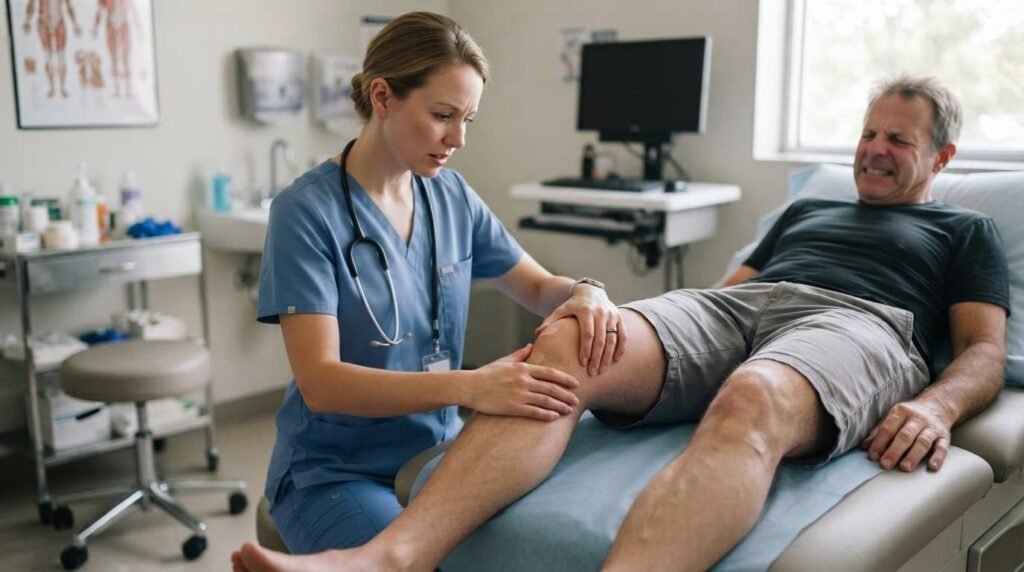
Accurate diagnosis of a knee ligament tear relies on more than symptoms alone, however detailed the patient’s description might be. A physical examination checks stability, range of motion and tenderness across specific points. Manual stress tests often help isolate each ligament in turn.
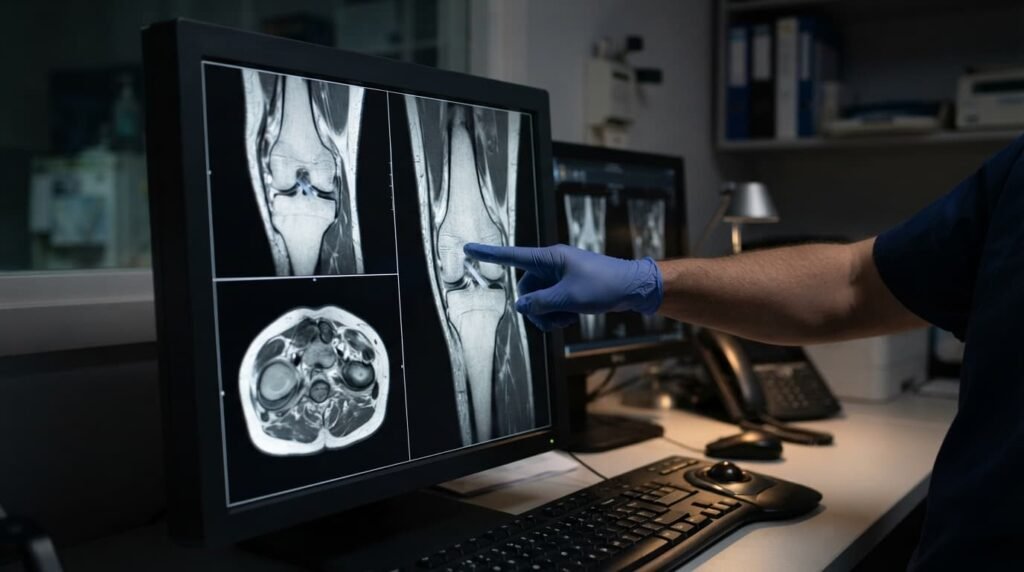
Imaging typically follows the initial examination. X-rays rule out fractures, while MRI scans reveal soft-tissue damage in far greater detail than any physical test can provide. Arthroscopy, a minimally invasive camera procedure, is reserved for select cases. It suits situations where imaging remains inconclusive or surgery is already planned.
Specific manual tests help isolate each structure during examination. The Lachman test assesses excessive forward movement of the shinbone, a key sign of ACL damage. Valgus stress testing assesses side-to-side looseness associated with the MCL. McMurray’s test checks for the clicking or catching typical of a meniscus tear. None of these tests works in isolation, and skilled clinicians combine several to build a confident picture.
Delaying assessment rarely helps matters. Waiting too long to seek a diagnosis can allow a minor tear to worsen into a considerably more complex injury. Persistent swelling, locking, or an inability to bear weight after several days of rest are all worth acting on. Waiting them out rarely helps.
Treatment Options for ACL, MCL and Meniscus Injuries
Treatment for a knee ligament tear depends heavily on which structure is affected and how severe the damage is. Activity level and general health also shape the plan.
Non-Surgical Treatment
Minor tears, particularly isolated MCL injuries, frequently respond well to conservative care built around a few consistent principles:
- Rest and activity modification to avoid further strain on the joint
- Ice is applied regularly during the first few days to control swelling
- Compression and elevation during the acute phase of the injury
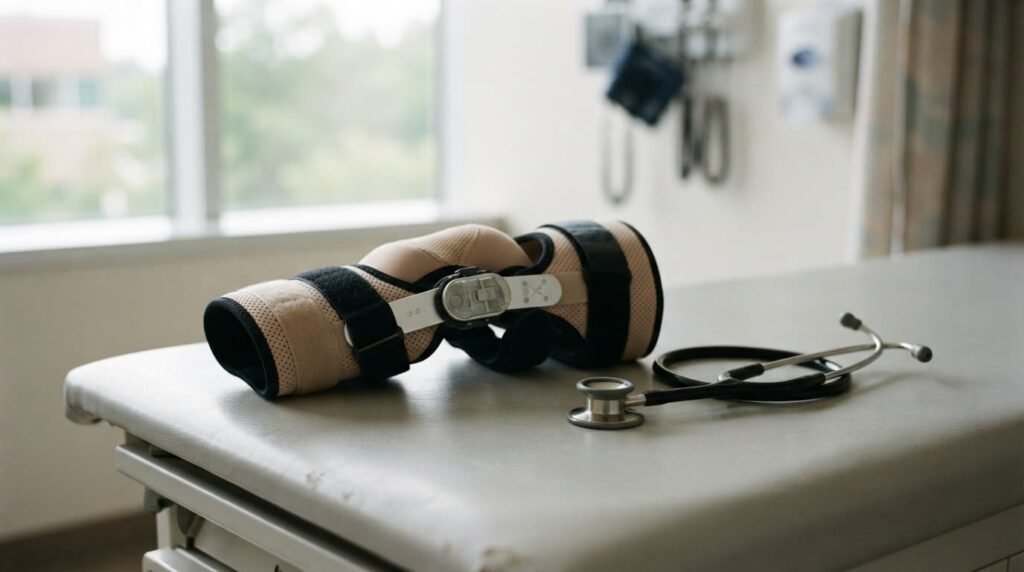
- Bracing to stabilise the joint while the tissue heals naturally
- Structured physiotherapy to rebuild strength and range of motion gradually
Regenerative options, including PRP therapy, are sometimes considered to support healing and reduce reliance on more invasive procedures where appropriate.
Surgical Treatment
More significant tears, or combined injuries, often require surgical intervention to restore normal joint function:
- ACL reconstruction, using a tendon graft to replace the damaged ligament entirely
- Meniscus repair, stitching the cartilage back together wherever the tear allows
- Meniscus removal is reserved for cases where the tear is too extensive to repair
- MCL repair is mainly limited to severe or combined injuries rather than isolated tears
Rehabilitation follows every surgical procedure, gradually restoring strength, movement and confidence in the joint over several months.
Recovery Time After a Ligament Tear
Knee ligament tear recovery varies considerably depending on which structure was damaged and whether surgery was ultimately needed.
| Injury | Typical Recovery |
| MCL tear | 3 to 6 weeks |
| Meniscus tear (with surgery) | 4 to 6 weeks |
| ACL tear | 6 to 12 months |
| Combined injuries | Often 9 to 12 months or longer |
Age, overall fitness and how closely rehabilitation instructions are followed all influence the final timeline considerably. Athletes returning to pivoting sports typically face the longest, most cautious rehabilitation schedules. Re-injury risk stays elevated until strength and confidence fully return.
A rushed return to sport is one of the most common causes of repeat injury. A structured, staged rehabilitation programme matters far more than any arbitrary calendar date.
Protecting Joint Health After a Ligament Injury
A knee ligament tear earlier in life can leave a lasting mark on joint health decades later. This holds true even once the initial injury has fully healed. Damaged cartilage and altered joint mechanics increase the long-term risk of osteoarthritis, sometimes appearing many years after the original incident.
This is particularly relevant for men over 60. Old ligament and meniscal injuries frequently resurface as chronic knee pain in later life. Managing inflammation early, staying active within safe limits, and monitoring joint changes all help reduce this risk over time.
For patients who go on to develop osteoarthritis following an old injury, modern non-surgical options exist beyond traditional steroid injections. Arthrosamid injection treatment offers longer-lasting relief without requiring surgery. Patients weighing options may also find it useful to review how Arthrosamid compares with PRP therapy. Mr Syed Nadeem Abbas discusses assessment and long-term treatment planning in more detail on the DrSNAClinic YouTube channel.
Preventing a Torn Knee Ligament
Prevention cannot remove all risk, but it lowers the odds considerably. A few consistent habits protect the ACL, MCL and meniscus during both sport and daily life:

- Strengthen the hamstrings and quadriceps evenly to support the ACL during sudden stops
- Warm up properly before sport, including dynamic stretches and light jogging
- Choose footwear suited to the playing surface, avoiding studs that grip too firmly on turf
- Practice safe landing and pivoting technique, particularly in netball, football and skiing
- Avoid twisting the knee while the foot stays fixed to the ground
- Maintain a healthy weight to reduce the everyday load on the joint
- Address any previous knee injury fully before returning to full activity
Frequently Asked Questions
What is the difference between an ACL and a meniscus tear?
An ACL tear usually causes immediate, deep pain and instability, while a meniscus tear’s symptoms profile often develops more gradually, with locking or catching as key signs rather than sudden collapse.
Is it possible to walk on a torn meniscus?
Walking on a torn meniscus is often possible initially, especially with smaller tears, though stiffness and swelling typically increase over the following days as the joint reacts.
What are the signs of a torn ACL?
A loud pop, immediate swelling and a feeling that the knee is about to give way are the classic signs of an ACL tear, though a clinical exam remains necessary to confirm the diagnosis.
What is an unhappy triad knee injury?
An unhappy triad involves simultaneous damage to the ACL, MCL and meniscus, usually caused by a forceful blow to the outer knee during contact sports such as rugby or football.
How long does a knee ligament tear take to heal?
Recovery ranges from three to six weeks for an isolated MCL tear up to twelve months or more for a combined ligament injury requiring extensive surgery and rehabilitation.
Does a knee ligament tear increase the risk of arthritis later?
Yes. Cartilage and ligament damage can alter joint mechanics permanently. This raises the long-term risk of osteoarthritis even after otherwise successful treatment.
Can a torn knee ligament heal without surgery?
Many MCL tears and smaller meniscus tears heal well with rest, bracing and physiotherapy alone. Larger ACL tears usually need surgical reconstruction, especially for patients returning to pivoting sports.
A torn knee ligament rarely fits into one neat category. The ACL, MCL and meniscus each fail in different ways, for different reasons. Recovery depends entirely on getting the diagnosis right from the start. Spotting the pattern early shapes every decision that follows. This holds true for a straightforward MCL sprain or a combined unhappy triad alike.
Prompt assessment remains the single most useful step after any knee injury. A confirmed diagnosis leads to the right treatment and a realistic recovery timeline. It also lowers the chance of long-term joint damage.
Read more: How Rheumatoid Arthritis Affects the Knee Joint Over Time
Read more: Synovial Fluid in Knee Explained With Its Causes and Treatment