How Rheumatoid Arthritis Affects the Knee Joint Over Time

Knee rheumatoid arthritis develops when the immune system mistakenly attacks the lining of the knee joint, triggering pain, swelling and stiffness that often appear in both knees together rather than just one. Rheumatoid arthritis in the knee is widely recognised as one of the most disruptive forms of the disease, since the joint carries so much daily weight and movement.
Unlike the slow mechanical wear behind most osteoarthritis, this autoimmune process can move quickly, and some of the damage it leaves behind cannot be undone. Anyone newly diagnosed, or simply trying to make sense of stubborn knee pain, usually wants three things. They want a clear picture of what is happening inside the joint. They want a list of warning signs worth watching for. And they want an honest sense of what treatment actually involves.
How Rheumatoid Arthritis Changes the Knee Joint
The knee is the body’s largest joint. It is built from the kneecap, the lower thighbone and the upper shinbone, all cushioned by cartilage and wrapped in a thin tissue layer called the synovial membrane. That membrane produces fluid that keeps the joint moving smoothly under normal conditions. Rheumatoid arthritis synovial membrane knee damage begins exactly here, since this is the tissue the immune system targets first. When the immune system misfires, it targets this membrane directly. The tissue swells, thickens, and starts overproducing fluid, which raises pressure inside the joint capsule and gradually wears down the cartilage and ligaments that hold everything in place.
A Joint Disease That Rarely Picks Just One Side
This is one of the clearest signals doctors look for. Osteoarthritis tends to develop unevenly, often worse on whichever side has carried the most strain over the years. Rheumatoid arthritis in both knees is the far more common pattern, since the underlying disease process attacks joints symmetrically rather than responding to wear on one particular side.
Telling It Apart From Mechanical Wear
Doctors sometimes need to rule out ordinary wear before confirming an autoimmune cause, since both conditions share overlapping symptoms. The clearest distinction tends to be timing: osteoarthritis typically worsens with activity and eases with rest, while this condition often does the reverse, flaring up after periods of stillness. The comparison of rheumatoid arthritis knee vs osteoarthritis usually gets settled quickly once blood tests come back. Mechanical wear does not produce the inflammatory markers associated with autoimmune joint disease.
Spotting the Early Warning Signs
Does rheumatoid arthritis affect knees more than other joints is a question many people ask once symptoms begin, and the honest answer is that knees rank among the most commonly affected sites alongside hands and wrists. Catching rheumatoid arthritis knee symptoms early genuinely changes outcomes, mainly because treatment works best before permanent joint damage has set in. Knee pain, rheumatoid arthritis sufferers describe most often is rarely a single sensation; it tends to shift between dull aching, sharp catching, and a deep stiffness that settles in overnight. The difficulty is that early signs can feel like nothing more than a bad night’s sleep or a knee that is simply having an off day.

Swelling, Heat and That Familiar Morning Stiffness
A knee under autoimmune attack often looks puffier than usual and feels warm when touched, a result of the inflamed membrane pumping extra fluid and blood into the joint space. Rheumatoid arthritis knee stiffness tends to follow a recognisable pattern, settling in overnight and easing gradually rather than vanishing the moment someone gets out of bed. Many patients describe needing anywhere from several minutes to closer to an hour before a stiff joint loosens enough for normal walking. Rheumatoid arthritis knee swelling paired with that distinctive stiffness after rest, rather than after exertion, is a useful early signal that something autoimmune may be underway.
Noisy Joints and Sudden Instability
As cartilage thins, the knee can start making sounds it never used to make. Clicking, grinding, or a sudden catching sensation when standing up from a low chair are common complaints. Some people describe their knee briefly locking mid-step, or buckling without warning, which understandably knocks confidence when walking on uneven pavements or stairs.
When Symptoms Spread Beyond the Joint Itself
The disease rarely stays contained to one part of the body. Fatigue is almost universal among patients, often described as a tiredness that sleep does not seem to touch. A mild fever, reduced appetite, and small, firm nodules under the skin near the elbows or knees can also appear. Left untreated for long enough, the joint can also develop visible rheumatoid arthritis knee deformity, where bone erosion and ligament damage pull the joint out of its natural alignment. This is exactly why a GP will usually ask broader health questions rather than focusing purely on the joint that hurts.
Symptoms Worth Monitoring Closely
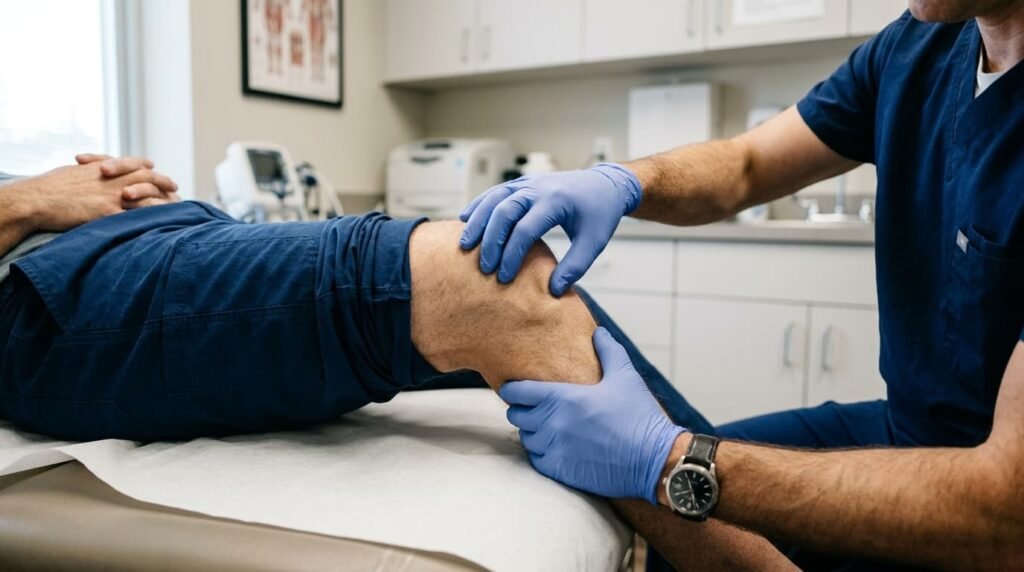
Some symptoms carry more diagnostic weight than others. Clinicians often look for the following specific patterns when assessing a painful knee:
- Morning stiffness lasting 30 minutes or longer. Stiffness that clears within a few minutes of getting up suggests mechanical wear. Stiffness that drags on for half an hour or more after waking is far more typical of an autoimmune cause.
- Symmetrical involvement. The condition frequently affects matching joints on both sides of the body at the same time, rather than favouring whichever knee has taken the most strain over the years.
- Visible changes to the skin around the joint. A knee under attack often looks swollen, feels noticeably warm, and can take on a reddish tinge across the skin directly over the joint.
- A sense of instability. As ligaments and tendons weaken under sustained inflammation, the knee can start to feel loose, giving way unexpectedly or buckling during ordinary movement such as walking down stairs.
What Triggers the Condition in the First Place
Nobody has identified a single definitive cause, which understandably frustrates patients hoping for a tidy explanation. What researchers do know is that genetics loads the gun, while certain lifestyle and environmental factors appear to pull the trigger.
Genetics and Inherited Risk
Having a close relative with this condition, or with another autoimmune disorder, raises personal risk noticeably. That does not guarantee the disease will ever appear, but it does suggest the immune system may already be primed to misfire given the right set of circumstances. Researchers continue to study specific gene variants linked to higher susceptibility, though genetics alone rarely tells the full story, since plenty of people carry risk genes without ever developing symptoms.
Smoking and Other Contributing Factors
Smoking stands out among the risk factors that people can actually do something about. It increases both the likelihood of developing the condition and its severity once symptoms appear, particularly for those who already carry a genetic predisposition. Other contributors named in the broader research on rheumatoid arthritis knee causes include being female, reaching middle age, carrying excess weight, and long-term exposure to substances such as silica dust. None of these factors works alone; the condition tends to emerge from a combination rather than a single tidy culprit. Anyone wanting a closer look at how lifestyle choices influence joint health more generally may find it useful to read a related guide on exercise and joint wellbeing.
Confirming a Diagnosis Through the UK Healthcare System
A GP is usually the first port of call. Getting there sooner rather than later genuinely matters, since UK clinical guidance strongly favours catching rheumatoid arthritis knee disease early to limit long-term joint erosion. Most people are referred to a rheumatologist for specialist confirmation and ongoing management once initial blood results raise suspicion.
Blood Tests and What the Results Actually Show
Blood tests look for general inflammatory markers alongside two more specific antibodies. One is the rheumatoid factor, present in roughly 80% of cases. The other is cyclic citrullinated peptide antibodies, found in a slightly smaller share of patients. Neither test alone confirms anything definitively, but combined with symptom history and a physical examination, they build a convincing overall picture.
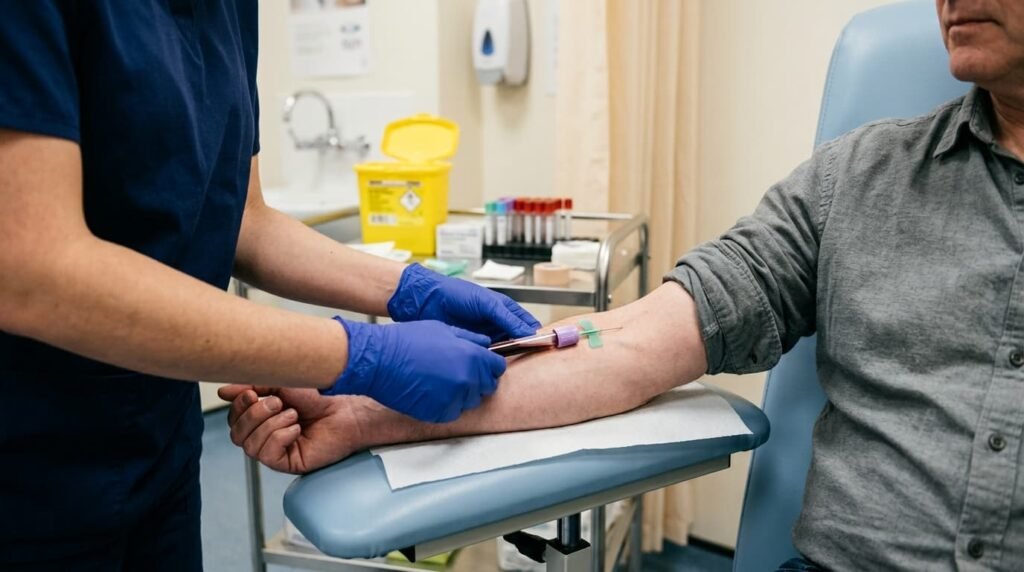
Physical Examination and Imaging
A physical check looks for warmth, swelling and reduced range of motion in the joint, alongside a wider health review since the disease can affect organs beyond the knee. Imaging, such as X-ray, ultrasound, or MRI, helps confirm bone and cartilage damage, although scans can look unremarkable in the earliest stages before erosion becomes visible. This is one reason clinicians lean heavily on bloodwork and symptom patterns rather than waiting for a scan to provide definitive proof either way. Anyone whose knee pain has already led to a closer look at the joint itself might also find it helpful to read more about how knee pain gets investigated and diagnosed more broadly.
Living With the Condition Day to Day
Joint damage tells only part of the story. A knee living with knee rheumatoid arthritis locks, buckles or aches through the night. That reshapes ordinary routines in ways that rarely make it onto a standard symptom checklist.
Mobility, Work and the Small Daily Negotiations
Simple tasks such as climbing stairs, gardening or climbing out of a low car can turn into small daily negotiations with a joint that has its own opinions. Fatigue compounds the difficulty, since exhaustion makes even gentle movement feel like wading through treacle. Employment can suffer too; some people reduce their hours or shift roles entirely once rheumatoid arthritis knee mobility problems make their usual job impractical to continue.

The Emotional Side That Rarely Gets Mentioned
Unpredictable flare-ups make planning genuinely difficult, and that uncertainty wears people down in a way that medication alone cannot fully address. It is worth saying plainly that feeling low or anxious alongside a chronic joint condition is common. It is not a personal failing, and it deserves just as much attention as the physical symptoms. On a lighter note, most long-term patients eventually develop an uncanny talent for forecasting rain. They can do it purely from how their knees feel that morning, a skill no weather app has yet managed to replicate convincingly.
Treatment Options Worth Knowing About
There is no outright cure, but there is a genuinely broad toolkit for slowing rheumatoid arthritis knee progression and keeping the joint functional for as long as possible. Rheumatoid arthritis knee treatment UK pathways generally start with a GP or rheumatologist and move through several stages depending on how the condition responds. Treatment plans are rarely static; most patients move between options as symptoms change, sometimes stepping up to stronger medication during a flare and stepping back down once things settle.
Starting With Medication
Initial relief usually comes from anti-inflammatory drugs or short steroid courses, which calm symptoms quickly without stopping the underlying disease from progressing. Longer-term control typically relies on DMARDs for knee rheumatoid arthritis prescribing. This is a group of drugs that slows joint damage by tempering the immune response itself rather than simply masking pain at the surface.
Biologic Treatments for Tougher Cases
When standard medication is not enough on its own, biologics for rheumatoid arthritis knee care offer a more targeted approach by blocking the specific immune signals that drive inflammation. They are often combined with a conventional disease-modifying drug rather than used in isolation, and while effective, they require closer monitoring given their broader effect on immune function.
Physiotherapy and Practical Support
A structured rheumatoid arthritis knee physiotherapy plan keeps the joint mobile without overloading it, alongside practical advice on protecting the knee during everyday tasks like lifting or kneeling. Occupational therapy sometimes enters the picture too, particularly when assistive equipment would make daily life noticeably more manageable.

Surgery and Joint Replacement
When medication and therapy no longer hold the line, surgical options range from keyhole procedures to full joint replacement. Replacement surgery is generally reserved for advanced cases where the joint surface has worn down extensively, and outcomes are usually strong for restoring day-to-day function afterwards.
Remission Is the Goal, Not a Guarantee
Many patients reach periods where symptoms quieten considerably, sometimes for months at a stretch. Getting there typically depends on early rheumatoid arthritis knee diagnosis and consistent treatment adherence, plus a fair amount of biological luck, since the disease does not behave identically from one person to the next.
Frequently Asked Questions
What is the best painkiller for knee pain caused by this condition?
There is no universal best option, since the right choice depends on severity and overall health. Many people start with anti-inflammatory medication under medical guidance, while genuine long-term control comes from disease-modifying drugs rather than painkillers alone. A GP or rheumatologist usually tailors the exact combination to the individual.
What is the fastest way to relieve knee pain during a flare-up?
Rest, gentle elevation and prescribed anti-inflammatory medication tend to bring the quickest relief during a flare, alongside avoiding activities that load the joint until the swelling settles down. A short cold compress can also help calm acute swelling. If a flare does not ease within a few days, contacting a GP is worthwhile.
My knee hurts when I bend it and straighten it. Could this be the cause?
Pain on bending and straightening can point to several different issues, including this autoimmune disease, mechanical osteoarthritis or simple cartilage damage. A GP assessment, usually supported by blood tests, remains the only reliable way to tell them apart.
Does treatment differ much across different parts of the UK?
Core treatment follows established national clinical guidance everywhere. Waiting times and access to specific biologic drugs can vary somewhat depending on local NHS provision or whether someone opts for private care.
This form of arthritis in the knee is a long-term condition, but it is rarely an unmanageable one. Early recognition of swelling, stiffness and that distinctive morning tightness gives treatment the best possible head start. Diagnosis through blood tests and physical examination, followed by a treatment plan built around medication, physiotherapy and, where needed, surgery, gives most patients a realistic path towards stable, functional joints. Anyone noticing persistent knee symptoms alongside fatigue or general unwellness should raise it with a GP sooner rather than later. This disease responds far better to treatment started early than to treatment started late.
Read more: Modern Osteoarthritis Treatment Alternative to Knee Replacement Injection
Read more: Knee Arthritis Exercises to Avoid That Increase Knee Pain