
Hydrotherapy for knee pain has been used in clinical settings for decades and for good reason. Water does something land-based exercise simply cannot: it removes load from the joint while still allowing the muscles around it to work hard. For anyone dealing with knee osteoarthritis, that combination is difficult to match.
Osteoarthritis gradually breaks down the cartilage inside the knee joint. As that protective layer wears away, movement becomes painful. Activity levels drop. Muscles weaken. The joint deteriorates faster as a result. Breaking that cycle requires exercise but the wrong kind of exercise only makes things worse. That is where water comes in.
Why Hydrotherapy for Knee Pain Actually Works
The knee carries a significant load with every step. Even gentle walking generates a force roughly three to four times body weight through the joint. For a knee with damaged cartilage, that is a great deal to absorb repeatedly throughout the day.
Water changes the equation. The buoyancy of water offloads a large proportion of body weight — in chest-deep water, the knee bears only around 25 to 35 percent of its usual load. Movement becomes possible. Pain drops. And because water also provides resistance, the muscles are still working and strengthening with every movement.
That is the core principle behind pool therapy for knee pain — and it explains why aquatic physiotherapy for the knee is so widely recommended by physiotherapists and orthopaedic specialists alike.
The Role of Warm Water in Arthritis Management
Temperature matters in hydrotherapy. Warm water — typically between 33°C and 36°C — does more than make the session comfortable. Heat reduces muscle tension, improves circulation, and increases joint flexibility before a single exercise has even begun.
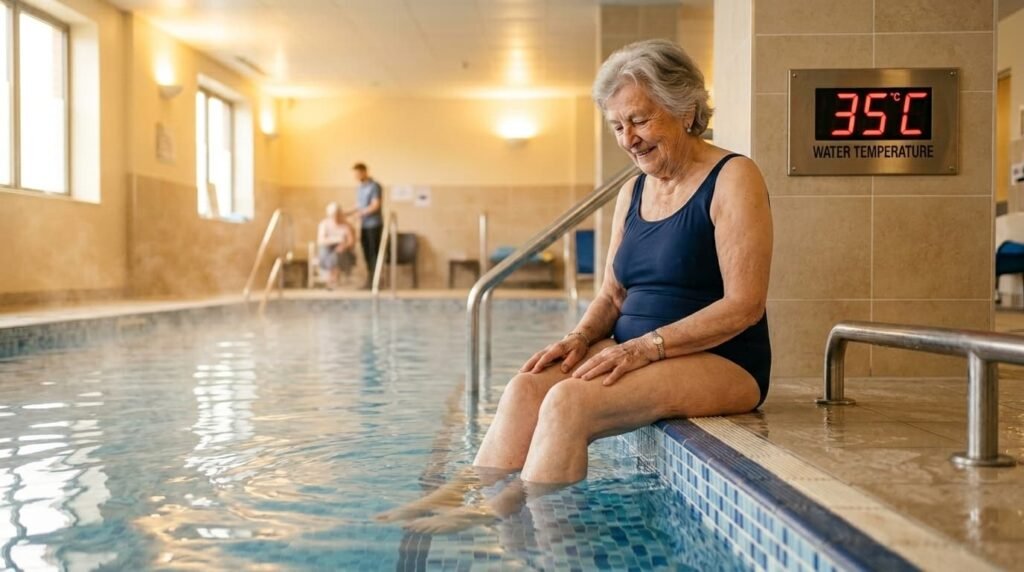
For anyone dealing with knee stiffness following periods of rest or inactivity, this pre-warming effect is clinically significant. Research consistently shows that warm water exercise for arthritis produces greater pain relief and functional improvement than cold or tepid pool sessions. It is the difference between a joint that feels ready to move and one that still feels locked.
Hydrostatic Pressure and Swelling Reduction
There is another mechanism worth understanding: hydrostatic pressure. Water exerts gentle, even pressure across all submerged tissue. This compressive effect helps reduce joint swelling and improves circulation in ways that sitting with an ice pack simply cannot replicate.
For patients with a swollen, inflamed knee — a common feature of osteoarthritis flares — immersion in warm water can provide noticeable relief even before the session begins. This makes aquatic therapy for knee osteoarthritis a particularly useful option during flare-up periods when land-based exercise becomes too uncomfortable to sustain.
The Best Hydrotherapy Exercises for Arthritis and Knee Pain
Not all water exercises are equal. The goal with hydrotherapy exercises for arthritis is to build strength, maintain range of motion, and reduce pain — without overloading already compromised cartilage. These are the exercises that clinical evidence and physiotherapy practice most consistently support.
Water Walking — The Starting Point for Knee Osteoarthritis
Walking in water for arthritis is often the first exercise recommended — and rightly so. It mirrors a functional everyday movement while dramatically reducing joint load. In waist-to-chest deep water, the knee absorbs only a fraction of the force it would on land.
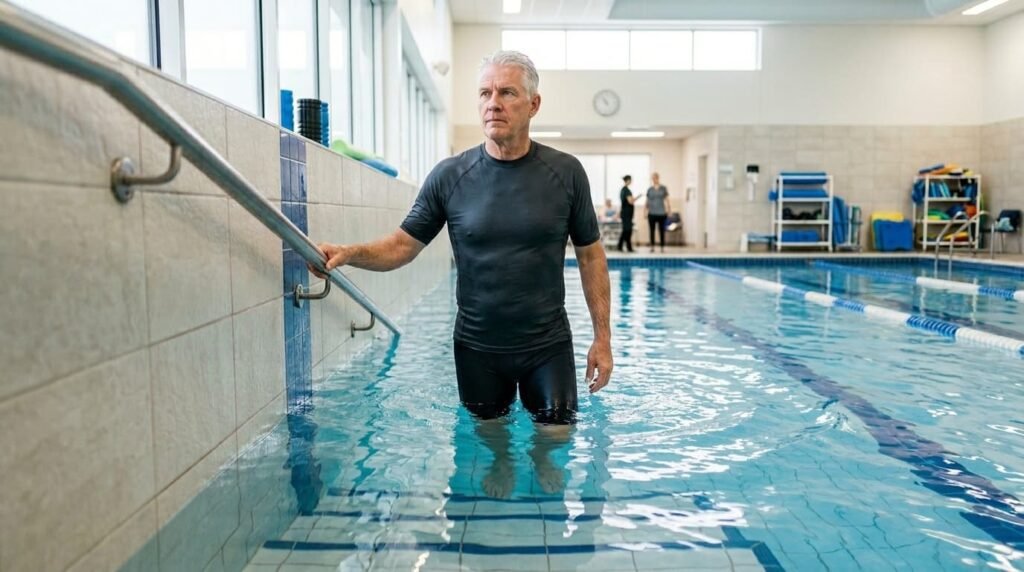
Posture should remain upright, steps deliberate, and the pace steady rather than rushed. Many patients find that walking in water arthritis sessions of 10 to 15 minutes are sufficient to begin with, building gradually over several weeks as strength and confidence improve.
- Start in chest-deep water to maximise buoyancy
- Progress to waist-deep water for greater muscle demand
- Begin at 10 minutes; aim for 20 to 30 minutes over 4 to 6 weeks
Knee Osteoarthritis Exercises in Water — Strength Focus
Building strength around the knee is one of the most effective ways to reduce pain long-term. Stronger quadriceps, hamstrings, and calf muscles reduce the direct load on the cartilage surface during daily activity. These water exercises for knee osteoarthritis directly address that goal.
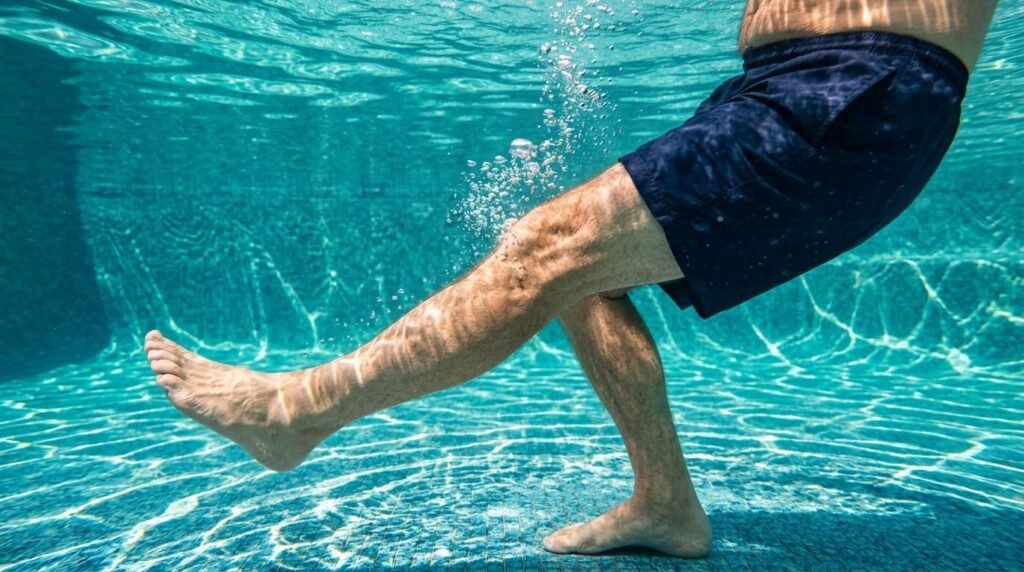
- Straight leg raises: Standing in chest-deep water, lift one leg out straight, hold for 2 to 3 seconds, lower slowly. Targets the quadriceps directly.
- Aquatic knee bends: Feet shoulder-width apart, bend the knees to no more than 90 degrees. Water reduces load significantly. Builds quadriceps and gluteal strength.
- Side leg raises: Standing upright, lift one leg out to the side. Strengthens hip abductors, which are important for overall knee alignment.
- Heel raises: Rise onto tiptoes and lower slowly. Builds calf strength and improves ankle-to-knee stability.
- Knee extensions with resistance: Using pool noodles or foam ankle cuffs, extend and flex the knee against resistance. Particularly effective in later-stage rehabilitation.
Each of these pool exercises for knee arthritis should be performed in a controlled manner — quality of movement always comes before quantity of repetitions.
Water Aerobics for Arthritis — Adding Cardiovascular Benefit
Water aerobics for arthritis brings cardiovascular training into the programme without the joint impact of running or step classes. A structured session typically combines movement patterns — leg swings, marching, side steps, arm presses into a continuous routine that elevates the heart rate and builds endurance.
The buoyancy allows participants to work at a higher perceived effort without the discomfort that often limits land-based cardiovascular exercise in people with significant knee pain. Many find that water aerobics classes near them also offer a social dimension — and research shows that group-based exercise has measurable positive effects on arthritis exercise motivation and long-term adherence.
Swimming for Knee Osteoarthritis — What the Evidence Shows
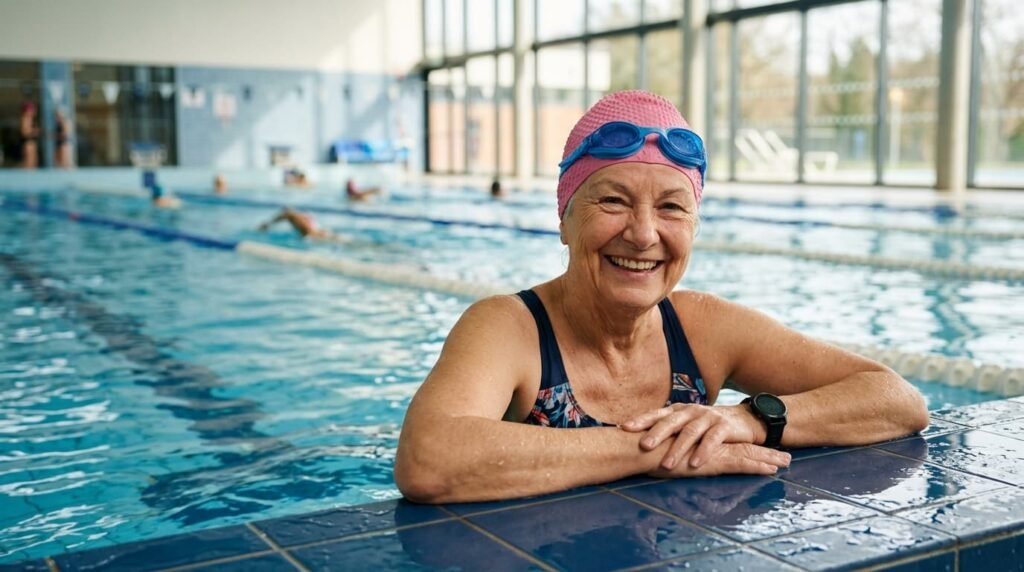
Swimming for knee osteoarthritis has a strong evidence base. Systematic reviews consistently demonstrate improvements in pain, stiffness, and physical function following regular swimming programmes. The non-weight-bearing nature of swimming makes it one of the few high-intensity cardiovascular options that remains accessible as the condition advances.
Is Swimming Good for Arthritis? A Clinical Perspective
Swimming good for arthritis is not simply a matter of opinion — the research supports it clearly. Regular swimming reduces inflammation markers, improves cardiovascular fitness, supports weight management, and strengthens the muscles that protect the knee joint.
Weight management is particularly relevant. Each additional kilogram of body weight adds roughly four kilograms of compressive force through the knee with every step. Swimming addresses both pain and weight simultaneously — a combination that few other activities can offer at this level of joint safety.
Top Tips for Swimming With Arthritis
Getting started with swimming with arthritis requires a little preparation. These top tips for swimming with arthritis help ensure each session is safe, comfortable, and effective.
- Choose the right stroke: Front crawl and backstroke are generally lower impact for the knee than breaststroke, which involves a rotational kick that can aggravate joint pain.
- Warm up first: Spend 5 to 10 minutes walking or performing gentle leg movements in the shallow end before swimming any laps.
- Use flotation aids: Pull buoys, noodles, and kickboards allow isolated upper or lower body exercise — useful for managing localised discomfort on a given day.
- Pace appropriately: Swimming for arthritis should not be rushed. A moderate, sustainable pace across 20 to 30 minutes produces better long-term outcomes than short, intense efforts.
- Moisturise after: Chlorinated water dries and irritates skin — particularly relevant for those with psoriatic arthritis. Shower immediately and apply moisturiser.
How to Swim With Arthritis Safely
Knowing how to swim with arthritis safely reduces the risk of flare-ups and setbacks. The key principles align with any form of exercise for osteoarthritis: start at a manageable level, progress gradually, and always distinguish between productive muscle soreness and joint pain that signals the need to stop.
If swimming tips for arthritis pain had to be summarised in one sentence: steady, consistent effort over weeks and months produces far more improvement than any single intense session ever will.
Low Impact Exercise for Knee Pain — Why Aquatic Options Lead the Way
Low impact exercise for knee pain covers a wide range of options — cycling, yoga, tai chi, and walking are all commonly recommended. Among these, aquatic exercise knee pain relief stands out because it combines the lowest possible joint load with the ability to exercise at a meaningful intensity.
A 2025 network meta-analysis comparing physical therapy approaches for knee osteoarthritis ranked hydrotherapy second only to knee bracing for reducing pain and stiffness — ahead of land-based exercise programmes. That is a strong clinical endorsement for water-based approaches as the preferred option for many patients, particularly those in moderate to advanced stages of the condition.
Low impact exercise for arthritis also supports long-term joint health beyond symptom relief. Regular aquatic activity maintains range of motion, supports healthy cartilage nutrition — which relies on movement-driven fluid exchange — and preserves the muscle mass that protects the joint throughout daily life.
Managing Arthritis Pain During Exercise — Practical Guidance
Managing arthritis pain during exercise requires an understanding of the difference between two types of discomfort. Muscle fatigue — the expected tiredness from working muscles — is normal and productive. Joint pain that worsens during or persists significantly after exercise is a signal to reduce intensity or modify the movement.
A useful working rule: if pain rises above 5 out of 10 during exercise, reduce the demand. If pain persists for more than two hours after a session ends, the session was too intense. These guidelines, applied consistently over time, help build a sustainable and effective exercise habit.
Getting the Frequency Right for Aquatic Exercise Knee Pain Relief
For aquatic exercise knee pain relief to be effective, frequency matters as much as intensity. Clinical guidelines generally recommend two to three sessions per week as the therapeutic minimum. Fewer than this and adaptations come too slowly to sustain motivation. More than five weekly sessions without adequate rest risks overuse and fatigue.
Starting at two sessions per week and building to three over 4 to 6 weeks is a sensible progression for most people beginning a structured hydrotherapy programme.
Arthritis Exercise Motivation — Staying Consistent When It Is Hard
Starting a new exercise programme is the straightforward part. Sustaining one is considerably harder — particularly when pain flares, motivation dips, or early sessions feel discouraging. Arthritis exercise motivation is a genuine clinical concern, and research points clearly to social and goal-based strategies as the most effective solutions.
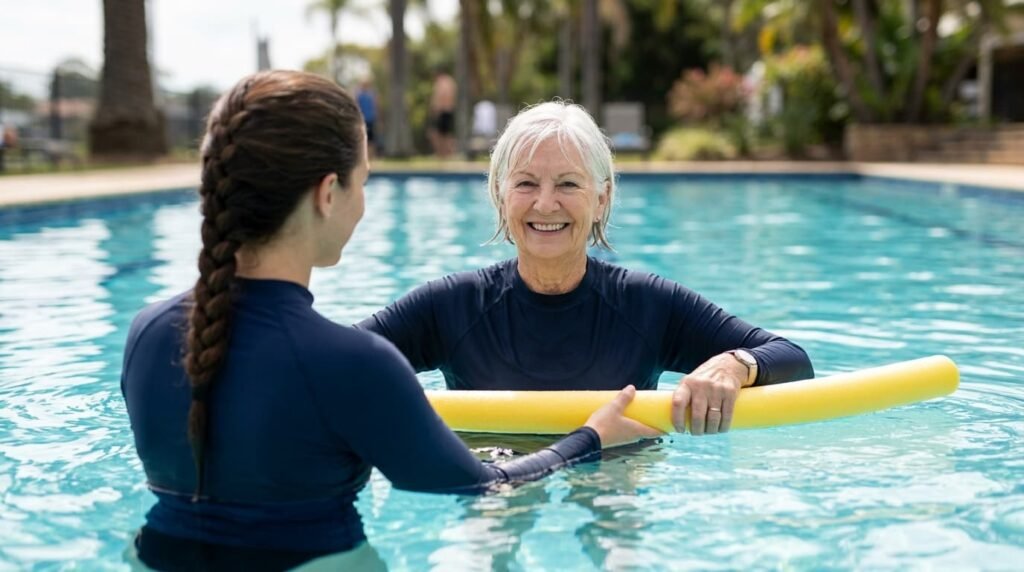
- Set specific, small goals: Rather than “I want to feel better,” try “I want to walk in the pool for 15 minutes three times this week.” Specific goals are far easier to measure and build on.
- Join a class: Water aerobics classes nearby provide structure, professional instruction, and a social environment — all of which improve consistency considerably.
- Track progress: A simple log of session duration, pain level before and after, and general notes builds a clear picture of improvement over time.
- Allow for difficult days: Missing one session is not failure. Consistency across months matters far more than perfection across any single week.
- Work with a physiotherapist: A structured aquatic physiotherapy knee programme removes the guesswork and provides the professional accountability that significantly improves long-term adherence.
Frequently Asked Questions
Is hydrotherapy for knee pain suitable for all stages of osteoarthritis?
Hydrotherapy for knee pain is suitable across most stages of osteoarthritis, including moderate to severe cases where land-based exercise has become too painful. The buoyancy of water reduces joint load significantly, making movement possible even when pain limits activity on land. In very advanced cases, a physiotherapist or orthopaedic specialist should advise on the appropriate exercise intensity and programme structure.
What are the best water exercises for knee osteoarthritis?
The most effective water exercises for knee osteoarthritis include water walking, aquatic squats, straight leg raises, side leg raises, and heel raises. These knee osteoarthritis exercises in water target the quadriceps, hamstrings, and stabilising hip muscles — all of which support the knee joint and reduce direct load on the cartilage surface.
How often should aquatic therapy for knee osteoarthritis be done?
Aquatic therapy for knee osteoarthritis is most effective at two to three sessions per week. This frequency allows the joint and surrounding muscles to adapt and recover between sessions. Clinical guidelines suggest maintaining this schedule for at least 8 to 12 weeks before expecting meaningful, sustained improvement in pain and function.
Is swimming good for arthritis in the knee?
Yes — swimming good for arthritis is well supported by clinical research. Regular swimming improves pain levels, cardiovascular fitness, and joint function in people with knee osteoarthritis. It also supports weight management, which directly reduces compressive load on the knee. For many patients, swimming with arthritis becomes the primary exercise of choice because it allows sustained effort with minimal joint discomfort.
What are the top tips for swimming with arthritis?
Key swimming tips for arthritis pain include choosing lower-impact strokes such as front crawl or backstroke over breaststroke, warming up in the shallow end before swimming laps, using flotation aids to manage localised pain, pacing consistently rather than working at maximum effort, and moisturising after the session to prevent chlorine-related skin irritation.
How does water aerobics help arthritis knee pain?
Water aerobics for arthritis combines cardiovascular training with strength and mobility work in a low-load environment. The water reduces impact on the knee while still providing resistance for muscle development. Regular participation in water aerobics classes near available facilities also supports arthritis exercise motivation through the social and structured nature of group sessions.
Can pool therapy for knee pain replace other treatments?
Pool therapy for knee pain works best as part of a broader management plan rather than a complete replacement for other treatment. It complements physiotherapy, appropriate medication, and lifestyle changes. For many patients managing knee osteoarthritis without surgery, it becomes a long-term and highly effective component of self-management.
How is managing arthritis pain during exercise done safely?
Managing arthritis pain during exercise involves pacing, monitoring pain levels throughout, and distinguishing between muscle soreness and joint pain. A practical guide: if joint pain rises above 5 out of 10 during exercise, reduce the intensity. If pain persisted for more than two hours after the session, the workload was too high. Aquatic physiotherapy knee programmes delivered by a qualified physiotherapist provide the most individually appropriate framework for safe progression.
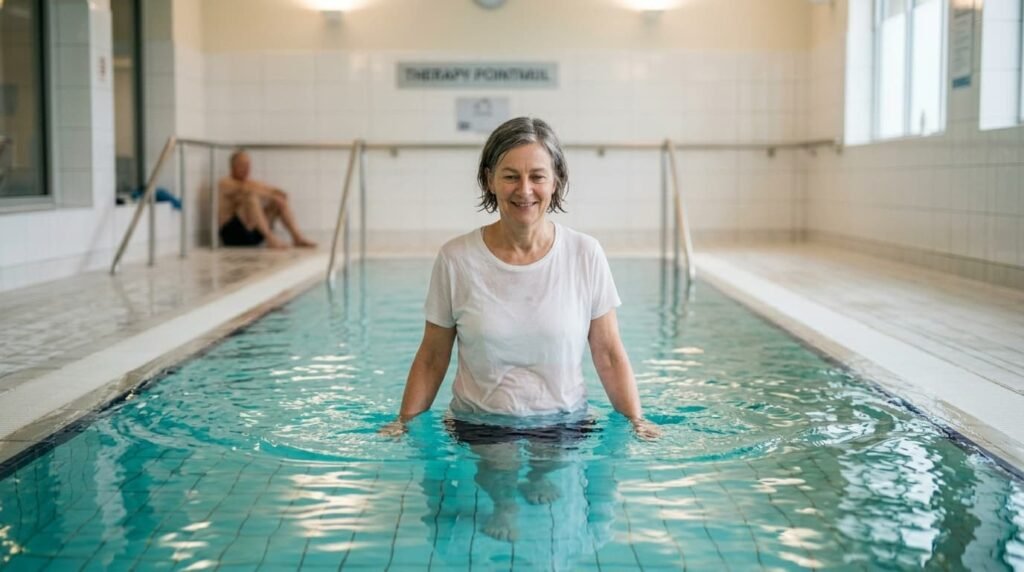
Hydrotherapy for knee pain delivers genuine pain relief, improved function, and better quality of life across all stages of knee osteoarthritis. The water offloads the joint, reduces inflammation, and makes meaningful exercise possible even when walking on land is uncomfortable. Consistent effort over weeks and months produces results that no single session ever could.
For those whose knee pain has not responded sufficiently to exercise alone, non-surgical options are worth exploring. Mr Syed Nadeem Abbas — an orthopaedic expert with over 25 years of experience and MBBS, MRCSEd, and MSc qualifications — offers specialist assessment and Arthrosamid injection treatment at his London clinic. Trusted by over 3,500 patients across the UK, his patient-first approach focuses on avoiding surgery wherever clinically appropriate.
Read more: Bone on Bone Knee Treatment: Effective Solutions for Relief
Read more: What Nobody Tells Arthritis Patients About Stress and Joint Pain


