What Nobody Tells Arthritis Patients About Stress and Joint Pain

Stress and joint pain have more in common than most people realise and that connection often goes unnoticed until the damage is done. When joints feel worse on the most difficult days, that is not a coincidence. The body tracks everything, and stress is always on that list.
This pattern comes up repeatedly in orthopedic care. A patient manages arthritis well for weeks, then a rough month at work hits and suddenly progress disappears. The joints did not change overnight. The chronic stress load did. And that shift alone is enough to trigger a measurable physical response inside the body.
Stress activates the immune system, spikes cortisol levels, tightens surrounding muscles, and disrupts sleep all at the same time. For someone already living with arthritis, each of those effects lands directly on already-sensitive joints. The result is more pain, longer flares, and slower recovery.
The Real Link Between Stress and Joint Pain
Stress is a full-body event not just a mental one. The moment your brain detects a threat, it sends signals to your organs, muscles, immune system, and hormones. For someone already dealing with arthritis, that chain reaction lands directly in the joints.
Research consistently shows that chronic psychological stress is a meaningful contributor to ongoing joint pain. The connection runs through specific hormones, immune signals, and muscle responses that directly affect how much discomfort you feel on any given day.
So if you have ever noticed that your arthritis symptoms spike during difficult periods, job pressure, family conflict, financial worry there is a real physiological reason for that. Understanding it gives you something to work with, and that is always the better starting point.
How Does Stress Affect Joint Pain? The Biology Made Simple
When your brain perceives a threat, it activates the fight-or-flight system. Your breathing quickens. Your heart speeds up. Your muscles tighten. A flood of hormones enters your bloodstream. In the short term, this response is useful it helps you react fast.
The problem is that modern stressors do not go away after a few minutes. Work deadlines, financial pressure, and relationship tension can keep that response firing for days or weeks. The body never fully resets. That prolonged activation is where joint health quietly takes the hit.
Cortisol’s Role in Arthritis Inflammation
Cortisol is your body’s primary stress hormone. Short bursts of it actually help suppress inflammation. But when levels stay elevated long-term, the immune system loses its ability to regulate inflammatory signals properly — and your joints end up paying the price.
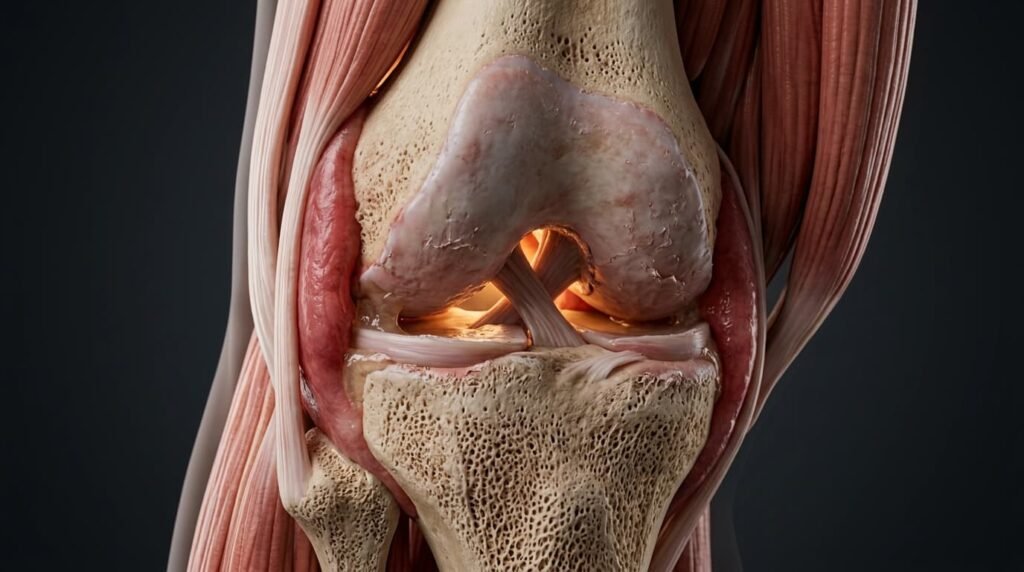
In conditions like rheumatoid arthritis and psoriatic arthritis, the immune system is already overactive. Layering chronic stress on top of that makes a difficult situation significantly worse. Elevated cortisol contributes to a rise in inflammatory cytokines — proteins that break down cartilage and drive joint damage further.
Even in osteoarthritis, where inflammation plays a smaller role, high cortisol raises pain sensitivity. You feel more discomfort even when the physical state of the joint has not changed. That is how stress and inflammation silently do their damage over time.
Muscle Tension and Your Joints
Stress causes muscles to contract involuntarily. That is a protective reflex useful in a genuine emergency, but problematic for arthritis patients day to day. Tight muscles around an already inflamed joint add mechanical pressure and restrict the movement available to you.
This tends to show up most in the neck, shoulders, lower back, hips, and knees. If these areas already give you trouble, stress sharpens that discomfort quickly even without any change in your physical routine.
Does Emotional Stress Affect Arthritis?
The short answer is yes. Emotional stress affects arthritis through multiple pathways simultaneously, and each one compounds the others.

First, there is the direct hormonal effect described above. Then comes the behavioural side. When you are stressed, sleep suffers first. Exercise drops off. Eating habits shift toward convenience. Pain tolerance drops. Each of these changes independently makes arthritis harder to manage — together, they create ideal conditions for a serious flare.
Sleep disruption is particularly damaging. Many arthritis patients already struggle with overnight discomfort, and stress-related sleeplessness makes that worse. Poor sleep keeps inflammation elevated and prevents the body from doing its natural repair work. The joint goes into each new day without adequate recovery.
There is also a psychological cycle that traps many patients. Constant pain creates anxiety. Anxiety feeds stress. Stress worsens pain. If you have ever felt like you were going in circles, this loop is likely why — and identifying it is the first step to breaking it.
Arthritis and Anxiety: A Connection That Cuts Both Ways
Arthritis and anxiety co-exist in roughly one in three people living with chronic joint conditions — and that number is likely higher in patients with severe or unpredictable symptoms. Anxiety triggers the same physiological stress response as any perceived threat. Your body cannot distinguish between a near-miss in traffic and a spiral of health-related worry. Both activate cortisol. Both tighten muscles. Both raise inflammatory markers in the blood.
There is also a measurable psychological response called pain catastrophising — an intense focus on pain, a sense of helplessness, and an expectation of the worst. This is a recognised clinical pattern, not a personality weakness. It independently intensifies how pain is experienced, regardless of the actual physical state of the joint.
This is why managing anxiety is not optional for arthritis patients. It is part of the treatment. Can anxiety make arthritis worse? Based on the biology, the answer is clearly yes — and taking that seriously can make a genuine difference in daily quality of life.
Recognising a Stress-Triggered Arthritis Flare
Not every flare looks the same. One driven by a stress arthritis flare up has some distinctive patterns worth watching for:
- Morning stiffness that lasts noticeably longer than usual
- Joint pain that appears or worsens during or just after a high-stress period
- Swelling that arrives without any change in physical activity or diet
- Fatigue that feels heavier than normal alongside joint discomfort
- Pain that sharpens specifically on emotionally difficult days
Tracking your stress levels alongside your symptoms can be genuinely revealing. Many patients are surprised to see how clearly the two patterns line up once they start paying attention. If you spot a consistent relationship, bring it to your next appointment — it is useful clinical information.
It also helps to note what has not changed during a suspected flare. Your medication. Your movement. Your diet. When all the physical variables stay constant but pain rises, the trigger is often emotional rather than structural.
Stress Management for Arthritis Patients — Steps That Actually Work
Managing stress does not mean eliminating it entirely — that is not realistic, and it is not necessary. The goal is to interrupt the chronic stress cycle long enough for your body to reset its hormonal and immune response. Here are approaches with solid evidence behind them:
Move — But Keep It Low-Impact
Regular low-impact movement is one of the most effective tools available for both stress and joint health. Walking, swimming, and cycling lower cortisol, reduce inflammation, and prompt the release of endorphins that stabilise mood. These activities also strengthen the muscles supporting your joints, which reduces the mechanical load on them over time.

The common fear is that exercise will worsen joint pain. For most arthritis patients, the opposite is true. Consistent gentle movement supports cartilage health and helps regulate the stress response — two benefits in one habit.
Take Sleep Seriously
Sleep is when the body repairs damaged tissue and brings inflammation down. Without enough quality rest, inflammatory markers stay elevated and pain thresholds drop. A consistent bedtime, a quiet and dark room, cutting off caffeine by early afternoon, and limiting screen time before bed all contribute to better sleep. Addressing poor sleep directly is one of the most underrated parts of how to manage arthritis pain over the long term.
Use Breathing and Mindfulness
Box breathing — inhaling for four counts, holding for four, exhaling for four, then pausing for four — activates the parasympathetic nervous system and can calm the stress response within minutes. It requires no equipment, costs nothing, and can be done anywhere. Mindfulness-based practices have been shown in multiple clinical studies to reduce both chronic pain perception and the emotional burden of living with a long-term condition.
Eat to Support Your Joints
What you eat shapes how your body handles both stress and inflammation. Foods rich in omega-3 fatty acids, leafy greens, and antioxidant-dense vegetables help keep inflammatory markers in check. Highly processed foods, excessive sugar, and alcohol tend to drive them higher. The goal is not a perfect diet — it is building a consistent pattern that gives your body a better internal environment to work with.
Build Your Support System
Talking openly with someone — a counsellor, a close friend, a condition-specific support group — reduces the psychological load that comes with chronic pain. Social connection helps regulate the nervous system in ways that quiet reflection alone cannot. Do not underestimate how much this matters for joint health.
When to See Your Doctor
Stress management is a meaningful part of arthritis care — but it does not replace medical treatment. If you are experiencing frequent flares, worsening pain, or symptoms that are not responding to lifestyle changes, it is time for a proper clinical evaluation.

An orthopedic specialist can assess whether joint damage has progressed, review your current plan, and discuss options — from non-surgical approaches through to joint replacement surgery for cases where conservative care is no longer enough. Pain that limits your daily life deserves proper attention and a plan behind it.
There is no benefit to managing silently. Getting the right support — medical, psychological, and social — is precisely how you protect your joints over the long term.
Frequently Asked Questions
Can stress cause joint pain even if I don’t have arthritis?
Yes. Stress causes muscle tension and raises inflammatory markers in everyone — not only arthritis patients. For people without a diagnosed condition, sustained stress can still produce aching joints, body stiffness, and reduced flexibility, particularly in the neck, shoulders, and lower back.
How does stress affect joint pain differently in rheumatoid arthritis versus osteoarthritis?
In rheumatoid arthritis an autoimmune condition stress directly aggravates an already overactive immune response, making flares more frequent and severe. In osteoarthritis, stress primarily raises pain sensitivity and disrupts sleep, which slows natural repair. Both types are affected, just through slightly different biological routes.
Can a stress arthritis flare up last for weeks?
It can. If the stressor is ongoing and unaddressed, the hormonal and inflammatory effects continue. Flares driven by sustained stress — extended work pressure, caregiving demands, or a prolonged difficult life event — can persist for as long as that stress remains unmanaged.
Does emotional stress affect arthritis more in older patients?
Older patients often have less physiological resilience to prolonged cortisol exposure, so the impact can be more pronounced. That said, the connection between emotional stress and arthritis is present across all age groups.
Is stress management something doctors actually include in arthritis treatment?
Yes. Orthopedic and rheumatology specialists increasingly incorporate stress reduction into comprehensive care plans — alongside medication, physical therapy, and nutrition guidance. It is evidence-based practice, not an afterthought.
Can anxiety make arthritis worse over the long term?
Sustained anxiety keeps the stress response active, which maintains elevated cortisol and ongoing inflammation. Over time, this can accelerate joint damage and reduce how well patients respond to standard treatments. Managing anxiety is therefore a genuine long-term strategy for joint health.
What is the fastest way to calm a stress-related flare?
There is no single instant fix, but combining deep breathing, gentle movement, and prioritised sleep can lower cortisol levels within days. If the flare is severe or not responding, contact your doctor — additional treatment may be appropriate while you work on the underlying stress.

Stress and joint pain are connected through real, measurable biology. Elevated cortisol drives inflammation, muscles tighten around sensitive joints, sleep breaks down, and pain thresholds drop — all because of stress. This is not imagined. It has a clear physiological explanation.
The encouraging part is that you have genuine options. Consistent movement, better sleep, mindful breathing, a supportive diet, and strong social connections can reduce both your stress load and your joint discomfort over time.
Your joints and your mental health are not separate concerns. Taking care of one supports the other. Start with whichever feels most manageable right now and build from there.
Read more: Knee Pain Exercises for Women: Your Guide to Stronger, Healthier Knees
Read more: Knee Replacement Surgery How to Know When It Is the Right Step