Best Knee Pain Relief Foods to Improve Mobility and Joint Health

knee pain relief foods can have a direct impact on how the joints feel every day. Many people focus only on treatment, but daily food choices also play a major role in reducing pain, stiffness, and inflammation. A poor diet can increase inflammation inside the body, while the right foods can support cartilage, improve joint function, and help maintain a healthy weight, which reduces pressure on the knees.
In some cases, advanced treatments like Arthrosamid injection London clinics provide are used for long-term relief, and many patients also compare Arthrosamid injection cost UK options before making a decision. Arthrosamid injection helps cushion the knee joint, reduce pain, and improve movement in people with ongoing knee problems.
If knees feel heavy in the morning, sore after walking, or stiff after sitting for long periods, diet could be one of the hidden reasons. Instead of following a complicated plan, a few simple changes in daily meals can support joint health, reduce swelling, and improve mobility over time.
Why Diet Matters for Knee Pain
Knee pain is often linked to inflammation inside the joint. This inflammation does not happen overnight. It builds gradually due to poor diet, weight gain, and lack of proper nutrients. That’s why a structured diet for joint pain relief is important for long-term improvement.
Eat processed foods, sugar, and unhealthy fats regularly, your body reacts by increasing inflammation. This leads to swelling, stiffness, and discomfort in the knees. On the other hand, choosing the right foods that reduce joint inflammation helps calm the body and supports healing.
Many people searching for a joint pain specialist near me are often dealing with chronic inflammation that could have been reduced earlier with better food choices. A proper anti-inflammatory diet for joint pain helps reduce pressure on joints and supports cartilage health naturally.
In addition, diet also plays a role in maintaining bone density and joint lubrication. Without enough nutrients, joints become weaker over time, which increases the risk of long-term damage.
Best Knee Pain Relief Foods You Should Eat
Adding the right foods to daily meals helps reduce inflammation, ease knee pain, and support better joint movement over time.
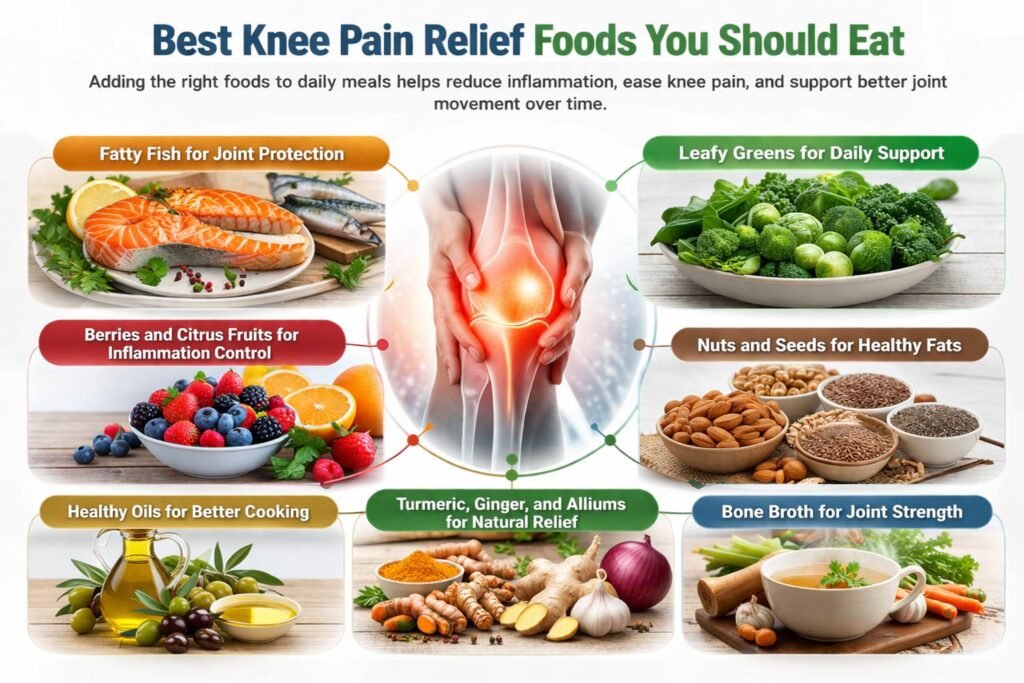
Fatty Fish for Joint Protection
Fatty fish like salmon, sardines, mackerel, and tuna are among the most effective joint pain relief foods. They are rich in omega-3 fatty acids, which help reduce inflammation and stiffness in the joints.
People who include fatty fish regularly in their meals often notice less swelling and better mobility. It is one of the simplest ways to support a knee pain diet without making major changes. Omega-3 also supports heart health, making it a smart addition overall.
Leafy Greens for Daily Support
Vegetables like spinach, kale, broccoli, and Brussels sprouts are essential foods for knee joint pain. They contain antioxidants and vitamin K, which help protect joints from damage and reduce arthritis symptoms.
Adding greens to your meals supports long-term joint health. It also helps people who are following a diet for knee pain UK plan to maintain balanced nutrition.
Berries and Citrus Fruits for Inflammation Control
Berries such as blueberries, strawberries, and blackberries are powerful foods to reduce knee pain. Citrus fruits like oranges and lemons provide vitamin C, which supports collagen production and joint repair.
These foods are easy to include in breakfast or snacks and are often recommended as part of the best foods for joint health. Regular intake helps strengthen joints and improve flexibility.
Nuts and Seeds for Healthy Fats
Almonds, walnuts, flaxseeds, and chia seeds are rich in important nutrients and healthy fats that help lower inflammation and keep joints moving smoothly.
They are an important part of an anti-inflammatory diet for joint pain and can easily replace unhealthy snacks in your routine. Vitamin E in nuts also helps protect joints from oxidative stress.
Healthy Oils for Better Cooking
Switching to extra virgin olive oil is one of the easiest improvements in a knee pain foods plan. It contains oleocanthal, a compound known for its anti-inflammatory properties.
This small change can make a noticeable difference, especially for people dealing with long-term knee discomfort.
Turmeric, Ginger, and Alliums for Natural Relief
Turmeric and ginger are well-known natural remedies for joint inflammation. They help reduce swelling and improve blood circulation.
Garlic and onions also play an important role by limiting enzymes that damage cartilage. Regular use in meals can support people trying to reduce inflammation naturally without relying only on medication.
Bone Broth for Joint Strength
Bone broth is often overlooked but highly effective. It contains glucosamine, chondroitin, and calcium, which support joint and bone strength.
Including bone broth in your weekly meals can help improve joint cushioning and reduce stiffness over time.
Foods That Reduce Joint Inflammation
Some foods go beyond basic nutrition and actively help reduce inflammation.

Whole Grains for Balanced Energy
Whole grains like oats, brown rice, and quinoa help maintain stable blood sugar levels. This reduces inflammation in the body.
They are a key part of foods for joint pain and support long-term joint health.
Green Tea for Joint Protection
Green tea contains antioxidants that protect joints from damage. It also supports metabolism, which helps maintain a healthy weight.
This makes it a useful addition for anyone following a diet for joint pain relief.
Calcium and Vitamin D Sources
Low-fat dairy, fortified milk, and plant-based alternatives provide calcium and vitamin D. These nutrients help maintain strong and healthy bones.
They are especially important for people at risk of joint degeneration or those considering arthritis treatment UK options.
Key Diet Adjustments for Knee Pain
Following the right diet pattern is just as important as choosing specific foods.
Mediterranean Style Eating
A Mediterranean-style approach focuses on whole foods, vegetables, fruits, beans, and healthy fats. It naturally supports an anti-inflammatory diet for joint pain.
Avoid Trigger Foods
Refined pasta, white rice, sugar, and excess salt should be limited. These foods increase inflammation and slow down recovery.
Maintain Nutrient Balance
Ensuring enough vitamins and minerals helps joints stay strong. This is particularly important for those following a diet for knee pain UK plan.
Foods to Avoid for Knee Pain
Not all foods support joint health. Some actually increase inflammation.

Processed snacks, sugary drinks, fried foods, and excess red meat should be reduced as much as possible. These foods increase inflammation and slow recovery.
Many patients seeking knee pain relief London services are advised to reduce these first before considering advanced treatments. Avoiding these foods is just as important as adding the right foods for knee pain.
Knee Pain Diet Plan (Simple and Practical)
A strict or complicated diet plan is not necessary. A simple and balanced routine works best for long-term support.
Daily Meal Structure
- Breakfast: Oats with berries for fibre, antioxidants, and steady energy
- Lunch: Grilled fish with vegetables for omega-3 fats, vitamins, and minerals
- Dinner: Lean protein with greens to support joint repair and overall health
Key Benefits of This Diet
- Supports joint health and helps reduce inflammation
- Assists with healthy weight management
- Improves movement and comfort over time
Simple Habits to Follow
- Eat balanced meals at regular times
- Include anti-inflammatory foods each day
- Focus on consistency for long-term results
This type of knee pain diet also aligns well with a diet for knee pain UK approach and supports better joint health over time.
Knee Pain in Ladies
Knee pain in women is quite common, especially after the age of 40. Hormonal changes, reduced bone density, and lifestyle factors can increase joint stress.

Women often experience faster cartilage wear and changes in joint structure. This makes a strong food for knee joint pain approach even more important.
Including calcium-rich foods, vitamin D sources, and anti-inflammatory options helps reduce symptoms and improve mobility. A proper knee pain foods plan can support long-term joint strength.
Weight and Knee Pain Connection
Weight plays a direct role in knee pain. Every extra kilogram adds pressure to your knee joints.
This is why a proper diet for joint pain relief is important. Losing even a small amount of weight can reduce stress on the knees and improve movement.
Many people consider arthritis treatment UK options before addressing weight. But combining weight management with the right diet gives better long-term results.
When Diet Is Not Enough
Diet helps, but in some cases, medical treatment becomes necessary. If knee pain continues despite lifestyle changes, you may need professional support.
Pain that lasts for months, swelling that does not improve, or difficulty in walking are clear signs that further treatment is needed.
At this stage, exploring knee pain treatment UK options becomes important. Treatments like Arthrosamid injection are designed to provide long-term relief by improving joint cushioning and reducing pain.
When combined with the right knee pain diet, the results are often more effective and long-lasting.
Arthrosamid Injection for Knee Pain
Arthrosamid injection is an advanced non-surgical treatment used for long-term knee pain, especially in people with osteoarthritis or ongoing joint problems. Many patients also search for Arthrosamid injection near me when looking for a reliable and effective treatment option. It works by improving cushioning inside the knee joint, which helps reduce pain and supports smoother movement.
FAQ
Which foods are most helpful for reducing knee pain?
Foods rich in omega-3 fatty acids, antioxidants, and vitamins are considered the best. This includes fatty fish like salmon, leafy greens such as spinach and kale, berries, citrus fruits, nuts, and seeds. These foods help reduce inflammation, support cartilage, and improve joint function over time.
Can a knee pain diet really help?
Yes, a proper knee pain diet plays a strong role in reducing inflammation and improving joint health. While it may not give instant results, consistent healthy eating can reduce stiffness, improve mobility, and support long-term recovery. It works even better when combined with exercise and proper medical care.
Which foods should I avoid?
Processed foods, sugary drinks, fried items, and excessive red meat should be avoided. These foods increase inflammation in the body and can worsen knee pain over time. Reducing these can help improve overall joint condition and reduce discomfort.
When should I see a specialist?
If knee pain lasts for several months, gets worse, or affects your daily movement, it is important to consult a joint pain specialist near me. Early treatment can prevent further joint damage and improve recovery outcomes.
What is the best diet for knee pain UK?
A balanced diet with anti-inflammatory foods, whole grains, healthy fats, and adequate calcium and vitamin D is considered ideal. This type of diet helps reduce inflammation, maintain weight, and support joint health effectively in the long term.

knee pain relief foods are not a quick fix, but they are a powerful long-term solution. Choosing the right foods helps reduce inflammation, improve mobility, and support joint health.
Consistency matters more than perfection. Small daily changes in your meals can make a noticeable difference in how your knees feel.
If pain continues, combining diet with professional care gives the best results.
Read more: Overweight Knee Pain Relief for Arthritis and Joint Health
Read more: Knee Arthritis Exercises to Avoid That Increase Knee Pain