Knee Replacement Surgery How to Know When It Is the Right Step

Knee replacement surgery is one of the most commonly performed orthopaedic procedures in the world, and for good reason. When knee pain reaches a point where it controls your daily life, disrupts your sleep, and stops responding to treatment, it becomes a serious option worth exploring.
For many people, the journey starts small. A little stiffness in the morning. Some discomfort going up the stairs. But over time, that discomfort builds into chronic knee pain. Medication, injections, and physiotherapy can no longer manage it.
At that stage, understanding whether knee replacement surgery is the right step becomes genuinely important.
What Knee Replacement Surgery Actually Involves
Knee replacement surgery, medically known as knee arthroplasty, involves removing the worn or damaged surfaces of the knee joint. These surfaces are replaced with an artificial implant. The implant is typically made from a combination of metal and plastic components. The goal is to restore function, eliminate pain, and help you return to normal daily life.
There are two primary types:
Total Knee Replacement Surgery
A total knee replacement surgery addresses damage across the entire joint surface. It is the more widely performed procedure.
Partial Knee Replacement
A partial knee replacement targets only the specific area of damage. It involves a smaller incision and less disruption to healthy tissue. Recovery is often quicker.
However, it is only suitable for certain patients. Your orthopaedic surgeon will assess which approach makes sense for your particular situation.
Signs You May Need a Knee Replacement
Recognising the warning signs early gives you more control over your choices. These are not definitive proof that surgery is necessary. But they are strong indicators that it is time to have a thorough conversation with a specialist.
Persistent Pain That Won’t Respond to Treatment
One of the clearest signs you need a knee replacement is pain that simply refuses to let up. Not occasional discomfort after exercise. Rather, it is deep, grinding chronic knee pain. It is present most of the day and often through the night.
Knee pain at night is particularly telling. When your knee aches even while sitting or lying still, the joint has typically deteriorated well beyond what conservative treatment can address.
Disrupted sleep due to knee pain also stops being just a physical issue. Poor sleep drives fatigue. It affects mood. It gradually erodes your overall wellbeing.
Swelling That Keeps Returning
Some swelling after activity is completely normal. The concern is when knee swelling and inflammation becomes persistent.

When the joint puffs up regularly, feels warm to the touch, and does not calm down with rest or ice, something more serious is happening. Anti-inflammatory medications for knee pain may also stop providing relief at this stage.
This kind of chronic inflammation is the body’s response to cartilage breakdown. When anti-inflammatory drugs are no longer working to control it effectively, the joint damage is usually quite advanced.
Stiffness and Loss of Mobility
Knee stiffness and immobility is a quality of life issue. It often goes underappreciated until it becomes severe.
If bending your knee is painful, getting out of bed feels like a challenge. Knee pain affects daily activities such as using stairs, getting in and out of a car, or walking moderate distances.
When knee pain affects daily life to this extent, it is a strong signal that the joint damage has progressed significantly.
Bone on Bone Knee Pain
Cartilage wear and tear is the underlying driver in most cases. When cartilage erodes completely, the bones of the joint start grinding directly against each other.
Bone on bone knee pain is severe and often unmistakable. It is a deep, rough sensation that worsens with every step.
An X-ray can confirm this level of deterioration. At this stage, non-surgical treatments are rarely capable of providing meaningful long-term relief. Surgery becomes a more serious consideration.
Visible Deformity in the Leg
As knee damage progresses, the alignment of the leg can shift.
Varus deformity, also called bow leg, causes the knees to curve outward. Valgus deformity, also called knock-knee, causes the knees to angle inward.
Both place uneven stress on the joint. Over time, knee misalignment accelerates damage. It can also complicate future surgical correction.
Catching these changes early and getting a proper assessment matters.
Impact on Mental and Emotional Wellbeing
This is the part that rarely makes it into clinical checklists, but it should.

When knee pain affects mental wellbeing, it goes well beyond physical discomfort. Giving up activities you love is difficult. Withdrawing from social life takes a toll. Depending on others for things you used to do independently carries a very real emotional weight.
If your confidence, mood, or enjoyment of life has taken a significant hit because of your knee, that is a legitimate and important factor. It should be part of deciding whether surgical treatment is warranted.
Conditions That Commonly Lead to Knee Surgery
Not every knee problem ends in replacement surgery. But certain underlying conditions are strongly associated with it.
Knee Osteoarthritis
Knee osteoarthritis is by far the most common reason people reach this point. Osteoarthritis of the knee develops gradually as the protective cartilage inside the joint wears down.
This process is often described as wear and tear arthritis. Age is the biggest risk factor. However, it can develop earlier in people who are overweight, have had previous knee injuries, or have spent years doing physically demanding work.
As osteoarthritis of the knee progresses, the cartilage thins and eventually disappears. This leads to the bone on bone contact that causes the most severe symptoms.
Rheumatoid Arthritis
Unlike osteoarthritis, rheumatoid arthritis knee surgery tends to be considered at an earlier stage. Rheumatoid arthritis is an autoimmune condition. The body’s immune system attacks the lining of the joint.
This causes inflammation and structural damage. It can affect people at a much younger age.
Because the destruction is driven by an ongoing immune response rather than mechanical wear, it can progress faster and more unpredictably.

Other conditions that can lead to knee replacement include gout, avascular necrosis, significant previous knee injuries, and certain bone disorders.
Non-Surgical Options to Explore First
Surgery is always a last resort. Not because it should be feared, but because there are real alternatives that work well for many people.
This is particularly true in the earlier stages of joint damage. Before concluding that you need knee replacement surgery, these options deserve honest consideration.
Physiotherapy
Physical therapy for knee pain focuses on building strength in the muscles that surround and support the knee. The quadriceps and hip abductors are particularly important.
Stronger supporting muscles reduce the load on the joint itself. This can meaningfully reduce pain and improve mobility without any surgical intervention.
Anti-Inflammatory Medications
Anti-inflammatory medications for knee pain include both over-the-counter options like ibuprofen and prescription-strength alternatives.
They can help manage both pain and swelling. They work best in the earlier stages of joint damage.
If anti-inflammatory drugs are no longer working or providing noticeable relief, that is a useful signal. It likely means the condition has moved beyond what medication alone can manage.
Corticosteroid Injections
Corticosteroid injections knee treatment delivers targeted anti-inflammatory medication directly into the joint. They can produce rapid, meaningful relief.
However, the effects are temporary. They are useful for managing flare-ups or bridging to a period where other treatments can take effect.
They are not a long-term solution for advanced joint damage.
Hyaluronic Acid Injections
Hyaluronic acid knee injection aims to supplement the natural fluid that lubricates the joint.
The results vary considerably between individuals. Some people experience a useful reduction in pain and improved movement for several months. Others find little benefit.
They are worth considering as part of a broader non-surgical management plan.
Arthrosamid Injections
A more recent option that has gained attention is Arthrosamid. It is a polyacrylamide hydrogel injection designed to provide long-lasting cushioning and lubrication within the knee joint.
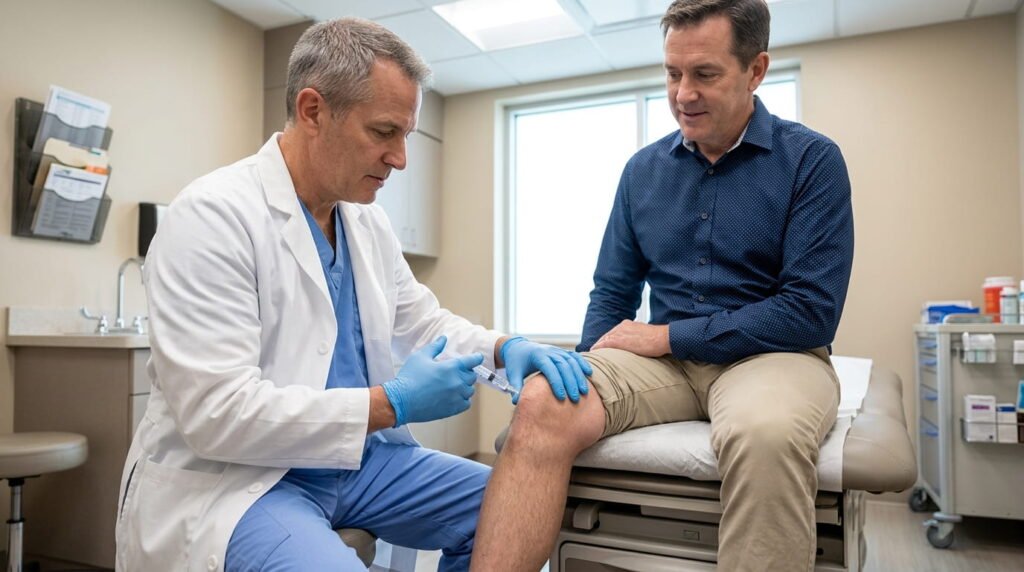
Unlike hyaluronic acid, Arthrosamid integrates into the joint tissue rather than being absorbed over time. This is thought to extend its effectiveness.
Early clinical evidence suggests it can offer sustained pain relief for people with osteoarthritis.
It is particularly useful for those who have not responded adequately to other conservative treatments. It is not a cure, and it is not suitable for everyone. It is not recommended for those with very advanced bone on bone knee pain.
But for the right patient, it may delay the need for surgery by a significant period. When you have exhausted all other treatment options and none are providing adequate relief, surgical evaluation becomes a reasonable and appropriate next step.
Is Knee Replacement Worth It?
For most people who genuinely need it, yes. The evidence consistently shows high satisfaction rates following knee replacement surgery.
The majority of patients experience a substantial reduction in severe knee pain. Mobility improves. Sleep improves.
There is also a meaningful improvement in quality of life that knee pain had previously taken away.
Risks and Modern Improvements
It is major surgery, and the risks are real even if uncommon. These include deep vein thrombosis, infection, nerve damage, stiffness from excess scar tissue, and in rare cases, reactions to implant materials.
However, modern surgical techniques and post-operative protocols have improved outcomes considerably.
Anaesthesia and Recovery
Many patients are walking the same day as their procedure.
Spinal anesthesia knee replacement is now commonly used instead of general anaesthesia. This improves comfort and speeds up recovery.
Recovery Timeline and Implant Longevity
Knee replacement recovery typically takes three to six months to reach full functional capacity.
However, most people return to light daily activities much sooner.

Implants are generally expected to last 15 to 25 years. This is especially relevant for younger patients, who may eventually need a revision procedure.
Private Knee Surgery
For those considering private knee surgery, the key advantage is faster access to consultation. The wait for the procedure itself is also significantly shorter.
This can matter a great deal when quality of life knee pain is severely compromised.
Are You a Good Candidate for Knee Replacement Surgery?
Your knee is not the only thing a surgeon will assess. Overall health matters just as much as the condition of the joint.
Key Health Factors
Being a strong knee replacement candidate typically requires that conditions like diabetes, cardiovascular disease, or high blood pressure are well managed.
Your weight needs to be within a range that the implant can handle effectively.
Smoking slows healing significantly and will be factored in. Any active infections need to be resolved before surgery is safe.
Shared Decision Making
Shared decision making knee surgery is the right approach. There is no universal threshold that automatically qualifies or disqualifies someone.
It is a conversation between you and your surgeon. It weighs your symptoms, your functional limitations, your overall health, and your goals.
Finding the Right Support
A good joint replacement center will guide you through every stage of this process, from initial assessment through to rehabilitation.
Getting a second opinion is completely reasonable and often encouraged.
FAQ
What are the early signs you might need a knee replacement?
Early indicators include persistent pain during activity, morning stiffness that takes time to ease, and swelling that does not settle with rest.
As these symptoms worsen and begin affecting sleep and daily function, it is worth consulting a specialist.
How do you know when you need a knee replacement?
When chronic knee pain no longer responds to physiotherapy, medication, or injections, and it is having a significant impact on your daily life and wellbeing, a formal surgical assessment is appropriate.
Can knee replacement surgery be avoided?
Many people manage their symptoms effectively without surgery. Physiotherapy, weight management, anti-inflammatory medications for knee pain, and injections including corticosteroids, hyaluronic acid, or Arthrosamid can all help.
Surgery is considered only once these options have been properly explored and found insufficient.
Is knee replacement worth it for younger patients?
It can be, especially when pain and disability are severe.
Younger patients should understand that implants typically last 15 to 25 years. A revision operation may eventually be required.
How long does knee replacement recovery take?
Most people return to light daily activities within a few weeks.
Full recovery generally takes three to six months.
Does leg deformity mean surgery is more urgent?
Not necessarily immediately.
However, varus or valgus deformity does accelerate joint damage over time. It can also make future surgery more technically complex. Getting assessed sooner is sensible.
The signs are usually clear once you know what to look for. Chronic pain that will not respond to treatment, disrupted sleep, reduced mobility, and bone on bone knee pain confirmed on imaging are all strong indicators.
If several of those apply to you, it is worth having an honest conversation with a specialist. For people who genuinely need it, knee replacement surgery delivers real results. Less pain, restored movement, and a return to everyday life.
Start with a consultation and make the decision that is right for you.
Read more: PRP vs Arthrosamid: Which Injection Works Better for Knee Pain?
Read more: Knee Arthritis Treatment Options: A Complete Guide to Managing Knee Osteoarthritis