Knee Arthritis Treatment Options: A Complete Guide to Managing Knee Osteoarthritis

Knee arthritis treatment options have advanced significantly over the past decade. Painkillers and surgery are no longer the only answers. Today, millions of people with knee osteoarthritis have access to a wide range of effective non-surgical solutions.
The knee is the body’s largest weight-bearing joint. Every step places up to five times your body weight on it. Over time, the protective cartilage breaks down and bones begin to rub against each other. The result is pain, stiffness, swelling, and a gradual loss of mobility.
The good news is that most people with knee osteoarthritis can successfully manage their symptoms. Stay active without needing knee replacement surgery. Modern treatment now includes a wide range of non-surgical and minimally invasive options from lifestyle changes. physiotherapy to advanced injections and regenerative therapies.
Home-Based Treatments for Knee Arthritis
Home-based approaches are the first step in any knee pain management plan. They are free, low risk, and backed by strong clinical evidence. Most people overlook them, but they work.

Exercise: The Most Underrated Treatment for Knee Pain
Regular, low-impact exercise is one of the most effective non-surgical treatments for knee joint pain. It strengthens the muscles around the knee, reduces pressure on the joint, and improves flexibility. Many people avoid movement because they fear it will make the pain worse. In most cases, the opposite is true.
- Swimming and hydrotherapy — water supports your weight while keeping joints moving
- Walking — gentle and sustainable; start short and build up
- Strength training — focused exercises recommended by a physiotherapist
Knee arthritis exercises should be consistent, not intense. A physiotherapist can design a programme specific to your stage of osteoarthritis.
Weight Loss for Reducing Knee Pain
Every extra kilogram of body weight adds roughly four kilograms of pressure on the knee joint. Losing even a small amount of weight can lead to significant improvements in pain and function.
Weight loss combined with exercise addresses knee joint inflammation relief from two directions at oncereducing mechanical load and calming systemic inflammation.
Knee Braces and Support Devices
A knee brace for osteoarthritis redistributes pressure away from the damaged part of the joint. Offloading braces are particularly useful for medial (inner) compartment osteoarthritis. Shock-absorbing insoles and walking aids also help reduce daily discomfort.
These are not permanent fixes, but they can provide time and comfort while other treatments take effect.
Hot and Cold Therapy for Knee Pain Relief
Heat relaxes tight muscles and improves circulation around the joint. Cold packs reduce acute swelling and numb sharp pain. Neither approach repairs cartilage damage, but both are safe, immediate, and surprisingly effective for short-term knee osteoarthritis pain relief.
Pain Relief Medications: What Helps and What Has Limits
When knee arthritis home remedies are not enough, medications step in. They do not slow the progression of osteoarthritis, but they do make daily life more manageable.
Paracetamol
Often the first suggestion, paracetamol provides mild pain relief with few side effects. Many patients find it has limited impact on moderate to severe knee pain, but it remains a reasonable starting point. Always follow the recommended dosage.
Non-Steroidal Anti-Inflammatory Drugs (NSAIDs)
NSAIDs such as ibuprofen and naproxen are more effective for knee joint inflammation relief. Topical versions applied directly to the knee are often preferred, as they carry fewer gastrointestinal risks than oral tablets. Your GP will weigh the benefits and risks based on your overall health.
Capsaicin Cream
Capsaicin blocks the nerve signals that send pain messages from the knee. It requires consistent use over two to four weeks before full effects emerge. Apply carefully it is derived from chillies, and getting it in your eyes is a memorable (not good) experience.
Knee Injections for Pain Relief: From Short-Term to Long-Lasting
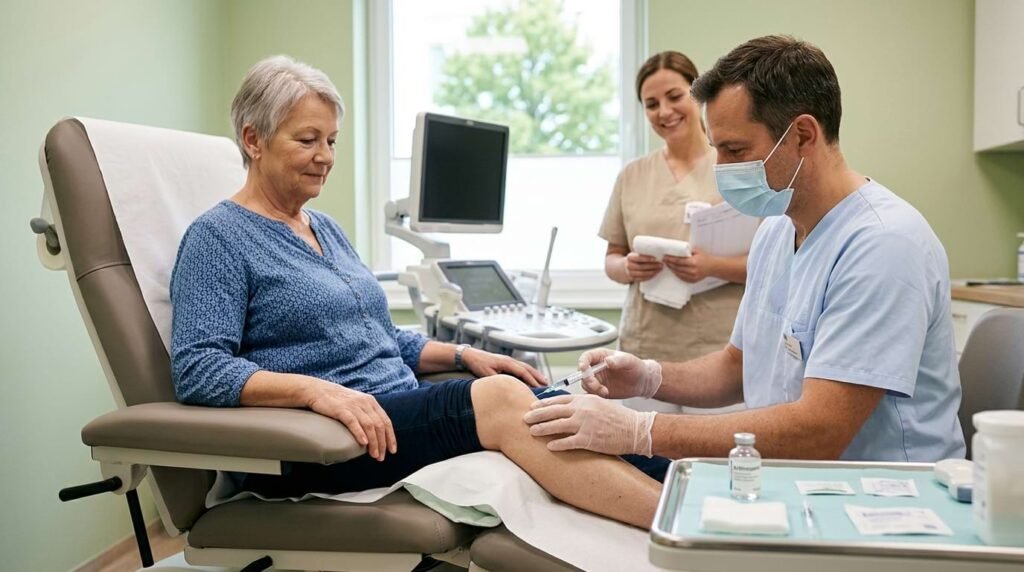
Injections represent a significant step forward in knee osteoarthritis treatment. They deliver treatment directly into the joint space, bypassing the limitations of oral medication. For patients seeking non-surgical knee pain relief that goes beyond.
What exercises and medications can achieve, injections are the next logical step. Options range from temporary relief to genuinely long-lasting results.
Corticosteroid Injections
Steroid injections reduce inflammation quickly and can provide relief for several weeks to months. They are one of the most commonly used intra-articular knee injections. However, repeated use carries risks, including cartilage breakdown over time. They work best as a short-term bridge not a long-term strategy.
Hyaluronic Acid (Viscosupplementation)
Hyaluronic acid injections supplement the synovial fluid knee treatment naturally provides. Synovial fluid lubricates the joint and cushions movement. In osteoarthritis, this fluid degrades. HA injections aim to restore its function.
Relief typically lasts three to six months, and evidence on effectiveness is mixed. Some patients benefit significantly, others less so.
Platelet-Rich Plasma (PRP) Injections
PRP uses growth factors extracted from the patient’s own blood to encourage tissue repair and reduce inflammation. It suits patients with mild to moderate knee cartilage damage treatment needs. Results vary, but some patients report twelve to twenty-four months of meaningful improvement. PRP is typically available through private clinics.
Arthrosamid Injection: Currently the Best Option for Knee Pain Relief
When it comes to non-surgical knee pain relief, Arthrosamid stands out as the most advanced and longest-lasting option available today. It is a polyacrylamide hydrogel injection non-biodegradable, non-surgical, and administered as a single intra-articular knee injection under ultrasound guidance.
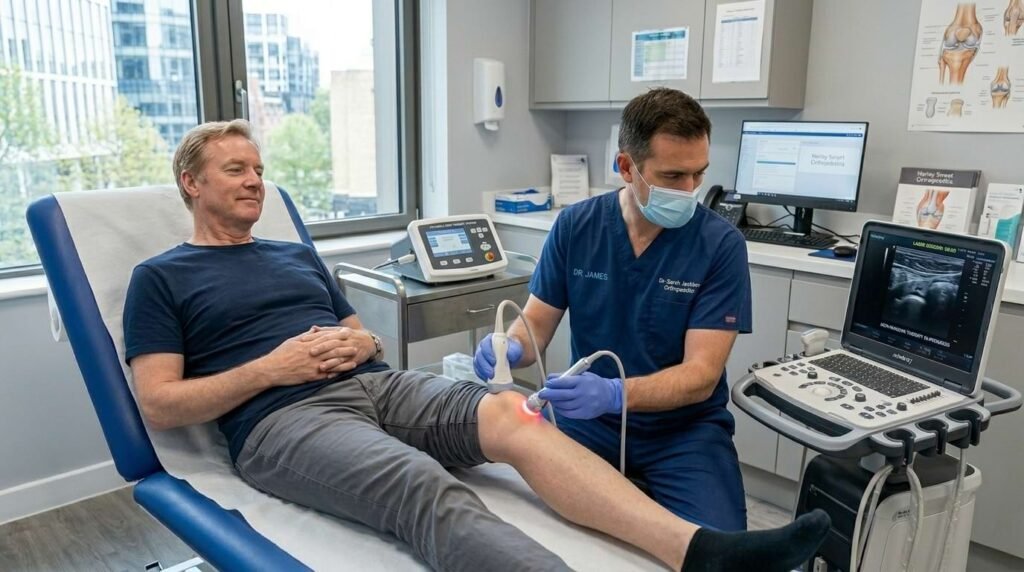
Unlike every other injection on this list, Arthrosamid does not break down inside the joint. It permanently integrates with the synovial membrane, cushioning the joint, reducing friction, and calming the inflammation that drives osteoarthritis pain.
It is the best treatment for knee joint pain for patients who want lasting results without surgery and the clinical evidence supports that claim strongly.
How Arthrosamid Works
- A single 6ml injection is placed directly into the knee joint space
- Ultrasound guidance ensures precise and safe placement
- The hydrogel bonds permanently with the synovial tissue
- Pain relief typically begins within four weeks
- Maximum benefit is usually seen at three to six months
What the Evidence Shows
Clinical studies, including the multicentre LUNA trial, show statistically significant improvements in pain, stiffness, and joint function at twelve months.
A 2025 study reported that benefits were maintained for at least five years after a single injection longer than any comparable non-surgical option currently available. Patients under seventy generally see better outcomes than older patients.
For anyone exploring alternatives to knee replacement, Arthrosamid offers a clinically proven, long lasting knee pain injection that delivers real-world results. It is available as a private knee pain injection through specialist orthopaedic clinics and sports medicine centres across the country.
Arthrosamid vs Other Injection Options
- Corticosteroids: weeks to months of relief vs. up to five years with Arthrosamid
- Hyaluronic acid: three to six months vs. up to five years with Arthrosamid
- PRP: twelve to twenty-four months vs. up to five years with Arthrosamid
- Arthrosamid can be repeated if needed, with no evidence of joint damage
Who Is Arthrosamid Suitable For?
- Adults with mild to moderate knee osteoarthritis
- Patients who have not responded well to steroid or HA injections
- Those looking to avoid or delay knee replacement surgery
- Anyone seeking a private knee pain injection backed by strong long-term evidence
If you have been managing knee pain for months without lasting relief, discussing Arthrosamid with a knee pain specialist is a logical and well-evidenced next step.
Knee Pain Physiotherapy: More Than Just Exercises
Physiotherapy deserves its own section because it underpins every other treatment in this guide. A good physiotherapist does not just hand you a sheet of exercises. They assess your gait, your muscle balance, and the specific mechanics driving your pain then build a programme around that.
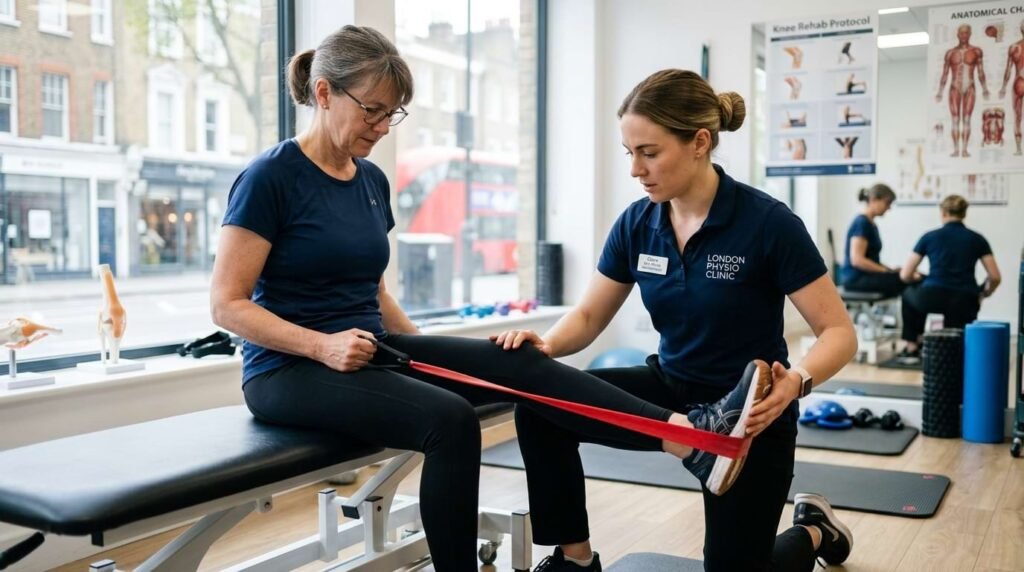
Manual therapy techniques, hands-on joint mobilisation and soft tissue work keep the joint supple. Combined with targeted strengthening, knee pain physiotherapy can significantly improve function and reduce reliance on pain medication. NICE guidelines recommend exercise therapy as a first-line treatment for knee osteoarthritis, and for good reason.
For many patients, a well-structured physiotherapy programme is genuinely one of the best ways to avoid knee replacement surgery altogether. Stick with it consistently and it delivers meaningful non-surgical knee pain relief over time.
If your symptoms are progressing, ask your GP for a referral or consider consulting a private physiotherapist for faster access and more personalised sessions.
When to Consider Knee Replacement Surgery
Surgery is never the starting point. It is the endpoint reached only after conservative and minimally invasive options have been tried and found insufficient. Good knee osteoarthritis pain management should always come first.
Alternatives to Knee Replacement Surgery First
Before any surgical discussion, a responsible clinician will confirm that you have genuinely exhausted the alternatives to knee replacement surgery. This includes sustained physiotherapy, weight management, appropriate medications, and at least one form of injection treatment. Rushing to surgery without this process increases risk without proportionate benefit.
Types of Knee Surgery
If surgery becomes necessary, several options exist depending on your age, anatomy, and the severity of joint damage.
- Partial knee replacement — replaces only the damaged compartment; suitable for localised arthritis
- Total knee replacement — replaces the full joint surface; standard for widespread osteoarthritis
- Osteotomy — realigns the knee to shift load away from damaged cartilage; more common in younger patients
- Arthrodesis (joint fusion) — rarely used; eliminates pain but removes movement entirely
Knee Replacement Surgery Recovery
Knee replacement surgery recovery takes time. Most patients begin walking the day after surgery with a physiotherapist present. Full recovery typically takes three to six months, and some patients continue to improve for up to a year. Robotic-assisted techniques such as Mako SmartRobotics improve implant positioning and are associated with better outcomes and faster recovery.
An artificial knee joint can last fifteen to twenty years. Younger patients may eventually need revision surgery, which carries higher complication rates, another reason to avoid knee replacement surgery for as long as possible through non-surgical means.

FAQ
Which knee arthritis treatment delivers the longest-lasting results?
For most patients, a combined approach works best for knee arthritis exercises, physiotherapy, weight management, and an appropriate injection. Among injectable options, Arthrosamid currently offers the most evidence-backed, long-lasting knee osteoarthritis pain relief available without surgery.
Can knee arthritis be treated without surgery?
Yes — it is for mild pain treatment. Knee pain treatment without surgery includes physiotherapy, NSAIDs, lifestyle changes, and injectable therapies. Surgery is a last resort when all other alternatives to knee replacement have been properly tried.
How long does a knee pain injection last?
Corticosteroids last weeks to months. Hyaluronic acid provides three to six months of synovial fluid knee treatment. PRP treatment can last for two years. Arthrosamid, the leading hydrogel knee injection has shown results lasting up to five years, making it the longest-lasting option currently available.
What are the stages of knee arthritis?
There are four stages. Stage one is minimal with small cartilage changes. Stage two shows early bone spurs and mild pain. Stage three involves significant cartilage loss and regular pain. Stage four means severe joint damage and constant pain. Knee arthritis treatment options expand as the condition progresses, with surgery typically reserved for stage three and four.
Is walking good for knee arthritis?
Yes. Walking is a safe, low-impact way to support your knee pain management plan. It builds muscle strength, maintains joint flexibility, and helps with weight loss and knee pain management. Start gently and build up over time.
What are the common knee gel injection side effects?
Most patients experience only mild, temporary discomfort or swelling for one to three days after an intra-articular knee injection. Serious complications are rare. Arthrosamid has a strong safety profile, with no serious concerns reported in five-year follow-up trials.
How much does a private knee pain injection cost?
Costs depend on the type. Corticosteroids are the least expensive. PRP and Arthrosamid cost more upfront, but given how long they last, they often work out more cost-effective. Speak to a knee pain specialist for current clinic pricing.
When should I consider knee replacement?
When to consider knee replacement typically arises after sustained non-surgical management has genuinely failed usually after at least twelve months. Signs include severe daily pain, major mobility loss, and advanced joint damage confirmed on imaging.
Knee arthritis treatment options have advanced significantly in recent years. From lifestyle modifications and physiotherapy to advanced non-surgical injections such as Arthrosamid, effective solutions now exist for every stage of osteoarthritis.
The most successful approach involves early intervention and selecting the appropriate treatment according to the severity of the condition. Many patients can manage knee pain effectively and maintain an active lifestyle without undergoing surgery.
Persistent knee pain should prompt consultation with a knee specialist to determine the most suitable long-term management strategy and preserve quality of life.
Read more: Recognizing Knee Osteoarthritis and How Arthrosamid Injection London Help
Read more: New non-surgical knee pain treatments in UK 2026 with Arthrosamid injection