Modern Osteoarthritis Treatment Alternative to Knee Replacement Injection

Alternative to knee replacement injection treatments are gaining attention among people who want relief from knee osteoarthritis without surgery. Knee pain can gradually interfere with daily life.
Simple activities such as walking, climbing stairs, kneeling, or standing for long periods may start to feel uncomfortable. For many people, knee replacement surgery feels like a major step. It often involves hospitalization, recovery time, and rehabilitation.
Arthrosamid is gaining attention in the UK as a modern option for knee osteoarthritis treatment. Many clinics now provide this procedure, including services for arthrosamid injection london. Treatment prices, such as arthrosamid injection cost uk, may vary by provider. At the same time, modern medical research has introduced several injection therapies that target the knee joint directly.
These treatments aim to reduce inflammation, improve lubrication, and support joint movement. In many cases, they can delay the need for surgery. Some patients experience relief for months or even years after receiving the right injection therapy. Understanding the available options helps patients make informed decisions about their knee health.
Why Patients Prefer Injections Over Knee Replacement
Knee Osteoarthritis Develops Over Time
Knee osteoarthritis develops slowly over time. The cartilage that protects the knee joint gradually becomes thinner and weaker. When cartilage deteriorates, bones begin to rub against each other during movement. This friction causes pain, swelling, and stiffness in the joint.
Early Treatments Before Surgery
Many people initially manage the condition with pain medication, physical therapy, or lifestyle adjustments. However, symptoms may worsen over time. At that stage, doctors may suggest surgery. Despite this recommendation, many patients prefer exploring non surgical knee osteoarthritis treatment options before considering joint replacement.
Maintaining an Active Lifestyle
Another reason patients choose an injection instead of knee replacement is the desire to maintain their lifestyle. Major surgery often requires months of recovery and physical therapy. For professionals or older adults, this recovery period may feel inconvenient or stressful.
Risks Associated with Knee Replacement Surgery
Surgery also carries certain risks. Although knee replacement is a common procedure, complications can still occur. These may include infection, blood clots, or reactions to anesthesia. Because of these concerns, many patients look for alternatives to knee replacement injection therapies that may relieve symptoms without surgery.

Arthrosamid Injection Near Me
Many clinics now offer modern injection treatments for knee osteoarthritis, including Arthrosamid therapy. Patients often search for arthrosamid injection near me when looking for minimally invasive options that may reduce pain and improve knee mobility without immediate surgery.
How Knee Arthritis Injection Treatment Works
Modern knee arthritis injection treatment targets the joint directly. Unlike oral medications that circulate throughout the body, injections deliver treatment precisely where it is needed.
Inside a healthy knee joint, synovial fluid works as a natural lubricant. It allows smooth movement between bones and cartilage. With osteoarthritis, this joint fluid gradually loses its thickness and lubrication ability. As a result, inflammation may increase inside the joint, leading to swelling and pain.
Knee joint injection therapy helps restore balance within the joint. Some injections reduce inflammation. Others improve lubrication or stimulate tissue repair. These effects may lead to better movement and less discomfort.
Many patients notice improvement within days or weeks after treatment. Depending on the injection type, relief may last for several months. For individuals hoping to delay surgery, these therapies act as valuable injections that delay knee replacement.
Key Alternatives to Consider
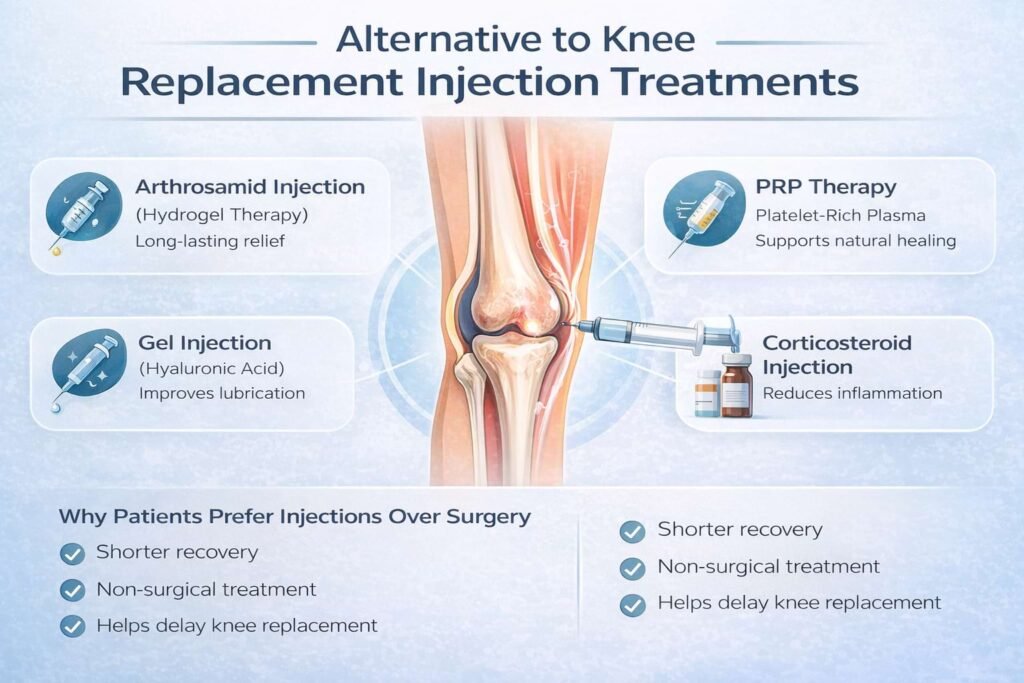
Several injection therapies are commonly used as alternatives to knee replacement injection treatments. Each option works differently and may be recommended depending on the severity of knee osteoarthritis.
Gel Injection for Knee Arthritis
A gel injection for knee arthritis is also known as viscosupplementation. This treatment contains hyaluronic acid, a substance naturally present in joint fluid. Hyaluronic acid works as a lubricant and shock absorber within the knee.
In people with osteoarthritis, the amount and quality of hyaluronic acid decreases. This reduction increases friction during movement and leads to pain and stiffness.
The injected gel improves joint movement and reduces friction between bones. Patients often experience smoother movement and less discomfort while walking or climbing stairs.
For many people exploring injection instead of knee replacement, gel injections provide temporary relief that may last several months. Although results vary, this therapy is widely used in modern knee osteoarthritis treatment plans.
Arthrosamid Injection for Knee Osteoarthritis
One of the latest treatments for knee osteoarthritis is the Arthrosamid injection for knee osteoarthritis. Arthrosamid is a hydrogel-based treatment that works differently from traditional injections.
Instead of only lubricating the joint, Arthrosamid integrates into the synovial membrane. This integration helps stabilize the joint environment and may reduce inflammation.
Many specialists consider Arthrosamid injection alternative to knee replacement because it may provide longer-lasting relief than other injections. Clinical studies suggest that many patients experience improved mobility and reduced pain within weeks after treatment.
Because of these results, Arthrosamid is becoming an increasingly popular option for minimally invasive knee arthritis treatment.
Platelet-Rich Plasma (PRP)
Platelet-rich plasma therapy is another form of modern knee osteoarthritis treatment. This therapy uses a small sample of the patient’s blood. The blood is processed to concentrate platelets, which contain natural growth factors.
These growth factors may support tissue healing and reduce inflammation inside the joint. PRP injections aim to improve the joint environment rather than simply masking pain.
Many doctors recommend PRP as part of the best non surgical treatment for knee osteoarthritis strategies. Some patients report improved pain levels and mobility for several months after treatment.
Although results may vary, PRP remains a promising option within non surgical knee osteoarthritis treatment options.
Corticosteroid Injection
Corticosteroid injections are one of the most widely used knee pain injection therapy methods. These injections quickly reduce inflammation inside the joint.
Patients often experience rapid relief after treatment. Swelling decreases and joint movement becomes easier.
Doctors usually recommend this therapy during severe knee pain flare-ups. However, corticosteroid injections are limited because frequent use may weaken cartilage over time.
Even with this limitation, corticosteroids remain an important knee arthritis injection treatment for short-term pain control.
Stem Cell Therapy
Stem cell therapy is an emerging minimally invasive knee arthritis treatment that aims to support tissue regeneration. Stem cells can develop into different types of cells, including cartilage cells.
During this procedure, stem cells are typically collected from bone marrow or fat tissue. They are then injected into the knee joint.
Researchers continue to study this therapy as part of the latest treatment for knee osteoarthritis developments. Some patients experience improved joint function and reduced pain after treatment. Although still evolving, stem cell therapy represents a promising direction in modern knee osteoarthritis treatment.
Best Injection for Knee Osteoarthritis
Choosing the best injection for knee osteoarthritis depends on several factors. These include the severity of arthritis, the patient’s age, overall health, and lifestyle.
For Mild Arthritis
For mild arthritis, a gel injection for knee arthritis may provide sufficient relief. Patients with moderate arthritis may benefit from Arthrosamid injection for knee osteoarthritis because it often provides longer-lasting results.
For Moderate Arthritis
Patients with moderate arthritis may benefit from Arthrosamid injection for knee osteoarthritis since it often provides longer-lasting results.
Other Treatment Options
PRP therapy may be recommended for patients interested in regenerative approaches.
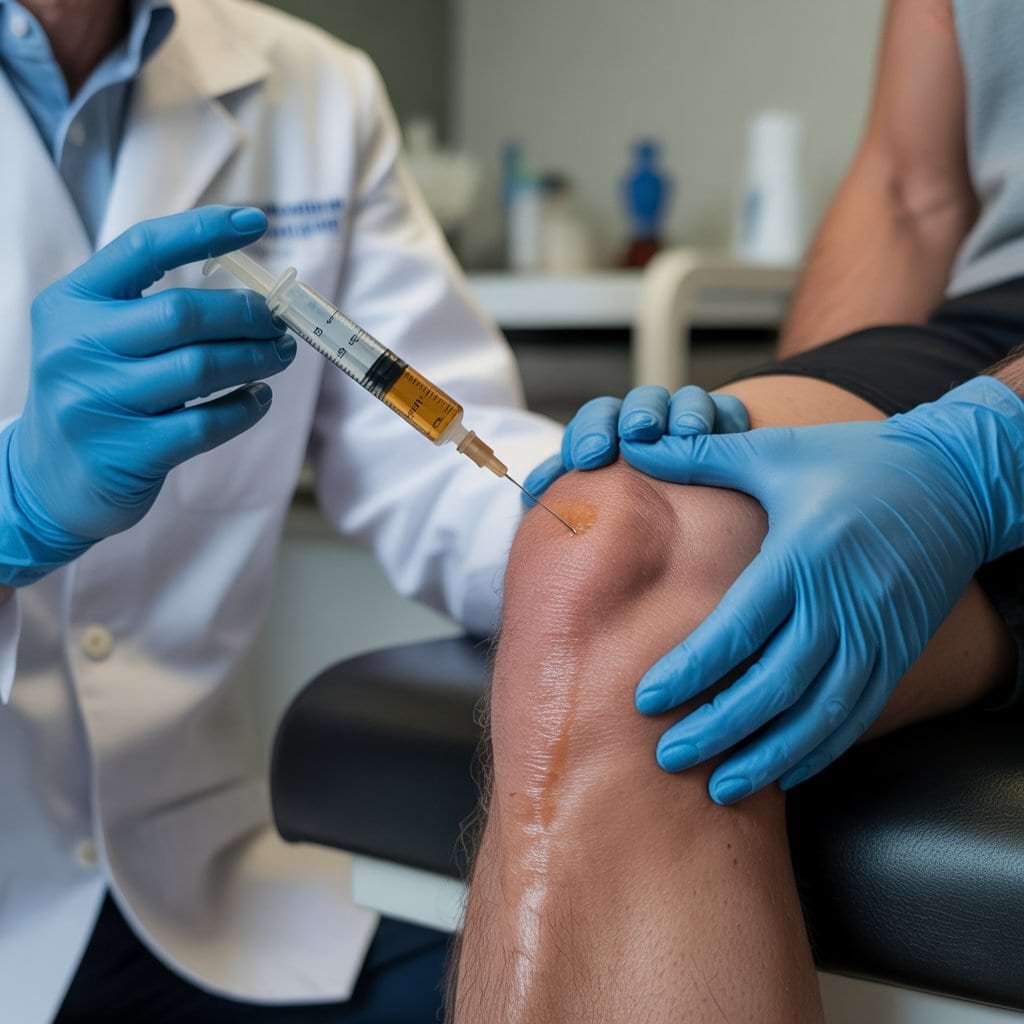
Meanwhile, corticosteroid injections remain effective for short-term pain control.
Specialist Evaluation
A qualified specialist can determine the most appropriate knee pain injection therapy. After evaluating imaging results and patient symptoms.
Latest Treatment for Knee Osteoarthritis
Medical research continues to introduce new approaches for the latest treatment for knee osteoarthritis. Advances in injection therapies aim to provide longer-lasting relief while reducing the need for surgery.
Hydrogel technologies such as Arthrosamid are gaining attention because they remain inside the joint longer than traditional treatments. Biologic therapies like PRP focus on stimulating the body’s natural healing processes.
Some specialists also combine injections with physiotherapy programs. This combination may improve joint stability and mobility while supporting best non surgical treatment for knee osteoarthritis strategies.
As research progresses, these therapies continue to expand the options available for non surgical knee osteoarthritis treatment options.
How to Avoid Knee Replacement Surgery
Many patients want to know how to avoid knee replacement surgery while managing symptoms effectively.
Weight management plays a key role in knee health. Excess body weight increases pressure on the knee joint and accelerates cartilage damage. Losing even a small amount of weight may reduce joint stress.
Strength training also supports knee stability. Strong quadriceps and hamstring muscles help absorb impact during movement.
Physical therapy programs improve flexibility and mobility. When combined with knee joint injection therapy, these strategies may delay the need for surgery.
For many patients, lifestyle changes together with knee arthritis injection treatment provide effective long-term symptom management.
Risks and Limitations of Knee Injection Treatments
Although injections provide relief, they are not permanent cures for osteoarthritis. Most treatments offer temporary benefits that may last several months.
Risks
Some patients may experience mild swelling or discomfort after the injection. In rare cases, infections or allergic reactions may occur.

Limitations
The effectiveness of alternative knee replacement injection therapies depends on the stage of arthritis. Severe cartilage damage may reduce treatment effectiveness. Doctors carefully evaluate each patient before recommending injections that delay knee replacement.
When Knee Replacement Surgery Becomes Necessary
In advanced stages of osteoarthritis, surgery may become the most effective solution. Severe cartilage loss, constant pain, and limited mobility may indicate that conservative treatments are no longer sufficient.
When non surgical knee osteoarthritis treatment options no longer provide relief, knee replacement surgery may help restore mobility and improve quality of life.
However, many patients successfully delay surgery for years by using knee pain injection therapy along with lifestyle adjustments and physical therapy.
FAQ
1. What is the best injection alternative to knee replacement?
Several injections are used as an alternative to knee replacement injection treatments. Options include Arthrosamid injection for knee osteoarthritis, PRP therapy, and gel injection for knee arthritis. The best option depends on arthritis severity and a specialist’s evaluation.
2. How long does an Arthrosamid injection last for knee osteoarthritis?
Many patients experience relief for months or even years after Arthrosamid injection for knee osteoarthritis. The hydrogel integrates with the joint lining and helps reduce inflammation. Results may vary depending on the stage of knee osteoarthritis.
3. Can knee injections delay knee replacement surgery?
Yes, many knee arthritis injection treatment options can help delay surgery. Treatments such as PRP, hyaluronic acid gel injections, and Arthrosamid injection improve joint lubrication and reduce pain.
4. Are knee osteoarthritis injections safe?
Most knee pain injection therapy procedures are considered safe when performed by a specialist. Patients may experience mild swelling or discomfort after treatment. Serious complications are rare but should always be discussed with a doctor.
Modern non surgical knee osteoarthritis treatment options help many patients manage pain without immediate surgery. Treatments such as Arthrosamid injection, PRP therapy, and gel injection for knee arthritis can improve mobility and reduce discomfort.
For individuals looking for an alternative to knee replacement injection, consulting a specialist can help determine the most effective treatment plan.
Read more: Why Arthritis Pain in Cold Weather Causes More Knee Pain in Winter
Read more: Knee Arthritis Exercises to Avoid That Increase Knee Pain