Knee Osteoarthritis Daily Life Guide — How to Stay Active and Manage Pain Effectively

Knee osteoarthritis daily life is something millions of people navigate — often without enough practical guidance. If getting out of bed in the morning feels like a negotiation with your own knee, the experience is far more common than most realise. Osteoarthritis of the knee affects everyday tasks most people take for granted: climbing stairs, walking to the shops, lowering into a chair, even sitting comfortably through a film.
The condition does not simply affect the joint — it reshapes the entire rhythm of daily life, from the moment of waking to the difficulty of sleeping. Understanding it properly, and managing it with a structured, evidence-based approach, makes a genuine difference to quality of life, functional independence, and long-term joint health.
What Knee Osteoarthritis Does to Daily Life
Managing osteoarthritis of the knee begins with understanding what is actually happening inside the joint. Cartilage — the specialised tissue that cushions the ends of the bones — wears down progressively over time. As it thins and breaks down, the bones begin to make contact with each other during movement. That contact causes pain, swelling, stiffness, and over time, changes to the shape and mechanics of the joint itself.
The impact on knee osteoarthritis daily life builds gradually rather than arriving all at once. Morning stiffness that lasts 20 to 30 minutes before the joint loosens. Pain that flares after walking further than usual or standing for prolonged periods. Increasing difficulty with stairs — particularly descending, which loads the knee joint more heavily than going up. Trouble sleeping through the night. A constant background ache that shapes how every day is planned, every outing is calculated, every social commitment is weighed against how the knee is likely to behave.
This condition is also referred to as gonarthrosis in clinical and medical literature — particularly in specialist and European healthcare settings.
Recognising the Signs of Osteoarthritis in the Knee
Is Knee Arthritis Getting Worse?
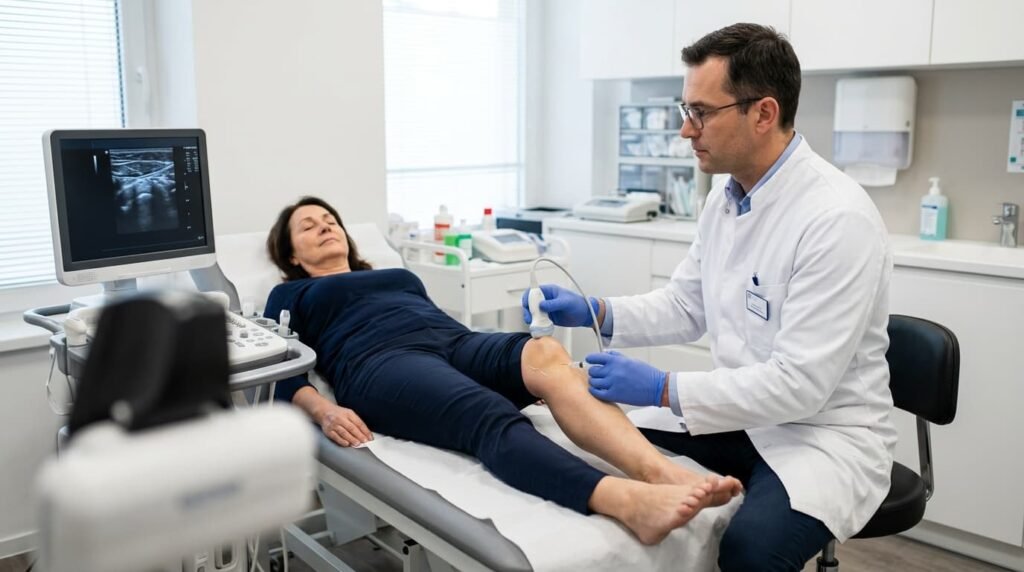
The signs of osteoarthritis in the knee are often subtle in the early stages, which is part of why the condition is frequently underdiagnosed until it has progressed significantly. Common indicators to be aware of include:
- A dull, persistent ache after physical activity that gradually improves with rest
- Stiffness first thing in the morning, or after sitting for extended periods — a phenomenon known as the “gelling” effect
- A creaking, grinding, or clicking sensation when bending or extending the knee, known clinically as crepitus
- Visible or palpable swelling around the joint, particularly following activity or at the end of the day
- Reduced range of motion — difficulty fully straightening the leg or bending the knee beyond a certain point
- A sensation of the knee giving way or feeling unstable under load
Knee arthritis getting worse typically announces itself through a recognisable pattern: pain that was previously activity-related begins occurring at rest. Swelling that was intermittent becomes persistent. Measures that used to bring relief — a hot bath, a short rest, an anti-inflammatory tablet — stop working as reliably. Osteoarthritis knee pain at night is a particularly significant marker. When pain consistently disrupts sleep, interrupting the body’s essential tissue repair and recovery processes, the condition has moved beyond the early or mild stage and warrants specialist assessment.
Monitoring these changes over time — rather than dismissing them as inevitable ageing — allows for earlier intervention, which consistently produces better long-term outcomes.
Home Adaptations That Make Knee Osteoarthritis Daily Life Easier
Practical Home Adaptations for Knee Pain
Small, targeted changes to the home environment can significantly reduce the daily mechanical demands placed on an arthritic knee. Home adaptations for knee pain do not need to involve major renovation or significant expense. The most impactful changes are often the simplest:
- A raised toilet seat or grab bars in the bathroom to reduce the depth of bending required when sitting and standing
- Bed raisers to bring the sleeping surface to a height that allows controlled, pain-reduced transitions in and out of bed
- A firm chair with solid armrests in the main living area, which allows the upper body to assist when rising rather than loading the knee alone
- Non-slip mats in bathrooms, kitchens, and on stairs to prevent the reflexive catching movements that load the joint suddenly
- Reorganising kitchen and storage areas so that the most frequently used items are accessible at mid-height, eliminating repeated deep crouching or high reaching
- A shower stool or bath board to allow bathing without sustained awkward positioning that stresses the knee
Aids for Osteoarthritis of the Knee
Aids for osteoarthritis of the knee are practical clinical tools — not concessions to limitation, but active strategies for joint protection and pain reduction. The most widely recommended is a walking stick for knee arthritis. Used correctly — held in the hand opposite to the affected knee — a walking stick reduces the mechanical load transmitted through the joint by up to 25%. For a condition where every step places force equivalent to three to five times body weight through the knee, this reduction is clinically meaningful.
Other aids that contribute to better knee osteoarthritis daily life management include:
- Knee braces or neoprene supports that provide proprioceptive feedback and mild stability during activity
- Long-handled tools for gardening, cleaning, or retrieving items from the floor — eliminating the need for deep bending
- Wheeled trolleys or shopping bags on wheels to remove the need to carry loads that increase joint loading
- Grip aids and ergonomic kitchen tools that reduce the need to compensate through awkward lower limb positions
Best Exercise for Knee Osteoarthritis
Exercise is one of the most robustly evidence-based interventions for knee osteoarthritis daily life management. The goal is to strengthen the musculature that supports and protects the joint — primarily the quadriceps, hamstrings, and hip stabilisers — while avoiding activities that overload already-compromised cartilage. The best exercise for knee osteoarthritis builds strength, maintains mobility, and reduces pain over the medium and long term.
The most consistently recommended options include:
Walking — Accessible, low-cost, and effective. Walking with osteoarthritis of the knee slows joint deterioration, supports healthy cartilage nutrition, and contributes to weight management. Is walking good for knee osteoarthritis? For the vast majority of patients, yes — provided it is paced appropriately. Short, frequent walks produce better outcomes than infrequent long ones that lead to flare-ups and subsequent inactivity.
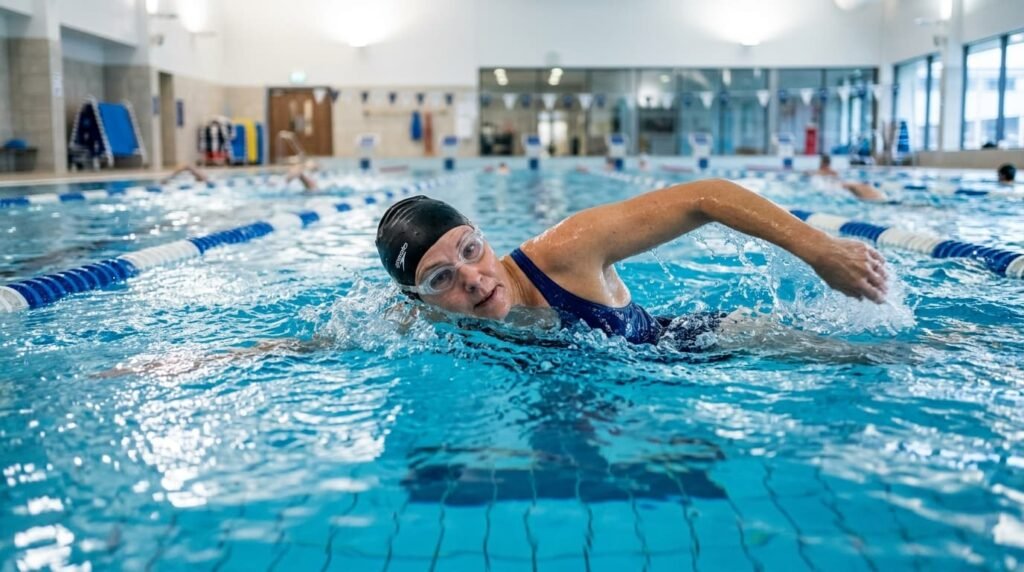
Swimming for knee osteoarthritis — Water provides buoyancy that supports body weight and dramatically reduces joint load, making it one of the gentlest and most effective cardiovascular and strengthening options available. It allows full range of motion work without the compression that land-based exercise involves.
Cycling — Stationary or outdoor cycling maintains joint mobility and builds quadriceps strength without the high-impact loading of running or walking on hard surfaces. Seat height should be adjusted so the knee does not bend beyond 90 degrees.
Targeted strengthening exercises — Quad sets, straight leg raises, clamshells, and seated knee extensions build the muscle mass that absorbs load and reduces the force transmitted to the joint surface. These are the foundation of any physiotherapy programme for OA.
Water exercises for arthritis and yoga for arthritis pain relief are both worth exploring as complementary options — particularly for patients who find standard exercise protocols difficult due to pain or reduced range of motion.
Stretches for arthritis pain — Gentle, sustained stretching of the hamstrings, calves, and hip flexors reduces the muscular tightness that compounds joint stiffness and alters gait mechanics.
Exercises to Avoid With Knee Arthritis
Exercises to avoid with knee arthritis are those that place high or repetitive compressive, shear, or impact forces through an already-damaged joint surface. These include:
- Running and jogging — repetitive high-impact loading accelerates cartilage breakdown in OA knees
- Jumping, skipping, or high-impact aerobic classes
- Deep squats or weighted lunges that drive the knee well beyond 90 degrees of flexion
- Sports involving sudden changes of direction, lateral cutting movements, or pivoting — football, tennis, basketball, squash
- Prolonged stair climbing as exercise, particularly descending stairs repeatedly
Can exercise make arthritis worse?
The wrong kind of exercise, yes — but this should not be interpreted as a reason to avoid movement altogether. Low impact exercise for knee arthritis consistently reduces pain, improves function, and slows progression over time. The clinical evidence on this is unambiguous. The key is choosing the right type, the right intensity, and building volume gradually.
Managing Osteoarthritis Knee Pain Relief at Home
Heat or Cold for Arthritis Pain
Is heat or ice better for arthritis? The honest answer is that both have a place, and their appropriate use depends on the situation.
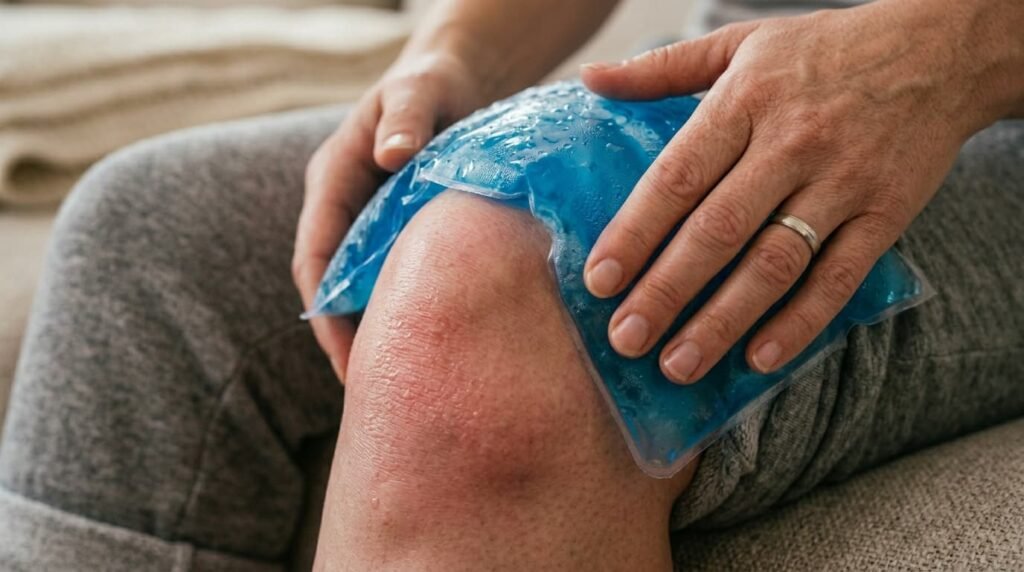
Heat increases local circulation, relaxes periarticular muscle tension, and reduces joint stiffness. It is most useful before activity — first thing in the morning to ease the gelling effect, or before exercise to prepare the joint. A heat pack, warm towel, or hot shower all work effectively.
Cold reduces acute inflammatory activity, decreases swelling, and provides numbing analgesia following activity or during a flare. An ice pack wrapped in a thin cloth, applied for 15 to 20 minutes after physical activity or during a flare-up, is typically more appropriate than heat in these circumstances.
Both modalities have a role in osteoarthritis knee pain relief at home. Rotating between them based on what the joint needs — warmth for stiffness, cold for swelling — is clinically sound.
Natural Arthritis Pain Relief Options
For how to reduce knee pain at home, a range of evidence-supported non-pharmaceutical options are worth incorporating into a daily routine:
Capsaicin cream for arthritis — A topical cream derived from chilli peppers that depletes substance P, a neuropeptide involved in pain signal transmission. Applied two to three times daily to the skin over the joint, it provides meaningful relief for many patients after consistent use over several weeks.
Massage for arthritis relief — Gentle therapeutic massage of the muscles surrounding the knee — particularly the quadriceps and hamstrings — reduces muscle tension, improves local circulation, and modulates pain perception. Direct pressure on the inflamed joint itself should be avoided.
Acupuncture for arthritis pain — The evidence base is mixed but a meaningful proportion of patients report genuine benefit. Side effects are minimal, making it a low-risk option for those seeking complementary pain management alongside conventional treatment.
Mindfulness for arthritis pain — Chronic pain alters the nervous system’s processing of pain signals. Mindfulness-based stress reduction (MBSR) and similar techniques reduce the psychological amplification of pain, improve sleep quality, and reduce the anxiety and catastrophising that often accompany persistent joint pain.
When home measures are insufficient, the best painkiller for arthritis at mild-to-moderate stages is typically an NSAID such as ibuprofen for arthritis pain — used as directed and for limited periods. Topical NSAIDs (diclofenac gel) carry fewer systemic side effects and are increasingly recommended as a first-line option. Always consult a GP before beginning any regular medication regimen, particularly in older patients or those with cardiovascular or renal conditions.
How to Sleep With Arthritis Pain
Osteoarthritis knee pain at night is one of the most depleting and underacknowledged dimensions of knee osteoarthritis daily life. Disrupted sleep impairs tissue healing, raises pain sensitivity, worsens mood, and reduces the motivation for the daily activity that is so important for joint health. Practical strategies to improve sleep quality include:
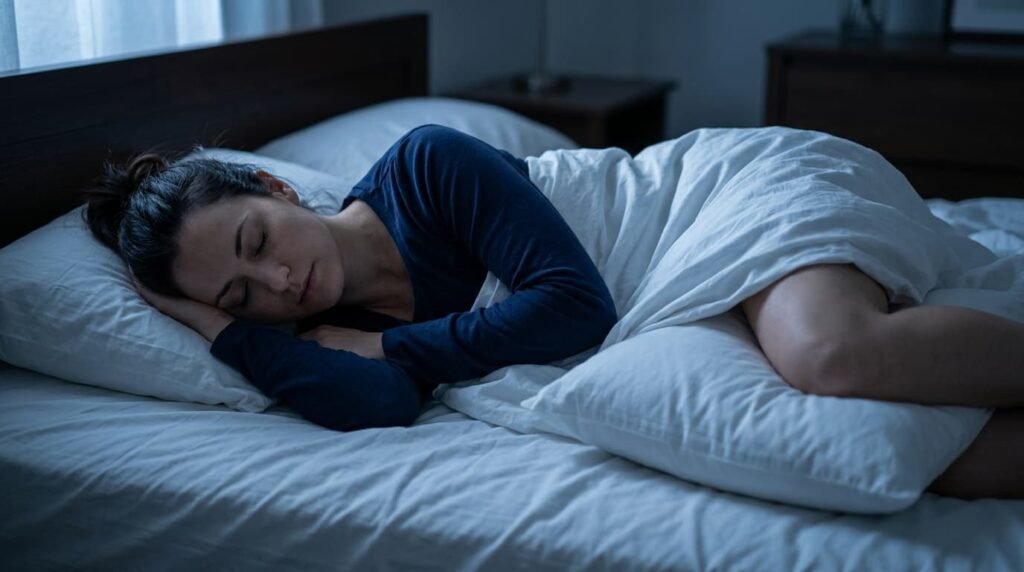
- Placing a firm pillow between the knees when sleeping on the side, to maintain neutral hip and knee alignment and reduce rotational stress on the joint
- Using a memory foam mattress topper to distribute pressure more evenly and reduce the impact of position changes during the night
- Applying a heat pack to the knee for 15 to 20 minutes before bed to reduce overnight stiffness
- Keeping the bedroom cool and dark — elevated body temperature can increase inflammatory activity and worsen swelling
- Avoiding prolonged sitting in the hours before bed, which leads to joint stiffening that makes lying down uncomfortable
Advanced Treatment: Arthrosamid Injection
For patients who have optimised home management, physiotherapy, and pain medication without achieving sufficient relief, knee osteoarthritis treatment options extend into injection-based therapies. Among these, Arthrosamid has emerged as one of the most clinically significant advances in non-surgical knee care.
Arthrosamid is a polyacrylamide hydrogel injected directly into the knee joint under ultrasound guidance. Unlike corticosteroid injections — which suppress inflammation temporarily and wear off within weeks — Arthrosamid physically integrates with the synovial membrane of the joint, creating a long-lasting structural cushion that reduces intra-articular pressure, friction, and the mechanical pain signals arising from damaged joint surfaces.
Arthrosamid is available through private orthopaedic clinics in the UK and is increasingly considered a first-line option for patients with moderate-to-severe OA who are not yet surgical candidates, who have exhausted conservative management, or who wish to delay knee replacement surgery. A consultation with a private knee specialist will determine candidacy based on OA grade, symptom history, and previous treatment response.
Mental Health: The Part Nobody Warns About
Arthritis and Depression — A Real Connection
Chronic pain and mental health are inextricably connected, and knee osteoarthritis daily life carries a psychological burden that is rarely discussed with the same seriousness as the physical one. Arthritis and depression affects roughly one-third of people living with chronic musculoskeletal conditions — making it one of the most prevalent comorbidities of the condition and one of the most undertreated.

Arthritis anxiety and pain create a self-reinforcing cycle: pain increases anxiety, anxiety increases pain sensitivity, disrupted sleep worsens both, and reduced activity leads to deconditioning that makes physical management harder. Coping with chronic joint pain requires addressing this psychological dimension directly, not simply hoping it resolves once the knee improves.
Effective approaches include:
Cognitive behavioural therapy for chronic pain (CBT) — Evidence-based psychological intervention that helps patients identify and modify unhelpful thought patterns around pain, break avoidance behaviours, and develop active coping strategies.
Mindfulness and relaxation practices — Reduce the neurological amplification of pain signals and improve emotional regulation in the context of persistent discomfort.
Peer support and community connection — Engaging with others who live with similar conditions reduces the isolation that chronic pain often generates, and provides practical sharing of strategies that work in daily life.
GP referral for mental health support — If low mood, persistent anxiety, or withdrawal from valued activities are present consistently, this warrants the same clinical attention as the physical symptoms.
Acknowledging the emotional weight of knee osteoarthritis daily life is not weakness. It is part of managing the whole condition properly.
Lifestyle: Diet, Weight, and Long-Term Management
Arthritis Lifestyle Changes Worth Making
The lifestyle factors with the strongest evidence base for improving knee osteoarthritis daily life outcomes include:
Arthritis and weight loss — The mechanical relationship between body weight and knee loading is direct and significant. Every kilogram of body weight generates approximately four kilograms of force through the knee joint during walking. Even a 5% reduction in body weight produces measurable reductions in pain and functional limitation, and slows cartilage loss over time.
Diet and arthritis pain — An anti-inflammatory dietary pattern — rich in oily fish (omega-3 fatty acids), colourful vegetables, whole grains, legumes, and olive oil — supports joint health and reduces the systemic inflammatory load that drives OA progression. Processed foods, refined sugars, excess alcohol, and red meat consumed in high quantities are associated with increased inflammatory activity and are best limited.
Does smoking make arthritis worse? Yes, clearly. Smoking increases systemic inflammation, impairs connective tissue repair, and reduces the effectiveness of both conservative and injectable treatments. Smoking cessation is a clinically meaningful intervention for OA management.
Arthritis posture tips — Poor posture and abnormal gait patterns create uneven load distribution across the knee joint, accelerating wear on already-compromised cartilage. Working with a physiotherapist on gait analysis, posture correction, and movement patterns can meaningfully reduce daily joint stress.
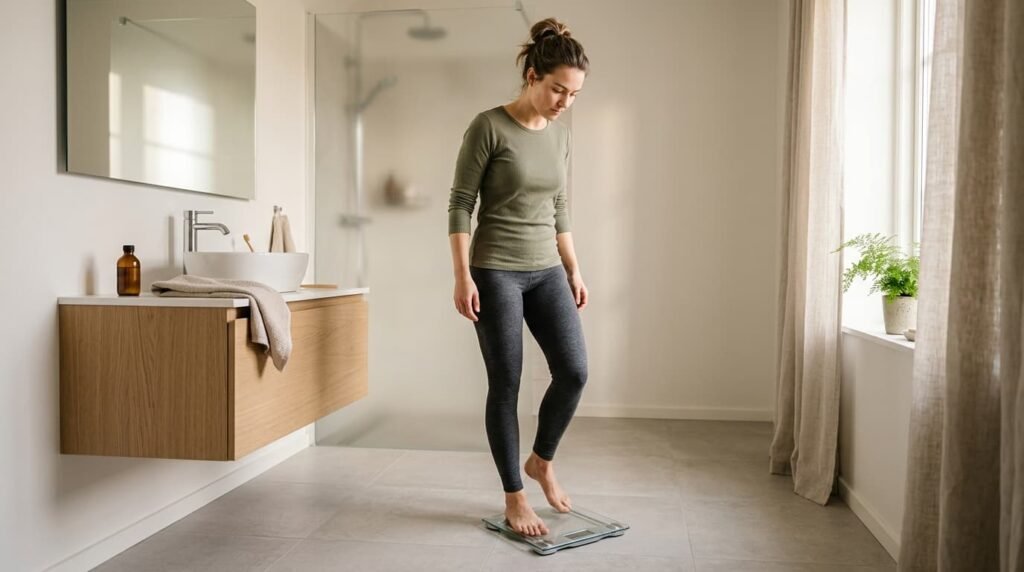
How to protect joints with arthritis — Ergonomic tools, activity pacing, appropriate footwear (cushioned, supportive soles; avoiding flat shoes or heels), and avoiding repetitive impact activities form the practical framework for joint protection in daily life.
How to manage arthritis without medication — At mild-to-moderate stages, a genuinely comprehensive combination of exercise, weight management, dietary adjustment, sleep optimisation, stress management, and home adaptations can constitute a complete management strategy for many patients.
FAQ
What is the best exercise for knee osteoarthritis daily life?
Swimming, walking, and cycling are consistently rated as the most effective options. They strengthen supporting muscles without high-impact loading. Yoga for arthritis pain relief and water exercises for arthritis are excellent complementary additions, particularly for patients with significant pain or restricted range of motion.
What should you not do with knee osteoarthritis?
Avoid high-impact activities including running, jumping, and deep squats. Exercises to avoid with knee arthritis also include sports involving rapid direction changes, prolonged stair work as exercise, and any activity that consistently triggers a flare the following day.
Can you still walk with knee osteoarthritis?
Yes — and in most cases walking is actively recommended. Is walking good for knee osteoarthritis? Consistently yes, provided distance and pace are managed sensibly. Short, regular walks are clinically preferable to infrequent long walks that cause post-activity flare-ups.
How does arthritis affect mental health?
Arthritis and depression frequently coexist. Chronic pain and mental health are deeply interconnected — persistent pain raises anxiety, disrupts sleep, and reduces participation in valued activities. Cognitive behavioural therapy for chronic pain is an evidence-based option alongside mindfulness for arthritis pain and peer support networks.
What is Arthrosamid and how does it help knee OA?
Arthrosamid is an injectable polyacrylamide hydrogel that provides long-lasting structural cushioning inside the knee joint by integrating with the synovial membrane. Among the advanced knee osteoarthritis treatment options available privately, it is distinguished by its single-injection model and 2-year clinical durability data — without the need for repeated procedures.
Knee osteoarthritis daily life is a daily negotiation — but it is one that can be managed thoughtfully and effectively with the right approach. From home adaptations and low impact exercise for knee arthritis to targeted pain management strategies and advanced treatments like Arthrosamid injection, the range of available options is genuinely broad. The key is building a personalised plan, staying consistent, and not waiting until pain becomes unmanageable before seeking help.
If symptoms are worsening progressively, disrupting sleep, or affecting mental health consistently, a consultation with a private knee specialist is a worthwhile and often transformative next step.
Read more: How to Tell the Difference Between Arthritis and Joint Pain
Read more: How Your BMI and Osteoarthritis Are Closely Connected