Low-Impact Workouts for Knee Pain: A Safe and Practical Exercise Guide

Knee pain affects millions of people worldwide and for many, it becomes a reason to stop moving altogether. But complete rest rarely solves the problem. In fact, prolonged inactivity weakens the muscles around the joint, which puts even more pressure on the knee over time.
Low-impact workouts for knee pain offer a clinically supported alternative. These exercises keep the body active while reducing mechanical stress on the joint helping to manage pain, improve mobility, and build the muscle strength that protects the knee during daily movement.
What Are Low-Impact Workouts for Knee Pain?
Low-impact workouts for knee pain are exercises that keep at least one foot on the ground or take pressure off the joints entirely. They protect your knees while still building strength, improving flexibility, and supporting cardiovascular health.
These workouts differ from high-impact activities like running or jumping, which create heavy force on the knee joint with every step. Low-impact options use smooth, controlled movement instead.
They work well for:
- People with knee osteoarthritis
- Adults recovering from knee injuries
- Older adults need to stay active safely
- Anyone experiencing chronic knee stiffness or discomfort
Why Low-Impact Workouts for Knee Pain Actually Work
Many people think rest is the only answer when their knees hurt. It rarely is.
Controlled movement keeps the muscles around the knee strong. Strong muscles absorb shock, reduce joint pressure, and improve stability. When you stop moving completely, those muscles weaken — and that puts even more stress on the joint itself.
Low-impact workouts for knee pain break this cycle. They keep you active without overloading the joint. Over time, regular low-impact exercise reduces stiffness, improves mobility, and can even lower the level of daily discomfort.
Here is what they deliver:
- Less pressure on the knee joint
- Stronger muscle support around the knee
- Improved range of motion
- Better circulation to joint tissue
- Reduced stiffness over time
Movement is medicine when you choose the right kind.
Best Low-Impact Workouts for Knee Pain
Walking for Knee Pain
Walking for knee pain is the most accessible starting point for most people. It requires no equipment, no gym, and no special training. Yet it delivers real benefits.
Walking improves blood flow to the knee, reduces stiffness, and strengthens the leg muscles that support the joint. It also helps with weight management and even a small reduction in body weight reduces significant stress on the knees.
Tips to walk safely with knee pain:
- Walk on flat, even surfaces first
- Wear supportive footwear
- Keep a steady, moderate pace — avoid rushing
- Start with 10–15 minutes and build up gradually
- Avoid steep hills or uneven terrain in the early stages
Walking is a reliable, low-risk exercise. It may not look impressive, but it builds a strong foundation for everything else.
Cycling for Knee Pain
Cycling for knee pain is one of the most effective low-stress cardio options available. The smooth, circular pedalling motion keeps the knee moving through its full range without creating harsh compression.
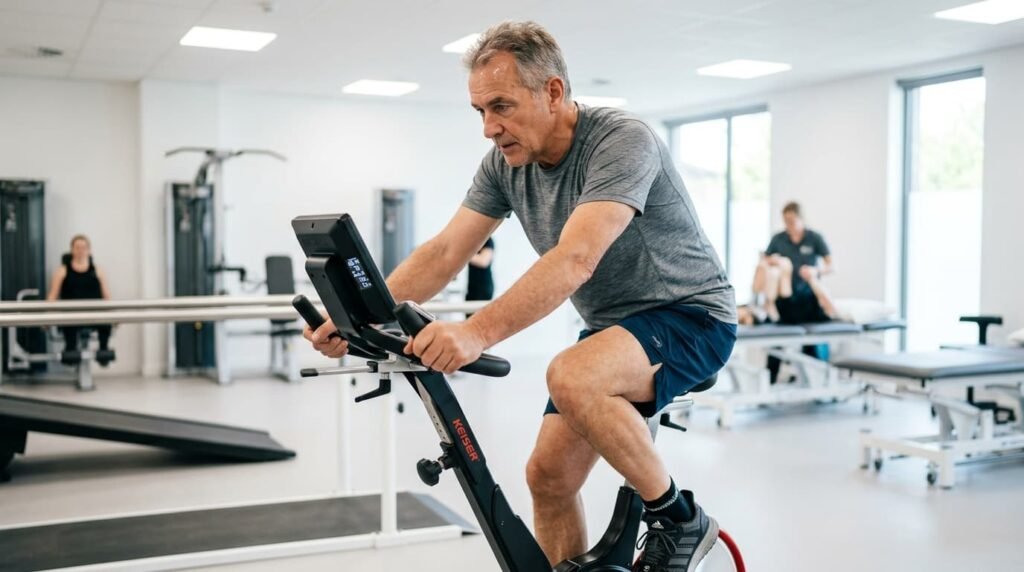
Unlike walking or running, cycling removes body weight from the equation. The saddle supports you, so the joint works without bearing full load.
Why cycling works:
- Smooth motion reduces joint impact
- Adjustable resistance lets you control the intensity
- Strengthens quadriceps and hamstrings simultaneously
- Supports cardiovascular fitness without joint strain
A stationary bike is the safest starting point. It gives you full control over resistance, speed, and duration. Outdoor cycling is also excellent once you feel comfortable and confident.
Cycling appears regularly in low-impact cardio for arthritis programmes because it keeps the heart and joints working in harmony.
Swimming for Knee Pain
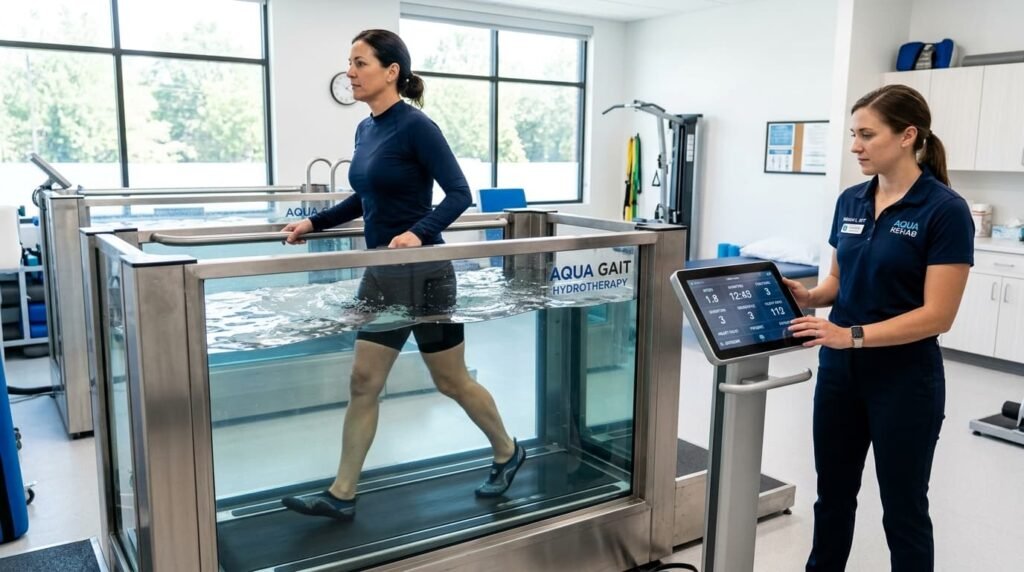
Swimming for knee pain is one of the most powerful options on this list. Water reduces your effective body weight by up to 90%, which removes almost all compression from the knee joint.
At the same time, water provides gentle resistance so your muscles still have to work. You build strength and endurance while giving your knees complete relief from impact.
Best swimming options for knee pain:
- Freestyle (front crawl) — full body movement with low knee load
- Backstroke — smooth leg kick that avoids sharp bending
- Water walking — simple and highly effective for beginners
Swimming is widely recommended in exercises for knee osteoarthritis programmes precisely because it offers this combination of relief and resistance.
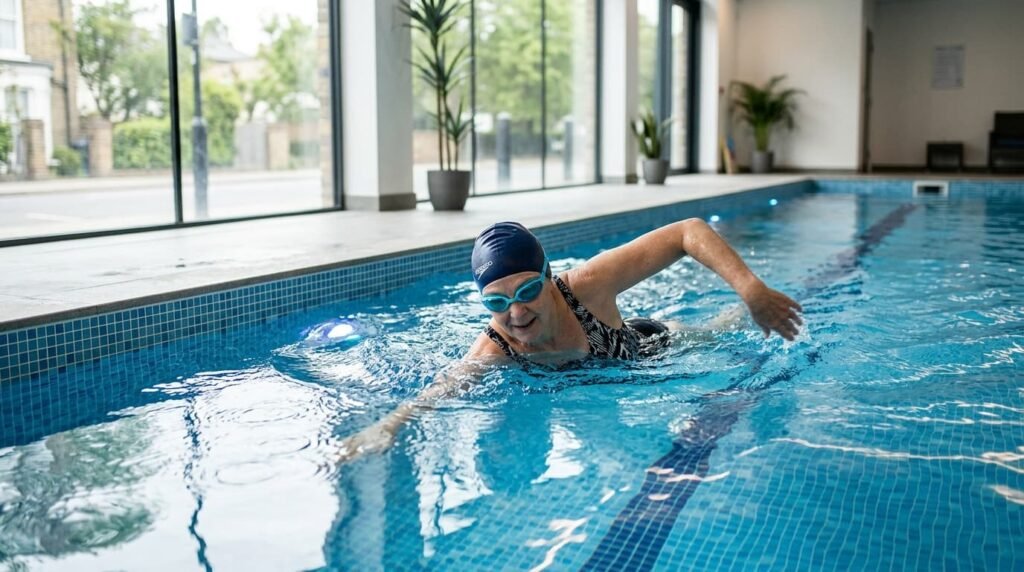
If you are new to swimming, start with 15–20 minutes of gentle movement and build from there.
Water Aerobics for Knee Pain
Water aerobics for knee pain takes the benefits of swimming and adds structure and variety. Instead of continuous laps, you perform specific exercises in the water often in a group setting.
This works particularly well for people who are not confident swimmers, or who prefer guided movement over free-form exercise.
Why water aerobics helps:
- Water provides natural resistance without joint strain
- Group classes support consistency and motivation
- Exercises target specific muscle groups around the knee
- Suitable for all fitness levels
Water aerobics is a strong option inexercises for knee osteoarthritis management because it combines gentle movement with meaningful muscle engagement. Your knees get the relief of buoyancy while your body still does real work.
Yoga for Knee Pain
Yoga for knee pain focuses on flexibility, balance, and controlled body movement. Done correctly, it reduces stiffness, improves the range of motion, and builds the body awareness that helps you move more safely in daily life.
Yoga is not about extreme poses or perfect alignment. For people with knee pain, it is about slow, deliberate movement that respects the joint’s limits.
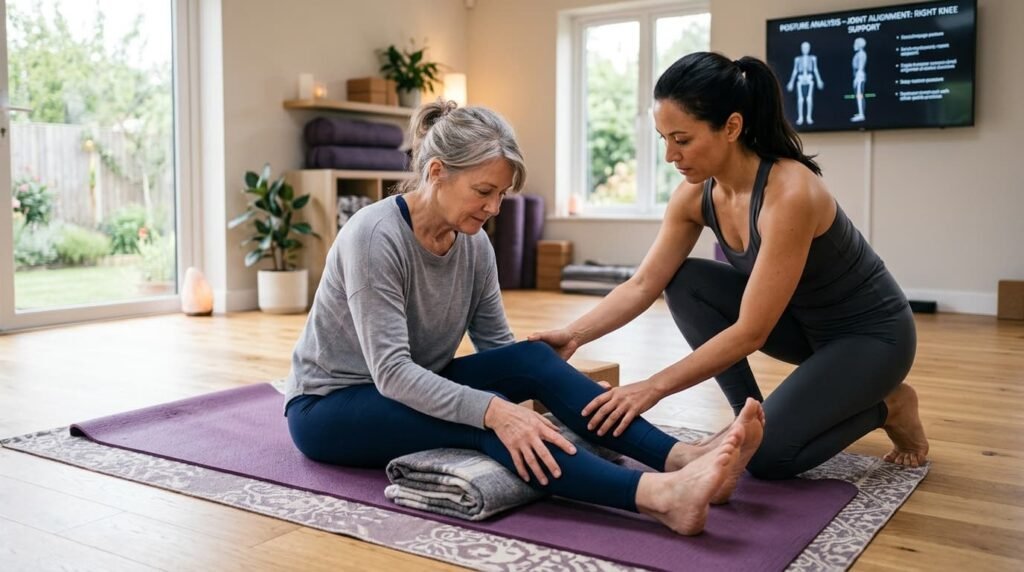
Beginner-friendly yoga for knee support:
- Supine leg stretches — lying down, gently extending the leg
- Seated forward bends — light hamstring stretch with no knee compression
- Gentle warrior poses — builds quad and hip strength with controlled loading
- Child’s pose — gentle hip and knee flex in a supported position
Always use a thick yoga mat for cushioning. Avoid deep squats or kneeling poses until your joint is stronger and more comfortable.
Elliptical for Knee Pain
Elliptical knee pain is an excellent alternative for people who want cardio but cannot tolerate running. The elliptical machine mimics a running stride without the impact your feet never leave the pedals, so there is no hard landing force on the knee.
Why the elliptical works well:
- Smooth, gliding motion eliminates joint shock
- Adjustable resistance and incline
- Works both upper and lower body
- Maintains cardiovascular fitness safely
The elliptical fits naturally into low-impact cardio for arthritis routines because it provides an effective workout at whatever intensity suits your current condition.
Start at low resistance and a comfortable pace. Increase gradually as your strength and confidence build.
Best Strengthening Exercises for Knee Support
Cardio keeps you fit. Strength training keeps your knees protected. The muscles around the knee — particularly the quadriceps, hamstrings, and glutes — act as natural shock absorbers. When they are strong, the joint itself carries less load.
These knee strengthening exercises are safe, effective, and suitable for most people with knee pain.
Straight Leg Raise Exercise
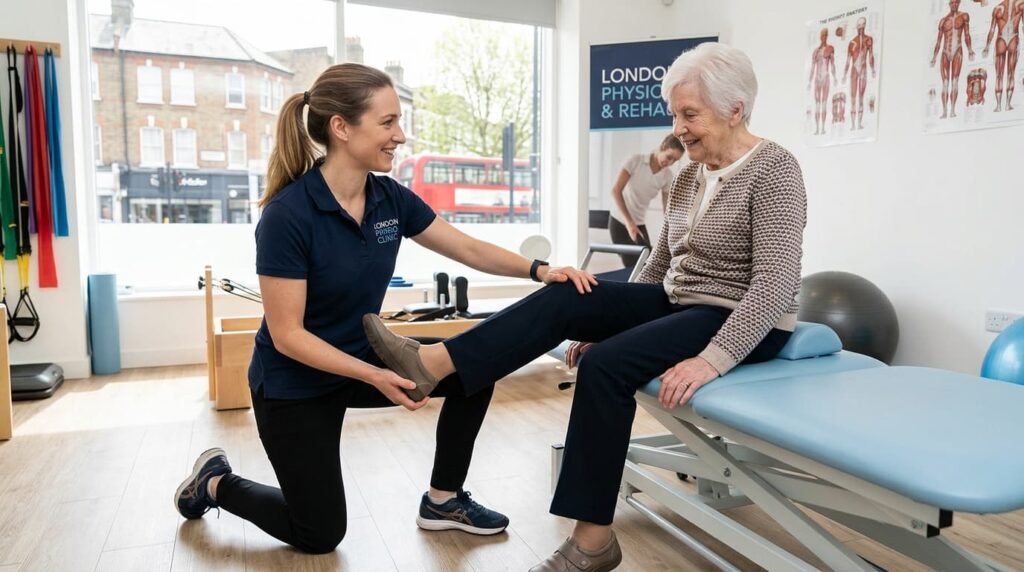
The straight leg raise exercise is one of the safest and most effective exercises for building quad strength without bending the knee under load.
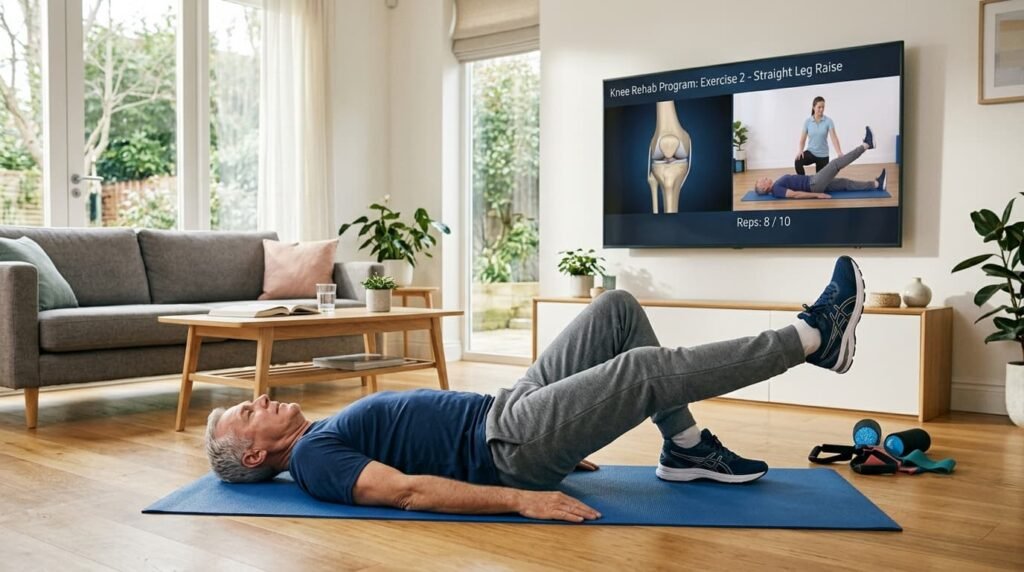
How to perform it:
- Lie flat on back on a surface
- Bend one knee with the foot flat on the floor
- Keep the other leg straight and tighten the thigh muscle
- Slowly lift the straight leg to the height of the bent knee
- Hold for 3–5 seconds, then lower slowly
- Repeat 10–12 times per leg
This exercise builds quadriceps strength without putting the knee through any stressful range of motion. It is a cornerstone of most exercises for knee pain rehabilitation programmes.
Quad Strengthening Exercises
The quadriceps are the large muscles at the front of the thigh. They control knee extension and absorb impact during movement. Weak quads are a major contributor to knee pain.
Effective quad strengthening exercises:
Wall Sit: Stand with your back against a wall and slide down until your knees reach a 90-degree angle (or as far as is comfortable). Hold for 20–30 seconds. Build up over time.
Seated Knee Extension: Sit upright in a chair. Hold for 3 seconds, then lower. Repeat 10–15 times per side.
Mini Squat: Stand with feet hip-width apart. Bend your knees slightly — just 20–30 degrees. Hold for a second, then stand back up. This activates the quads without deep knee bending.
Strong quads directly reduce the mechanical load on the knee joint. Make these a regular part of your routine.
Hamstring Exercises for Knee
Hamstring exercises for knee health are just as important as quad work. The hamstrings run along the back of the thigh and control knee flexion. When they are tight or weak, they place uneven stress on the joint.
Simple hamstring exercises:
Hamstring Curl (Standing): Hold a chair for balance. Slowly bend one knee, lifting your heel toward your glutes. Hold for 2–3 seconds, then lower. Repeat 10–12 times per side.
Bridge Exercise: Lie on your back with knees bent and feet flat.Hold for 3–5 seconds at the top, then lower. This works both hamstrings and glutes.
Hamstring Stretch: Sit on the edge of a chair. Extend one leg out straight with the heel on the floor. Gently lean forward from the hips until you feel a stretch in the back of the thigh. Hold for 20–30 seconds.
Balancing quad and hamstring strength is essential for long-term knee stability.
Glute and Hip Strengthening
The glutes and hips control how your knee tracks during movement. Weakness in these areas causes the knee to collapse inward, which creates pain and increases injury risk.
Effective exercises:
- Clamshell: Keep feet together and lift the top knee upward. Lower slowly. Repeat 12–15 times per side.
- Side-Lying Leg Raise: Lie on your side with legs straight. Lift the top leg slowly. Hold briefly at the top, then lower with control.
- Glute Bridge with Single Leg: Progress from the standard bridge by extending one leg while holding the lift.
Strong glutes and hips reduce the demand placed on the knee during all activities — walking, climbing stairs, and even standing.
Exercises for Knee Osteoarthritis Management
Exercises for knee osteoarthritis follow slightly different principles than general knee pain management. Osteoarthritis involves structural changes to the joint so the focus shifts to maintaining range of motion and managing stiffness rather than aggressive loading.
Key principles:
- Move within a comfortable, pain-free range
- Prioritise consistency over intensity
- Allow for rest days when inflammation flares
- Combine gentle cardio with targeted strength work
The best combination for osteoarthritis typically includes swimming or cycling for cardio, combined with straight leg raises, gentle yoga, and progressive quad strengthening. Water aerobics also works extremely well because it offers both cardio and resistance with minimal joint load.
Progress will be slow. That is normal and expected. Consistent gentle movement produces better long-term outcomes than irregular intense sessions.
Low-Impact Cardio for Arthritis: What to Focus On
Low-impact cardio for arthritis serves a specific purpose: keep the cardiovascular system active, support healthy body weight, and maintain joint mobility all without triggering inflammation or pain.
The best options are:
| Exercise | Joint Load | Best For |
| Swimming | Very Low | Osteoarthritis, high pain levels |
| Water Aerobics | Very Low | Osteoarthritis, beginners |
| Stationary Cycling | Low | General knee pain, building fitness |
| Elliptical | Low–Moderate | Moderate pain, cardio focus |
| Walking | Moderate | Mild pain, daily maintenance |
Aim for 20–30 minutes of low-impact cardio, three to five times per week. If that feels like too much initially, start with 10–15 minutes and build up.
The goal is not to push hard. The goal is to move consistently.
Tips to Get the Most from Low-Impact Workouts for Knee Pain
Low-impact workouts for knee pain deliver the best results when you follow a few practical guidelines:
- Warm up first. Even 5 minutes of gentle movement prepares the joint and reduces stiffness before exercise.
- Listen to your pain. Mild discomfort during exercise is normal. Sharp or worsening pain is a signal to stop.
- Progress gradually. Add duration or resistance slowly do not jump ahead too quickly.
- Rest when needed. Recovery days matter. Overtraining can trigger flares, especially with arthritis.
- Stay consistent. Three to five sessions per week beats one intense session followed by five days of rest.
- Combine cardio and strength. Cardio supports joint health. Strength training protects the joint. Both are essential.
FAQ
How long does it take to see results from low-impact workouts for knee pain?
Most people notice reduced stiffness and improved mobility within 4 to 6 weeks of consistent exercise. However, results depend on the severity of your condition and how regularly you train. Aim for at least 3 to 5 sessions per week. Small daily effort builds meaningful change over time.
Can I do knee pain relief exercises at home without any equipment?
Yes, absolutely. Many effective knee pain relief exercises at home require no equipment at all. Straight leg raises, mini squats, hamstring curls, and clamshells can all be done on a mat in your living room. A sturdy chair helps with balance for standing exercises. Consistency matters more than equipment.
Is Arthrosamid injection suitable for people who cannot do regular exercise?
Arthrosamid is a non-surgical injectable treatment designed for people with knee osteoarthritis who struggle with pain despite conservative management. It works by integrating into the synovial tissue and providing long-term cushioning and pain relief. It can be a helpful option for those who find exercises for knee osteoarthritis too painful to perform consistently. A specialist assessment is needed to confirm suitability.
What is the difference between low-impact cardio for arthritis and regular cardio?
Low-impact cardio for arthritis avoids hard landing forces on the joint. Activities like swimming, cycling, and elliptical training keep movement smooth and controlled, reducing the compression that running or jumping creates. Regular cardio often involves repeated impact that can worsen inflammation in arthritic joints. Low-impact options deliver the same cardiovascular benefits without triggering pain.
Are knee-friendly exercises safe during an arthritis flare-up?
During a flare-up, it is best to reduce intensity rather than stop completely. Gentle water aerobics for knee pain or light range-of-motion movements in bed or a chair are usually safe. Avoid anything that increases swelling or heat around the joint. Once the flare settles, gradually return to your usual knee strengthening exercises routine.
How does body weight affect knee pain during low-impact workouts?
Every extra kilogram of body weight adds approximately 3 to 4 kilograms of force on the knee joint during movement. Combining regular exercise with a balanced diet supports gradual weight loss, which directly reduces knee load and improves daily comfort over time.
Low-impact workouts for knee pain are not a compromise. They are the smart choice. Start small. Stay consistent. Choose movement that respects your joints.
If pain persists despite regular exercise, Mr Syed Nadeem Abbas, a London-based orthopaedic expert, offers the Arthrosamid injection a single, non-surgical treatment providing up to five years of knee pain relief.
Read more: Knee Pain While Sitting: Causes and Effective Solutions
Read more: Arthritis Myths and Facts: 9 Common Misconceptions You Should Stop Believing