
Vitamins and knee pain go together more than most people realise. Simple tasks like climbing stairs or getting out of the car can become painful. Many people even start thinking about a knee brace for arthritis in the knee.
What most people miss is that knees don’t wear out from age alone. Nutritional gaps play a major role. Cartilage needs collagen, bones need calcium, and joints need anti-inflammatory support. Vitamins and joint pain are closely connected because the right nutrients help protect and repair joint tissue.
Vitamins and joint pain are more linked than most expect. Low levels of key nutrients can speed up cartilage breakdown, increase inflammation, and slow joint repair. The good news is that many of these issues can be improved with proper nutrition.
Why Vitamins Matter for Knee Health
The knee is a complex joint made of cartilage, ligaments, tendons, and fluid. When it lacks proper nutrition, problems start quietly and then become painful. Research shows that vitamins and joint pain are strongly related. People with nutrient deficiencies often experience more inflammation, faster cartilage wear, and slower recovery.
Fixing these deficiencies can reduce pain and improve how well the knees function every day.
Vitamin D for Knee Pain: The Sunshine Shortcut
If there’s one vitamin knees can’t afford to skip, it’s Vitamin D.
Vitamin D helps the body absorb calcium, which keeps bones dense and strong. Without enough of it, bones lose density, joints become unstable, and inflammation gets harder to control.
How Low Vitamin D Damages Knee Joints
People with rheumatoid arthritis consistently show lower Vitamin D levels compared to those without the condition. Studies also suggest that Vitamin D deficiency and knee pain often occur together particularly in people with osteoarthritis.
Low Vitamin D increases inflammatory markers in the blood. Those markers attack joint tissue, speed up cartilage breakdown, and make existing knee pain worse. It’s a chain reaction knees really don’t want.

What makes this especially frustrating is that most people don’t realise they’re deficient until symptoms are already present. Fatigue, muscle weakness, and aching joints are all signs but they’re easy to chalk up to aging or stress rather than a nutrient gap.
Vitamin D and Cartilage: A Direct Connection
Most people know Vitamin D supports bones, but it also directly affects cartilage.
Vitamin D receptors exist in chondrocytes, the cells that build and maintain cartilage. Low Vitamin D levels make these cells less active, slowing cartilage repair and thinning the protective layer between bones. This leads to more joint pain.
Studies show low Vitamin D speeds up knee osteoarthritis progression. That’s why it’s important for long-term vitamins and joint pain management.
Vitamin D and Inflammation: The Immune Link
Vitamin D helps regulate the immune system by suppressing pro-inflammatory cytokines that cause joint inflammation.
Adequate Vitamin D keeps inflammation under control. Low levels allow inflammation to persist, worsening knee stiffness and morning pain. This makes Vitamin D a key nutrient in vitamins and joint pain relief.
How Much Is Actually Needed?
Most adults need between 600–800 IU of Vitamin D daily. However, anyone already deficient may need higher doses under medical supervision. Getting a blood test first is a smart move; it removes the guesswork entirely.
Best Sources of Vitamin D for Knee Health
- Sunlight — 15–20 minutes of direct midday sun on bare skin daily
- Fatty fish — salmon, mackerel, sardines (also rich in omega-3 for knee pain)
- Egg yolks — modest amounts, but worth including
- Fortified dairy and plant milks — consistent and accessible
- Vitamin D3 supplements — better absorbed than D2; often combined with K2 for joint health
When sunlight isn’t reliable, which is most of the year for people in northern climates, supplementation makes practical sense. Vitamin D3 taken with a fat-containing meal improves absorption significantly.
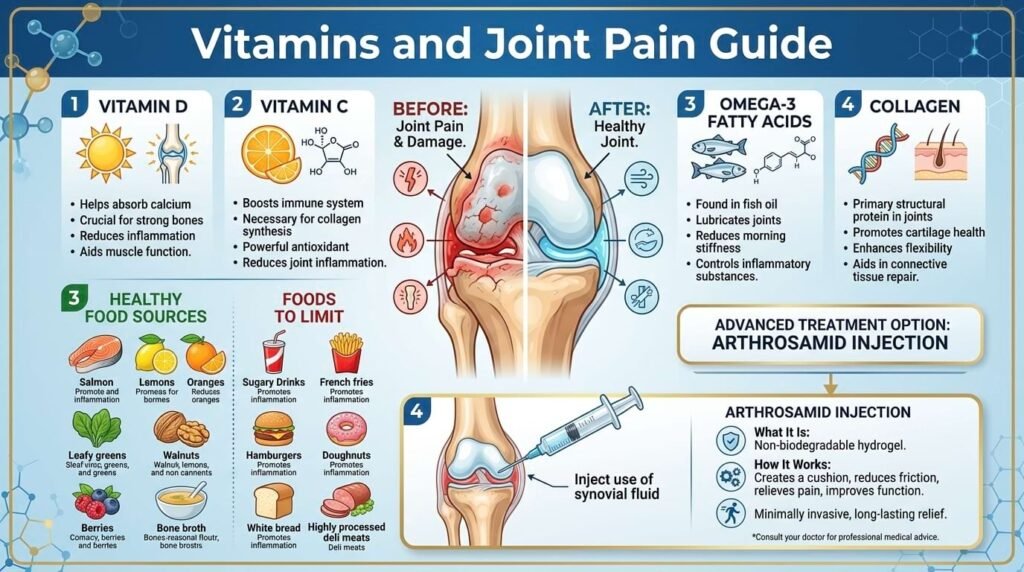
Vitamin C for Knee Pain: More Than Just Immunity
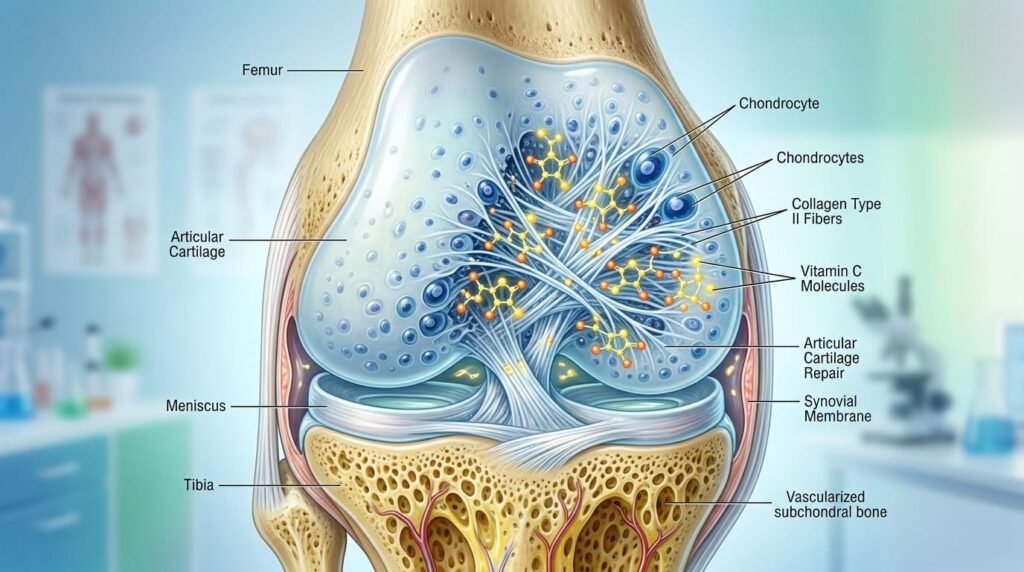
Most people know Vitamin C for fighting colds, but it plays a much more important role in knee health. It is essential for collagen production, antioxidant protection, and cartilage repair.
Vitamin C Builds the Framework Joints Depend On
Collagen makes up about 70% of joint cartilage, and Vitamin C is the key nutrient needed to produce it. Without enough Vitamin C, collagen production slows down, making cartilage repair difficult. It also acts as a powerful antioxidant that helps neutralise free radicals and reduce inflammation in the joints.
How Vitamin C Deficiency Affects the Knees
Even mild Vitamin C deficiency can increase the risk of knee osteoarthritis progression. Studies show that low Vitamin C intake is linked to faster cartilage loss and higher inflammation. This leads to more swelling, stiffness, and pain over time.
Vitamin C and Collagen Work Together
Vitamin C helps convert amino acids into stable collagen fibres. This is why taking Vitamin C with collagen supplements is highly effective Vitamin C provides the support needed to build and repair joint cartilage.
Vitamin C and Joint Inflammation
Knee joints are highly vulnerable to oxidative stress. Vitamin C concentrates in the synovial fluid and helps protect the joint lining from damage. Consistent intake supports the body’s natural defence against inflammation.
How Much Vitamin C Do You Need?
Adults need 65–90 mg daily. For those with active joint inflammation, 200 mg from food sources is often recommended. Food sources like bell peppers, citrus fruits, strawberries, broccoli, and guava are best. High-dose supplements should be taken carefully and preferably under medical advice.
Best Food Sources of Vitamin C for Joint Health
- Red and yellow bell peppers — among the highest Vitamin C content of any food
- Citrus fruits — oranges, grapefruits, lemons
- Strawberries and kiwi — high Vitamin C with additional antioxidant benefits
- Broccoli and Brussels sprouts — excellent sources that also provide folate and knee health support
- Guava — exceptionally high in Vitamin C and widely available in many Asian markets
These foods aren’t just good for joints; a diet built around them naturally supports immune health, skin, and cardiovascular function as well.
Other Important Vitamins and Nutrients
- Omega-3 Fatty Acids: Omega-3 fatty acids are one of the most researched natural options for joint pain, with strong supporting evidence.
How Omega-3 Helps Reduce Knee Inflammation
Fish oil works by lowering inflammatory chemicals in the body. Studies show it can significantly reduce joint pain, stiffness, and swelling especially in rheumatoid arthritis. Many people with osteoarthritis also report less morning stiffness and better comfort.
Best Sources of Omega-3 for Knee Health
The richest food sources are fatty fish like salmon, mackerel, and sardines. For plant-based options, algae-based omega-3 supplements are a good alternative. Omega-3 is considered one of the safest supplements for knee pain with minimal side effects.
- Collagen Peptides: Provide building blocks for cartilage repair. Type II collagen is especially helpful for knee joints.
- Vitamin K2: Works with Vitamin D to direct calcium to bones instead of soft tissue.
- Turmeric (Curcumin): A natural anti-inflammatory that helps reduce knee pain and swelling.
Other Key Nutrients Knees Depend On
Several important nutrients work alongside vitamins and joint pain management to support overall knee health.
Calcium for Knee Pain
Calcium is essential for strong bones. Low calcium levels can increase stress on knee joints and cartilage. Adults need 1,000–1,200 mg daily. Good sources include dairy, leafy greens, and fortified plant milks. Calcium citrate is usually better absorbed, especially for those with digestive issues.
Zinc and Knee Health
Zinc plays a key role in collagen production and immune regulation. People with low zinc levels often experience more joint inflammation. Including zinc-rich foods or supplements may help reduce swelling and support vitamins and joint pain relief.
Niacinamide for Knee Pain
Niacinamide (a form of Vitamin B3) has shown promise in early studies for improving joint flexibility and reducing inflammation in osteoarthritis. It can be a helpful addition for vitamins and joint pain management.
Iron Deficiency and Knee Pain
Iron deficiency can indirectly worsen knee pain by reducing oxygen supply to joint tissues, increasing fatigue and pain sensitivity. Checking iron levels is recommended if you feel constantly tired along with knee discomfort.
Collagen for Knee Joint Health
After the mid-20s, natural collagen production declines, leading to increased knee pain and cartilage wear. Collagen supplements provide essential amino acids that help repair and rebuild cartilage tissue. Type II collagen is especially effective for reducing pain and improving joint function in osteoarthritis. Hydrolysed collagen peptides absorb well, and combining them with Vitamin C makes the results even better.
Folate and Knee Health
Folate helps control homocysteine levels in the body. High homocysteine is linked to increased joint inflammation. Eating leafy greens, legumes, and fortified foods supports folate intake and complements vitamins and joint pain care.
Foods Harmful for Arthritis
Getting enough joint care vitamins matters — but so does avoiding what makes inflammation worse.
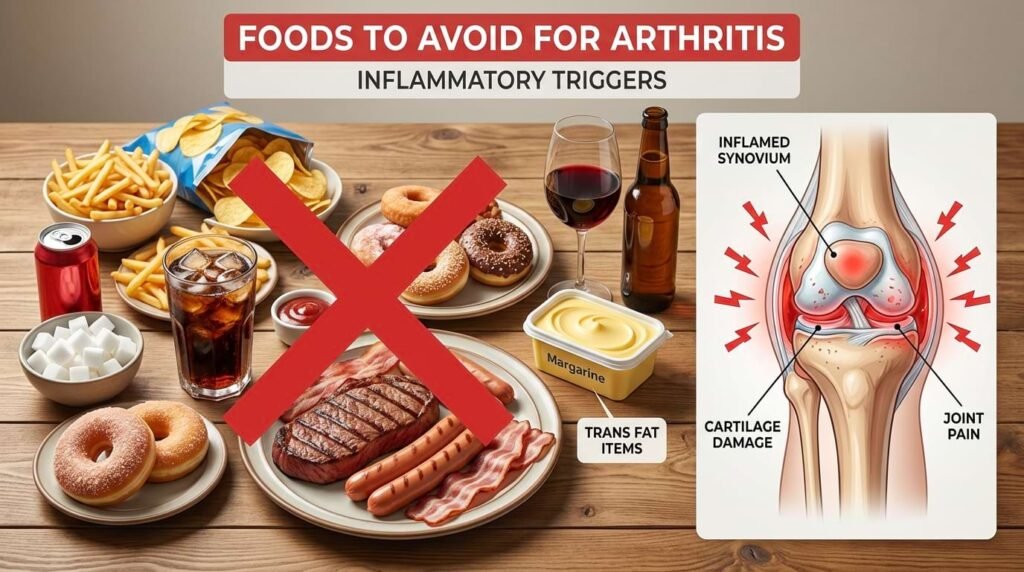
Foods harmful for arthritis include:
- Processed sugars and refined carbs — spike inflammatory markers quickly
- Red and processed meats — high in compounds that promote joint inflammation
- Trans fats and fried foods — directly trigger inflammatory responses
- Alcohol — disrupts nutrient absorption and worsens joint swelling
- Excess sodium — can contribute to water retention around joints
Managing uric acid is also worth noting here. The normal rate of uric acid is 3.4–7.0 mg/dL for men and 2.4–6.0 mg/dL for women. When it rises above these levels a condition called hyperuricemia uric acid crystals can deposit in joints, causing intense pain. Limiting purine-rich foods (organ meats, shellfish, beer) helps keep levels in range.
Arthrosamid Injection for Knee Pain: A Modern Clinical Option
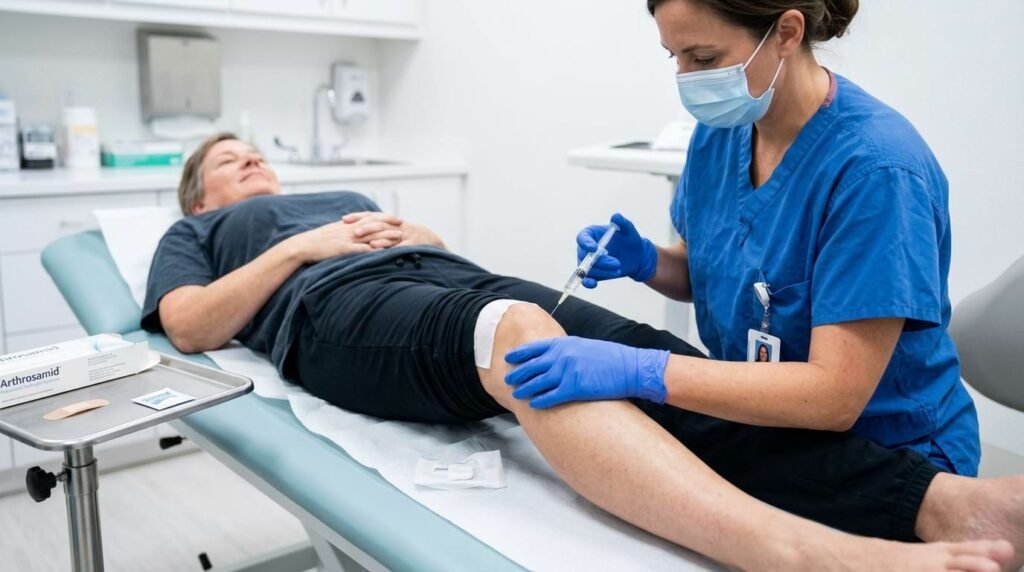
Vitamins and supplements address knee pain from the inside out. But for those dealing with moderate to severe osteoarthritis, a newer medical option has been gaining clinical attention: the Arthrosamid injection.
How Does It Work for Knee Arthritis?
Once injected, the hydrogel attaches to the inner lining of the joint capsule. This creates a stable, water-retaining layer that reduces friction between joint surfaces, eases pain during movement, and helps restore some of the function lost due to cartilage degradation.
Clinical trials have shown meaningful pain relief lasting up to two years in some patients with a low side effect profile compared to corticosteroid injections, which can weaken cartilage with repeated use.
Who Is It Suitable For?
Arthrosamid is generally considered for adults with mild to moderate knee osteoarthritis who haven’t responded adequately to physiotherapy, joint care vitamins, or oral anti-inflammatory medication. It’s not a cure but as a bridge between conservative management and surgery, it offers a clinically relevant middle ground.
Arthrosamid vs. Other Injections
| Injection Type | How It Works | Duration of Effect |
| Corticosteroid | Reduces inflammation short-term | 4–12 weeks |
| Hyaluronic Acid | Lubricates the joint | 3–6 months |
| PRP (Platelet-Rich Plasma) | Promotes tissue repair | Variable |
| Arthrosamid | Cushions and integrates into joint lining | Up to 2 years |
Always consult an orthopaedic specialist before considering any injection-based treatment. Arthrosamid is not available in all regions and is typically offered through specialist clinics.
When Vitamins Alone Are Not Enough: Recognising the Limits
Supplements for bones and joints are genuinely useful. But they’re not a universal fix.
Signs That Something More May Be Needed
- Pain that wakes a person up at night
- Significant swelling that doesn’t respond to anti-inflammatory nutrients or joint relief cream
- Joint instability — the knee giving way during normal activity
- Loss of range of motion that limits daily tasks
In these situations, a medical assessment is more appropriate than adding another supplement. Vitamins for knee arthritis pain work best as preventive and supportive tools not as replacements for diagnosis and treatment.
Can Too Many Vitamins Actually Harm the Knees?
This is a question worth taking seriously. More is not always better and with certain vitamins, taking too much can cause real problems.
The Risks of Vitamin Overdose
Fat-soluble vitamins specifically Vitamins A, D, E, and K are stored in body fat and the liver. Unlike water-soluble vitamins (B and C), excess amounts don’t simply flush out. Taking high doses over time can lead to toxicity.
Vitamin D toxicity (Hypervitaminosis D): Excessive Vitamin D raises calcium levels in the blood a condition called hypercalcaemia. Symptoms include nausea, weakness, frequent urination, and in severe cases, kidney damage. This typically occurs from over-supplementing rather than sun exposure or food.
Vitamin A excess: High doses of preformed Vitamin A (from supplements, not food) can cause headaches, liver damage, and notably for joint health actually worsen bone density over time, increasing fracture risk around weight-bearing joints like the knee.
Vitamin E in high doses: While beneficial at normal levels, megadoses of Vitamin E can interfere with blood clotting and may increase bleeding risk, which is particularly relevant for anyone on blood-thinning medication.
Calcium overconsumption: Taking significantly more calcium than the body needs doesn’t strengthen bones further. Instead, excess calcium can build up in arteries and soft tissue potentially contributing to joint stiffness rather than relieving it.
The Safe Approach
- Always get blood levels tested before starting high-dose supplementation
- Follow recommended daily allowances unless directed otherwise by a medical professional
- Treat supplements as additions to a balanced diet not replacements for one
- Avoid stacking multiple multivitamins with individual supplements, which can cause unintended dosing overlap
The goal is adequacy, not excess. Joint care vitamins work best when levels are brought from deficient to optimal not pushed beyond what the body can safely use.

FAQ
Q1: Which vitamins are most effective for knee joint pain?
Vitamin D, Vitamin C, and omega-3 fatty acids are the most effective for vitamins and joint pain. Vitamin D reduces inflammation, Vitamin C supports collagen production, and omega-3s help lower joint swelling.
Q2: Can vitamin deficiency actually cause knee pain?
Yes. Vitamin deficiency is directly linked to vitamins and joint pain. Low Vitamin D and B12 increase inflammation and pain sensitivity. A blood test is the best way to check.
Q3: Does Vitamin D help with knee stiffness?
Yes. Vitamin D helps reduce knee stiffness and inflammation, especially morning stiffness. Restoring normal levels often improves joint comfort.
Q4: Is fish oil good for knee inflammation?
Yes. Fish oil is effective for knee inflammation due to its omega-3 content. It reduces swelling and works well with other joint supplements.
Q5: What are the best supplements for bones and joints together?
The best combination includes Vitamin D3 with K2, collagen peptides, omega-3s, and turmeric.
Q6: How does collagen help knee cartilage repair?
Collagen provides essential amino acids to rebuild cartilage. Type II collagen is particularly helpful for reducing knee pain and improving flexibility.
Q7: Should a knee brace be used alongside vitamins for knee pain?
Yes. A knee brace offers mechanical support while vitamins reduce inflammation from inside. Using both together gives better results.
Q8: Are there foods to avoid when taking vitamins for knee arthritis pain?
Yes. Avoid processed sugars, fried foods, red meat, and excess alcohol. These increase inflammation and reduce the benefits of vitamins and joint pain supplements.
Vitamins and knee pain are more closely connected than most people realise. The right nutrients not only help reduce pain but also support cartilage, collagen, bone strength, and inflammation control.
You don’t need a complete diet overhaul. Start by checking your Vitamin D levels, add omega-3s to your routine, and cut down on inflammatory foods. Small, consistent changes can bring noticeable improvement over time.
Read more: Modern Osteoarthritis Treatment Alternative to Knee Replacement Injection
Read more: Why Arthritis Pain in Cold Weather Causes More Knee Pain in Winter


