
Arthritis pain in cold weather is a problem many people notice as soon as temperatures drop. Joints that felt manageable during summer can suddenly become stiff, swollen, and uncomfortable in winter. Doctors often hear patients say their knees or fingers seem to predict the weather better than the forecast.
Cold temperatures affect the body in several ways. Blood circulation slows slightly, muscles tighten, and joints may feel less flexible. These changes can increase inflammation and lead to discomfort. For people already living with arthritis, winter can feel like an unwelcome guest that refuses to leave.
Some patients also start researching treatment options when symptoms increase. While painkillers and physiotherapy remain common solutions. Some patients also consider modern therapies, where understanding the arthrosamid injection cost can be an important part of evaluating long-term joint pain treatment options.
In the United Kingdom, treatment decisions may also consider arthrosamid injection cost UK when exploring options for persistent joint pain. Understanding winter arthritis triggers helps manage symptoms better.
Why Cold Weather Causes Arthritis Pain
Many people wonder whether winter actually causes joint pain or if it simply feels worse. Research suggests that weather changes can influence joints, especially when arthritis is already present.
Changes in Barometric Pressure
Barometric pressure often drops before cold or rainy weather arrives. This change can affect tissues around the joints.
When pressure decreases, the tissues surrounding joints may expand slightly. For people with arthritis, this expansion can increase discomfort and stiffness. This is one reason why arthritis pain in cold weather becomes more noticeable when winter storms approach.
Patients sometimes joke that their knees know when snow is coming. While joints cannot predict the weather, pressure changes can certainly make them feel that way.
Joint Fluid Thickening
Healthy joints contain synovial fluid. This fluid acts like a lubricant and allows smooth movement.
Cold temperatures can make this fluid slightly thicker. When lubrication decreases, joints may feel stiff and harder to move. People experiencing cold knee arthritis often notice that their knees feel less flexible in the morning or after sitting for long periods.
As a result, many patients report increased arthritis pain in cold weather during winter months.
Muscle Tightness in Winter
Muscles naturally contract when exposed to cold temperatures. This reaction helps the body conserve heat.
However, tighter muscles can also place extra pressure on nearby joints. For someone already experiencing arthritis, this added pressure may increase cold knees pain and stiffness.
This explains why some people feel relief once they warm up or begin gentle movement.
Reduced Blood Circulation
Cold weather can slow blood circulation in certain parts of the body. When circulation decreases, joints may receive less oxygen and nutrients.
For people with arthritis, this can increase stiffness and discomfort. Reduced circulation is another reason why many patients notice stronger arthritis pain in cold weather during colder months.
Less Physical Activity in Winter
People tend to move less during winter because cold weather discourages outdoor activity. Long periods of sitting can make joints stiff and painful.
Reduced movement can worsen joint flexibility and increase inflammation, which may contribute to arthritis pain in cold weather.
Increased Joint Sensitivity
Cold air can make nerves around joints more sensitive. This increased sensitivity may cause people to notice pain more easily.
For individuals with arthritis, even small changes in temperature may trigger cold knees arthritis symptoms and joint discomfort.
Is Arthritis Worse in Cold Weather?
Cold weather can make symptoms of osteoarthritis and rheumatoid arthritis more noticeable for many people.
The answer varies from person to person, but many studies show that temperature and humidity can influence joint pain levels.
Does Cold Make Arthritis Worse?
Yes, in many cases colds make arthritis worse. Cold weather can increase stiffness and reduce circulation around joints. These factors can amplify existing inflammation.
People with arthritis may notice:
- More stiffness in the morning
- Increased swelling
- Reduced joint flexibility
These symptoms are common signs of arthritis pain in cold weather.
Which Arthritis Is Worse in Cold Weather?
Which Arthritis Is Worse in Cold Weather?
Cold temperatures often make joint stiffness and discomfort more noticeable in conditions such as osteoarthritis and rheumatoid arthritis. Two types are often affected most:
Osteoarthritis
This condition occurs when cartilage gradually wears down. Cold temperatures may increase stiffness around affected joints.
Rheumatoid Arthritis
People with rheumatoid arthritis cold weather symptoms often experience stronger flare-ups during winter. This autoimmune condition causes inflammation that may react to environmental changes.
Common Symptoms During Winter
People experiencing arthritis often report similar symptoms when temperatures fall.
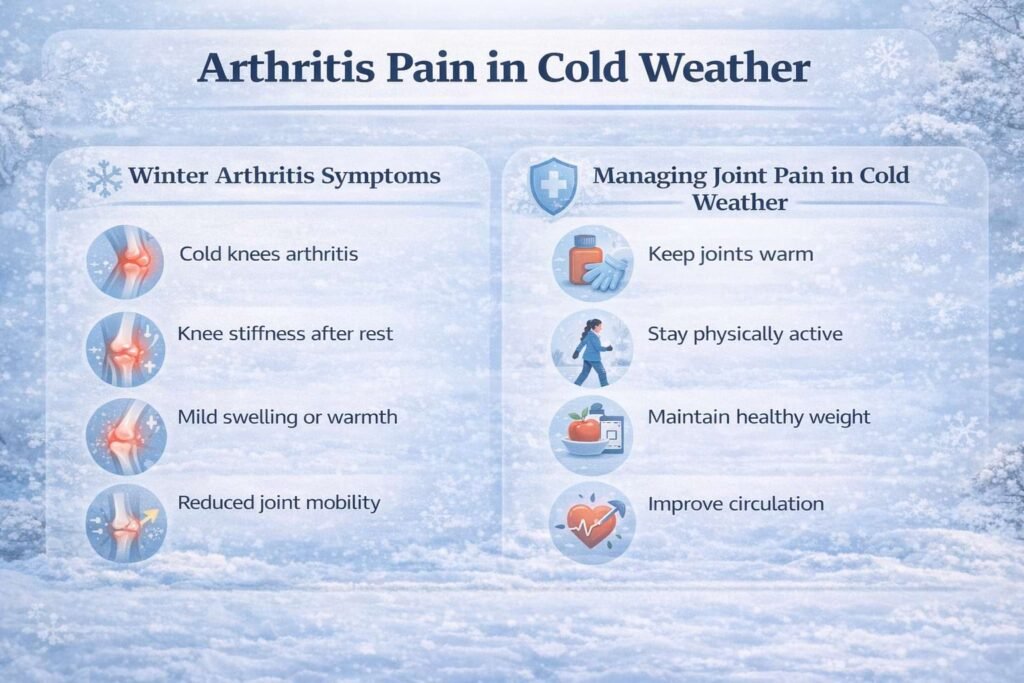
Cold Knees Arthritis
Many individuals notice cold knees arthritis symptoms first. Knees carry much of the body’s weight, making them vulnerable to stiffness and swelling during colder months.
Symptoms may include:
- Knee stiffness after rest
- Difficulty bending the joint
- Mild swelling or warmth
Cold Knees Pain and Swelling
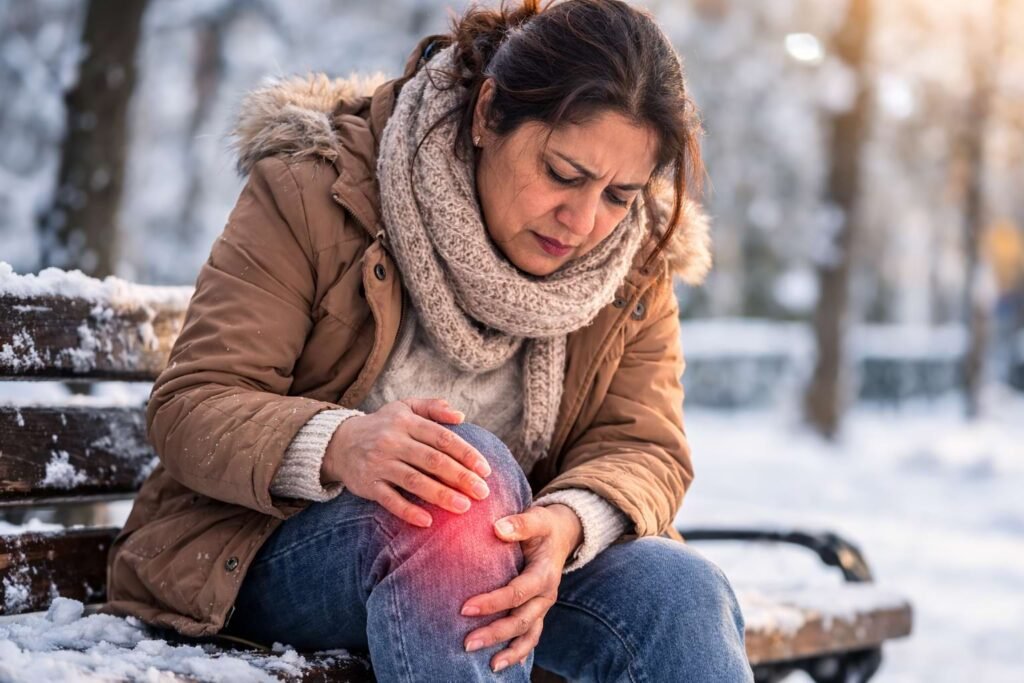
Cold knee pain is another frequent complaint. The joint may feel sore or tight, especially after exposure to cold air.
This discomfort can increase when walking outside in winter without adequate warmth.
Reduced Joint Mobility
Cold weather can also limit joint movement. When muscles tighten and synovial fluid thickens, joints may not move as smoothly as usual.
For many people, these symptoms contribute to noticeable arthritis pain in cold weather.
Tips for Managing Joint Pain in Cold Weather
Simple lifestyle changes can help reduce winter joint discomfort. When temperatures drop, joints often become stiff and painful. However, a few daily habits can make a noticeable difference. These strategies help maintain flexibility, support circulation, and reduce arthritis pain in cold weather.
Keep Your Joints Warm
Keeping joints warm helps improve blood circulation and reduce stiffness. Cold air can tighten muscles and restrict joint movement, so protecting your joints from cold temperatures is important.
Helpful tips include:
- Wearing thermal clothing, gloves, and knee warmers when going outside
- Using knee supports or compression sleeves to maintain warmth and stability
- Applying warm compresses or heating pads to stiff joints for short periods
- Taking warm showers or baths to relax muscles and improve circulation
These small changes may reduce arthritis pain in cold weather significantly and help joints stay more flexible throughout the day.
Stay Physically Active
Exercise might feel difficult when joints ache, but gentle movement actually improves flexibility and joint lubrication. Regular physical activity helps maintain muscle strength, which supports and protects joints.
Low-impact activities such as walking, swimming, cycling, or stretching help maintain joint function without placing too much pressure on the joints. Even simple movements like light yoga or morning stretches can improve mobility.
Regular movement can reduce stiffness linked to arthritis pain in cold weather and help people stay active during winter months.
Maintain a Healthy Weight
When body weight increases, the joints that carry most of the body’s load such as the knees, hips, and ankles experience greater pressure. Over time, this pressure can worsen joint pain and accelerate cartilage wear.
Losing even a small amount of weight can help reduce cold knees pain and improve mobility. A balanced diet combined with regular exercise can help maintain a healthy weight and support long-term joint health.
Improve Circulation
Good circulation keeps joints nourished and flexible. When blood flow improves, tissues receive more oxygen and nutrients, which may reduce inflammation and stiffness.
Helpful strategies include:
- Light stretching in the morning to loosen stiff joints
- Staying hydrated throughout the day to support joint lubrication
- Avoiding long periods of sitting or inactivity
- Wearing warm clothing to keep blood vessels from constricting
These habits support effective arthritis in cold weather treatment and help maintain joint flexibility during colder months.
Maintain Vitamin D Levels
During winter, people often spend less time in sunlight. Reduced sun exposure may lower vitamin D levels, which can affect bone and joint health.
Eating vitamin D–rich foods such as fish, eggs, and fortified dairy products can help maintain healthy bones. Some doctors may also recommend supplements if vitamin D levels are low.
Healthy vitamin D levels support stronger bones and may help reduce joint discomfort during winter.
Protect Your Joints During Outdoor Activities
Cold temperatures can increase the risk of joint stiffness or injury when exercising outside. Preparing properly before outdoor activity helps protect the joints.
Arthritis in Cold Weather Treatment
Managing arthritis often requires a combination of therapies.
Medication and Anti-Inflammatories
Doctors frequently recommend anti-inflammatory medication to reduce swelling and discomfort. These medicines may help control symptoms during colder months.
Many patients rely on medication as part of their arthritis in a cold weather treatment plan.
Physiotherapy
Physiotherapy helps strengthen muscles that support joints. Strong muscles reduce strain and improve mobility.
Therapists often recommend tailored exercises for individuals experiencing arthritis pain in cold weather.
Lifestyle Adjustments
Simple adjustments such as improving posture, using supportive footwear, and staying active can reduce winter joint pain.
These changes help prevent worsening symptoms and improve long-term joint health.
Advanced Treatments for Persistent Joint Pain
For some patients, traditional treatments do not provide sufficient relief. In these situations, doctors may discuss additional medical options.
One treatment sometimes considered for knee osteoarthritis is hydrogel-based therapy. Patients exploring modern procedures often ask about arthrosamid injection london clinics when looking for specialised treatment.
Others search online for arthrosamid injection near me when trying to find providers who offer this therapy locally. Specialists evaluate each patient carefully to determine whether the treatment is appropriate.
Such advanced options may complement traditional arthritis in cold weather treatment strategies, especially for individuals experiencing persistent joint discomfort.
FAQ
Can cold weather affect arthritis symptoms?
Yes, cold temperatures can affect joints, especially for people living with arthritis. Lower temperatures may slow blood circulation and increase stiffness in the joints. As a result, many individuals experience stronger arthritis pain in cold weather, particularly during winter mornings or after long periods of inactivity.
Is arthritis worse in cold weather?
For many people, arthritis worse in cold weather becomes noticeable because muscles tighten and joints lose flexibility in colder conditions. Cold temperatures can also make joint fluid thicker, which may increase stiffness and discomfort during daily movement.
What helps arthritis in cold weather?
Several simple strategies can help manage symptoms during winter. Staying physically active, wearing warm clothing, and using heat therapy may help improve circulation and reduce stiffness. These habits support effective arthritis in cold weather treatment and help maintain better joint mobility.
Does cold make arthritis worse at night?
Yes, in many cases colds make arthritis worse during the night because joints remain inactive for several hours. When joints stay still for too long, stiffness may increase, making pain and discomfort more noticeable in the morning.
Read more: Knee Arthritis Exercises to Avoid That Increase Knee Pain
Read more: New non-surgical knee pain treatments in UK 2026 with Arthrosamid injection


