
Knee pain after steroid injection is one of the most frustrating experiences a patient can face — the relief felt real, the swelling settled, movement improved, and then, weeks or months later, the discomfort crept back. Cortisone shots are among the most widely used treatments for knee pain across the UK, and for good reason. They reduce inflammation quickly and effectively. But they do not repair the underlying joint damage. When the medication wears off, the structural problem that caused the inflammation is still there waiting.
Why Knee Pain Comes Back After a Cortisone Shot
Cortisone suppresses inflammation effectively — but inflammation is not the problem. It is the response to the problem. Once the medication clears, the underlying joint damage is still there, and the body picks up exactly where it left off.
The Relief Is Real — But So Is the Limitation
A cortisone shot works by suppressing the inflammatory response inside the joint. Swelling reduces. Pain signals quieten. For many patients, this creates meaningful short-term relief — enough to move more freely, sleep better, and get through the day.
The problem is straightforward. Inflammation is the symptom, not the cause.
Whether the underlying issue is cartilage degeneration, ligament laxity, meniscal irritation, or joint instability — cortisone does not touch any of it. Once the medication clears the system, the body picks up exactly where it left off. The inflammatory process restarts. Pain returns.
This is why cortisone injection wears off — not because the injection failed, but because it was never designed to do more than pause the process temporarily.
Why the Cortisone Shot Wore Off Faster Than Expected
Several factors determine how long a cortisone shot lasts in the knee. On average, patients experience relief for anywhere between two weeks and six months. The variation depends on:
- Severity of the underlying joint damage
- Activity level during the post-injection period
- Whether the root mechanical problem has been addressed
- Overall systemic inflammatory load
- Whether the injection was placed accurately under ultrasound guidance
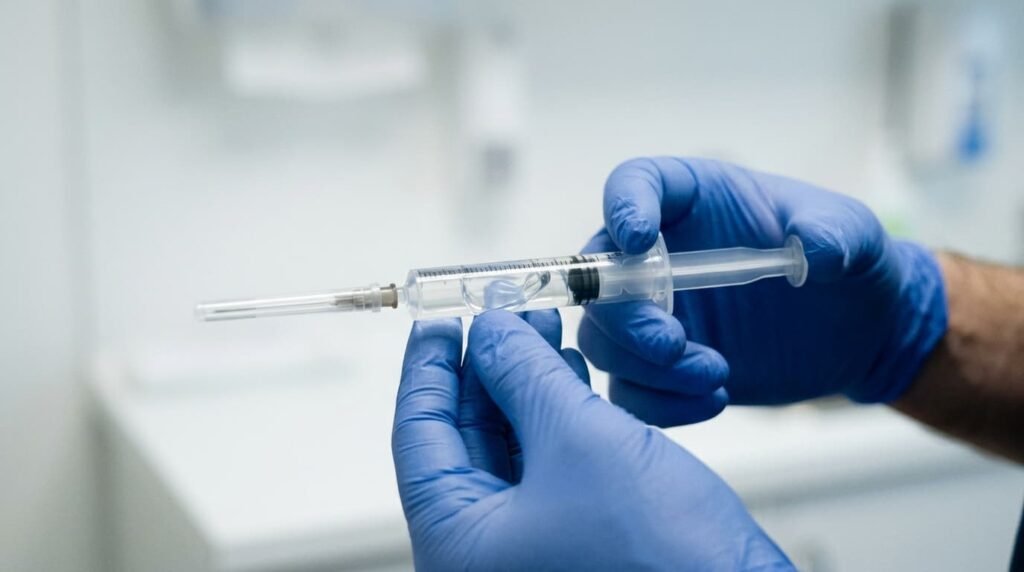
When pain returns after cortisone shot in the knee sooner than expected, it often signals that the underlying condition is more advanced than the initial assessment suggested — or that the injection missed its optimal placement.
Hydrocortisone Injection Side Effects — What the Evidence Shows
Most patients tolerate a single cortisone injection without serious problems. However, the side effect profile changes significantly with repeated use — and many patients are not told this clearly enough at the outset.
Common Side Effects After a Steroid Knee Injection
The most frequently reported hydrocortisone injection side effects include:
- Post-injection pain flare — intense soreness at the injection site lasting 24 to 72 hours. This is the body’s initial response and typically settles without intervention.
- Hydrocortisone injection bruising — minor bruising around the injection site, usually resolving within a few days.
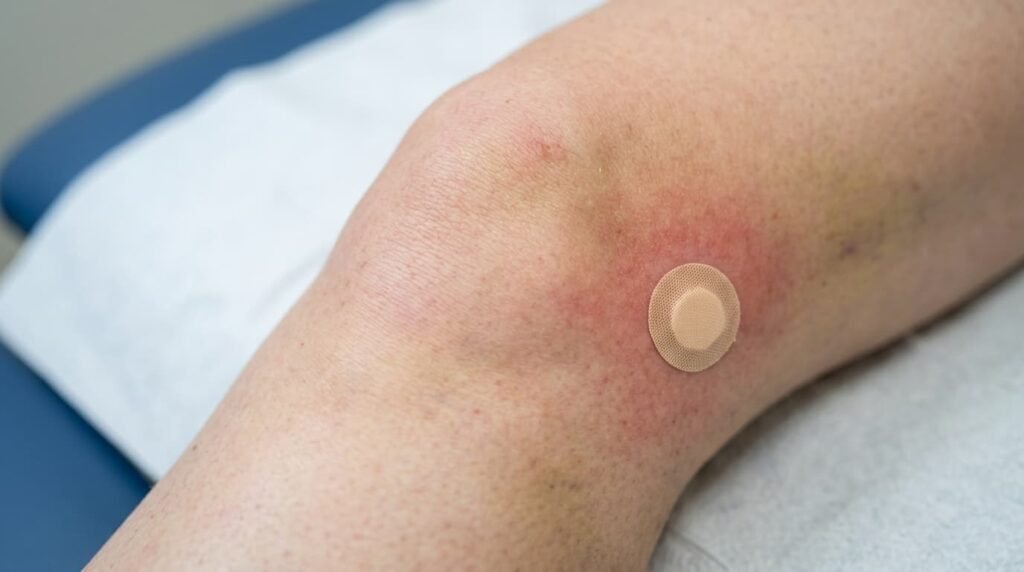
- Steroid injection swelling after — temporary localised swelling, distinct from the joint swelling being treated.
These are generally mild and self-limiting. Resting the joint for 24 hours and taking paracetamol or ibuprofen is usually sufficient.
Serious Side Effects That Require Medical Attention
Serious cortisone injection side effects are less common but clinically significant, particularly with repeated use:
Infection — any injection into a joint carries a theoretical risk. High temperature, increasing redness, warmth, and worsening pain in the days after the procedure should prompt urgent medical review. Sterile technique is non-negotiable for this reason.
Steroid injection mood changes — emotional fluctuations, sleep disturbance, anxiety, or low mood can follow cortisone injections due to systemic steroid absorption. These typically resolve within days.
Cortisone injection allergic reaction — rare but possible. Signs include swelling of the lips, tongue or throat, difficulty breathing, and sudden dizziness. This requires immediate emergency attention.
Hydrocortisone injection Cushing’s syndrome — prolonged or repeated use can produce facial puffiness, weight gain in the upper back and abdomen, and skin changes. Patients on frequent injections should be monitored.
Steroid injection adrenal insufficiency — repeated courses can suppress natural cortisol production. Patients on multiple courses should ask about carrying a steroid emergency card.
Hydrocortisone injection children growth — long-term use in children and teenagers can slow normal growth. Paediatric patients require careful height and weight monitoring throughout treatment.
The Problem With Repeat Steroid Injections
Each cortisone injection suppresses inflammation temporarily without touching the structural cause. The joint continues to deteriorate between injections — and the side effect profile accumulates with every additional dose.
When the Second Injection Works Less Well Than the First
A pattern reported consistently: the first cortisone injection provided good relief, the second less so, and the third barely worked at all. This is not a coincidence.
The joint continues to deteriorate between repeat cortisone injections in the knee. By the time another procedure is being considered, the underlying damage is often more advanced than when treatment first began.
There is also the question of cortisone injection cartilage damage repeated use causes. Research indicates that frequent intra-articular steroid injections — more than three to four per year in the same joint — may accelerate cartilage loss. The steroid injection long-term side effects profile includes this cartilage concern, which is why most specialists recommend limiting frequency carefully.
For patients wondering how long between steroid injections knee UK guidelines suggest, the general clinical consensus is a minimum of three months between injections in the same joint, with a cautious approach to cumulative dosing.
Steroid Injection Knee Not Working — What It Actually Means
When treatment stops producing meaningful relief, it is not a dead end. It is information. The underlying joint condition has progressed to a point where pain suppression alone is no longer enough.
This is the moment to explore alternatives to cortisone shots for knee pain — not book another cortisone appointment. Continuing the same cycle when knee pain after steroid injection keeps returning is not a clinical strategy.
Alternatives to Cortisone Shots for Knee Pain
When steroid injections stop delivering adequate relief, there are established non-steroid options available in the UK. The right choice depends on the grade of osteoarthritis, treatment history, and how long-lasting the relief needs to be.
PRP — Cortisone Shot vs PRP for Knee Pain
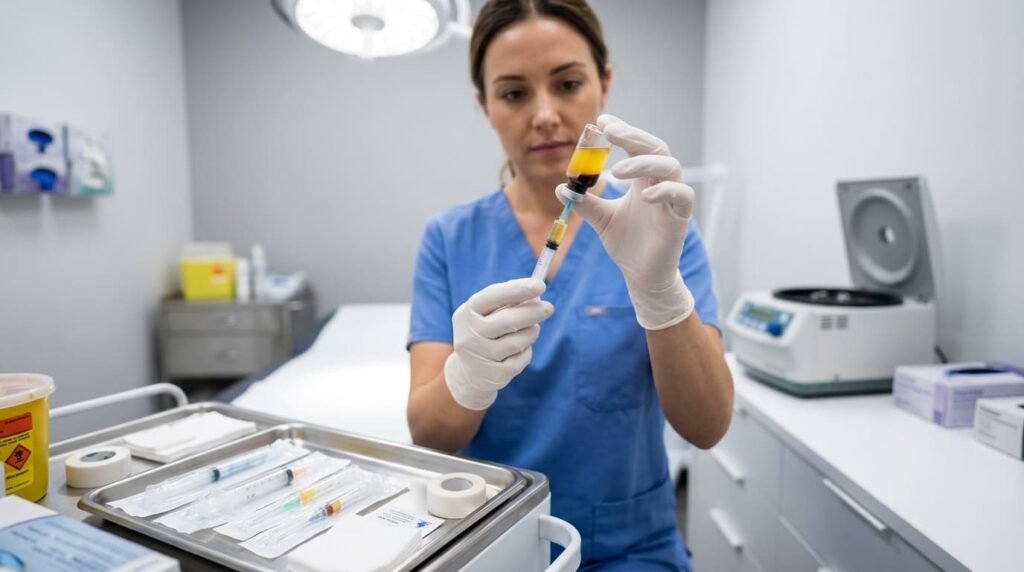
Platelet-rich plasma therapy uses growth factors drawn from the patient’s own blood to support tissue repair. Unlike cortisone, PRP is not primarily anti-inflammatory — it is regenerative in intent.
In the cortisone shot vs PRP knee pain comparison, the distinction is purpose. Cortisone quietens inflammation. PRP attempts to support the healing of the tissues driving that inflammation. The PRP injection vs steroid knee evidence base has strengthened in recent years, with clinical guidelines increasingly acknowledging it as a reasonable option for mild to moderate knee osteoarthritis.
PRP typically lasts longer than cortisone — around 6 to 12 months for suitable patients — though results vary based on the grade of joint involvement and the preparation technique used.
Arthrosamid — A Non-Steroid Knee Injection for Sustained Relief
For patients where steroid injection knee UK alternatives are being considered seriously, Arthrosamid represents one of the most significant developments in non-surgical knee pain management in recent years.
Arthrosamid is a hydrogel — 97.5% water with a cross-linked polyacrylamide structure. Unlike cortisone or hyaluronic acid, it does not get absorbed or broken down. When injected into the knee, it integrates into the synovial lining permanently, providing sustained cushioning and reducing joint inflammation.
The arthrosamid vs steroid injection knee comparison comes down to duration and mechanism. Cortisone lasts weeks to months. Arthrosamid can provide relief for up to three to four years from a single procedure. For patients whose knee pain after steroid injection keeps returning, this represents a fundamentally different approach.

Private knee injection London clinics offering Arthrosamid provide this under ultrasound guidance as an outpatient procedure. Most patients drive themselves home the same day.
For patients whose knee pain after steroid injection has become a repeating cycle, the hydrogel knee injection vs cortisone question is increasingly one patients bring to specialist consultations — and the answer depends on the grade of osteoarthritis, previous treatment history, and the patient’s goals.
Arthrosamid Injection After Steroid Failed — Is It Appropriate?
For patients who have had one or more steroid injections without sustained benefit, arthrosamid injection after steroid failed is a clinically relevant question. The two treatments work through entirely different mechanisms, meaning prior steroid use does not preclude Arthrosamid candidacy in most cases. A specialist assessment will confirm eligibility based on the specific joint condition and treatment history.
Regenerative Injection Therapy for the Knee
Regenerative injection therapy for the knee encompasses both PRP and prolotherapy — a treatment that uses an irritant solution to stimulate natural repair in ligament and tendon structures. For patients whose knee pain root cause involves soft tissue instability rather than pure cartilage degeneration, regenerative options may address the underlying driver more directly than anti-inflammatory treatment.
When to See a Specialist
Many patients dealing with knee pain after steroid injection find themselves caught between ongoing pain and surgery that feels premature. This middle ground is where specialist assessment adds the most value — not to fast-track a procedure, but to map out what is actually possible.
Knee Pain Not Ready for Surgery — The Middle Ground
Many patients find themselves in a difficult position. The pain is significant enough to affect daily life. But surgery — particularly knee replacement — feels premature, unwanted, or clinically inappropriate at this stage.

This middle ground is where a sports medicine doctor for knee pain or an orthopaedic physician can evaluate the joint in full — imaging, movement assessment, treatment history — and map out a management plan that extends well beyond the cortisone cycle.
For patients in London, cortisone injection knee NHS waiting time can run to several months. Private knee injection London alternatives, available through specialist clinics, offer faster access to the full range of current treatment options — including Arthrosamid, PRP, and structured rehabilitation — without the wait.
FAQ
Why does knee pain after steroid injection keep returning?
Cortisone reduces inflammation but does not repair the structural damage causing it. Once the medication clears, inflammation returns if cartilage wear, ligament strain, or joint instability is still present. The joint needs more than temporary pain suppression.
How long does a cortisone shot last in the knee?
Relief typically lasts between two weeks and six months. Duration depends on the severity of the underlying condition, activity levels, and whether the structural problem has been addressed alongside the injection.
Are repeated steroid injections bad for the knee?
Research suggests that frequent intra-articular steroid use — more than three to four times per year — may accelerate cartilage loss over time. Most UK specialists recommend a minimum of three months between injections in the same joint.
What are the main steroid injection side effects to watch for?
Common effects include temporary post-injection soreness, bruising, and swelling. More serious effects from repeated use include adrenal insufficiency, features of Cushing’s syndrome, and mood changes. Infection, though rare, requires urgent attention if symptoms develop.
What alternatives exist when a steroid injection stops working?
PRP, Arthrosamid, hyaluronic acid, and structured physiotherapy are all established alternatives. Arthrosamid is particularly relevant for patients needing sustained relief — a single injection can provide benefit for up to three to four years.
What is the difference between Arthrosamid and a cortisone injection?
Cortisone is an anti-inflammatory that lasts weeks to months and is eventually absorbed. Arthrosamid is a permanent hydrogel implant that integrates into the joint lining, providing sustained cushioning and inflammation reduction without repeat dosing.
When should a private knee specialist be consulted?
When steroid injections are no longer providing adequate relief, when pain is limiting daily activity, or when a comprehensive assessment of all available treatment options is needed rather than repeating the same short-term approach.
Knee pain after steroid injection returning is not a sign of failure — it is a signal that the underlying joint condition needs more than temporary inflammation control. Understanding why cortisone wears off, what its side effects profile looks like over repeated use, and what alternatives now exist puts patients in a far stronger position to make informed decisions about their care.
For those caught between ongoing pain and unwanted surgery, the treatment landscape in the UK has expanded considerably. Non-steroid options — including Arthrosamid and PRP — offer meaningful paths forward that address the joint more directly and with greater durability than the cortisone cycle allows.
Mr Syed Nadeem Abbas (MBBS, MRCSEd, MSc) is a London-based orthopaedic physician and one of the UK’s leading specialists in non-surgical knee osteoarthritis treatment, including Arthrosamid injection, practising at Harley Street.
Read more: Knee Pain During Pregnancy What Causes It and How to Treat It
Read more: Hydrotherapy for Knee Pain Could Be Your Best Treatment Option


