
Knee pain during pregnancy affects far more women than most pregnancy guides acknowledge. Back pain gets the spotlight. Pelvic girdle pain gets its own NHS leaflet. But knees tend to suffer quietly — and unnecessarily.
Pregnancy triggers a cascade of physical changes that place the knee under stress from multiple directions at once. Hormones loosen the ligaments that hold the joint stable. Body weight increases steadily, and the force through each knee during a single step can multiply significantly. The centre of gravity shifts forward, posture changes, and the knees are forced to compensate.
Add fluid retention, sciatic nerve compression, and flattening foot arches — and it becomes clear why so many pregnant women find their knees aching, swelling, or clicking without warning.
Why Do Knees Hurt During Pregnancy? The Real Causes
Joint pain during pregnancy rarely has just one cause. It is usually a combination of hormonal, mechanical, and postural changes all happening at once. Understanding what is driving the problem makes it a lot easier to address.
Relaxin Hormone and Knee Pain: The Hormonal Trigger
The hormone relaxin is produced in high quantities during the first trimester. Its job is to loosen the ligaments around the pelvis to prepare the body for birth. Sensible in theory — except relaxin does not only target the pelvis. It circulates throughout the body and affects every joint, including the knees.
Looser ligaments mean less stability. The knee relies heavily on its ligaments — the ACL, MCL, PCL, and LCL — to hold everything in alignment. When those ligaments become more lax due to pregnancy hormones, the joint can move slightly outside its optimal range, causing aching, stiffness, and that unsettling sensation of the knee feeling unreliable.
This is where knee pain pregnancy hormones becomes a genuine clinical category. It is not imagined and it is not weakness — it is physiology.
Weight Gain and Shifting Centre of Gravity
By the second and third trimester, the combination of a growing bump and normal pregnancy weight gain places considerably more load through the knee joints. Research suggests that for every pound of body weight gained, the force on the knee during walking increases by roughly three to four pounds.
The bump also shifts the centre of gravity forward. The body compensates — often by locking the knees back or adjusting stride length — and both adaptations place additional stress on the joint. This is one of the most common reasons for knee pain in the third trimester specifically.
Postural Changes and Gait Shifts During Pregnancy
Pregnant women often adopt a wider stance as the pregnancy progresses. This is instinctive and protective. The downside is that it changes the angle at which force passes through the knee, which can contribute to pain along the inner or outer side.
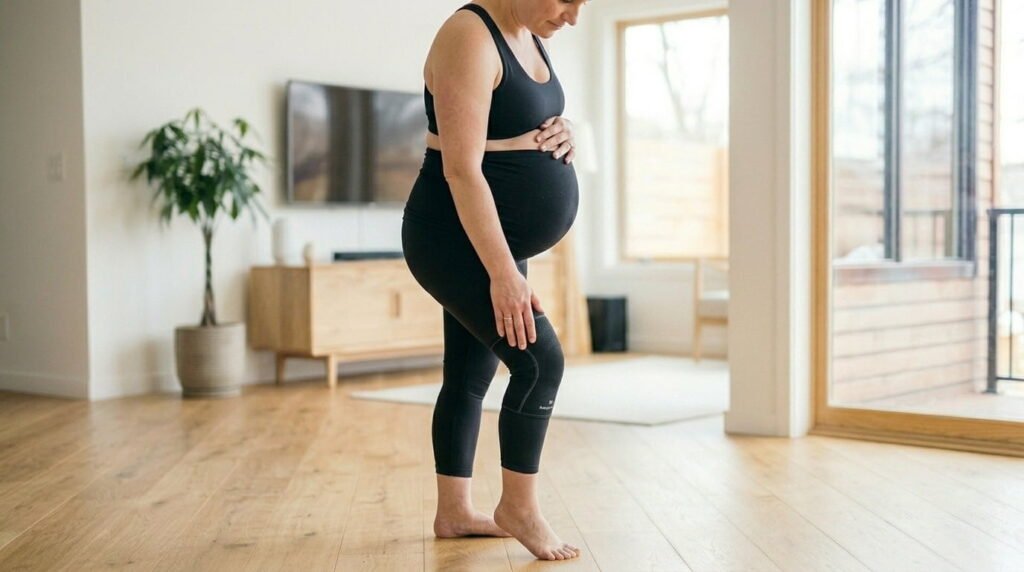
Flat feet are another factor. Clinical research has shown that foot arches often flatten during pregnancy, particularly in the third trimester. This inward rolling of the foot — called pronation — alters knee alignment and is a known contributor to outer knee pain during pregnancy.
Fluid Retention and Swollen Knee During Pregnancy
Swelling is extremely common in pregnancy, particularly in the lower limbs. When fluid accumulates around the knee joint, the result can be a swollen knee during pregnancy that feels stiff, warm, and achy — especially after long periods of standing or sitting.
This type of swelling typically peaks in the third trimester and tends to be worse in warm weather or at the end of the day. Elevating the legs and reducing prolonged standing can provide meaningful relief.
Sciatica and Referred Knee Pain in Pregnancy
Sciatica knee pain pregnancy is often overlooked because people associate sciatica purely with lower back pain. The sciatic nerve runs from the lower back all the way down through the buttocks, thigh, and knee to the foot. When the growing uterus or postural changes compress the sciatic nerve, pain can radiate to the knee — sometimes presenting as sharp knee pain during pregnancy with no obvious local cause.
Knee Pain by Trimester — What to Expect
Knee Pain in Early Pregnancy — First Trimester
Most people are surprised to experience knee pain in early pregnancy, before the bump has had any real impact on weight distribution. The explanation is mostly hormonal — particularly the rapid increase in relaxin.
During the first trimester, relaxin levels are at their highest. The sudden loosening of ligament tissue can make joints feel unstable or achy even with minimal physical change. Some women also report knee clicking during pregnancy beginning in the first trimester, which is generally harmless but can be disconcerting.
Round ligament pain is another early pregnancy phenomenon. Although it is primarily felt in the abdomen, round ligament pain knee pregnancy connections are occasionally reported due to the interconnected nature of pelvic and lower limb mechanics.
Knee Pain Second Trimester — Causes and Patterns
The second trimester brings weight gain, postural shifts, and the beginnings of gait adaptation. Knee pain second trimester causes typically involve increased load through the joint combined with the instability already established in the first trimester.
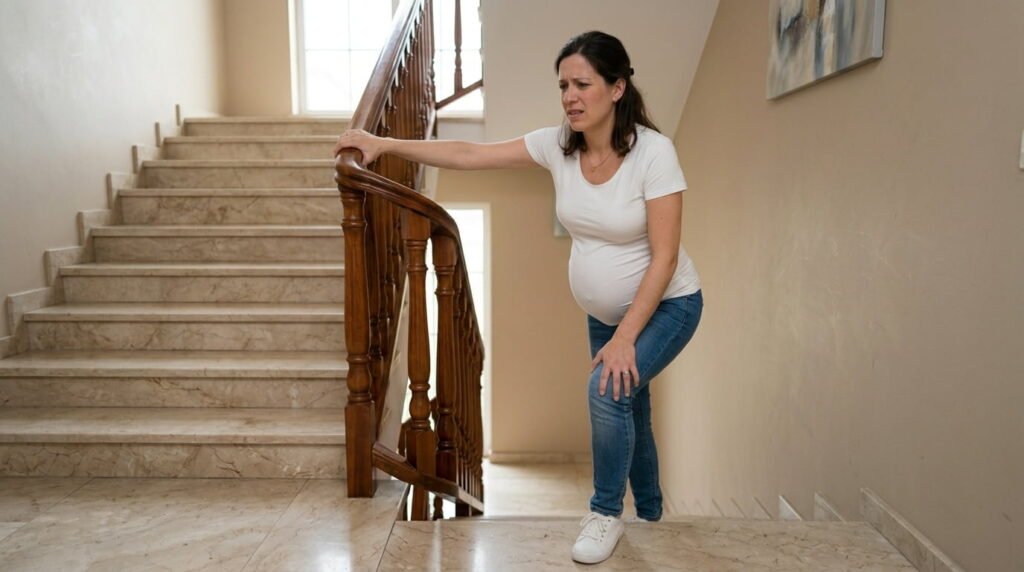
Many women find this trimester the most manageable for activity — morning sickness has often eased and the bump is not yet large enough to severely limit movement. Using this window for targeted strengthening exercises is genuinely useful, as stronger surrounding muscles reduce the load placed on the joint itself.
Knee Swelling and Knee Pain Third Trimester
The third trimester is where most women find knee discomfort at its most pronounced. Knee swelling during pregnancy in the third trimester is common because fluid retention peaks, body weight is at its highest, and postural compensation is most extreme.
Knee stiffness during pregnancy is also particularly noticeable in the third trimester, especially first thing in the morning or after resting for long periods. This is partly due to inflammation from joint stress and partly from fluid that pools when not moving.
Pregnancy Knee Pain Relief — What Actually Helps
There is no shortage of advice on pregnancy aches. The challenge is knowing which approaches are actually evidence-based and which are well-meaning folklore. Below are the methods with real clinical support.
Safe Exercises for Knee Pain in Pregnancy
Keeping the muscles around the knee strong is one of the most effective long-term strategies. The quadriceps (front of thigh), hamstrings (back of thigh), and glutes all help absorb load through the knee joint. Weak surrounding muscles mean more stress on the joint itself.
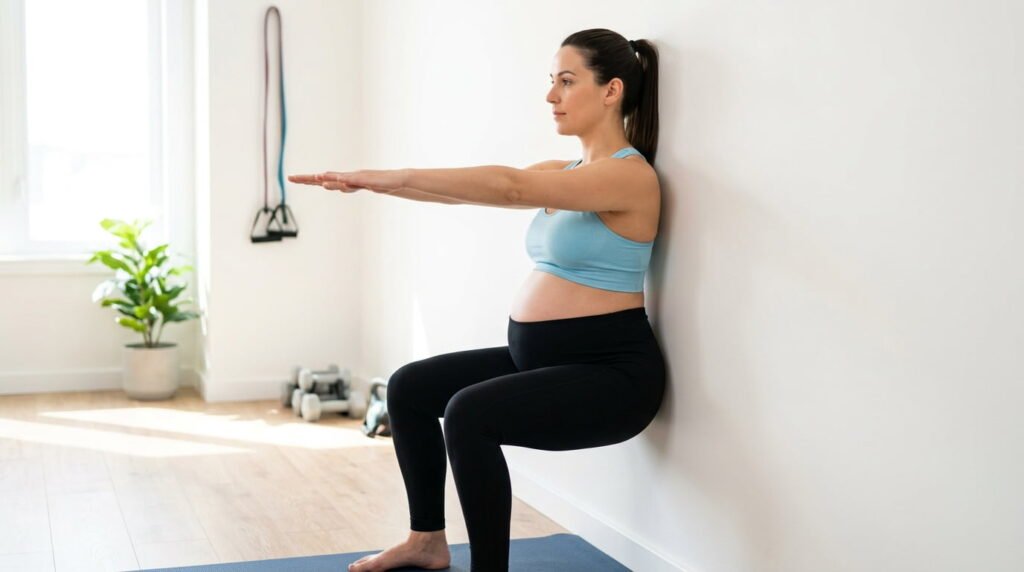
The following pregnancy knee pain exercises are generally safe and effective:
- Wall squats: Stand with your back against a wall, feet slightly forward, and slowly bend the knees to around 45 degrees. Hold for a few seconds, then rise. Keep movement controlled.
- Clamshells: Lying on the side with knees bent and feet together, lift the top knee like opening a clamshell. This strengthens the glute medius, which stabilises the knee.
- Seated leg extensions: Sitting in a chair, slowly straighten one leg, hold for a few seconds, and lower. Builds quad strength without impact.
- Heel raises: Standing at a wall for support, rise onto tiptoes and slowly lower. Strengthens the calves, which support knee mechanics during walking.
- Short walks on flat surfaces: Knee pain pregnancy walking relief is real — gentle movement improves circulation, reduces stiffness, and maintains strength. Avoid hills and uneven ground.
Always stop if any exercise causes sharp or worsening pain. Speak to a physiotherapist or midwife if unsure which exercises are right for a specific stage of pregnancy.
How to Sleep With Knee Pain During Pregnancy
This is one of the most searched questions for good reason. Poor sleep worsens pain perception, and pregnancy already disrupts sleep enough without aching knees adding to it.
The most effective position is lying on the left side with a pillow placed between the knees. This keeps the hips, pelvis, and knees in better alignment and reduces the twisting pressure that makes medial and lateral knee pain worse overnight.
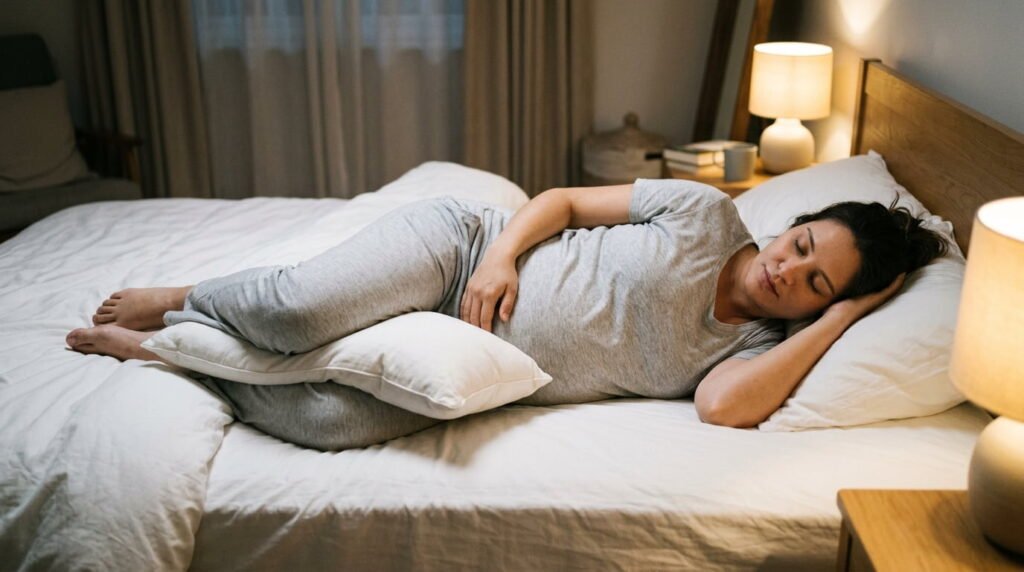
A full-length body pillow — sometimes called a pregnancy pillow — supports the bump simultaneously. For those experiencing significant knee stiffness during pregnancy in the mornings, a gentle warm-up routine before getting out of bed can help, such as slow knee bends while lying down before standing.
Knee Brace for Pregnancy UK — Does It Help?
For more persistent instability or swelling, a knee brace for pregnancy in the UK market offers several well-rated options. A soft compression sleeve — rather than a rigid brace — is generally most appropriate during pregnancy. It provides mild joint support and reduces swelling without restricting blood flow.
The best knee support for pregnancy UK users typically look for is a breathable, adjustable neoprene or knit sleeve. These can be worn comfortably throughout the day. It is worth noting that a brace addresses symptoms rather than causes — physiotherapy and exercise remain the most effective long-term interventions.
Physical Therapy for Knee Pain During Pregnancy
Physical therapy for knee pain during pregnancy — or pregnancy knee pain physiotherapy London for those in the capital — is the gold standard approach. A physiotherapist can assess exactly what is driving the pain: joint instability, muscle weakness, referred pain, or gait issues. From there, a programme specific to the stage of pregnancy can be developed.
When to See a Doctor — Knee Pain Pregnancy Red Flags
Most pregnancy-related knee discomfort is manageable without urgent medical input. However, certain symptoms should prompt a conversation with a GP, midwife, or orthopaedic specialist without delay.
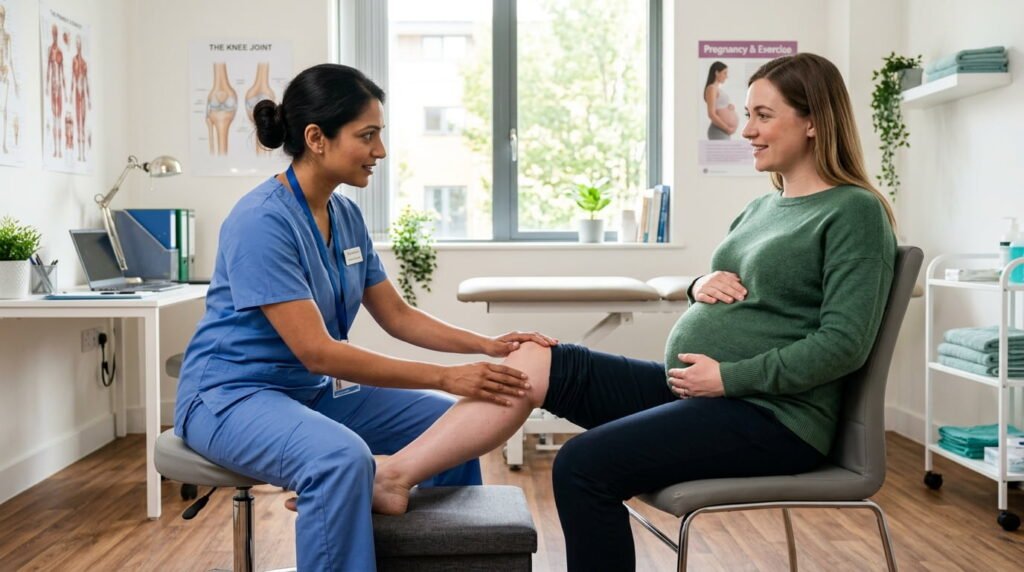
Seek prompt medical advice for:
- Sudden, severe, or sharp knee pain during pregnancy that comes on without clear cause
- Significant swelling in one knee only — particularly if accompanied by warmth or redness, which can indicate infection or blood clot
- Pain that worsens significantly at rest or wakes from sleep
- Any knee pain after a fall or trauma
- Knee pain pregnancy NHS referrals are appropriate when pain limits daily activities, affects mental wellbeing, or does not improve with self-care after two to three weeks
Knee pain during pregnancy is common, but “common” and “fine to ignore” are not the same thing. Getting something assessed provides both answers and the right support.
Knee Pain After Pregnancy — Postpartum Recovery
Many women expect their knee pain to resolve the moment the baby arrives. For some it does. For others, the postpartum period brings its own challenges.
Can Relaxin Cause Knee Pain After Birth?
Relaxin does not instantly disappear after delivery. In breastfeeding mothers, levels remain elevated for several months. This means the joint laxity that contributed to discomfort during pregnancy can persist postpartum.
Can relaxin cause knee pain after birth?
Yes, it can. Knee pain after pregnancy driven by ongoing hormonal laxity is particularly common in the first few months postpartum, especially when activity levels increase too quickly.
Knee Postpartum — Getting Back to Normal
Knee postpartum recovery follows a similar approach to pregnancy management gradual loading, targeted strengthening, and patience. The connective tissue needs time to return to its pre-pregnancy state.
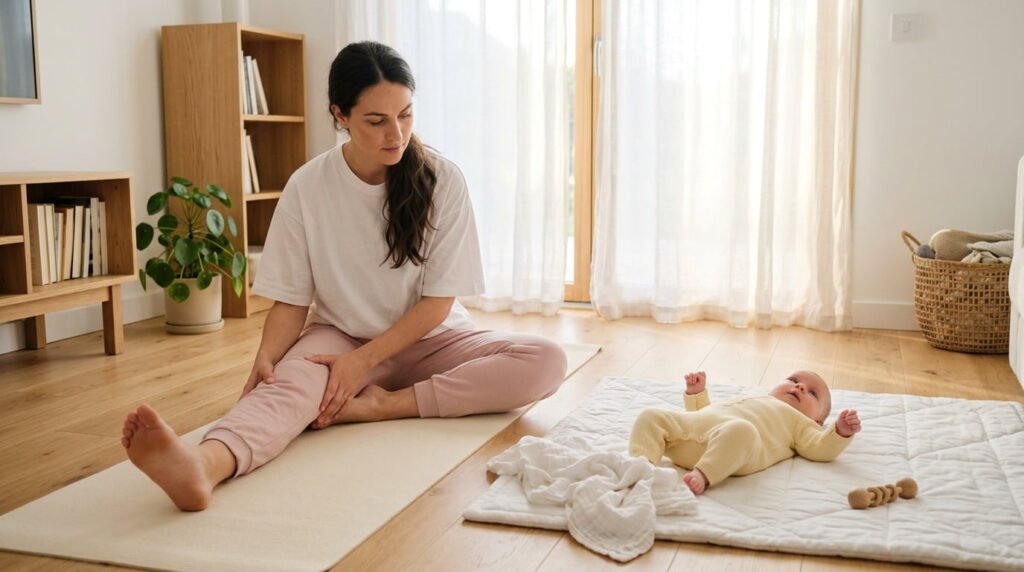
Knee pain after c section is worth a specific mention. Following a caesarean, mobility is initially restricted. The combination of reduced activity, continued hormonal effects, and the physical demands of newborn care bending, lifting, sitting on low surfaces can place unexpected stress on the knees.
Knee pain not going away after pregnancy — whether after vaginal birth or c-section — beyond three to four months postpartum is worth investigating with a physiotherapist. Early assessment leads to better outcomes than waiting.
FAQ
Why do my knees hurt during pregnancy?
Knee pain when pregnant is usually caused by a combination of factors: the hormone relaxin loosening the joint’s supporting ligaments, weight gain placing greater load through the joint, postural shifts altering knee alignment, and fluid retention causing swelling. All of these can occur simultaneously, which is why the pain can feel quite varied in character.
Is knee pain in early pregnancy normal?
Knee pain in early pregnancy can occur even before weight gain becomes a factor. Relaxin is released in high quantities during the first trimester, which affects joint stability early on. Knee clicking during pregnancy is also a common early symptom. Both are generally normal but worth mentioning at a midwife appointment if they limit activity.
What is the best pregnancy knee pain relief?
The most effective combination is targeted muscle-strengthening exercises (particularly for the quadriceps, hamstrings, and glutes), appropriate use of ice or heat, modified sleeping position with a pillow between the knees, and for persistent cases physiotherapy. A knee brace for pregnancy UK users favour is typically a soft compression sleeve for added daytime support.
Can pregnancy cause permanent knee damage?
For the overwhelming majority of women, no. Pregnancy-related joint pain resolves once hormonal levels normalise and physical demands reduce post-birth. However, knee pain not going away after pregnancy beyond three to four months, or pain that was never properly managed, can occasionally contribute to longer-term joint wear. Early physiotherapy assessment significantly reduces this risk.
How should someone sleep with knee pain during pregnancy?
The recommended position for knee pain lying down during pregnancy is on the left side with a pillow placed between the knees. This supports the knee joint in a neutral position and reduces pressure on both the medial and lateral structures. A full-length pregnancy pillow helps maintain this position throughout the night.
Can relaxing cause knee pain after birth?
Yes. Can relaxin cause knee pain after birth — the answer is yes, particularly in breastfeeding women where hormone levels remain elevated. Knee postpartum instability or aching that mirrors pregnancy symptoms is often related to ongoing relaxing presence. Gradual return to activity is key to managing this phase.
Is physical therapy for knee pain during pregnancy safe?
Absolutely. Physical therapy for knee pain during pregnancy is not only safe but is generally the most effective clinical intervention available. A trained physiotherapist will tailor the assessment and exercise plan to the specific trimester and individual presentation. Pregnancy knee pain physiotherapy London providers are widely accessible, and NHS referral is available for those with significant functional limitations.
What does knee pain after a c section involve?
Knee pain after c section is somewhat distinct from other postpartum presentations. Reduced mobility during recovery leads to muscle weakness. Combined with the physical demands of newborn care — bending, sitting on low surfaces, feeding positions — this can place significant stress on the knees. Gentle strengthening exercises, starting around six weeks post-surgery with medical clearance, are generally recommended.
Knee pain during pregnancy is common, multi-factorial, and very manageable when addressed properly. The hormonal changes of pregnancy are real, the mechanical demands are significant, and neither should be dismissed as something to simply endure.
The most effective approach combines understanding the cause, staying appropriately active, supporting the joint during sleep and daily activity, and getting proper clinical support when the pain is persistent or limiting.
For those experiencing ongoing discomfort after delivery, especially where the pain is not settling as expected, a specialist assessment is a worthwhile next step. Early intervention almost always leads to better outcomes than waiting.


