Diabetic Knee Pain and the Treatments That Actually Help

Diabetic knee pain develops when long-term high blood sugar damages the nerves, blood vessels and joint tissue surrounding the knee. The discomfort often builds gradually, starting as mild stiffness before progressing into more persistent pain that limits daily movement.
Diabetic knee pain refers to joint discomfort that stems directly from complications of diabetes rather than a standalone injury. It’s not a single diagnosis. Instead, it’s an umbrella term covering several overlapping problems, including nerve damage, circulation issues and accelerated cartilage breakdown.
The knee is a weight-bearing joint, which makes it particularly vulnerable. Add elevated glucose into the mix, and the tissue repair process slows down considerably. Cartilage that would normally regenerate at a steady pace starts breaking down faster than the body can rebuild it. Over years, this mismatch between damage and repair quietly reshapes the joint.
How Diabetes Affects the Knee Joint
High glucose levels trigger a cascade most people never connect to their knees. Blood vessels supplying the joint narrow over time, reducing oxygen and nutrient delivery to cartilage and surrounding tissue. Nerves running through the leg can also become damaged, a process doctors call diabetic neuropathy.
Together, these changes set the stage for chronic inflammation. The knee joint, already under constant mechanical stress from standing and walking, simply cannot keep pace with the damage. This is part of why diabetic knee pain often progresses faster than typical age-related wear and tear, even in patients who are otherwise active and healthy.
Causes Behind Diabetic Knee Pain
Several distinct mechanisms drive knee pain and diabetes together, and understanding each one helps explain why generic painkillers rarely solve the underlying problem.
Blood Sugar and Joint Pain Connection
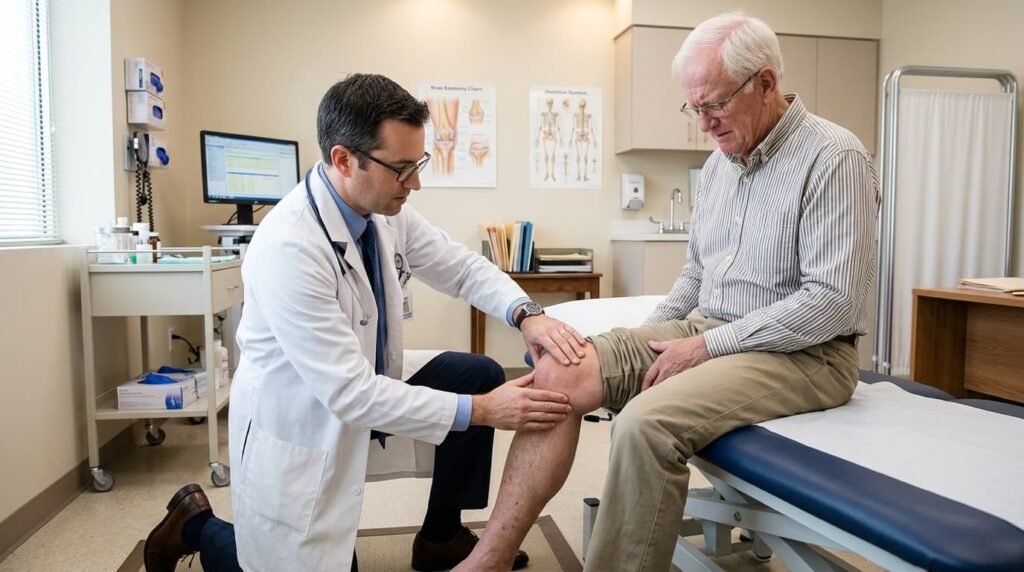
The link between blood sugar and joint pain isn’t theoretical. Elevated glucose promotes the formation of compounds called advanced glycation end-products, which stiffen collagen fibres inside cartilage. Stiffer cartilage absorbs shock poorly, accelerating wear with every step.
Chronic hyperglycaemia also raises levels of inflammatory cytokines circulating through the bloodstream. These molecules settle into joint tissue, fuelling swelling and discomfort that can flare unpredictably, sometimes worse on days when glucose readings spike. Patients often notice this pattern themselves long before a doctor explains the mechanism behind it.
Diabetic Neuropathy Knee Pain
Diabetic neuropathy knee symptoms differ from typical arthritis pain. Rather than sharp, localised soreness, patients often describe burning, tingling or a strange numbness that creeps from the feet upward. Nerve fibres become damaged from prolonged exposure to high glucose, distorting how pain signals travel to the brain.
This matters clinically. A patient with neuropathy might injure a knee without immediately feeling it, allowing damage to worsen unnoticed. Routine self-checks become genuinely important here, not just a precaution mentioned in passing.
Diabetic Osteoarthritis
Diabetic osteoarthritis describes osteoarthritis that develops or progresses faster because of diabetes-related inflammation, rather than purely from age or mechanical overuse. Cartilage degrades more quickly, joint space narrows, and bone-on-bone friction becomes more likely.
Obesity frequently complicates this picture further, since excess weight and type 2 diabetes often coexist and each one independently strains the knee joint. The two conditions tend to feed each other, which is exactly why treatment plans rarely focus on the knee in isolation.
Recognising Diabetic Knee Pain Symptoms
Spotting diabetic knee pain symptoms early can prevent months of unnecessary suffering. Common warning signs include:
- Stiffness that’s worse first thing in the morning or after sitting for long periods
- Swelling around the kneecap, sometimes without an obvious trigger
- A grinding or clicking sensation during movement
- Reduced range of motion when bending or straightening the leg
- Burning or tingling sensations that suggest nerve involvement rather than mechanical wear
Pain that worsens steadily over weeks, rather than improving with rest, generally warrants a clinical assessment.
Charcot Joint Knee Warning Signs
A more serious, though less common, complication is Charcot joint knee disease. This occurs when severe nerve damage leaves a joint unable to sense injury properly, allowing small fractures and instability to accumulate unnoticed. Warning signs include unexplained warmth, redness, swelling, or visible changes in the knee’s shape. Left untreated, the joint can deform permanently, so prompt diagnosis is essential. Catching this early, before deformity sets in, makes a measurable difference to long-term mobility.
Related Diabetic Joint Problems Beyond the Knee
Diabetes rarely limits its impact to one joint. Diabetic joint problems often appear in clusters, and recognising the wider pattern helps clarify why knee symptoms might be part of something larger.
Diabetic Cheiroarthropathy and Limited Joint Mobility
Diabetic cheiroarthropathy, sometimes called limited joint mobility, mainly affects the hands but can extend to wrists, elbows and knees. The condition causes joints to stiffen and lose their normal flexibility, a result of long-term changes in collagen structure. Limited joint mobility diabetes cases tend to correlate closely with how long someone has lived with the condition and how well blood sugar has been managed over that time.
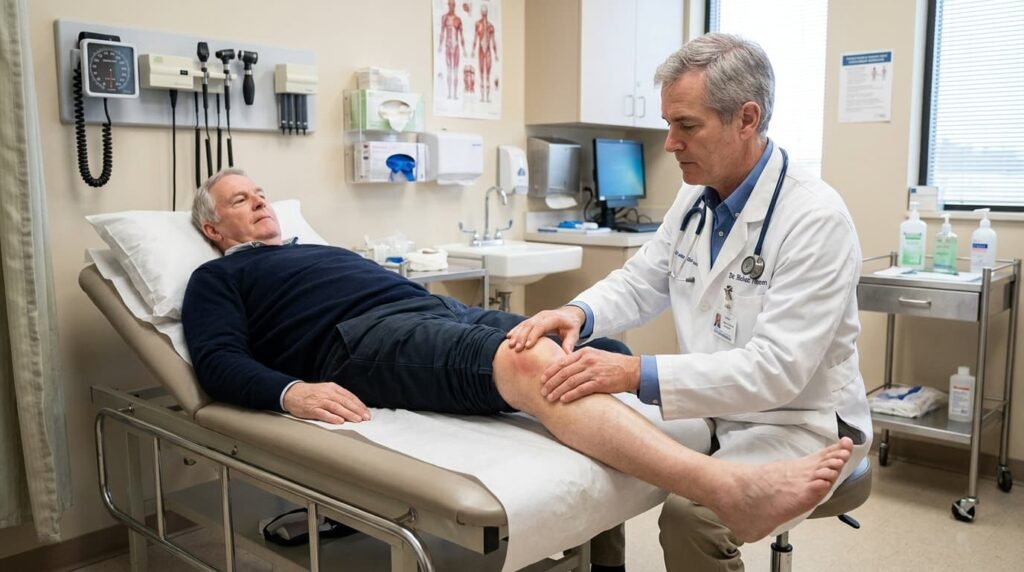
These changes fall under the broader category of diabetes musculoskeletal complications, a group of conditions that share a common root: prolonged high glucose altering connective tissue throughout the body, not just within the knee.
Frozen Shoulder Diabetes Link
Frozen shoulder diabetes cases occur more frequently than in the general population, and researchers still aren’t entirely sure why, though microvascular damage is a leading theory. Shoulder stiffness and restricted movement can develop gradually, often without any preceding injury. Recognising this pattern matters, because diabetes joint stiffness frequently shows up in more than one location simultaneously rather than as an isolated knee issue. A patient managing knee pain alone might be missing a wider pattern worth flagging to their doctor.
Diabetic Knee Pain Treatment Options
Effective diabetic knee pain treatment usually combines several approaches rather than relying on one fix. What works well for one patient may need adjusting for another, particularly given how diabetes complicates standard joint therapies. Recent research has also opened up newer medication-based routes worth understanding.
Glucose Control as a Treatment Foundation
Stable blood sugar reduces the systemic inflammation that worsens joint pain and cartilage damage. This isn’t a side note. Glucose control sits underneath every other treatment decision, because poorly managed blood sugar can undermine even well-designed physiotherapy or medication plans. Patients who keep readings steady tend to report fewer flare-ups, even before other interventions are introduced.

Metformin and Its Anti-Inflammatory Role
Metformin, a medication long used to manage type 2 diabetes, has shown anti-inflammatory properties that extend beyond blood sugar control. A randomised, placebo-controlled trial published in JAMA found that metformin produced a notably greater reduction in knee pain scores compared with placebo over six months in patients with knee osteoarthritis. Researchers believe the effect comes from metformin’s activation of a cellular pathway called AMPK, which suppresses inflammatory signalling within joint tissue.
This doesn’t mean metformin replaces standard pain management, but for patients already taking it for diabetes, the joint-related benefit may be a welcome side effect rather than an unrelated coincidence.
GLP-1 Medications and Weight-Related Pain Relief
GLP-1 medications, including semaglutide and dulaglutide, support pain reduction through two combined mechanisms: improved blood sugar control and significant weight loss. Since excess weight places direct mechanical pressure on the knee joint, shedding even a modest amount can ease strain considerably. Research from institutions including the National Institutes of Health has highlighted this dual benefit, noting that patients on GLP-1 therapy often report improved joint comfort alongside their metabolic improvements.
Physical Therapy and Lifestyle Changes for Knee Pain Diabetes
Physiotherapy strengthens the muscles supporting the knee, easing pressure on the joint itself. A tailored programme typically includes low-impact strengthening exercises, such as swimming and cycling, alongside stretching routines designed to improve flexibility without overloading already-compromised tissue.
Lifestyle changes for knee pain diabetes extend beyond the exercise mat. Steady blood sugar control reduces the inflammatory load on joints, while gradual weight loss eases mechanical stress. Even modest reductions in body weight translate into noticeably less pressure on weight-bearing joints.
Knee Brace for Diabetics
A well-fitted knee brace for diabetics can redistribute pressure away from damaged areas of the joint, offering stability during daily activity. Bracing proves especially useful for patients experiencing instability from muscle weakness or early-stage joint deterioration. Custom-fitted options tend to outperform generic over-the-counter braces, particularly for patients with neuropathy who may not notice if a brace fits poorly.
Hyaluronic Acid Injection Knee Diabetic Patients
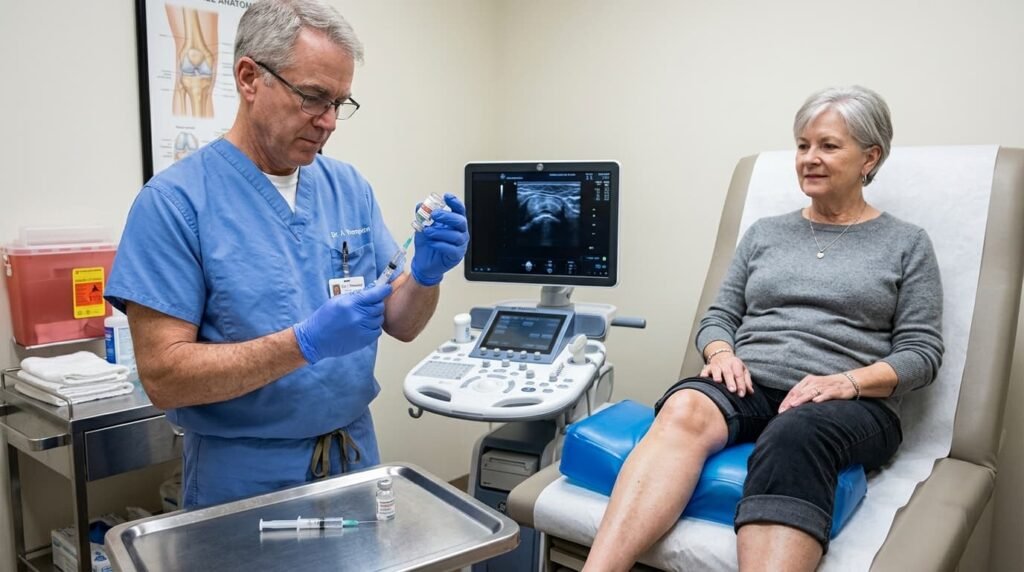
A hyaluronic acid injection knee diabetic patients receive supplements the natural fluid cushioning the joint, improving lubrication and reducing friction during movement. Unlike corticosteroid injections, hyaluronic acid carries a lower risk of disrupting blood sugar control, making it a preferred option for many diabetic patients managing osteoarthritis-related pain.
Corticosteroid injections remain available too, though glucose levels should be monitored closely afterwards, since steroids can cause temporary spikes that some patients find unsettling.
Arthrosamid Injection as a Longer-Term Option
Arthrosamid, a polyacrylamide hydrogel injection, offers a longer-lasting alternative for patients who haven’t found enough relief from standard injections. Unlike steroids or hyaluronic acid, it works by thickening the synovial membrane rather than simply lubricating the joint, with effects shown to last beyond two years in most patients. For diabetic patients managing osteoarthritis-related knee pain, this extended duration can mean fewer repeat procedures and more stable symptom control between treatments.
Shockwave Therapy for Knee Pain
Shockwave therapy for knee pain has gained attention as a non-invasive option that stimulates the body’s own healing response. Low-intensity acoustic waves are directed at the affected tissue, encouraging blood flow and triggering the release of natural repair factors. For diabetic patients, improved circulation around the knee can be particularly valuable, since poor blood flow is already part of the underlying problem. Clinical evidence suggests the treatment can reduce pain and improve function in knee osteoarthritis, though results vary depending on severity and how consistently sessions are completed.
When Diabetes and Knee Replacement Become Necessary
For some patients, conservative treatments eventually stop providing adequate relief, and diabetes and knee replacement surgery becomes the next consideration. Surgeons typically approach this decision cautiously with diabetic patients, since healing times can be longer and infection risk slightly higher when blood sugar isn’t well controlled beforehand.
HbA1c Levels and Surgical Timing
A surgical team will routinely evaluate HbA1c levels before approving a knee replacement. The generally accepted target sits between 7.0% and 7.5%, since levels within this range are associated with a meaningfully lower risk of post-operative infection and complications. If a patient’s HbA1c climbs above 8%, surgery is often postponed until levels improve, simply because the risk profile shifts considerably at that point.
Pre-Surgery GLP-1 Use and Recovery Outcomes
Emerging research, including work from Yale Medicine, indicates that taking GLP-1 medications such as semaglutide in the months leading up to a knee replacement can support better surgical preparation. The combined effect of improved glycaemic control and pre-operative weight reduction appears to lower certain surgical risks, although this remains an evolving area of clinical practice rather than a universal protocol.
Pre-surgical glucose management often becomes a priority in the months leading up to the procedure, improving both surgical outcomes and recovery speed. Patients who reach this stage usually benefit from close coordination between their endocrinologist and orthopaedic specialist.
Lifestyle Changes That Support Long-Term Joint Health
Sustainable improvement rarely comes from a single treatment. A combination of habits tends to produce the best long-term results:
- Maintaining steady blood glucose levels through diet and medication adherence
- Choosing low-impact activities such as swimming or cycling over high-impact sports
- Losing excess weight gradually, since every pound shed meaningfully reduces knee pressure
- Eating anti-inflammatory foods, including oily fish and leafy vegetables
- Monitoring feet and knees regularly for early signs of numbness or swelling
None of these changes work overnight, but consistency tends to pay off within a few months for most patients. Combined with the medication-based options now supported by clinical research, the overall outlook for managing diabetic knee pain has genuinely improved in recent years.
Frequently Asked Questions
Does diabetes cause knee pain directly?
Diabetes doesn’t attack the knee joint on its own. Instead, it contributes to pain indirectly through three main pathways: nerve damage, poor circulation and accelerated cartilage breakdown. Over time, these changes weaken the joint’s ability to repair itself, making it more vulnerable to everyday wear.
What does diabetic neuropathy knee pain feel like?
It often presents as burning, tingling or numbness rather than the sharp, mechanical pain typically associated with arthritis. Some patients also describe a strange “pins and needles” sensation that travels up from the feet. Because nerve signals are affected, pain levels can feel inconsistent, mild one day and more noticeable the next.
Can metformin really help with knee pain?
Clinical trial evidence suggests metformin can reduce knee osteoarthritis pain through its anti-inflammatory effects, independent of its blood sugar benefits. The medication appears to calm inflammatory activity within the joint itself, not just in the bloodstream. That said, it isn’t a standalone treatment and works best alongside other approaches like physiotherapy or weight management.
Is hyaluronic acid injection knee diabetic treatment safe?
Generally, yes. It carries a lower risk of affecting blood sugar compared with corticosteroid injections, which can sometimes cause temporary glucose spikes. Most patients tolerate the injection well, though individual suitability should always be confirmed with a specialist familiar with their full medical history.
When does diabetes and knee replacement become the right option?
Surgery typically becomes relevant once conservative treatments, such as physiotherapy, medication and injections, no longer manage pain effectively. Before proceeding, HbA1c is usually optimised to between 7.0% and 7.5%, since this range is linked to fewer post-operative complications and a smoother recovery.
Does shockwave therapy for knee pain work for diabetic patients specifically?
Evidence suggests it can support healing and reduce pain by improving local blood flow, which is particularly relevant given the circulation issues diabetes often causes. Sessions are non-invasive and typically spaced a week apart, with many patients noticing gradual improvement rather than immediate relief.

Diabetic knee pain rarely improves on its own, but with steady glucose control, the right combination of treatments, and timely specialist input, most patients see real improvement in comfort and mobility.
Mr Syed Nadeem Abbas, a leading private knee expert based in London, specialises in diagnosing and treating complex knee conditions like joint pain.
Read more: How Ultrasound-Guided Knee Injections Improve Pain Relief
Read more: Knee Pain in Women Is Not the Same as Knee Pain in Men