Knee Arthritis Self Management Made Simple for Everyday Life

Knee arthritis self management was not a topic I came to by choice it found me, the way most important health topics do, through the people searching for answers at 2am after a particularly bad night with their knee. I have spent years producing health and digital content, and this subject comes up more than almost any other. People want practical help. Not just a list of symptoms.
Arthritis of the knee affects millions of adults across the UK. It is not an automatic sentence to surgery or permanent disability. What you do consistently day in, day out shapes how the condition behaves.
What Is Knee Arthritis and Who Does It Affect?
Before getting into management, it helps to understand what you are actually dealing with. What is knee arthritis, exactly? At its simplest, it is the progressive breakdown of the cartilage that cushions the knee joint. As knee cartilage damage advances, bone begins to contact bone. Knee joint inflammation follows, driving the pain and swelling that make day-to-day activity difficult.
Knee cartilage thinning is gradual. Many people have osteoarthritis knee UK changes showing on X-ray before they notice any significant symptoms. Knee arthritis risk factors include age, excess body weight, previous knee injury, family history, and physically demanding occupations.
Recognising the Early Signs of Arthritis in Knee
Catching knee arthritis symptoms early is genuinely useful — it opens more management options and gives the joint the best chance of staying functional for longer.
Signs of arthritis in knee to watch for include:
- Knee stiffness morning — eases within 30 minutes of moving, unlike rheumatoid arthritis where it lasts longer
- Knee pain when bending or straightening the leg, particularly on stairs
- Knee swelling causes that build gradually with activity
- Knee clicking and grinding sensations during movement
- Knee buckling — a sudden giving-way caused by muscle weakness around the joint
- Knee pain after walking UK distances that previously felt comfortable
What does arthritis knee pain feel like? Most people describe a deep, persistent aching that builds with activity and eases with rest in the early stages. Over time, resting pain becomes more frequent. That progression is exactly why early knee arthritis self management matters so much.
Different Types That Cause Arthritis Knee Pain
Osteoarthritis of the knee is the most common, but it is not the only type:
- Rheumatoid arthritis knee — an autoimmune condition causing the joint lining to become chronically inflamed. Rheumatoid arthritis knee UK predominantly affects women and can occur at any age
- Gout in knee — uric acid crystal deposits that cause sudden, severe pain episodes
- Juvenile arthritis knee — a less common form affecting children and adolescents
A knee arthritis diagnosis from a GP or musculoskeletal specialist will identify which type you have and shape the management approach accordingly.
Proven Strategies for Knee Arthritis Self Management
Knee arthritis self management, applied consistently, is one of the most effective tools available for this condition. More effective than painkillers alone. And often more effective than waiting for a referral that takes months to arrive. My approach is built around three areas: movement, pain management, and lifestyle.
Movement and Exercise — Where Self Management Begins
Exercise is the non-negotiable element of osteoarthritis knee pain management. Strong muscles surrounding the knee absorb the mechanical load that would otherwise fall on damaged cartilage. Less load means less pain and slower disease progression. This is well-established in the clinical literature — and yet it remains one of the most underused tools.
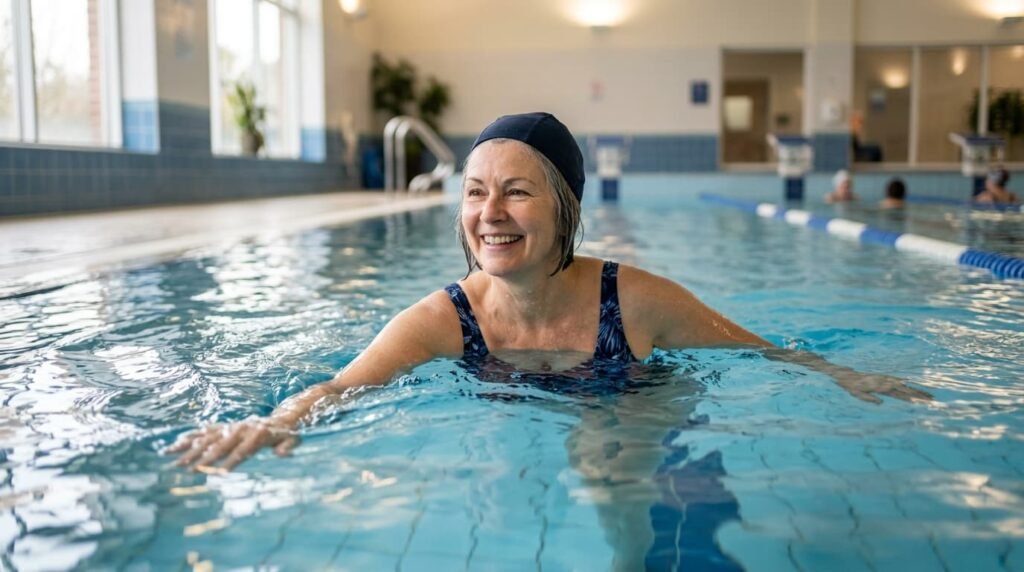
Low impact exercise for knee pain is the safest entry point. The options I return to most consistently:
- Swimming and hydrotherapy — water removes compressive load from the joint, making movement genuinely comfortable
- Cycling — builds quadriceps strength with minimal knee flexion stress
- Walking — flat terrain, supportive shoes, manageable distance
- Yoga and stretching — particularly valuable for managing knee stiffness and maintaining flexibility
Best Exercises for Knee Osteoarthritis
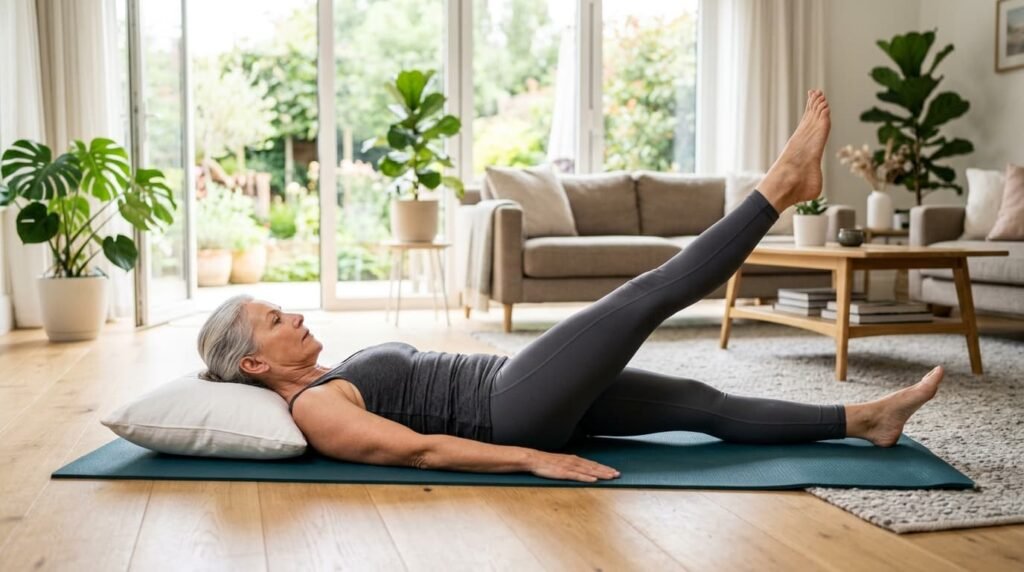
Knee arthritis exercises that physiotherapists in the UK most commonly prescribe include:
- Straight leg raises — builds quad strength without loading the bent knee
- Seated leg extensions — controlled, progressive, and joint-friendly
- Mini squats — start shallow (30 degrees) and increase depth gradually as strength improves
- Step-ups with controlled descent — functional strength that transfers directly to daily activity
Exercises for stiff arthritic knees should always begin conservatively. A mild ache during or after exercise is acceptable. Sharp or increasing pain during movement is a signal to reduce intensity and reassess.
Best exercises for knee osteoarthritis work best as part of a consistent programme — not as a one-off effort during a flare-up. Knee arthritis exercises UK physiotherapists design these programmes based on your specific joint presentation, fitness baseline, and daily demands. If you have not yet had a formal physio assessment, I strongly recommend requesting one.
Building a Consistent Weekly Routine
Consistency beats intensity for this condition. A realistic weekly structure:
- 3 days: Strengthening exercises — 20 to 30 minutes per session
- 2 days: Low impact cardio — cycling, swimming, or walking
- Daily: 5 to 10 minutes of gentle range-of-motion movement, especially first thing in the morning
Managing Knee Joint Pain at Home
Knowing how to treat knee arthritis at home in the UK is about having a clear, practical toolkit ready before symptoms escalate. Treating knee arthritis at home covers both daily pain control and acute flare-up response.
Heat or Ice for Knee Arthritis — The Honest Answer
Heat or ice for knee arthritis is one of the most common questions — and one of the least consistently answered.
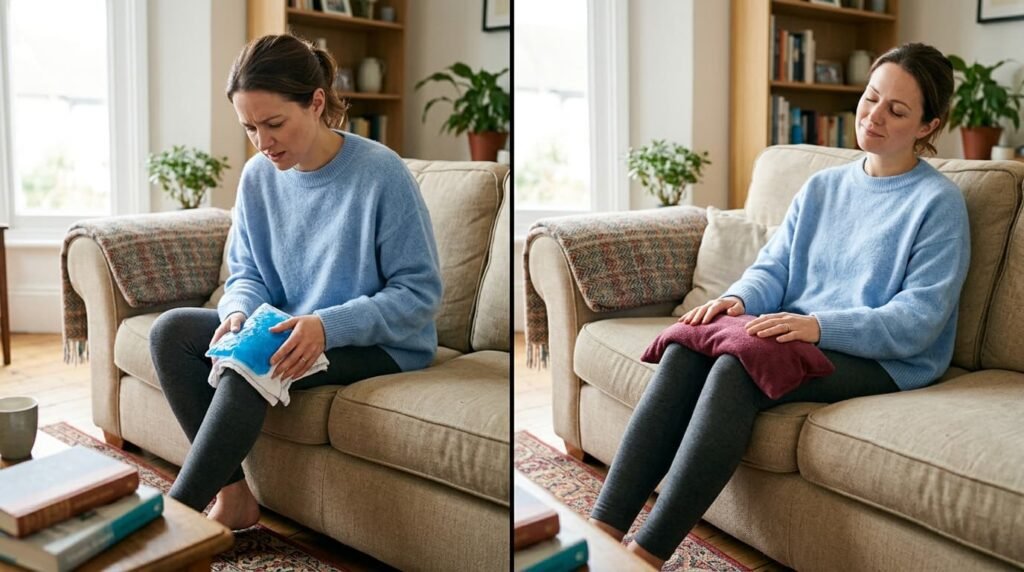
Heat or ice on arthritic knee should be matched to what the joint is doing:
- Swollen, warm, actively inflamed joint: Use cold. Wrap an ice pack in a cloth and apply for 15 minutes. Cold reduces knee joint inflammation and eases acute pain without medication
- Stiff, achy, post-rest joint: Use heat. A warm compress relaxes tight muscles and improves circulation around the joint
Knee swelling treatment at home starts with cold, elevation, and rest. If swelling is significant or does not improve within 48 to 72 hours, a clinical review is warranted.
Knowing when to use heat versus cold is a small but meaningful part of effective knee arthritis self management — and getting it right makes a genuine difference to comfort.
Choosing the Best Painkiller for Knee Arthritis
Best painkiller for knee arthritis in UK clinical guidance follows a clear, stepped sequence:
- Paracetamol for knee pain — first-line, well tolerated, effective for mild to moderate pain
- Topical NSAIDs for knee pain — applied directly to the skin over the joint, reducing inflammation locally with fewer systemic side effects than oral tablets
- Oral NSAIDs — effective but carry gastrointestinal and cardiovascular risks with long-term use; should be used cautiously in older adults
- Steroid injection knee — delivered by a GP or musculoskeletal specialist for significant acute flare-ups; provides short-term relief and creates space for rehabilitation to progress
- Knee gel injections (viscosupplementation) — hyaluronic acid injections that lubricate the joint and can provide medium-term relief
Lifestyle Changes That Support Knee Health
Lifestyle adjustments sit alongside exercise as the most important long-term contributors to knee arthritis self management. They are not glamorous. But they work.
Weight Loss and Knee Pain — The Numbers That Matter
Lose weight knee pain research produces a consistently striking figure: every pound of body weight lost removes approximately four pounds of force from the knee joint during walking. Losing weight knee pain research also shows that a 5 to 10% reduction in total body weight produces meaningful improvements in knee arthritis symptoms UK — comparable to several weeks of structured physiotherapy.
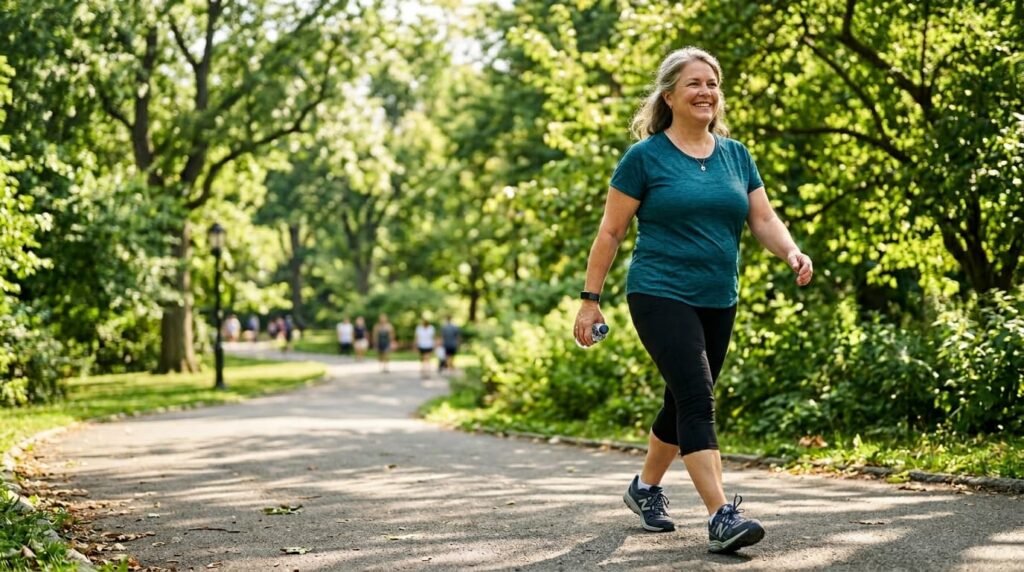
I always recommend combining low impact activity with dietary changes rather than pursuing rapid weight loss, which reduces muscle mass and can worsen joint instability.
Supportive Gear Worth Considering
A knee brace for arthritis provides external stability during weight-bearing activities. Unloader braces — which shift load away from the most affected compartment — are particularly useful for those with single-compartment disease. Supportive footwear with cushioned soles and appropriate insoles improves load distribution from the ground up, reducing the impact that reaches the knee joint.
These small changes add up across a day of walking, standing, and climbing stairs.
When Self Management Is Not Enough — Knowing Your Options
Knee arthritis self management works well for most people with mild to moderate disease. But there are clear signals that professional input is needed:
- Arthritis knee pain that wakes at night and does not settle with rest
- Knee arthritis symptoms UK that no longer respond to home management strategies
- Progressive worsening of osteoarthritis knee symptoms over several months
- Knee buckling that creates a fall risk
- Knee arthritis diagnosis that shows significant joint space narrowing on X-ray
Knee Arthritis Treatment UK: A Stepped Approach
Knee arthritis treatment UK follows a staged care model. Conservative management comes first. Intervention is considered when that has been properly tried and found insufficient. Knee arthritis treatment options beyond physiotherapy and medication include:
- Knee arthritis physiotherapy UK — structured, evidence-based programmes through NHS or private providers
- Steroid injections — for acute pain control
- Knee gel injections — for longer-term joint lubrication
- Advanced injectable treatments — newer options providing structural support within the joint without surgical intervention
Knee Arthritis Treatment Without Surgery: How Realistic Is It?
Knee arthritis without surgery is achievable for many patients — including those with moderate disease. Knee arthritis without surgery UK approaches have advanced considerably, with some injectable treatments now providing multi-year relief without surgical risk or recovery time.
For those exploring knee replacement alternatives, how to slow down knee arthritis through non-surgical means is a conversation worth having with a private knee specialist UK before committing to an operation. Can knee arthritis get worse to the point where surgery is unavoidable? In a minority of cases, yes. But that is far from the inevitable outcome it is often presented as.
Understanding Surgical Options
Knee arthritis surgery UK options include:
- Knee arthroscopy — minimally invasive, but offers limited benefit for established osteoarthritis
- Partial knee replacement — appropriate when disease is confined to one compartment of the joint
- Total knee replacement — for end-stage disease affecting the entire joint
- Private knee replacement UK — for those who wish to avoid NHS waiting times; knee replacement UK through the NHS carries increasing wait periods in many regions
Living With Arthritis in Knee: The Long Game
Living with knee arthritis is a long-term process, not a single treatment event. How to manage knee arthritis over years rather than weeks means building habits that protect the joint consistently. Living with osteoarthritis knee tips I return to most often:
- Spread demanding activities throughout the day — avoid doing everything at once
- Alternate between sitting, standing, and moving to prevent sustained joint loading
- Warm up the joint before activity, particularly in cold or wet conditions
- Keep a brief symptom diary to track patterns and identify triggers
Weather, Seasons, and Knee Pain Patterns
Knee arthritis weather pain is real and very commonly reported. Knee arthritis pain worse in cold weather is one of the most consistent patterns patients describe — barometric pressure changes and low temperatures are both associated with increased joint sensitivity.

Practically, this means warming up more thoroughly before winter activity, keeping the joint covered in cold conditions, and not being surprised when symptoms fluctuate with the weather. There is a cure for knee arthritis? Not yet. But can knee arthritis go away or become significantly more manageable? For many people, yes — with consistent effort and informed choices.
Knee arthritis in older adults carries additional considerations around bone density and muscle mass decline. Living with arthritis in the knee at any age means adapting strategies over time — but the core approach stays the same.
FAQ
What is the most effective approach to knee arthritis self management?
Knee arthritis self management is most effective as a combination: regular low impact exercise for knee pain, appropriate pain relief, weight management, and professional review when symptoms change. No single measure works well in isolation.
What are the best exercises for knee arthritis?
Knee arthritis exercises UK physiotherapists prescribe most consistently include straight leg raises, seated leg extensions, cycling, and walking. The best exercises for knee osteoarthritis focus on building quadriceps and gluteal strength while keeping stress on the joint low.
How do I know if my knee osteoarthritis is getting worse?
Osteoarthritis knee symptoms that signal progression include increased resting pain, greater difficulty with daily tasks, more frequent swelling, and reduced range of movement. A knee arthritis diagnosis review — through your GP or a private knee specialist UK — will clarify what is happening.
Is heat or cold better for knee stiffness?
Heat or ice for knee arthritis depends on the presentation. Use cold for swollen, warm, actively inflamed joints. Use heat for post-rest stiffness and morning aching. Heat or ice on arthritic knee — choose based on what the joint is doing, not just what feels instinctively comforting.
Can I avoid knee replacement?
Many people achieve long-term knee arthritis without surgery in the UK through a combination of exercise, weight management, and advanced non-surgical treatments. Knee replacement alternatives have improved considerably, and knee arthritis treatment without surgery is a realistic aim for many patients. Discuss your options with a specialist before deciding.
What is the best painkiller for knee arthritis?
Paracetamol for knee pain is the recommended first-line option. Topical NSAIDs for knee pain come next when paracetamol is insufficient. A steroid injection knee procedure is appropriate for significant flare-ups when other measures have not controlled the pain.
Knee arthritis self management is, in my experience, one of the most consistently underestimated tools available to people with this condition. It is not complicated. It is not expensive. But it requires commitment because it only works when applied consistently over time.
Start with exercise. Build weight management into your daily habits. Use pain relief intelligently rather than reactively. Seek professional input when symptoms change or escalate. And accept that osteoarthritis knee pain management is a lifelong conversation rather than a one-time solution.
Read more: How Your BMI and Osteoarthritis Are Closely Connected
Read more: Low-Impact Workouts for Knee Pain: A Safe and Practical Exercise Guide