
Knee inflammation is one of the leading reasons people seek help for knee pain in the UK. It develops when the tissues inside or around the joint react to injury, overuse, or an underlying condition. The result is swelling, stiffness, and discomfort that can make ordinary movement difficult. Some cases settle within days, while others linger for months and gradually limit everyday activity.
How Does Inflammation Cause Knee Pain?
The knee joint relies on smooth cartilage, a thin layer of synovial fluid, and several supporting ligaments. When any of these structures become irritated, the body sends extra blood flow and immune cells to the area. This natural repair response causes fluid to build up inside the joint capsule. That fluid build-up is what most people actually mean when they describe knee pain from inflammation.
The swelling stretches the joint capsule, which is rich in nerve endings, so pain often follows quickly. Stiffness comes next, since the knee struggles to bend fully when it is filled with excess fluid. Understanding this chain of events helps explain why knee pain and swelling so often appear together rather than in isolation.
Inflammation can be acute or chronic, and the distinction matters for treatment. Acute inflammation appears suddenly after an injury or infection and typically resolves within a few weeks as the tissue heals. Chronic inflammation, by contrast, persists for months, often driven by ongoing conditions such as osteoarthritis or autoimmune disease. Repeated low-grade inflammation gradually damages cartilage, which is why early intervention tends to protect long-term joint function far better than waiting for symptoms to pass on their own.
Signs of Knee Inflammation to Watch For
Early recognition makes treatment far more effective. These signs are usually easy to spot once you know what to look for.
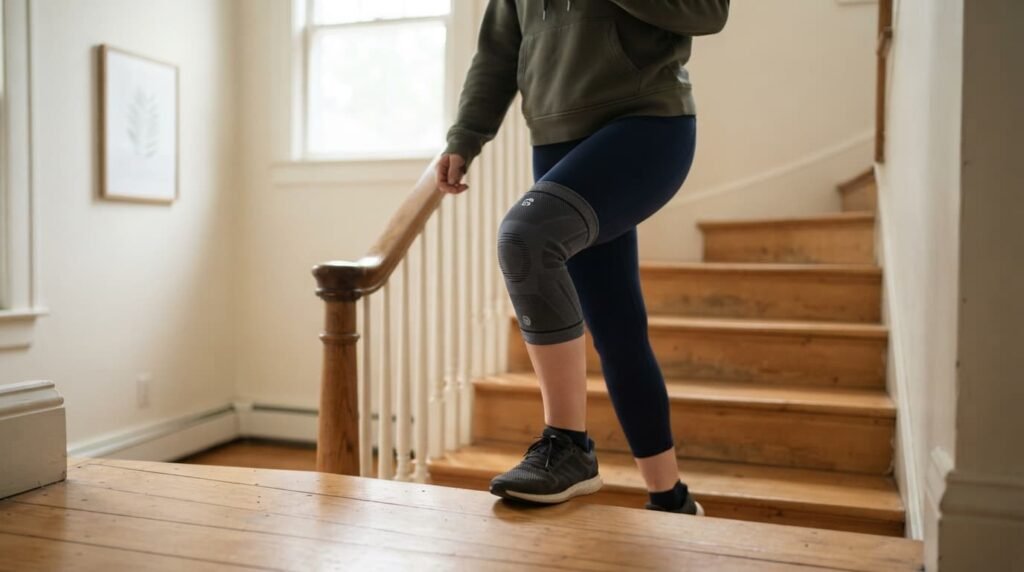
- Swelling around the knee joint, sometimes visible as puffiness
- Warmth or redness over the skin covering the knee
- Stiffness that is worse first thing in the morning
- A dull ache that sharpens with stairs or prolonged standing
- Reduced knee mobility when trying to fully straighten or bend the leg
- A feeling of tightness under the kneecap after sitting for long periods
Persistent swelling that does not settle within a few days deserves a proper assessment, since it may point to an underlying joint condition rather than a simple strain. Symptoms can also vary depending on the cause. A joint affected by osteoarthritis tends to ache gradually throughout the day, while an infected or gout-affected knee often becomes hot, red, and severely painful within hours. Noting exactly when symptoms started, and whether one or both knees are affected, gives a clinician valuable clues before any tests are carried out.
Common Causes of Knee Inflammation
Several conditions sit behind most cases of inflammation in the knee. Identifying the specific cause shapes the entire treatment plan, since a torn ligament and an autoimmune disease respond to very different approaches despite producing similar symptoms.
Knee Osteoarthritis
Knee osteoarthritis is the most frequent cause of chronic joint inflammation in adults over 50. Cartilage gradually wears down, and the exposed bone surfaces trigger a low-grade inflammatory response. Pain tends to build slowly over months or years rather than appearing overnight. Morning stiffness that eases after a short walk is a typical early clue, and swelling often increases after longer periods of standing or walking on hard surfaces.
Tendonitis and Bursitis
Tendonitis develops when repetitive strain irritates the tendons around the joint, often from running or cycling. Bursitis affects the small fluid-filled sacs that cushion the knee and typically follows kneeling or direct pressure. Both conditions cause localised swelling rather than pain across the entire joint, and both usually improve once the aggravating activity is reduced and the tissue is given time to settle.
Ligament Sprain and Cartilage Damage
A ligament sprain, whether from sport or a sudden twist, inflames the surrounding tissue as part of the healing process. Cartilage damage from a meniscus tear behaves similarly, often producing swelling within hours of the injury. Both injuries can leave the joint feeling unstable, and a proper assessment helps rule out a more serious structural tear before rehabilitation begins.
Rheumatoid Arthritis and Gout
Rheumatoid arthritis is an autoimmune condition that attacks the joint lining directly, causing inflammation that can affect both knees at once. Gout, by contrast, results from uric acid crystals collecting in the joint and tends to cause sudden, severe flare-ups. Both conditions usually need ongoing medical management alongside any local treatment aimed at the knee itself.
Baker’s Cyst
A Baker’s cyst forms behind the knee when excess synovial fluid pushes into a pocket at the back of the joint. It usually signals an existing inflammatory process rather than a separate condition on its own.
How to Diagnose Knee Inflammation
Working out what is causing the problem starts with a detailed history and a physical examination. A clinician will check range of motion, feel for warmth, and look for visible swelling. Blood tests can help confirm rheumatoid arthritis or gout, while imaging such as ultrasound or MRI reveals cartilage damage, fluid levels, and ligament integrity.
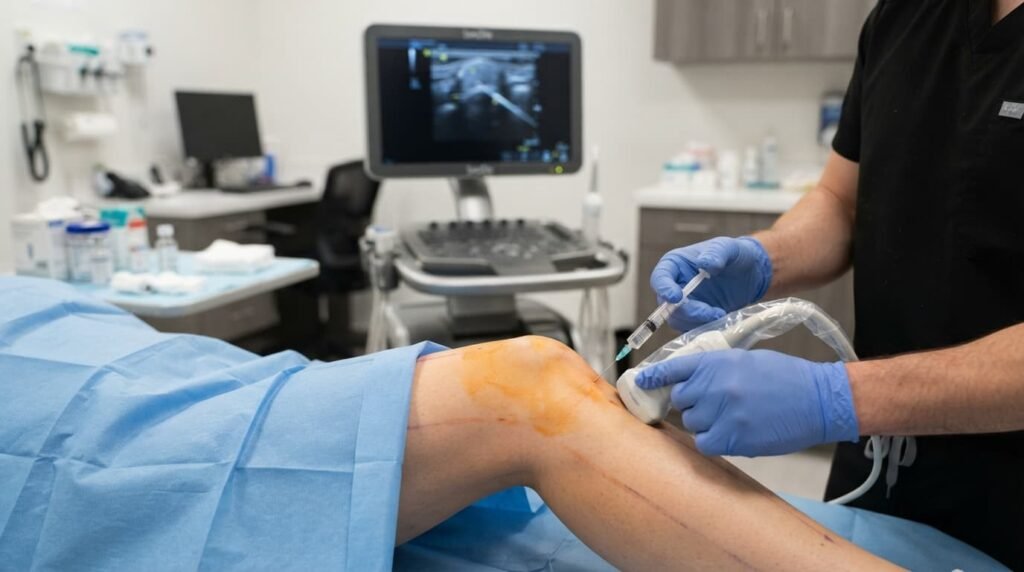
In some cases, a clinician will draw a small sample of joint fluid for laboratory analysis. This procedure, known as joint aspiration, can distinguish between infection, gout, and general inflammatory swelling within a short turnaround time. It also temporarily relieves pressure inside the joint, which many patients find brings noticeable comfort straight away. An accurate diagnosis prevents months of treating the wrong problem.
Knee Inflammation Treatment Options
Treatment varies depending on the underlying cause, but most plans combine several approaches rather than relying on one method alone.
Is Rest Good for Knee Inflammation?
Short periods of rest help during a sharp flare-up, allowing swelling to settle. Extended rest, however, tends to weaken the muscles that support the joint and can slow overall recovery. A balanced approach, alternating gentle movement with recovery periods, generally produces better outcomes than complete inactivity. Ice application during the first forty-eight hours after a flare-up can also reduce swelling considerably, particularly when combined with light elevation of the leg.
Physical Therapy for Knee Inflammation
Physical therapy at this stage focuses on restoring strength without overloading the joint. A therapist will usually introduce gradual resistance work once acute swelling has reduced. Manual therapy techniques can also improve circulation around the joint capsule. Sessions are typically spaced across several weeks, with the programme adjusted as strength and confidence in the joint improve.
Exercises for Knee Inflammation
Useful exercises for easing symptoms include:
- Straight leg raises to strengthen the quadriceps without bending the joint
- Gentle hamstring and calf stretches
- Shallow step-ups performed slowly
- Stationary cycling at low resistance
- Water-based walking, which reduces load while keeping the joint moving
Compression Sleeves and Knee Injections
A knee compression sleeve provides gentle support and can reduce swelling during daily activity. When conservative measures fail to control symptoms, clinicians sometimes recommend a knee injection for pain relief, such as a corticosteroid or hyaluronic acid injection, to calm inflammation directly inside the joint. Patients researching longer-lasting injectable options may want to explore Arthrosamid injections, which support people with knee osteoarthritis.
Preventing and Reducing Inflammation in the Knee
Knowing how to prevent inflammation in the knees is often more valuable than treating a flare-up after it starts.
Anti-Inflammatory Foods for the Knee
An anti-inflammatory diet built around oily fish, leafy greens, berries, and olive oil can lower overall inflammatory markers in the body. Reducing processed sugar and refined carbohydrates further supports joint health over time. Anti-inflammatory foods will not replace medical treatment, but they can meaningfully reduce background inflammation. Staying well hydrated also supports the production of healthy synovial fluid, which keeps the joint moving smoothly under load.
Daily Habits That Reduce Strain
- Maintain a healthy body weight to lower pressure on the joint
- Warm up properly before exercise
- Choose supportive, well-cushioned footwear
- Avoid sitting with the knee bent for extended periods
- Build strength gradually rather than increasing activity suddenly
How Should You Sleep with Knee Inflammation?
Placing a pillow between the knees while lying on your side keeps the joint aligned and reduces overnight strain. Sleeping with a slightly elevated leg can also limit fluid pooling around the joint by morning. Small changes to sleeping position often bring surprisingly noticeable relief.

What Makes Knee Inflammation Worse?
Certain habits consistently aggravate symptoms. High-impact activity performed too soon after a flare-up, prolonged standing on hard floors, and carrying excess weight all place additional strain on an already irritated joint. Ignoring early swelling and continuing normal training routines regardless of pain is one of the fastest ways to turn a minor issue into a lasting one. Poor footwear, sudden increases in exercise intensity, and skipping warm-up routines also contribute to repeated flare-ups over time.
Knee Inflammation in Everyday Life
It affects far more than sport or exercise routines. Simple tasks such as climbing stairs, gardening, or carrying shopping can all become uncomfortable once the joint is inflamed. Many patients also notice that cold or damp weather makes stiffness more noticeable, even though the underlying inflammation has not changed. Recognising these everyday triggers makes it easier to plan activity around a flare-up rather than pushing through discomfort. Adjusting pace, taking regular breaks, and using supportive footwear during longer days on your feet all help protect the joint while it settles.
When to See a Knee Specialist
Most mild inflammation improves within one to two weeks with rest, gentle movement, and basic anti-inflammatory measures. Swelling that persists beyond this window, or pain that worsens despite treatment, warrants a specialist opinion. Patients can also find detailed explanations of specific treatments, including Arthrosamid, on the Dr SNA Clinic YouTube channel.
FAQs About Knee Inflammation
What is the fastest way to reduce knee pain from inflammation?
Applying ice wrapped in a cloth for fifteen to twenty minutes helps calm swelling without irritating the skin. Elevating the leg above heart level encourages fluid to drain away from the joint more efficiently. Combining this with brief rest from aggravating activity, rather than complete inactivity, usually brings the quickest and most lasting relief.
Is rest good for knee inflammation, or should the joint keep moving?
Brief rest during a flare-up allows swelling to settle and reduces further irritation to the joint. Prolonged inactivity, however, tends to weaken the surrounding muscles and can slow overall recovery. Gentle, controlled movement introduced once the initial swelling eases generally supports stronger, longer-lasting improvement.
What are the earliest signs of knee inflammation?
Swelling around the knee joint is often the earliest and most noticeable sign, sometimes appearing as mild puffiness rather than obvious distension. Morning stiffness that eases with gentle movement frequently follows soon after. Warmth over the skin, along with a dull ache that worsens with activity, tends to develop as symptoms continue.
Can an anti-inflammatory diet really help knee pain?
An anti-inflammatory diet will not cure an underlying joint condition or replace medical treatment. Foods such as oily fish, leafy greens, and olive oil can help lower overall inflammatory markers in the body over time. Combined with other treatments, dietary changes can meaningfully support recovery and reduce the frequency of flare-ups.
Does a knee compression sleeve actually work?
A compression sleeve will not treat the underlying cause or replace clinical care. Many patients find gentle compression helps reduce visible swelling and gives the joint a greater sense of stability. Wearing one during daily activity or exercise can provide useful support while the underlying condition is managed.
When should knee inflammation be checked by a doctor?
Swelling that persists beyond two weeks, despite rest and basic self-care, often points to an underlying condition that needs proper assessment. Sudden, severe pain or a knee that becomes hot and red within hours can indicate infection or gout and warrants prompt attention. Inflammation affecting both knees at once, or symptoms that keep returning, should also be checked by a suitably qualified clinician.
Knee inflammation covers a wide range of underlying conditions, from simple overuse to chronic joint disease. Recognising the early signs, understanding the likely cause, and following an appropriate treatment plan all make a genuine difference to recovery. Mr Syed Nadeem Abbas and the clinical team bring specialist experience in assessing and managing persistent knee pain and swelling, helping patients understand which underlying cause is at play and which treatment route suits them best.
With the right combination of rest, movement, and professional guidance, most people regain comfortable, confident knee mobility. Anyone dealing with ongoing swelling or discomfort can book a consultation to discuss the most suitable next steps with the clinical team.
Read more: Private Knee Pain Treatment London Explains What Patients Should Expect
Read more: Osteoarthritis Exercises Help Ease Knee Pain and Restore Movement


