
✅ Medically reviewed
Arthrosamid for kneecap symptoms attracts growing interest across the UK. Arthritis UK estimates that 5.4 million people in the UK have knee osteoarthritis. Many of them feel the worst discomfort at the front of the joint. That is where the kneecap glides over the thigh bone.
Patellofemoral osteoarthritis describes wear in exactly that area. Stairs, squatting and cycling usually expose it first. Standard research often groups all knee arthritis together, so the kneecap joint receives less attention.
Arthrosamid injection is an injectable gel that adds cushioning inside the joint. It does not cure arthritis or regrow cartilage. It aims to ease friction, reduce pain and keep people active.
Understanding Patellofemoral Osteoarthritis Behind the Kneecap
What Wears Down at the Front of the Joint
The kneecap sits in a groove at the end of the thigh bone. Smooth cartilage covers both surfaces. In a healthy joint, the surfaces glide with very little friction.
Osteoarthritis changes that picture. Thinning kneecap cartilage exposes the bone underneath, and the surfaces start to rub. Damaged cartilage doesn’t grow back, so treatment focuses on pain control and improved function.
Typical Symptoms Patients Describe
Front of knee pain is the hallmark symptom. Other patterns often appear alongside it:
- Aching after long periods of sitting
- Grinding or crunching when the knee bends
- Swelling after busy days
- Stiffness when rising from a chair
- Giving way when the thigh muscles tire
Pain beneath the kneecap often builds slowly over months. Many patients first blame age or an old sports injury.
Risk Factors and Who Develops It
Several factors raise the risk. A previous kneecap injury, dislocation or fracture leaves a lasting mark on the joint. Repeated heavy loading, such as years of stair-heavy work or running, adds wear.
Excess body weight increases force through the knee with every step. Women develop this pattern more often than men, and the risk rises with age. A family history of arthritis also contributes.
Why Early Assessment Matters
Early assessment allows treatment to start before muscles weaken and habits change. Patients who wait often lose thigh strength, and weaker muscles load the joint more. A timely review also rules out other causes of the same symptoms, such as tendon irritation or referred hip pain. Clear answers early save months of trial and error.
Why Stairs, Squatting and Cycling Strain the Kneecap Joint
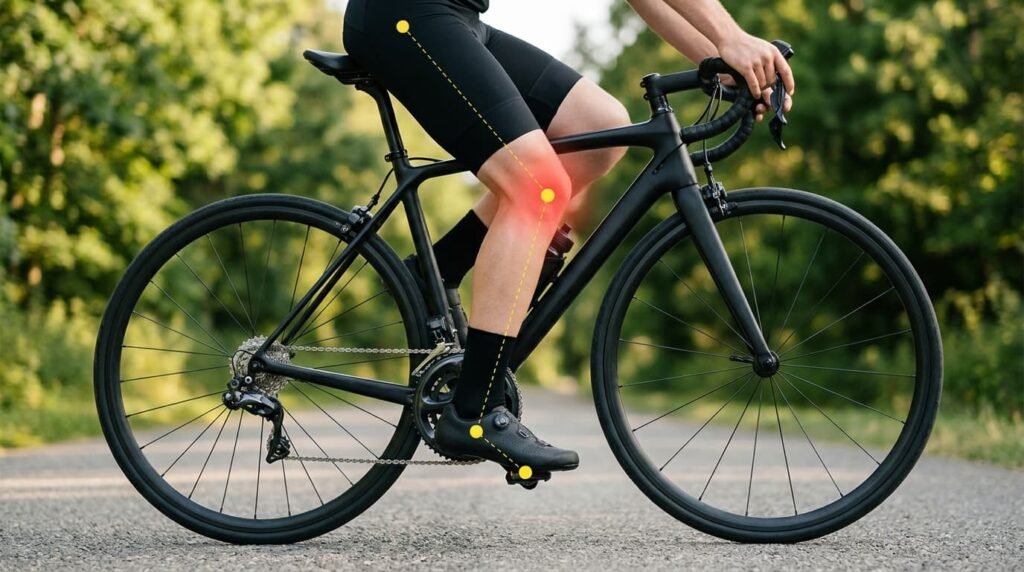
The patellofemoral joint carries a heavy load whenever the knee bends under weight. Force through it rises to several times body weight during everyday movements. Worn surfaces tolerate that pressure poorly.
Knee Pain Climbing Stairs and Slopes
Each step up bends the knee while the thigh muscles pull hard. The kneecap presses firmly into its groove. Pain after a single flight of stairs is a classic warning sign. Few people enjoy a gym session they never booked.
Stepping down can hurt even more, because the thigh muscles must brake body weight. Steep slopes and uneven pavements create the same pattern.
Knee Pain Squatting and Deep Bending
Squatting bends the knee far beyond ninety degrees. Pressure behind the kneecap climbs sharply in deep bending. Gardening, kneeling and low chairs create the same problem.
Even picking up a dropped coin becomes a negotiation. Many patients stop squatting long before they stop walking. That early warning often goes unreported for years.
Knee Pain Cycling and Uphill Riding
Cycling repeats knee bending thousands of times per ride. Hills add resistance to every push of the pedal. A saddle set too low increases the bend further.
Sore knees on climbs often point to the joint, not to poor fitness. Riders frequently shorten their routes without realising why.
Avoiding movement entirely backfires. Rest weakens the thigh muscles, and weaker muscles load the joint more. Sensible modification works better than stopping altogether.
How Knee Alignment and Patellar Tilt Shape the Pain
Lateral Patellar Tilt Angle and Tracking
Radiographs show how the kneecap sits and tilts in its groove. Studies link radiographic severity with age and with the lateral patellar tilt angle. A kneecap that tracks off-centre loads one side of the joint more heavily.
That uneven load can speed up wear. It also explains why two patients with similar scans report very different pain.
What Scans and Examination Show
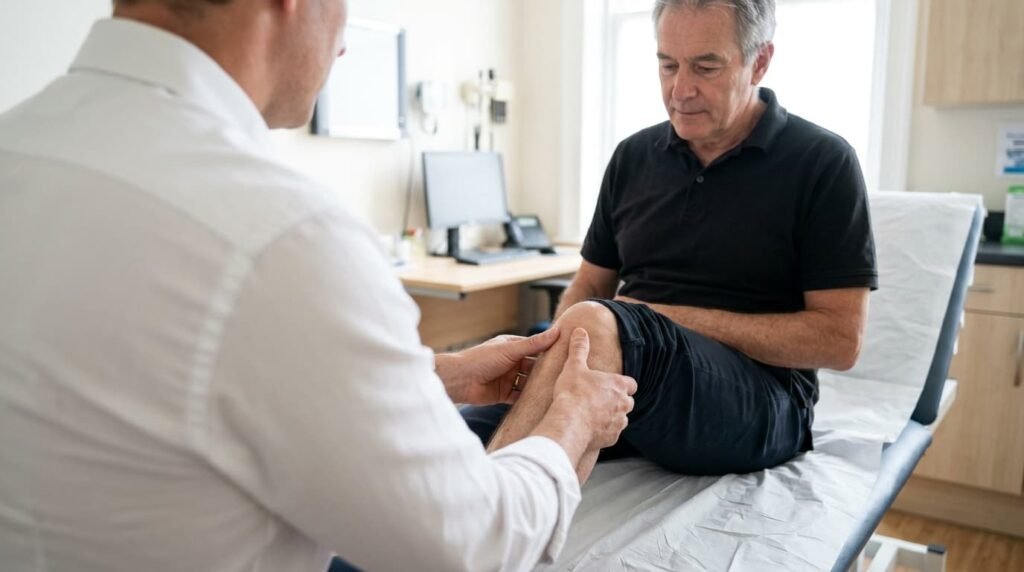
Examination checks tenderness, kneecap movement and thigh strength. A skyline X-ray view shows the gap between the kneecap and the thigh bone. MRI reveals cartilage and soft tissue detail when needed.
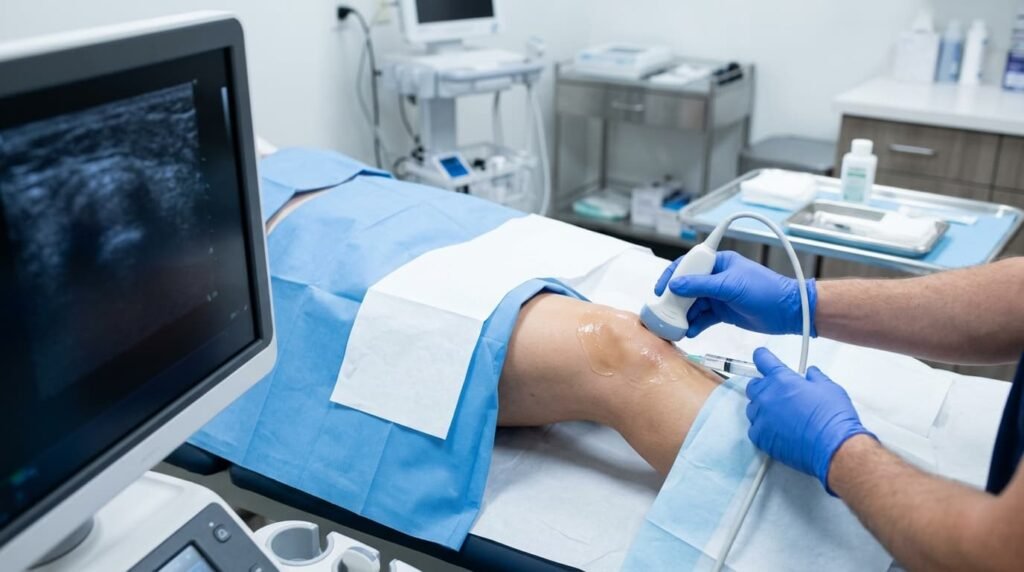
Ultrasound confirms where fluid or inflammation sits. It also guides injection placement later.
Why Assessment Comes First
Muscle strength, hip control and foot position also affect tracking. A thorough clinical assessment comes first, because scans alone rarely explain symptoms.
The findings shape every later decision, including whether an injection makes sense.
How Arthrosamid Works Inside the Joint
What the Gel Contains
Arthrosamid is an injectable hydrogel that consists of 2.5 per cent cross-linked polyacrylamide and 97.5 per cent water. The gel is not a drug. It integrates with the joint lining and adds bulk where cushioning has been lost.
That extra joint cushioning helps reduce friction during movement. Arthrosamid for kneecap treatment relies on exactly this mechanical effect.
How the Gel Behaves After Injection
The gel stays in the joint rather than dissolving within weeks. Water inside the gel gives it a soft, springy feel. Over time, the joint lining incorporates it into its own structure.
Clinicians therefore regard the injection as a single treatment rather than a course.
What the Research Shows
Clinical studies report pain relief lasting at least two years in many patients. Most trials enrolled people with general knee arthritis. Data specific to the kneecap joint remain limited.
The treatment has a generally good safety record, yet individual results still vary.
Where the Limits Lie
Arthrosamid does not cure arthritis. It will not regrow cartilage or realign the kneecap. This minimally invasive treatment aims to ease pain and improve comfort.
Realistic expectations matter more than any promise of a permanent fix.
Comparing Arthrosamid With Other Injection Options
Arthrosamid vs corticosteroid injections
Corticosteroids reduce inflammation quickly. Relief usually lasts weeks to a few months. Repeat doses carry limits, so clinicians space them out.
Arthrosamid works differently. The gel adds cushioning rather than suppressing inflammation, and benefit builds gradually over several weeks.
Arthrosamid vs PRP
Platelet-rich plasma (PRP) therapy uses a concentrate of the patient’s own blood platelets. Supporters say it calms inflammation and supports repair. Evidence in knee arthritis remains mixed, and preparation methods differ between clinics.
Arthrosamid has a fixed formulation, so results are easier to compare.
Mechanical Pain Versus Inflammatory Pain
Mechanical pain flares with load. Stairs, squats and hills trigger it, and rest settles it. Inflammatory pain brings swelling, warmth and morning stiffness.
Many patients have both. Patients whose first injection did not work usually need a different approach, not a repeat.
Who May Benefit and Who May Not
Likely Candidates
Typical candidates have mild to moderate arthritis and persistent pain despite exercise, weight management and simple painkillers. Load-related pain from stairs or cycling fits the profile well.
Specialists follow strict candidate selection criteria before recommending the gel. Arthrosamid for kneecap use needs even closer scrutiny, because the evidence base is smaller.
Less Suitable Situations
Several situations rule out or delay injection:
- Active infection in the joint or nearby skin
- Unexplained swelling that needs investigation first
- Severe bone-on-bone arthritis, which may respond less well
- Pain that actually comes from the hip or spine
Questions Specialists Ask
A good consultation covers the whole history:
- How long has the pain lasted?
- Which activities trigger it?
- Which treatments have already been tried?
- Has the knee ever dislocated, locked or swollen?
- How active does the patient want to be?
Building a Personalised Treatment Plan
Examination, history and imaging feed into one plan. The plan may combine an injection with strengthening and activity changes. Goals stay realistic and measurable.
What Happens During and After the Procedure
Preparing for the Visit
Patients usually continue normal medication unless the clinician advises otherwise. Loose clothing gives easy access to the knee. Arranging a lift home is sensible for the first day.
Patients should mention skin conditions or recent infections beforehand.
The Injection Visit
A clinician cleans the skin and numbs the area with local anaesthetic. The gel then goes into the joint space, often under ultrasound guidance. The visit is short, and most patients go home the same day.
Arthrosamid injections need no general anaesthetic.
Recovery and Early Results
Most patients rest the knee briefly and avoid strenuous activity for several days. Clinicians give specific advice on returning to sport. Recovery after Arthrosamid for kneecap treatment is usually straightforward.
Benefit builds gradually, so early soreness does not signal failure. Reported patient experiences describe steady improvement rather than overnight change.
Possible Side Effects
Short-lived soreness, swelling or stiffness at the injection site is common. Infection and other serious problems are uncommon but possible. Patients should report increasing pain, redness, heat or fever promptly.
Everyday Steps That Protect the Kneecap Joint
Strength and Movement
Strong thigh and hip muscles share the load that the kneecap joint carries. Age-related muscle loss makes this work even more valuable.
Low-impact options include flat cycling, swimming and straight-leg raises. Physiotherapy adds structure and supervision. Exercise supports any result from Arthrosamid for kneecap treatment.
Activity Adjustments
Small changes reduce daily strain:
- Raise the bike saddle slightly and use lower gears on hills
- Step down stairs slowly and use a handrail
- Limit deep squats and use a cushion for kneeling
- Take short breaks during long periods of sitting
Pacing Daily Activity
Pacing spreads activity across the day instead of packing it into one block. Short walks beat one long hike on a bad day. Warm-up movements prepare the joint before exercise.
A gentle cool-down helps stiffness settle afterwards.
Weight and Support
Every kilogram lost reduces the load through the knee during walking. Taping or a patellar brace helps some people feel steadier.
For visual explanations of non-surgical joint care, a video on the Dr SNA Clinic YouTube channel can add useful context.
Physiotherapy and Other Non-Injection Options
Physiotherapy Programmes
A physiotherapist builds a programme around the thigh, hip and calf muscles. Shallow sit-to-stands and step-ups usually suit the kneecap joint better than deep lunges. Programmes progress slowly. Pain should stay mild and settle within a day. Exercises that provoke sharp pain need adjustment. Supervised sessions teach good technique and track progress.
Medicines and Topical Treatments
Simple painkillers help some patients on bad days. Anti-inflammatory gels act locally and carry fewer side effects than tablets. Oral anti-inflammatories suit short courses only. Patients with stomach, kidney or heart conditions need medical advice first. Medicines ease symptoms, but they do not change joint mechanics.
Bracing and Taping
Patellar braces and tape alter how the kneecap tracks. Some patients report steadier knees and less pain. The effect varies from person to person. Braces work best alongside strengthening, not instead of it. A clinician can demonstrate correct taping technique.
Long-Term Outlook After Treatment

Follow-Up and Monitoring
Clinicians usually review progress after several weeks and again at around three months. Pain scores, stair tolerance and walking distance give measurable markers. Many patients keep a simple diary of good and bad days. That record guides later decisions. Arthrosamid for kneecap outcomes are best judged over months, not days.
Returning to Sport and Work
Most patients return to desk work within a day or two. Manual work and sport need a longer, staged return. Cycling usually restarts on flat routes before hills. Impact sports need individual advice. Clinicians set return dates for each patient after Arthrosamid for kneecap treatment. Pushing too fast risks a setback.
If Symptoms Return
Pain can return as arthritis progresses. The gel does not stop that process. A fresh assessment decides whether exercise changes, another option or a surgical opinion makes sense. Specialists discuss surgical options openly when they become relevant.
Frequently Asked Questions
What causes front of knee pain?
Wear in the patellofemoral joint is a frequent cause. Thinning cartilage, weak muscles and poor tracking all contribute. Tendon problems and referred hip pain can mimic it. Examination separates these causes.
Does Arthrosamid for kneecap problems work for everyone?
No. Results vary, and evidence for this exact joint remains limited. Careful selection improves the odds. Kneecap osteoarthritis differs between patients, so assessment comes first.
Is Arthrosamid a permanent fix?
No. The gel does not cure arthritis or rebuild cartilage. Benefit lasts for years in many patients, but results vary. Strengthening and activity changes help protect the outcome.
How long does Arthrosamid take to work?
Benefit builds gradually over several weeks rather than days. Individual timelines vary. Early soreness is common and settles. Follow-up reviews track progress.
How does Arthrosamid differ from PRP?
Arthrosamid is a standard gel that cushions the joint mechanically. PRP is a blood concentrate that aims to influence inflammation and repair. Evidence for PRP in knee arthritis remains mixed. A specialist matches the option to the pain pattern.
What should patients ask before booking an injection?
Useful topics include expected benefit, risks, alternatives, aftercare and the evidence for the kneecap joint. Patients should also ask how clinicians will measure success. A personalised treatment plan should answer each point.
Arthrosamid for kneecap symptoms offers cushioning, not a cure. Careful selection matters, because evidence for this specific joint is still developing. Strengthening and activity changes support any result.
Mr Syed Nadeem Abbas is a non-surgical knee and joint pain specialist. Book a consultation for an individual assessment.
Read more: Massage for knee pain eases stiffness and muscle tension when applied safely
Read more: Knee Pain From Hip Problems Is Often Missed Without a Proper Hip Check


