Knee Pain From Hip Problems Is Often Missed Without a Proper Hip Check

✅ Medically reviewed | Updated october 2026
Knee pain from hip problems is far more common than most people realise. Over 10 million people in the UK live with arthritis, according to Versus Arthritis. An estimated 5.4 million of them have knee osteoarthritis. Around 3.2 million have hip osteoarthritis. The two joints share nerves, muscles and walking mechanics, so trouble in one often appears in the other. Many patients treat the knee for months while the real trigger sits higher up the leg. That delay prolongs pain and leads to treatments that miss the target.
How Hip and Knee Pain Connect Through Nerves and Movement
Shared Nerve Supply
The hip and knee sit at opposite ends of the thigh bone. Yet the obturator and femoral nerves supply both joints. The brain receives a pain signal and struggles to locate its source. It often places the discomfort at the knee, even when the hip joint is under strain. Hip joint pain typically appears in the groin, outer hip, thigh or knee. Pain location alone therefore cannot prove where a problem begins. The knee collects the complaints, much like a receptionist who hears about problems created elsewhere in the building.
Shared Movement Chain
The hip, knee and ankle work as one chain. Each stride sends load up and down the leg. A stiff hip changes stride length and thigh position. The knee then absorbs forces it was never built to handle. Abnormal hip rotation also changes the angle of the knee joint. Forces then concentrate on one side of the cartilage. This pattern explains knee pain from hip dysfunction in many cases. A small shift at the hip can multiply the stress on the knee with every step. Over weeks, that extra load irritates cartilage, tendons and ligaments.
Referred Pain From Hip to Knee Explained
Referred pain means pain appears away from its true source. The hip is a classic example. Many patients arrive with a normal-looking knee but a stiff or arthritic hip. A knee that hurts without swelling, clicking or injury deserves a hip check. Knee pain from hip joint wear often feels dull, deep and hard to pinpoint.

Hip Pain Radiating to Knee
This pain usually travels down the front or inner thigh. Walking, climbing stairs or standing from a chair often triggers it. Rest may ease the ache, but stiffness returns after sitting. Pain may also wake a patient when lying on the affected side. Twisting movements, such as getting out of a car, often make it sharper.
Why the Hip Stays Quiet While the Knee Complains
Hip problems do not always announce themselves in the groin. Some patients feel nothing at the hip beyond mild stiffness. The knee then carries the whole complaint. Scans of the knee may show only minor changes that do not match the pain level. A mismatch between knee symptoms and knee scans is a classic hint that the hip deserves attention. Clinicians therefore test hip movement before blaming the knee.
Can Hip Pain Cause Knee Pain in Daily Life?
Yes, and the pattern is easy to spot. A sore hip shortens the stride. The pelvis tilts. The knee twists slightly with each step. After a few weeks, the knee aches although it never suffered an injury.
Hip Conditions That Trigger Knee Symptoms
Hip Arthritis Knee Pain and Joint Wear
Stiffness and pain follow. Many patients feel the knee ache first and notice the groin or buttock ache later. Limited hip rotation forces the knee to compensate with every stride. Hip arthritis knee pain often eases once treatment addresses the hip itself.
Hip Instability and Weak Stabilising Muscles
A hip that moves more than its muscles can control lets the thigh drift inward during each step. The knee then twists under load. Long hours at a desk rarely build strong glutes. Sudden gym sessions then expose the weakness.
Who Develops Hip-Driven Knee Symptoms Most Often
Risk rises with age, particularly after 45, because joint wear becomes more common. Desk workers develop weak glutes and tight hip flexors. Runners and cyclists load the same muscles repeatedly. Patients who changed their walking pattern after an injury or surgery also fit the profile.
Knee Osteoarthritis Alongside Hip Wear
Both joints can wear at the same time. Treating the hip alone may leave the knee symptoms unresolved. Mr Syed Nadeem Abbas explains why osteoarthritis hurts in a video series on the Dr SNA Clinic YouTube channel. The series also covers where the pain really comes from and what synovitis means.
Other Causes Along the Leg and Spine
Iliotibial Band Syndrome
The IT band runs from the hip to the outer knee. A tight band tugs on the knee and causes sharp outer-knee pain. Cyclists, runners and walkers meet this problem often. Weak hip muscles usually sit behind it.
Sciatic Nerve Pain Reaching the Knee
Irritation of a lower back nerve root can send pain down the leg. Tingling, numbness or burning often joins the ache. Back movement may change the symptoms. The knee sometimes receives the pain, although the spine starts the problem.
Flat Feet and Gait Changes
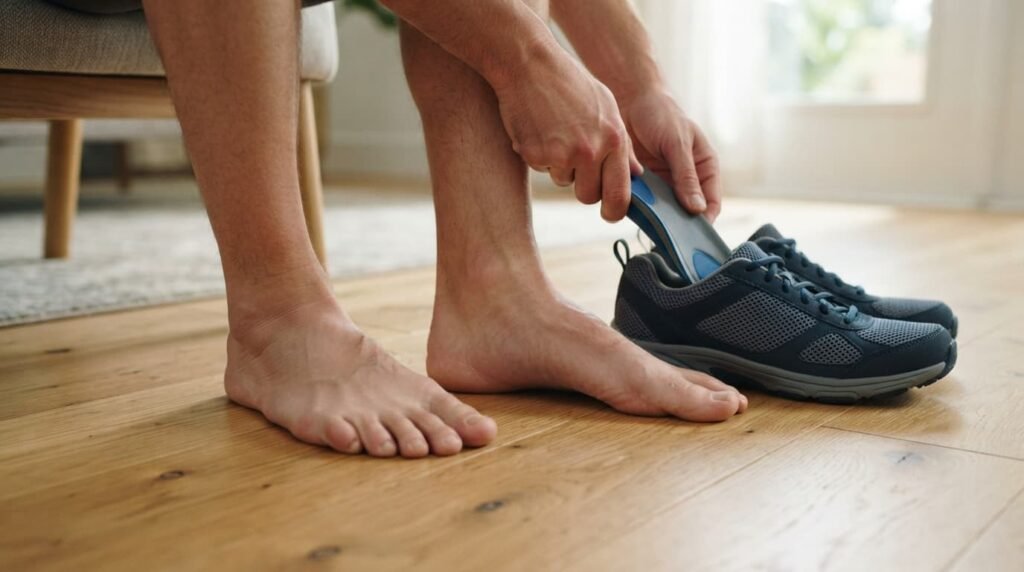
A collapsed arch rotates the shin inward. The knee then twists with each stride. Flat feet knee pain builds slowly and worsens after long walks. Supportive footwear and glute strengthening often help.
Muscle Overuse Injury From Repeated Strain
A tired muscle shares load poorly. Repeated running, lifting or poor posture strains the hip muscles first. The knee then pays the price. Rest, load management and strengthening usually settle the problem.
Tendonitis in Knee and Referred Strain
Inflamed tendons swell, ache and stiffen with movement. Altered hip mechanics often overload the tendons around the kneecap. Swelling, warmth and a grating feeling during movement point to tendon trouble.
Signs That Knee Pain Starts at the Hip
Several clues suggest knee pain from hip trouble rather than a local knee injury.
- Knee pain with no swelling, locking or injury
- Groin, buttock or outer hip ache
- Stiffness when putting on socks or shoes
- A limp or shortened stride
- Pain that worsens after sitting, then standing
Hip Versus Knee: A Quick Comparison
Knee-origin pain usually sits at a precise spot. Patients can often touch it with one finger. Swelling, locking and giving way favour a knee problem. Hip-origin pain feels broader and deeper. Groin ache, buttock ache and stiff hip movement favour a hip problem. Overlap exists, so professional assessment still matters.
Hip and Knee Pain on One Side
One-sided symptoms usually point to a single mechanical cause, such as joint wear, a tight band or a nerve problem. Symptoms on both sides can signal wider conditions, so a clinician should review them.
Hip and Knee Pain at the Same Time
Pain in both joints at once suggests a shared cause. Osteoarthritis, nerve irritation and gait changes lead the list. Swelling, warmth and stiffness suggest inflammation inside the knee, which needs its own assessment.
Red Flags That Need Urgent Review
Night pain, fever, sudden swelling, unexplained weight loss or inability to bear weight need urgent medical care. These signs can indicate infection, fracture or another serious condition. Emergency departments and urgent care services handle these cases. Waiting for a routine appointment risks lasting joint damage.
How Clinicians Diagnose Hip-Related Knee Pain
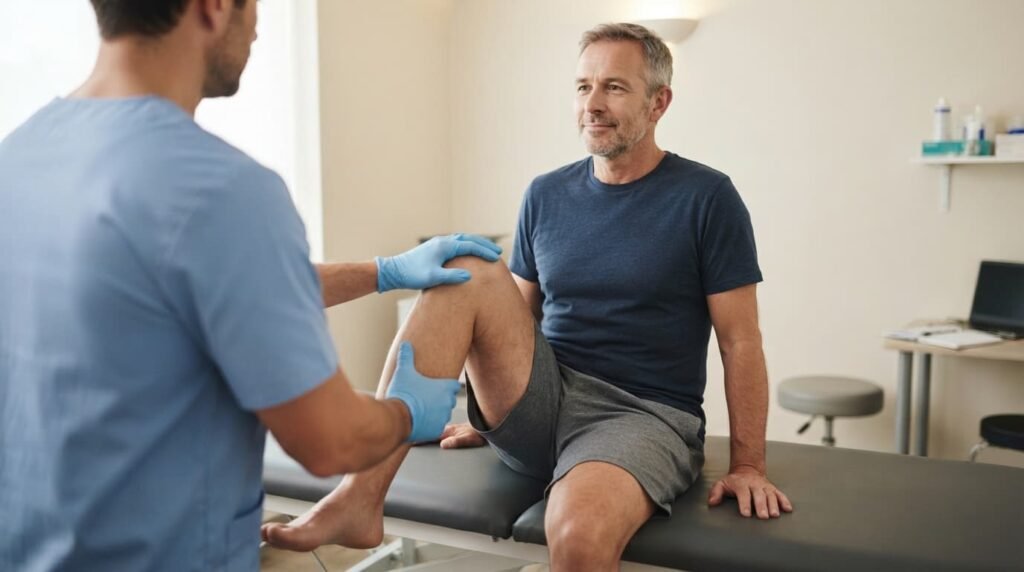
Diagnosing knee pain from hip involvement starts with a detailed history. The clinician asks where the pain begins, what worsens it and which movements trigger it. Hip rotation tests follow. Limited or painful rotation points to the hip joint. Knee ligament and tendon tests then clarify the role of the knee.
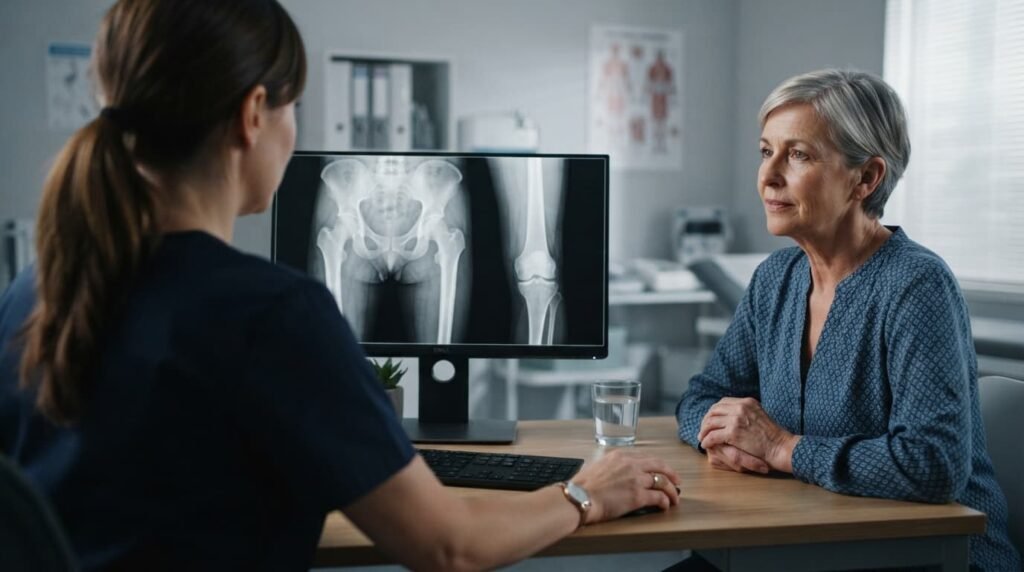
X-rays show joint space loss and bone changes. MRI shows cartilage, tendons and soft tissue. A normal knee scan does not close the case. Ongoing pain with clear knee imaging is a strong reason to examine the hip. Specialists sometimes use a diagnostic hip injection to confirm the source. Pain relief afterwards confirms the hip as the true cause.
Preparing for an Assessment
A short symptom diary speeds up the process. Notes should cover where the pain sits, when it starts and what eases it. Patients should bring previous scan reports, clinic letters and a list of treatments already tried. Comfortable clothing helps, because the examination covers the hip, knee and walking pattern. Clear notes help a specialist spot the pattern in minutes rather than visits.
If the knee proves to be the main source and arthritis is confirmed, a hydrogel injection may suit selected patients.
How to Relieve Hip and Knee Pain Safely
Treatment for knee pain from hip trouble should address the hip first.
Physiotherapy for Hip and Knee Pain
Targeted exercise strengthens the glutes, thighs and core. Stretching eases tight hip flexors and the outer thigh. Stride retraining reduces knee load. Physiotherapists also review footwear, posture and daily movement habits. Early physiotherapy can stop a minor hip issue from becoming a long-term knee problem.
Strength Progression Over Time
Mild cases of knee pain from hip weakness often settle within weeks of regular exercise. Arthritis-related pain needs longer-term management. Programmes usually start with gentle glute activation. Strength work then progresses to step-ups, squats and balance drills. Consistency matters more than intensity in the early weeks. Pain that rises beyond mild discomfort calls for a slower pace.
Home Measures and Lifestyle Changes
Heat relaxes tight muscles. Ice calms a flared joint. Pacing matters, because a marathon in week one rarely ends well. Weight loss also helps. Research links each kilogram lost to roughly four kilograms less knee load per step. Gentle yoga can improve hip mobility without heavy impact.
Footwear, Insoles and Walking Aids
Cushioned, supportive shoes reduce shock through the hip and knee. Insoles can support a collapsed arch and ease twisting at the knee. A walking stick, held on the side opposite the painful hip, can offload the joint during flare-ups. A physiotherapist can confirm the correct height and technique.
When Medical Treatment Helps
If hip arthritis drives the knee symptoms, treating the hip often brings relief. Guided exercise and weight management form the base of care. Pain relief medicines ease symptoms, though they do not fix the cause. Injections target a specific joint once scans confirm the source. Joint replacement suits advanced hip arthritis when other measures fail. Specialists base the choice on scans, symptoms and daily demands. A joint that responds poorly to the first plan often needs a fresh review of the true source.
Hip Surgery, Knee Symptoms and When the Knee Leads
Knee Pain After Hip Replacement
Surgery can change leg length or walking pattern, so the knee loads differently. Weak hip muscles during early recovery add strain. Persistent knee discomfort after hip surgery deserves review by the surgical team. Knee pain often improves once a worn hip no longer dominates the walking pattern.
Can Knee Pain Cause Hip Pain?
Yes. The relationship runs both ways. A stiff or painful knee shortens the stride, so the hip works harder. Weak thigh muscles add to the load. Stiff knees also limit hip extension during walking. Both joints then compensate for each other. When the knee is the main source, non-surgical orthopaedic treatment usually comes before surgery.
Frequently Asked Questions
Can Hip Pain Cause Knee Pain?
Yes. Shared nerves and shared movement link the two joints. A stiff or arthritic hip often sends pain to the knee. A hip examination should follow any unexplained knee pain.
Why Does the Knee Still Hurt After a Normal Scan?
Scans show structure, not pain pathways. The hip may be the true source. Referred pain leaves the knee looking healthy. A hip assessment often solves the puzzle.
Does Knee Pain After Hip Surgery Mean the Replacement Failed?
Not usually. Changes in leg length, walking pattern and muscle strength often explain it. Persistent or worsening pain needs review by the surgical team. Scans and blood tests help rule out complications.
Which Exercises Ease Hip and Knee Pain at the Same Time?
Glute bridges, clamshells and gentle hip flexor stretches suit many people. Pain should stay mild during exercise. Sharp or worsening pain means stopping and seeking advice. A physiotherapist can adjust the programme to the cause.
When Does Hip-Related Knee Pain Need Urgent Care?
Fever, sudden swelling, night pain or inability to bear weight need urgent medical care. These signs can indicate infection or fracture. Rapid review prevents lasting joint damage. Gradual aches usually justify a routine appointment instead.
Knee pain from hip problems follows a clear pattern once the shared nerves and movement chain come into focus. Hip arthritis, weak stabilising muscles, a tight IT band and foot mechanics often hide behind a sore knee. Early assessment of both joints speeds diagnosis and prevents months of treatment aimed at the wrong place. Mr Syed Nadeem Abbas is a non-surgical knee and joint pain specialist who assesses persistent knee symptoms.
Read more: How Non-Surgical Orthopaedic Treatment Changes From Early to Advanced Joint Damage
Read more: Golf and Knee Health Facts: Every Golfer Should Know Before the Next Round