
Hydrogel injection for knee osteoarthritis is becoming one of the most discussed non-surgical treatments in the UK. Knee osteoarthritis affects more than 8.5 million adults nationwide, according to national arthritis data. Symptoms range from mild morning stiffness to severe restriction that limits walking and stairs. Steroid injections and hyaluronic acid have long been the default options, yet both tend to wear off within months. Hydrogel treatment takes a different mechanical route, integrating with the joint lining instead of dispersing away. Understanding what happens inside the knee after treatment helps patients weigh this option against more familiar alternatives.
What Happens Inside the Knee After a Hydrogel Knee Injection
A knee joint relies on synovial fluid and cartilage to move smoothly. Osteoarthritis wears down cartilage and thins that fluid, so bones grind with less protection. A hydrogel knee injection places a soft, water-based gel directly into the joint capsule. Rather than sitting as a separate layer, the material becomes part of the surrounding tissue over several weeks. This mechanical distinction is central to understanding hydrogel injection for knee osteoarthritis as a treatment category. Patients often describe the change as gradual rather than immediate, unlike faster-acting steroid options.
Synovial Hydrogel Treatment and Membrane Integration
The synovium is a thin membrane lining the inside of the knee joint. Once injected, synovial hydrogel treatment gradually merges with this lining rather than remaining as a foreign substance. Synovial cells spread through the gel structure, creating a thickened, cushioned layer. This integration process is what separates hydrogel from injections that simply top up existing joint fluid. The result is a durable buffer that continues functioning long after a single appointment.
Why Polyacrylamide Hydrogel Knee Material Remains Stable
Polyacrylamide hydrogel knee treatment uses a cross-linked polymer structure combined mostly with water. This composition resists the natural breakdown that affects hyaluronic acid within months. Because the material is non-biodegradable, it stays in place rather than being reabsorbed by the body. Patients often ask why this matters clinically. A material that does not dissolve can keep providing mechanical support long after softer alternatives have disappeared.
The Science Behind Arthrosamid Knee Injection
Arthrosamid knee injection is the most widely used branded polyacrylamide hydrogel available for knee osteoarthritis in the UK. Understanding its structure explains why clinicians increasingly recommend it for suitable patients.
PAAG Knee Injection Composition and Structure
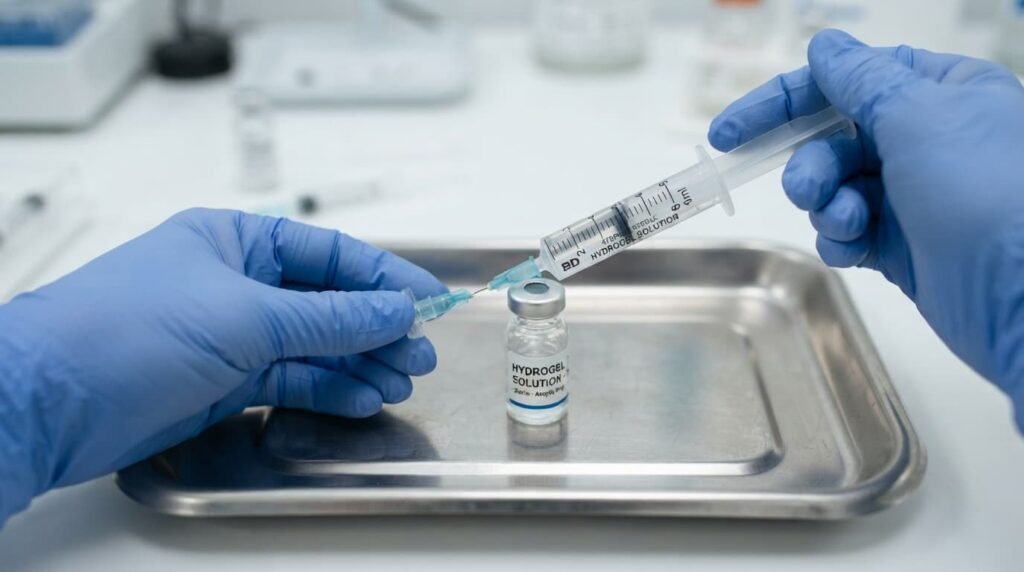
A PAAG knee injection typically contains around 2.5 per cent cross-linked polyacrylamide combined with non-pyrogenic water. This ratio keeps the gel soft enough to integrate safely while remaining structurally stable. The polymer network allows normal water exchange with surrounding tissue without losing overall volume. Researchers first developed this chemistry for other medical uses before adapting it for joint treatment.
Intra-Articular Hydrogel Injection Placement and Technique
An intra-articular hydrogel injection is delivered directly into the joint capsule using ultrasound guidance. Precise placement matters because inaccurate injections reduce effectiveness and increase discomfort. A trained clinician identifies the joint space before inserting the needle under real-time imaging. The procedure typically takes twenty to thirty minutes from preparation to completion.
- Local anaesthetic numbs the treatment area beforehand
- Ultrasound confirms accurate needle placement within the joint
- A single dose is usually sufficient for most patients
- Patients typically walk out of the clinic on the same day
How Hydrogel Cushions and Lubricates the Knee Joint
Pain from osteoarthritis largely stems from increased friction between bone surfaces. Reducing that friction, rather than masking pain signals, is the central goal of hydrogel treatment.
Knee Cushioning Injection Mechanics
A knee cushioning injection increases the volume and thickness of material inside the joint space. This added bulk absorbs impact during walking, climbing stairs, and standing from a seated position. Thicker material behaves more like healthy, undamaged synovial fluid than the thin fluid found in arthritic joints. Many patients notice steadier movement as the gel settles into place over several weeks.
Knee Joint Cushioning Gel Versus Natural Joint Fluid
Healthy joint fluid has a thick, egg-white consistency that absorbs shock efficiently. A knee joint cushioning gel aims to recreate that protective quality once natural fluid has thinned. Unlike natural fluid, the injected material does not degrade through daily movement. This durability explains why relief tends to build gradually rather than fading within weeks.
Comparing Hydrogel Treatment With Other Knee Injection Choices
Patients exploring knee osteoarthritis injection options often want a straightforward comparison before deciding on treatment. Choosing hydrogel injection for knee osteoarthritis over alternatives usually comes down to how long relief needs to last.
Hyaluronic Acid Vs Hydrogel Injection
A hyaluronic acid vs hydrogel injection comparison usually centres on duration and mechanism. Hyaluronic acid injections (see: kneepainclinicuk.com/blogs/gel-injections-for-knee-pain-a-non-surgical-option-for-osteoarthritis-symptoms) lubricate the joint temporarily before the body gradually absorbs the material. Hydrogel instead integrates with the synovial lining, creating longer-lasting structural support. Most hyaluronic acid courses require repeat treatment every six to twelve months.
Arthrosamid Vs Steroid Injection
An Arthrosamid vs steroid injection comparison highlights very different mechanisms and timelines. Steroid injections reduce inflammation rapidly but rarely last beyond six to twelve weeks. Repeated steroid use has also been linked to cartilage thinning in long-term studies. Hydrogel takes longer to reach full effect but avoids this cumulative risk.
Steroid Injection vs Hydrogel Injection — quick comparison:
- Onset: Two to three days vs Several weeks
- Typical duration: Six to twelve weeks vs Multiple years
- Repeat safety: Limited long-term vs Generally favourable
- Best suited for: Acute flare-ups vs Ongoing management
Steroid Injection Vs Hydrogel Knee Treatment for Repeated Use
A steroid injection vs hydrogel knee comparison becomes especially relevant for patients receiving frequent top-ups. Consultants often discuss switching once steroid benefits start shortening between appointments. Choosing a single longer-acting option can reduce the number of clinic visits needed each year. This shift also lowers cumulative exposure to repeated corticosteroid dosing.
Why Long-Lasting Knee Injection Results Happen With Hydrogel
A long-lasting knee injection outcome depends heavily on the stability of the material used.
Arthrosamid: How Long Does It Last
Arthrosamid: How Long Does It Last? is one of the most common patient questions before treatment. Clinical follow-up data suggest benefits commonly continue for two to five years in appropriately selected patients. Because the hydrogel does not degrade like hyaluronic acid, relief tends to plateau rather than fade sharply. Individual results vary depending on osteoarthritis severity and joint anatomy.
Arthrosamid Clinical Trial Results
Arthrosamid clinical trial results published in orthopaedic journals support this extended duration. A two-year cohort study following 269 patients and 314 knees reported sustained improvement in pain and function scores. Separate UK data recorded meaningful reductions in pain scores at three months post-treatment. These figures give patients an evidence-based benchmark rather than relying solely on marketing claims. A detailed breakdown of Arthrosamid injection success rates among UK patients sets these findings out in more depth. Outcome data also varies by baseline severity, so individual results are never guaranteed.
Who Benefits Most From Non-Surgical Knee Osteoarthritis Treatment
Not every patient responds equally well to hydrogel injection for knee osteoarthritis, so proper assessment matters before booking. Age, weight, activity level, and joint alignment can all influence how well the treatment performs.
Ideal Candidates and Kellgren-Lawrence Grade
Clinicians often reference the Kellgren-Lawrence grading scale when predicting outcomes. Patients graded two or three tend to respond best, since joint space narrows but remains present. Grade four patients with bone-on-bone contact can still see improvement, though results become less predictable. A thorough assessment, including imaging, helps determine realistic expectations beforehand.
Knee Replacement Alternative Injection Considerations
A knee replacement alternative injection route suits patients wanting to delay or avoid surgery. Ideal candidates have already tried physiotherapy, weight management, and anti-inflammatory medication first. Those cycling through frequent steroid injections often make particularly strong candidates. Surgery remains available later if symptoms progress despite conservative treatment. The full range of non-surgical knee treatment options (see: kneepainclinicuk.com) can be reviewed before deciding on a treatment pathway.
Arthrosamid Injection UK: Procedure, Recovery and Safety
An Arthrosamid injection UK appointment typically follows a straightforward clinical pathway from consultation to treatment. Most private clinics offering hydrogel injection for knee osteoarthritis follow a similar three-stage process. This begins with assessment, moves to imaging-guided treatment, then finishes with a structured aftercare plan.
Knee Injection Recovery Time
Knee injection recovery time after hydrogel treatment is generally short compared with surgical alternatives. Mild soreness or swelling can appear for a day or two following the procedure. Most daily activities, including gentle walking, resume almost immediately afterwards. Strenuous exercise is usually paused for around forty-eight hours as a precaution.
Arthrosamid Side Effects
Arthrosamid side effects are typically mild and resolve quickly. Temporary swelling, warmth, or discomfort at the injection site are the most frequently reported reactions. A rare pseudoseptic reaction can mimic infection, though this usually resolves within one to two weeks with rest. Active joint infection remains a firm contraindication before any injection proceeds. A fuller safety overview covering Arthrosamid treatment and what to expect (see: kneepainclinicuk.com/blogs/arthrosamid-treatment-for-knee-arthritis-what-it-is-how-safe-it-is-and-what-to-expect) is available for patients wanting more detail. This helps set expectations before booking a hydrogel injection for knee osteoarthritis.
Arthrosamid Cost UK Considerations
Arthrosamid cost UK enquiries vary depending on clinic, imaging requirements, and consultant experience. Private clinics typically confirm exact figures during an initial consultation rather than online. Insurance coverage also differs between providers, so checking policy terms beforehand avoids unexpected bills. Comparing the treatment against repeated steroid or hyaluronic acid courses over several years often puts the value into clearer perspective.
Getting Hydrogel Treatment at a Private Knee Clinic Harley Street

A private knee clinic Harley Street setting offers consultant-led assessment without lengthy NHS waiting times. Every candidate undergoes a full medical review before treatment proceeds, ensuring suitability is confirmed properly. We use ultrasound guidance throughout to maximise accuracy and reduce discomfort during the procedure. Mr Syed Nadeem Abbas provides personalised consultations covering realistic expectations for each patient’s specific stage of osteoarthritis. A wider overview of private knee pain treatment in London explains what patients should generally expect from consultation onward.
Frequently Asked Questions
Is hydrogel injection for knee osteoarthritis suitable for every patient?
Suitability depends on osteoarthritis severity, prior treatment history, and overall joint condition. Mild to moderate cases graded two or three typically respond best. A consultant assessment, including imaging, confirms whether this treatment fits individual circumstances.
How does Arthrosamid for knee osteoarthritis differ from hyaluronic acid?
Arthrosamid integrates permanently with the synovial membrane rather than gradually dispersing. Hyaluronic acid provides temporary lubrication that typically requires repeat courses every six to twelve months. This structural difference explains the longer duration associated with hydrogel treatment.
What does an Arthrosamid knee injection procedure involve?
The procedure uses ultrasound guidance to place hydrogel accurately within the joint capsule. Local anaesthetic minimises discomfort during the twenty-to-thirty-minute appointment. Most patients walk out the same day without further downtime.
Are there risks associated with Arthrosamid side effects?
Most reactions are mild, including temporary swelling or soreness near the injection site. Serious complications remain uncommon when treatment follows strict clinical protocols. Active infection at the treatment site is the main contraindication.
How soon can normal activity resume after treatment?
Knee injection recovery time is generally short, with most people resuming daily tasks immediately. Strenuous exercise is typically paused for around forty-eight hours. Full benefits often continue building over several weeks.
Does hydrogel treatment work as a knee replacement alternative injection?
For selected patients, this option can delay or reduce the need for surgery. Those with advanced joint damage may eventually still require surgical intervention. A specialist assessment clarifies which pathway suits each case.
What UK evidence supports Arthrosamid clinical trial results?
Published cohort studies following patients over one to two years report sustained pain and function improvements. UK-based data has echoed these findings across multiple treatment centres. Ongoing research continues tracking longer-term outcomes.
Is Arthrosamid injection UK availability limited to certain clinics?
Availability has expanded since the treatment launched in the UK market. Selected private clinics, including specialist centres in London, now offer the procedure. A consultation confirms local access and suitability.
Hydrogel injection for knee osteoarthritis offers a mechanically distinct alternative to steroid and hyaluronic acid treatment. Evidence supports multi-year relief in suitable candidates. The synovial integration process explains why benefits build gradually and persist longer than shorter-acting options. Mr Syed Nadeem Abbas, consultant specialising in non-surgical knee and joint treatment, advises patients on suitability for their stage.
Read more: Arthrosamid Injection for Women with Knee Osteoarthritis
Read more: Gel Injections For Knee Pain A Non-Surgical Option For Osteoarthritis Symptoms


