
Arthrosamid injection for women with knee osteoarthritis across the UK increasingly seeks non-surgical alternatives to steroid injections and joint replacement surgery. Knee osteoarthritis affects a larger proportion of women than men, particularly after the age of fifty. Research shows higher rates of pain among female patients. Stiffness and reduced mobility are also more commonly reported compared with male patients of similar age.
Understanding why this gap exists helps explain why targeted treatment options matter. Arthrosamid, a hydrogel-based injection, has become a recognised option for women managing persistent knee joint pain without surgery. This article explores why knee osteoarthritis presents differently in women and how Arthrosamid may help. Awareness of gender-specific joint care is growing steadily across UK private practice. Arthrosamid knee osteoarthritis women pathways now feature more prominently within consultant-led treatment planning.
Why Knee Osteoarthritis Affects Women More Than Men
Knee osteoarthritis in women develops through a combination of hormonal, structural and lifestyle-related factors. Growing clinical interest in Arthrosamid knee osteoarthritis in women reflects a wider shift toward gender-specific joint care. Historically, treatment guidance for knee osteoarthritis has been largely generalised across both sexes. Increasing awareness of female-specific patterns is changing how clinicians approach diagnosis and treatment planning.
Hormonal and Menopausal Influence on Joint Cartilage
Oestrogen plays a protective role in maintaining cartilage health throughout adulthood. During and after menopause, declining oestrogen levels can accelerate cartilage thinning. Joint inflammation often increases alongside this hormonal shift. Many women first notice worsening knee symptoms during this transition. Knee pain in menopause is now widely recognised as a distinct clinical pattern. It should not be mistaken for simple age-related wear alone. Knee osteoarthritis hormonal factors are increasingly discussed within UK rheumatology and orthopaedic circles. Recognising this hormonal link allows for earlier, more targeted intervention.
Joint Alignment and Biomechanical Differences in Women
Female pelvic structure creates a wider hip-to-knee angle than in men. This placement adds rotational stress across the knee joint during everyday movement. Lower muscle mass around the joint is also common among women. Combined, these factors can increase susceptibility to cartilage breakdown over time. Previous pregnancies can further affect joint laxity and long-term stability in some women.

Female knee osteoarthritis risk factors include the following:
- Hormonal changes linked to perimenopause and menopause
- Wider pelvic alignment increasing joint loading angles
- Lower baseline muscle mass supporting the knee joint
- Higher rates of joint hypermobility earlier in life
- Previous pregnancy-related joint laxity in some cases
What Is Arthrosamid Injection?
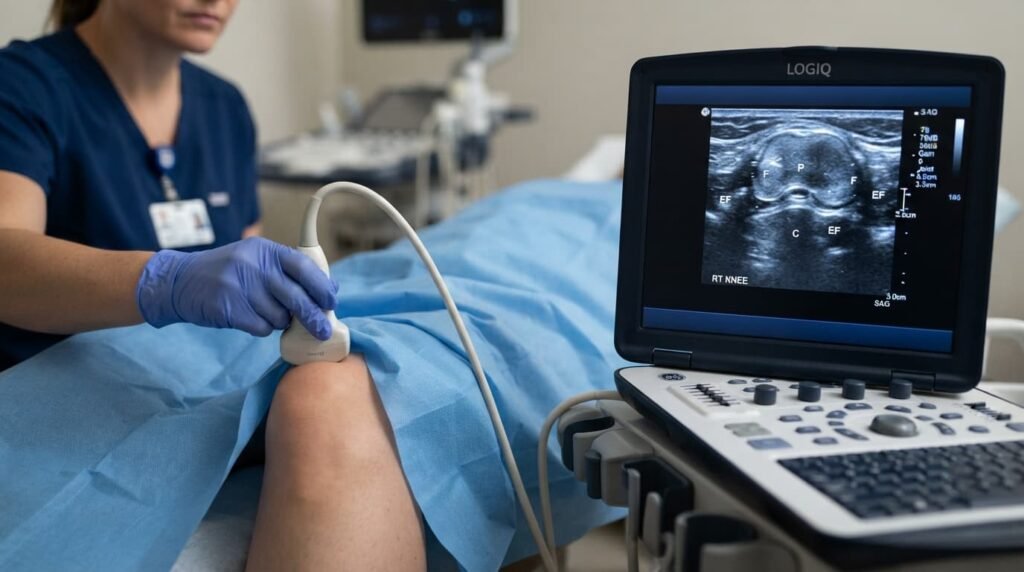
Arthrosamid injection knee treatment involves a single hydrogel injection placed directly into the joint capsule. The procedure is performed under ultrasound guidance for accurate placement. The hydrogel integrates into the synovial lining rather than simply coating the cartilage surface. It is composed mainly of water combined with a small percentage of cross-linked polyacrylamide. Unlike many injectable treatments, the hydrogel knee injection remains within the joint. It does not break down or disperse over a matter of months.
Synovial fluid injection knee treatments of this kind aim to restore joint cushioning. They also work to reduce the inflammatory cycle that drives ongoing pain. Unlike short-acting steroid injections, Arthrosamid is designed for sustained integration within the joint structure. This design underpins its longer-lasting clinical results. Clinical studies have followed patients for several years post-treatment. Findings continue to support sustained joint comfort well beyond initial recovery. Ongoing research into long-term safety further strengthens confidence in this treatment pathway.

How Arthrosamid Injection Helps Women with Knee Osteoarthritis
Arthrosamid knee osteoarthritis treatment for women focuses on restoring joint lubrication rather than masking symptoms temporarily. This distinction matters for women seeking a lasting solution rather than short-term relief.
Addressing Menopause-Related Joint Changes
By integrating into the synovial lining, Arthrosamid may help offset inflammatory changes linked to hormonal decline. This makes it a relevant option for women navigating joint pain postmenopause. Many women in this stage also experience other menopausal symptoms simultaneously, adding to overall discomfort.
Supporting Mobility and Independence in Daily Life
Reduced knee pain often translates directly into improved daily function. Walking becomes easier and climbing stairs less painful. Maintaining an active lifestyle becomes more manageable when joint stiffness eases. Arthrosamid injection for women experiencing persistent symptoms offers a pathway back to regular activity. Recovery from surgical procedures is not required with this approach.
A Non-Surgical Option for Active Women
Non-surgical knee osteoarthritis treatment appeals particularly to women who wish to delay joint replacement surgery. Some may wish to avoid surgery altogether if suitable. The procedure requires no incision. General anaesthetic is not typically required, and most patients return home the same day. For women balancing work, family and caregiving responsibilities, minimal downtime carries real practical value. Arthrosamid knee osteoarthritis women who lead busy lives often value this reduced disruption most.
Symptoms of Knee Osteoarthritis in Women
Knee osteoarthritis symptoms women commonly report differ slightly in presentation and timing from those seen in men.
Early Warning Signs
- Morning stiffness lasting more than thirty minutes
- A grinding or clicking sensation during movement
- Mild swelling after standing or walking
- Discomfort when climbing stairs or rising from a chair
- Reduced range of motion compared with previous years
When Symptoms Typically Worsen
Symptoms frequently intensify during the perimenopausal and postmenopausal years. This pattern often prompts women to seek assessment for the first time. Many present in their late forties or fifties. Left unaddressed, symptoms can progress from occasional discomfort to persistent daily pain. Sleep and general mobility are often affected as symptoms worsen.
What to Expect During the Arthrosamid Procedure
Consultation and Suitability Assessment
An initial consultation reviews medical history, current symptoms and any relevant imaging. A physical examination helps confirm the grade of osteoarthritis present within the joint. This assessment stage is essential before confirming suitability for Arthrosamid.
The Injection Process
Treatment is delivered as a single ultrasound-guided knee injection. This technique allows precise placement within the joint capsule. The procedure typically takes under thirty minutes. It is performed under local anaesthetic, minimising discomfort throughout.
Recovery Timeline
Most patients resume light activity within a few days of treatment. Strenuous exercise is generally avoided for several weeks afterwards. Arthrosamid side effects reported in clinical studies have been mild and short-lived. Temporary swelling or discomfort at the injection site is most commonly reported. Serious complications remain uncommon based on available data. For a closer sense of the treatment process, Dr SNA Clinic’s YouTube channel covers non-surgical joint treatment education. This content is relevant to women considering this option.
Arthrosamid Compared with Other Treatments for Women
Versus Steroid Injections
Corticosteroid injections offer fast but short-lived relief, often lasting only weeks to months. Arthrosamid vs steroid injection comparisons consistently show longer-lasting results with the hydrogel option. This is because Arthrosamid remains within the joint rather than dispersing quickly. Repeated steroid use over time can also carry risks to cartilage health.
Versus Hyaluronic Acid Injections
Hyaluronic acid injections lubricate the joint temporarily and typically require repeat courses. Arthrosamid vs hyaluronic acid studies suggest the hydrogel provides more durable symptom control. This benefit often comes from a single treatment rather than a repeated course. As a non-surgical alternative to knee replacement, Arthrosamid sits between conservative management and surgery. It offers middle-ground relief for many patients still weighing their options. Choosing between these treatments often depends on symptom severity, lifestyle demands and personal treatment goals.
Who Is a Suitable Candidate?
Knee osteoarthritis treatment for women through Arthrosamid is generally considered for mild to moderate cases. Suitability is confirmed through thorough clinical assessment beforehand. Candidacy typically excludes women with active joint infection or bleeding disorders. Recent knee arthroscopy within the past six months may also affect eligibility. Alternative pathways are discussed where Arthrosamid is not appropriate. Body mass index, activity levels and existing joint deformity are also reviewed during assessment. Women with knee osteoarthritis and well-managed general health tend to see the most consistent outcomes.

Understanding the Connection Between Arthrosamid and Women’s Knee Health
Arthrosamid injection knee treatment addresses a gap in care that has historically overlooked female-specific joint patterns. Knee osteoarthritis in women involves hormonal, structural and lifestyle factors rarely discussed in general guidance. By combining hydrogel technology with an understanding of these differences, treatment becomes more precisely tailored. This connection between mechanism and patient profile is central to why the approach continues gaining recognition. Women with arthrosamid knee osteoarthritis considering treatment benefit from this more tailored clinical perspective.
Frequently Asked Questions
Is Arthrosamid injection suitable for women going through menopause?
Arthrosamid may be suitable for women experiencing menopause-related joint pain, subject to individual assessment. Hormonal changes during this period often increase knee symptoms. This makes evaluation particularly relevant during the menopausal transition. A consultation confirms suitability based on joint condition and overall health.
Does knee osteoarthritis affect women differently than men?
Yes, knee osteoarthritis affects women differently from men in several ways. Additional hormonal and biomechanical factors are often involved. Female knee osteoarthritis risk factors include joint alignment differences and hormonal decline. Symptoms can also present earlier in some cases compared with men.
How long does Arthrosamid injection last?
Clinical evidence indicates benefits lasting several years following a single treatment. How long does Arthrosamid last remains a common question among prospective patients. Data continue to support durability beyond many similar injectable treatments. Follow-up assessment helps monitor long-term outcomes over time.
What side effects should be expected?
Arthrosamid side effects reported in studies are generally mild, including temporary swelling or tenderness. Serious complications remain rare according to available clinical data. Most discomfort resolves within a few days of treatment. Any unusual symptoms should be discussed with a clinician promptly.
Is the Arthrosamid procedure painful?
The procedure is performed under local anaesthetic, minimising discomfort during injection. Ultrasound-guided knee injection technique allows precise placement within the joint. This reduces unnecessary tissue disruption during the procedure itself. Most patients tolerate the procedure well overall.
Arthrosamid knee osteoarthritis in women pathways continue to reflect a broader shift toward tailored, evidence-based joint care. Knee osteoarthritis in women involves hormonal, structural and lifestyle factors that shape symptoms and treatment response. Arthrosamid offers a non-surgical option supported by growing clinical evidence for lasting relief. Careful assessment remains essential to confirm suitability for individual circumstances. Mr Syed Nadeem Abbas, a consultant specialising in non-surgical knee osteoarthritis treatment, provides guidance throughout this decision process.
Read more: The Best Knee Specialist London Delivers Lasting Knee Pain Relief
Read more: Knee Pain Without Injury and What It Really Means for Joint Health


