
Knee pain without injury affects a large share of adults at some point. It often appears with no fall, twist or blow to explain it. The knee depends on cartilage, ligaments, tendons and synovial fluid working together. Pain can develop when any one of these parts wears down gradually rather than being damaged in a single moment. Musculoskeletal research consistently shows gradual wear and repetitive strain cause more knee complaints than sudden trauma across most age groups. Specialists offering arthrosamid injection in London rely on seeing this exact pattern several times a week, particularly in people over 45.
What Does Knee Pain Without Injury Actually Mean?
The knee is a hinge joint, but it behaves more like a finely tuned machine. Cartilage, ligaments, tendons and fluid all work together to keep movement smooth. When one part wears down or becomes irritated, pain can follow without any single dramatic event causing it.
Unexplained knee pain is far more common than most people realise. Research consistently shows that gradual wear, repetitive strain and underlying joint conditions cause more knee pain cases than sudden trauma. A knee does not need to be hit to hurt. It simply needs to be overworked, under-supported or ageing faster than expected.
This matters because treatment for gradual damage looks very different to treatment for a torn ligament. Getting the cause right from the start saves months of guesswork.

A knee hurts, but no injury description is one of the most common ways patients open a consultation, and it almost always points towards one of the underlying patterns covered below rather than anything acute.
What Causes Knee Pain Without Injury?
There is rarely one single answer. Knee pain without injury usually stems from one of a handful of recurring patterns, and identifying which one applies changes the entire treatment path.
Gradual Knee Pain Causes and Overuse
Gradual knee pain causes are the most frequent culprit behind unexplained discomfort. Repetitive movements such as climbing stairs, kneeling at work, or regular running place small amounts of stress on the joint every single day. None of these actions causes damage on their own. Repeated thousands of times, though, they add up.
Knee pain from overuse often builds slowly over weeks or months rather than appearing in a single moment. Someone might notice stiffness after a long walk, then soreness the next morning, then pain that lingers for days. This slow build-up is a hallmark of overuse-related joint stress rather than acute injury.
Osteoarthritis Knee Pain No Injury
Osteoarthritis knee pain no injury cases are extremely common in people over 45, though the condition can start earlier. Cartilage inside the joint gradually thins, reducing the natural cushioning between bones. Bone can eventually rub against bone, producing stiffness, swelling and a grinding sensation known as crepitus.
Many people ask why their knee hurts for no reason when osteoarthritis is actually the answer, simply because the process is invisible from the outside. There is no bruise, no swelling in the early stages, and often no memory of an injury that started it. The joint has simply aged unevenly, sometimes accelerated by weight, previous minor strains, or genetics.
Other Underlying Contributors
Beyond overuse and arthritis, several other factors quietly contribute to what causes knee pain without injury:
- Weak hip and glute muscles, which shift extra load onto the knee joint
- Poor footwear that changes how weight travels through the leg
- Excess body weight, which multiplies pressure on the joint during walking
- Referred pain from the hip or lower back, which can mimic knee discomfort
- Fluid build-up such as a Baker’s cyst forming behind the knee
None of these requires a specific accident to trigger pain. They build in the background until the knee eventually signals that something needs attention.
Sudden Knee Pain No Injury: Why It Can Appear Overnight
Sudden knee pain no injury confuses people the most, because there was no warning at all. One day the knee felt fine. The next morning it was stiff, swollen or painful to bend.
This pattern often points to inflammation flaring up rather than fresh structural damage. Conditions such as gout, an inflamed bursa, or an early arthritic flare can all cause knee pain to spike out of nowhere, even though the underlying issue had been developing quietly for some time. A joint that has been slowly deteriorating can reach a tipping point where a normal daily movement, like standing up from a chair, becomes the moment pain becomes noticeable.
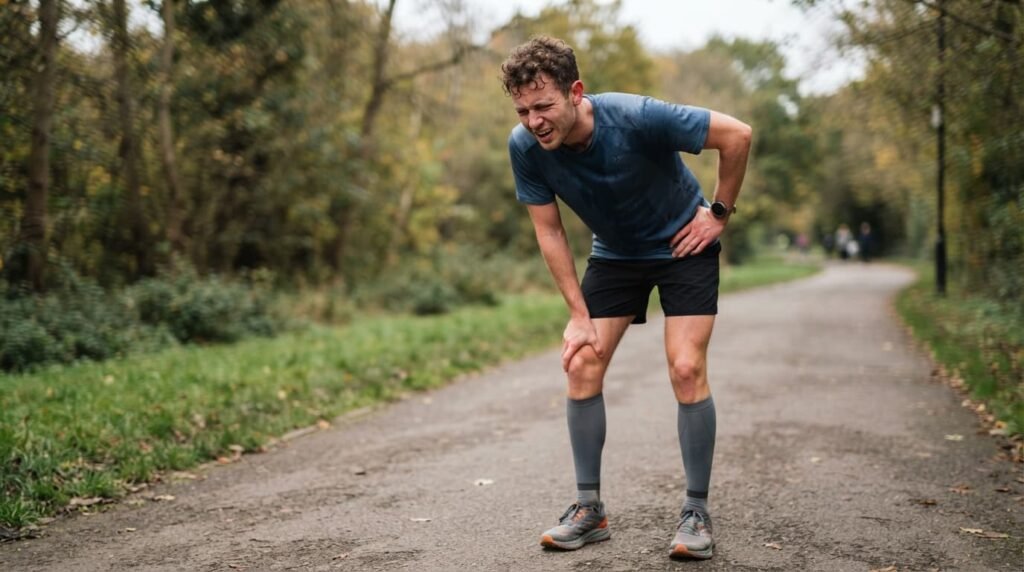
Sudden onset does not automatically mean something serious. It does mean the joint is worth having examined, particularly if the pain persists beyond a few days.
Knee Pain No Swelling No Injury: Should It Still Be Checked?
Swelling is often treated as the signal that something is genuinely wrong. Its absence, however, does not rule out a real problem. Knee pain with no swelling or injury cases are common in early-stage cartilage wear, nerve-related pain, or mechanical issues like poor kneecap tracking.
Patellofemoral pain, for example, frequently causes discomfort around or beneath the kneecap without any visible swelling at all. The joint can look completely normal while still sending consistent pain signals during stairs, squatting or prolonged sitting. Persistent pain without swelling still warrants professional review, especially if it interferes with daily activity or does not settle within two to three weeks.
Knee Pain Worse at Night No Injury: The Sleep Connection
Knee pain worse at night with no injury is a pattern that catches many people out, because daytime activity can actually mask joint discomfort. Movement keeps blood flowing and muscles engaged, which can reduce how pain registers. At night, once the body is still, inflammation and stiffness often become far more noticeable.
Osteoarthritis frequently follows this pattern, with pain intensifying after several hours of inactivity. Bursitis and tendinopathy behave similarly, easing during light movement but flaring once the knee rests in one position for too long. Anyone whose sleep is regularly disrupted by knee pain should treat it as a signal worth investigating rather than something to sleep through.
How This Differs From Common Knee Injuries
Knee pain causes linked to injury tend to follow a very different pattern from the gradual, unexplained type described above. Understanding how knee injuries are diagnosed helps separate the two, since imaging and physical assessment reveal very different findings depending on the cause.
Common Knee Injuries and Their Warning Signs
Reviewing the main knee injury types helps separate them from unexplained pain. Among the common knee injuries seen in clinics, several stand out for how clearly they connect to a specific moment or activity:
- Runner’s knee, medically known as patellofemoral pain syndrome, typically develops from repetitive impact during running or jumping
- ACL injury symptoms usually include a popping sensation, immediate swelling and instability after a sudden pivot or landing
- MCL injury treatment often follows a direct blow to the outside of the knee, causing pain along the inner joint line
- Jumper’s knee, a form of tendinopathy knee condition, develops from repeated jumping and landing in sports like basketball
- Knee ligament tear symptoms generally appear suddenly, alongside swelling that develops within hours rather than days
These injury types typically have a clear starting point, unlike the gradual or sudden-but-unexplained pain patterns discussed earlier in this guide.
Non-Surgical Treatment Knee Pain No Injury: What Actually Helps
Non-surgical treatment knee pain no injury approaches are usually the first step, and for good reason. Most cases respond well without any operation at all.

Physiotherapy strengthens the muscles supporting the knee, correcting the imbalances that often quietly cause pain in the first place. Weight management reduces the mechanical load placed on the joint with every step. Activity modification, rather than complete rest, keeps the joint mobile while avoiding the specific movements that aggravate symptoms.
Knee pain without injury treatment decisions should always follow a proper diagnosis rather than guesswork, since the wrong approach can delay genuine recovery by months.
When to See a Doctor for Knee Pain
Knowing when to see a doctor for knee pain prevents minor issues from turning into long-term problems. A GP or specialist review is worth booking when pain lasts longer than two weeks, worsens rather than improves, or limits walking, stairs or sleep.
Red flags that deserve prompt attention include a knee that gives way unexpectedly, visible swelling that appears suddenly, redness or warmth around the joint, or fever alongside knee pain. These signs can indicate infection or a more serious inflammatory condition rather than simple wear and tear.
Diagnosis typically starts with a physical examination, checking range of motion, stability and tenderness. Imaging such as X-ray or MRI may follow, depending on what the initial assessment suggests. The practice’s guide comparing X-ray and MRI scans explains why one is chosen over the other for different suspected causes.
How to Prevent Knee Injuries and Reduce Ongoing Strain
Learning how to prevent knee injuries matters just as much for people managing unexplained pain as for athletes. Strengthening the hips and glutes reduces the load transferred through the knee during walking and running. Supportive footwear changes how force travels up the leg with every stride.
Gradual increases in exercise intensity, rather than sudden jumps in activity, give tendons and cartilage time to adapt. Maintaining a healthy weight range removes unnecessary pressure from the joint surfaces. Knee injury recovery time also shortens considerably when these habits are already in place before a setback occurs, since stronger surrounding muscles support the joint throughout rehabilitation.
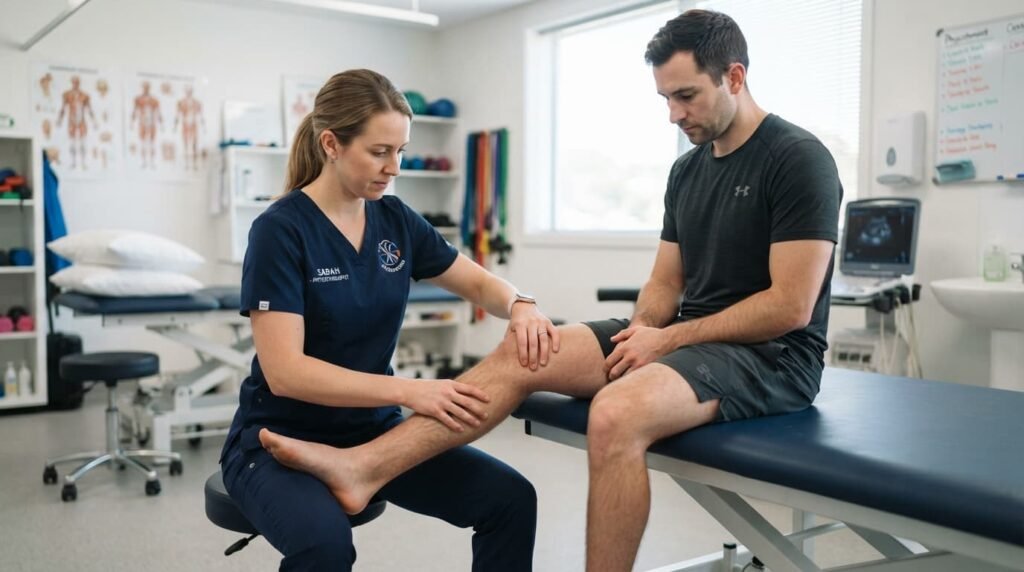
Knee pain after running is one of the most common overuse presentations seen in clinics, and often improves significantly once training load and footwear are properly assessed.
Frequently Asked Questions
Can knee pain without injury still be serious?
Yes. Conditions such as osteoarthritis, inflammatory arthritis and infection can all cause significant knee pain without any preceding injury, so persistent symptoms should always be assessed.
Why does my knee hurt for no reason at night specifically?
Reduced movement during sleep allows inflammation and stiffness to build, which is why knee pain worse at night with no injury is such a common complaint among people with early joint changes.
What is the difference between sudden knee pain no injury and a torn ligament?
A torn ligament usually follows a specific twisting or impact moment and causes immediate swelling, while sudden knee pain with no injury tends to build from an underlying condition reaching a tipping point.
Is knee pain with no swelling or injury less serious than swollen knee pain?
Not necessarily. Cartilage wear and nerve-related pain frequently cause discomfort without visible swelling, so the absence of swelling should not be taken as reassurance on its own.
What non-surgical treatment for knee pain with no injury before considering surgery?
Physiotherapy, weight management, activity modification and injection-based treatments such as arthrosamid are commonly tried before surgical options are discussed.
How long does knee injury recovery time typically take?
Recovery time varies from a few weeks for mild strains to several months for ligament repairs, depending on the specific structure involved and the treatment approach chosen.
Unexplained knee pain rarely comes from nowhere, even when no accident triggered it. Gradual wear, osteoarthritis, referred pain and inflammatory flares each leave their own pattern. Matching the pattern to the cause is the first real step toward relief. Pain that lasts beyond two weeks, worsens with rest, or disrupts sleep deserves a proper assessment rather than continued guesswork. Non-surgical options such as physiotherapy, weight management and joint injections resolve most cases before surgery becomes necessary.
Mr Syed Nadeem Abbas and the clinical team review each case individually. The assessment checks whether gradual wear, an early arthritic change, or a specific structural issue explains the symptoms. A treatment path follows from that finding rather than from guesswork.
Read more: Knee Arthritis Exercises to Avoid That Increase Knee Pain
Read more: New non-surgical knee pain treatments in UK 2026 with Arthrosamid injection


