How Patellofemoral Pain Syndrome Differs From Knee Osteoarthritis

Patellofemoral pain syndrome often gets mistaken for early knee osteoarthritis. The confusion makes sense. Both cause pain at the front of the knee. Both flare up during stairs, squats, or long periods of sitting. Both leave people wondering if rest will fix things, or if something more serious is going on. But these two conditions are not the same. The difference matters for treatment, recovery time, and long-term joint health.
Patellofemoral pain syndrome usually affects younger, active people. It responds well to targeted exercise. Knee osteoarthritis is different. It involves real cartilage breakdown. It tends to show up later in life, though it can appear earlier after a joint injury. Spotting the difference early gives the best shot at the right treatment before damage builds up.
What Is Patellofemoral Pain Syndrome?
Patellofemoral pain syndrome causes pain where the kneecap meets the thigh bone. This is called patellofemoral joint pain. The pain sits at the front of the knee and often feels like a dull ache rather than a sharp pain in one spot. Unlike a tendon injury, it rarely has one exact tender point a person can press on to bring on the pain.
Common Triggers and Daily Symptoms
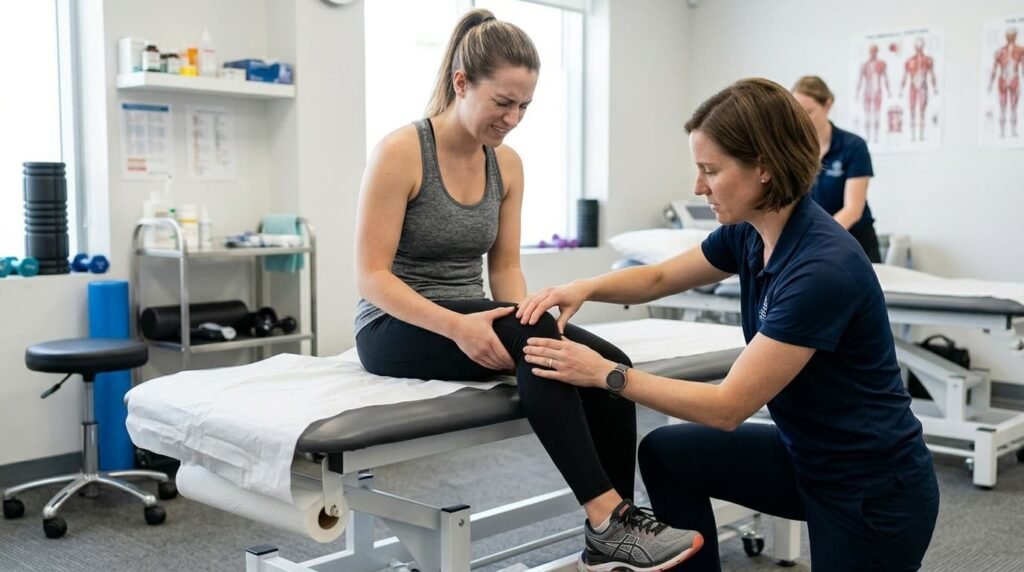
People with this condition often notice pain behind kneecap feelings during certain movements, not at rest. Climbing or going down stairs is a classic trigger. In fact, knee pain climbing stairs is one of the most common complaints. Sitting for a long time with a bent knee can also bring on pain around kneecap discomfort once standing up again. Squatting, kneeling, and running downhill add extra load to the joint. This is why knee pain squatting often shows up early. Some people also notice clicking or grinding, though this alone does not confirm a diagnosis.
Who Tends to Develop PFPS
PFPS knee problems are more common in younger, active people. This includes runners, cyclists, and anyone playing sports with lots of knee bending. Women seem to be affected slightly more than men, partly due to differences in hip and thigh alignment. Weak muscles around the kneecap, especially VMO weakness, often play a role. So does dynamic valgus knee movement, where the knee drifts inward instead of staying straight. A wider Q angle knee measurement, the angle between the hip and knee, can also throw off how the kneecap moves.
What Is Knee Osteoarthritis?
Knee osteoarthritis is a condition where the cartilage that protects the knee slowly wears away. Unlike PFPS, this involves real structural damage, not just mechanical irritation. Knee osteoarthritis symptoms usually build up slowly over months or years, not suddenly after one activity.
How Cartilage Breakdown Begins
Cartilage acts like a cushion, letting bones glide smoothly during movement. When the patellofemoral osteoarthritis process starts, repeated abnormal pressure makes this cartilage thin out and lose its cushioning.Once cartilage wear knee damage goes far enough, the bones underneath start to rub together. This causes the stiffness, swelling, and grinding feeling many people link to arthritis.
Early Signs Versus Advanced Symptoms
Early signs of knee osteoarthritis are often subtle. Think mild stiffness after rest, a slight ache after activity, or occasional swelling. As the condition gets worse, knee swelling and stiffness becomes more constant. Mobility narrows, and simple tasks like standing up from a chair grow harder. Morning stiffness that eases within thirty minutes usually points to earlier-stage disease. Stiffness that lasts longer often signals more advanced joint changes.

Patellofemoral Pain Syndrome vs Osteoarthritis: Key Differences
Despite the overlap in symptoms, a few patterns help tell these conditions apart.
Age and Onset Patterns
PFPS tends to show up in people under 40, often linked to sport or repeated activity. Knee osteoarthritis, including the patellofemoral type, is more common from the fifth decade of life onward. That said, cases linked to a past injury can appear earlier.
Pain Location and Triggers
Both conditions cause pain at the front of the knee, but the pain feels different. PFPS pain is usually spread out and hard to pinpoint. It gets worse with activity and eases with rest. Osteoarthritis pain often feels deeper. It can stick around even after rest, and it frequently brings morning stiffness that PFPS rarely causes in the same way.
Joint Sounds and Mechanical Symptoms
A knee clicking sound can show up in both conditions, so this symptom alone does not point to a diagnosis. But persistent grinding paired with swelling, reduced movement, and stiffness after sitting still leans more toward osteoarthritis than PFPS.
Shared Risk Factors Behind Both Conditions
Several underlying issues raise the risk of developing either condition, sometimes both at once.
Biomechanical Contributors
Poor knee joint biomechanics, including abnormal kneecap movement, weak hip muscles, and foot issues like overpronation, put uneven stress on the joint. Studies on osteoarthritis risk factors knee have linked unusual thigh bone shape and kneecap misalignment to a higher chance of cartilage damage over time.
Lifestyle and Activity-Related Factors
Carrying extra body weight increases the load on the joint with every step. This raises the risk for both PFPS and osteoarthritis. Repeated high-impact activity, like long-distance running without proper strength training, can also speed up wear. This is part of why runner’s knee is sometimes used loosely to describe both patellofemoral pain and early degenerative changes, even though the two are not the same thing.
How Clinicians Diagnose Each Condition
Getting the right diagnosis takes a mix of hands-on assessment and, when needed, imaging.
Physical Examination Techniques
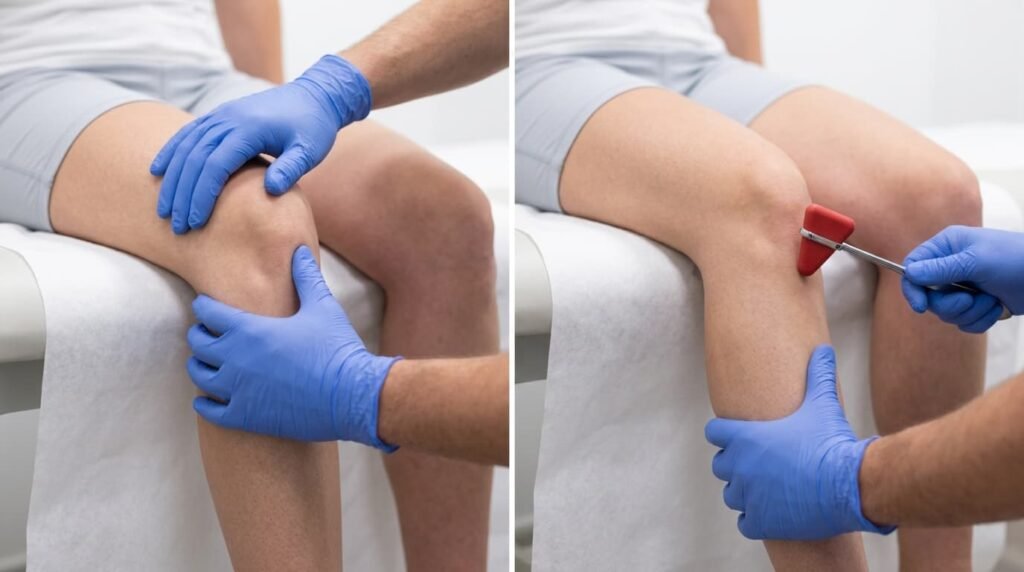
Doctors often use the Clarke’s test knee check. This involves gentle pressure on the kneecap while the muscle contracts, to see if it brings on pain. The patellar tap test checks for fluid behind the kneecap, which can point to swelling from joint irritation or early arthritic change. A detailed history covering activity levels, past injuries, and symptom patterns adds further clarity.
Imaging and Confirmatory Tests
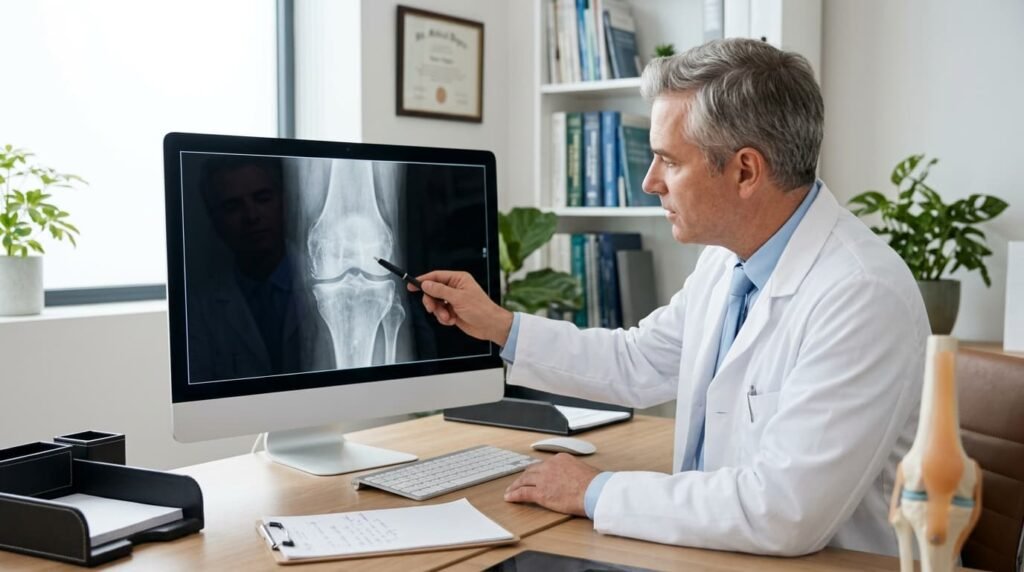
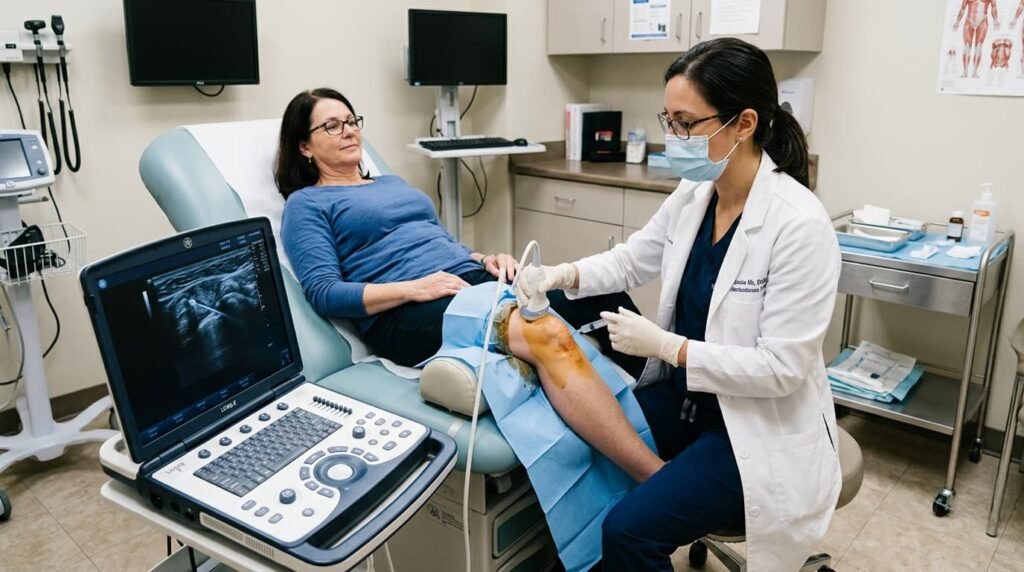
PFPS can often be diagnosed through a clinical exam alone. Knee osteoarthritis, on the other hand, usually needs imaging to confirm it. X-rays remain the standard way to spot joint space narrowing and bone changes. Ultrasound is also useful for catching early cartilage changes, fluid build-up, and inflammation that might not yet show on an X-ray.
Treatment Approaches for Both Conditions
Most cases of either condition respond well to non-surgical care. Surgery is usually saved for more advanced or stubborn cases.
Non-Surgical and Physical Therapy Options
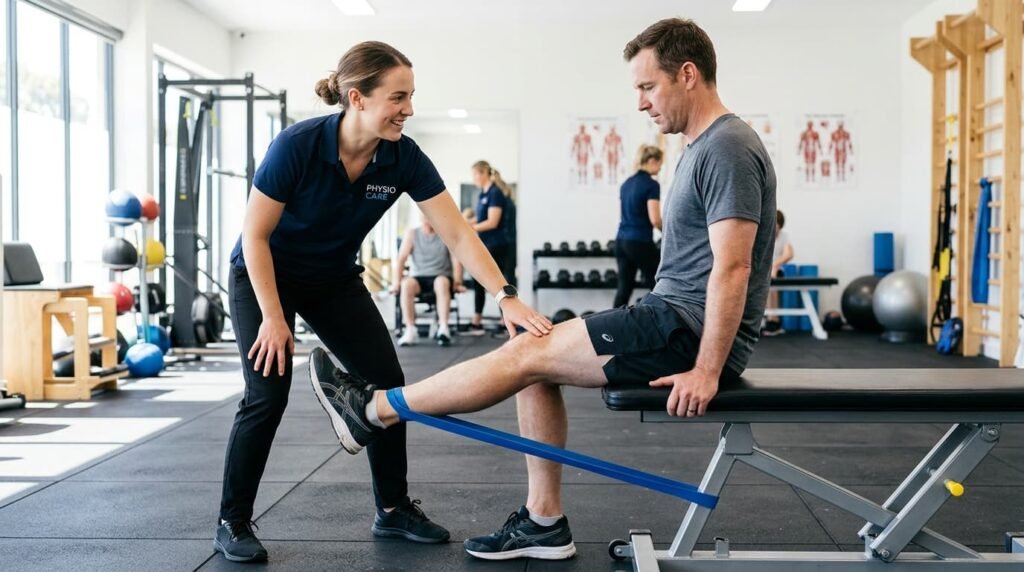
Physical therapy for knee pain forms the core of treatment for both PFPS and early osteoarthritis. Programmes usually target hip and thigh strength, especially the VMO, along with stretching and movement retraining. For many people, this approach alone brings real relief and helps stop symptoms from getting worse. This makes knee pain treatment without surgery a realistic first step, not a last resort.
Bracing and Activity Modification
Knee bracing for PFPS can help by gently guiding the kneecap into better position during movement, though results vary from person to person. A knee brace for kneecap pain may also ease discomfort during specific activities like stairs or long walks. Cutting back on high-impact activity for a short while gives irritated tissue room to settle.
Injection-Based Treatments
When physiotherapy alone is not enough, injection therapy can offer a useful window of pain relief that supports rehab. Steroid injection for knee pain reduces inflammation quickly and can ease symptoms enough to take on strengthening exercises. Hyaluronic acid injection knee treatment offers a drug-free option, topping up the joint’s natural lubrication. PRP injection knee osteoarthritis options use the body’s own platelets to support healing, while Arthrosamid injections are increasingly used for longer-lasting symptom control in degenerative knee cases. All of these are usually given as an ultrasound guided injection knee procedure, which improves accuracy and lowers the risk of complications.
When One Condition Leads to the Other
Poorly managed PFPS does not always stay contained to soft tissue irritation. Ongoing abnormal kneecap movement puts steady, uneven pressure on the cartilage underneath it. Over months or years, this repeated stress can wear down the cartilage surface. This sets the stage for patellofemoral osteoarthritis to develop. This is exactly why early action matters. Treating PFJ pain early through strengthening and movement correction may lower the chances of long-term joint damage later.
Related Knee Conditions That Mimic These Symptoms
Several other conditions can cause similar front-of-knee symptoms and are worth ruling out during assessment.
- Patella tendinopathy (jumper’s knee): Causes one specific, easy-to-find tender spot right over the tendon, unlike the spread-out ache typical of PFPS.
- ITB friction syndrome: Causes pain more toward the outer knee, often linked to running.
- Pes anserine bursitis: Causes tenderness on the inner side of the knee.
- Fat pad impingement knee: Creates pain just below the kneecap that gets worse with full extension.
- Baker’s cyst knee: A fluid-filled swelling behind the knee that can also cause stiffness, sometimes mistaken for arthritic changes.
- Knee cartilage tear and meniscal tear: Can mimic both PFPS and osteoarthritis, especially when knee pain after sitting or locking up is involved.
A thorough clinical exam remains essential before settling on either diagnosis.
Frequently Asked Questions
Is patellofemoral pain syndrome the same as knee osteoarthritis?
No, these are distinct conditions, even though they share a similar pain spot. Patellofemoral pain syndrome involves mechanical irritation around the kneecap. It is caused by things like poor tracking, weak muscles, or alignment problems. There is no structural cartilage damage. Knee osteoarthritis is different. It involves real breakdown of the cartilage lining the joint. This is a slower, more lasting process. That said, the two are not entirely separate. Persistent, untreated PFPS can put enough repeated stress on the joint to contribute to osteoarthritis later on.
Can runner’s knee turn into osteoarthritis?
Runner’s knee is a casual term often used for patellofemoral pain syndrome. It is especially common in people who run or do a lot of repetitive lower-limb activity. On its own, it does not automatically turn into osteoarthritis. But some root causes can raise the risk over time. These include weak muscles, poor biomechanics, or ongoing high-impact training without proper rehab. Left unaddressed, the strain on the joint can slowly raise the long-term risk of degenerative change.
What does a knee clicking sound usually mean?
A knee clicking sound, sometimes called crepitus, is very common and usually nothing to worry about on its own, especially if there is no pain with it. Many healthy knees click now and then during movement with no underlying issue at all. It becomes more worth noting when the clicking comes with other symptoms, like swelling, stiffness, reduced movement, or pain that does not settle. That combination can point toward either patellofemoral irritation or early osteoarthritic changes.
Does knee bracing for PFPS actually help?
Knee bracing for PFPS can be a genuinely useful part of a wider treatment plan. It helps most during activities that tend to bring on symptoms, like walking downstairs or standing for a long time. Braces work by giving extra support to the kneecap. They help it track better within its groove. That said, bracing alone rarely fixes the underlying issue. It tends to work best alongside a structured physical therapy programme that tackles weak muscles and movement patterns.
When should someone consider an injection for knee pain?
Injection-based treatments are usually considered once physiotherapy and activity changes have not brought enough relief. They also help when pain is bad enough to disrupt sleep, work, or daily life. Steroid injection for knee pain works fast to calm inflammation. It can open up a useful window to take on rehab exercises more fully. Hyaluronic acid injection knee treatment and newer options offer other routes to symptom control. These suit people wanting longer-lasting relief without repeated steroid use. A clinician can help work out which option suits the specific stage and cause of the knee pain.
Is surgery always needed for knee osteoarthritis?
No, surgery is far from the default option for most people with this condition. Many cases at an early to moderate stage respond well to knee pain treatment without surgery. This includes a structured exercise programme, gradual weight management where it helps, activity changes, and injection therapy when needed. Surgical options like joint replacement are generally saved for more advanced cases where non-surgical steps have been properly tried and have not given enough relief.
Patellofemoral pain syndrome and knee osteoarthritis share a lot of overlap in where they hurt and what sets them off. Still, they sit at very different points on the joint-health spectrum. PFPS tends to strike younger, active knees. It responds well to targeted strengthening, movement correction, and a bit of patience. Osteoarthritis reflects real wear inside the joint. It often needs a broader plan, which may include bracing, injections, or imaging-led monitoring over time. The two are linked too.
Unmanaged patellofemoral dysfunction can, over months or years, contribute to the kind of cartilage wear seen in osteoarthritis. Knowing which condition is at play, through proper clinical testing rather than guesswork, makes it possible to choose the right treatment early. It also helps skip unnecessary downtime and protect the knee joint for years to come. For a clinical assessment and a personalised treatment plan, patients are encouraged to consult Mr Syed Nadeem Abbas, a leading private knee expert based in Harley Street, London. Learn more at Knee Pain Clinic UK.
Read more: Arthrosamid Knee Injection Long Lasting Relief or a Permanent Solution
Read more: Everything You Need to Know About Knee Osteoarthritis Pain