
Shoes for knee osteoarthritis play a bigger role in daily comfort than most people realise. Roughly one in five adults in England lives with a long-term musculoskeletal problem. Knee osteoarthritis remains one of the most common causes behind that figure. Footwear directly affects how weight travels through the leg. Poor choices place extra strain on an already sensitive joint. The right pair can ease pressure, support natural movement, and reduce flare-ups over time.
Recognising Signs of Knee Problems
Occasional aches are normal, but persistent symptoms deserve attention. Understanding the signs of knee problems helps separate minor strain from a developing joint condition.
Common Symptoms Worth Noting
Several symptoms tend to appear together in osteoarthritic knees. Stiffness after rest is one of the earliest signs patients notice. Swelling around the joint often follows, along with a grinding or popping sensation during movement. Reduced range of motion tends to develop next, making stairs and long walks noticeably harder. Instability is another warning sign that should never be ignored, since it raises the risk of falls.
When Footwear Becomes a Factor
Knee pain can have many causes, ranging from injury to inflammatory conditions. Footwear, however, is an easily overlooked contributor that deserves closer attention. A shoe that forces unnatural movement patterns gradually wears down cartilage and soft tissue. Patients who switch footwear often notice symptom changes within weeks. That pattern suggests shoes can do real damage, or real good, depending on the choice made.
How Footwear Contributes to Knee Osteoarthritis
The connection between shoes and joint health comes down to biomechanics. Every step transfers force through the foot, ankle, and knee in sequence. Shoes for knee osteoarthritis either support that chain of movement or disrupt it entirely.
Pronation and Knee Pain
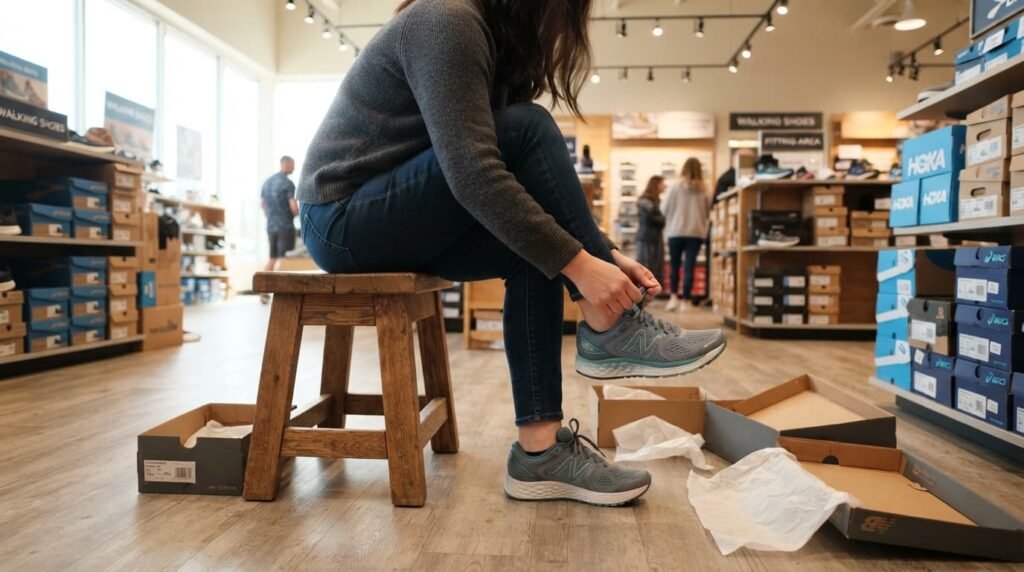
Pronation and knee pain are closely linked in clinical practice. Pronation refers to the natural inward roll of the foot during walking. This motion helps distribute impact evenly across the joint. Shoes that block pronation concentrate force on one part of the knee instead. Over time, that uneven loading accelerates cartilage breakdown considerably.
Arch Support and Alignment
Arch support knee pain is a frequent complaint among patients seeking footwear advice. The issue often runs in both directions at once. Too little support allows the foot to collapse inward during each stride. Excessive support, meanwhile, can prevent healthy pronation from happening at all. Balance matters more than maximum cushioning or maximum structure. Finding a shoe that supports without overcorrecting is the real goal.
Medial Knee Osteoarthritis and Foot Position
Medial knee osteoarthritis affects the inner side of the joint and responds strongly to footwear choices. When the ankle drifts inward due to a collapsed arch, the tibia rotates internally in response. This shift increases pressure on the medial compartment considerably. It also contributes to tibiofemoral cartilage damage over months and years of repeated loading. Varus malalignment knee patterns, where the knees bow outward, follow a similar mechanical pathway. These patterns often worsen further when unsupportive shoes remain in daily use.
Worst Shoes for Knee Osteoarthritis
Certain shoe categories consistently appear as problematic in podiatric and orthopaedic research. Avoiding these styles is one of the simplest ways to protect the joint long term.
High Heels
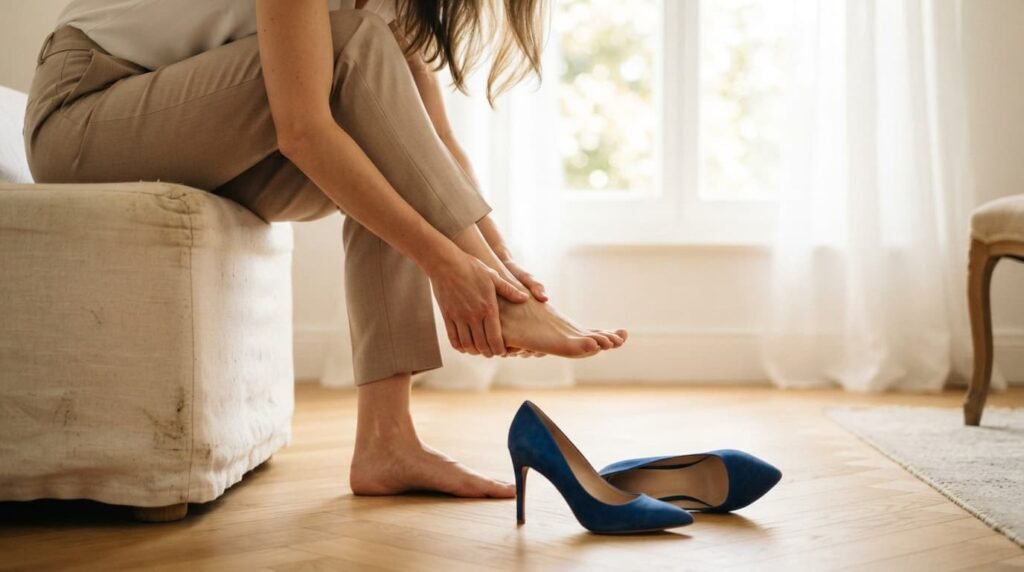
High heels knee pain is well documented across clinical literature. Raising the heel shifts body weight forward onto the front of the foot. This shift increases pressure through the knee by a significant margin. Even a modest heel height changes gait mechanics enough to matter. Regular wear compounds joint stress across years of use, particularly for patients already managing osteoarthritis symptoms.
Flat and Unsupportive Shoes
Flat shoes knee pain often surprises people, since flats seem harmless compared with heels. Without cushioning or structure, flat soles fail to absorb impact properly. Shock travels straight through the foot into the knee joint as a result. Ballet flats and thin-soled sandals fall into this category. Many fashion trainers marketed as casual wear share the same weakness.
Rigid, Poorly Designed Footwear
Worst shoes for knee osteoarthritis typically share one trait in common. They restrict natural foot movement during walking and standing. Overly stiff soles prevent the foot from flexing properly through each stride. This rigidity forces the knee to compensate for lost movement elsewhere. Narrow toe boxes crowd the forefoot and disrupt balance further, affecting alignment higher up the leg.
Boots With Poor Structure
Boots are not automatically harmful, though many combine a raised heel with a rigid sole. That combination places knees at similar risk to high heels. Thick materials add extra weight, compounding the strain further still. Choosing boots with a low, cushioned heel avoids most of this concern entirely.
What Makes a Shoe Genuinely Knee-Friendly
Selecting shoes for knee osteoarthritis involves balancing several features rather than chasing one single quality above others.
Flexibility Without Instability
Flexible shoes for knee pain allow the foot to move through its natural range during each step. A sole that bends at the ball of the foot mimics barefoot mechanics closely. Protection remains intact while natural movement stays possible. Complete rigidity and excessive floppiness both interfere with normal gait patterns. Moderate flexibility tends to work best for most patients.
Adequate Cushioning
Shoes and foot arch support work together with cushioning to absorb shock before it reaches the knee. A midsole with enough give reduces the jarring impact of walking on hard pavements. Cushioning that compresses too easily, however, fails to provide lasting support. A full day of standing or walking quickly reveals which shoes hold up.
Balanced Structural Support
Supportive shoes for knee pain strike a middle ground between rigid orthopaedic designs and unstructured casual footwear. A firm heel counter stabilises the rear foot during each step. A contoured footbed supports the arch without blocking pronation entirely. This balance keeps the lower limb properly aligned during ordinary movement.
Wide, Natural Toe Box
A toe box that allows toes to spread naturally supports better weight distribution across the forefoot. Pointed or narrow shoes crowd the toes together during wear. Pressure then shifts unevenly and travels upward to affect knee alignment over time.
Best Shoes for Knee Pain: Practical Recommendations
Translating these principles into an actual shopping list makes the guidance easier to apply in practice.
Best Walking Shoes for Knee Pain
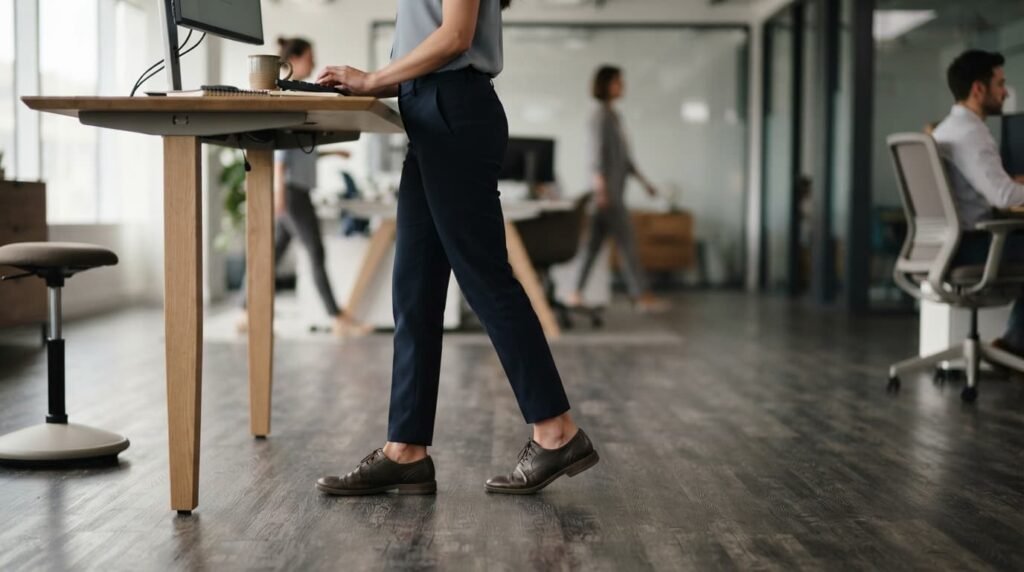
Best walking shoes for knee pain typically combine a cushioned midsole with moderate flexibility. A supportive but not overly rigid arch rounds out the ideal combination. Athletic trainers designed for daily walking usually outperform fashion sneakers in testing. Rigorous biomechanical testing tends to separate the two categories clearly. Replacing walking shoes every 500 to 800 kilometres maintains adequate shock absorption, since cushioning breaks down gradually with regular use.
Checklist Before Buying
- Bends naturally at the ball of the foot
- Offers moderate arch support without forcing the foot into one position
- Includes a cushioned midsole that absorbs shock effectively
- Provides a wide enough toe box for natural spread
- Fits securely without pinching or excess internal movement
Trying shoes later in the day gives a more accurate fit, since feet swell slightly through daily activity. Walking around the shop for several minutes reveals pressure points that standing alone often misses.
Can Shoes Cause Knee Pain on Their Own?
Bad shoes knee pain rarely develops from a single pair or a single day of wear. Can shoes cause knee pain outright, or do they simply accelerate existing wear already present? Evidence points toward footwear acting as a contributing factor rather than a sole cause. Genetics, previous injury, body weight, and activity levels all interact with footwear choices. Together, these factors determine overall joint health over a lifetime.
That said, shoes causing knee pain is a genuine clinical pattern seen frequently in practice. Patients who switch from unsupportive footwear to properly fitted shoes often report measurable improvement within a short period. Age-related joint changes add another layer worth considering for older patients.
Non-Surgical Options When Footwear Isn’t Enough
Correct footwear reduces strain considerably, but it cannot reverse existing cartilage damage on its own. Several non-surgical treatments provide additional relief when osteoarthritis symptoms persist despite shoe changes.

Weather also influences symptom severity for many patients living with arthritic knees. Joints often feel stiffer during colder months, and temperature affects joint comfort. Diet plays a supporting role too, and anti-inflammatory eating habits can reduce knee pain.
Injection-based treatments offer knee joint pain relief for more persistent cases without requiring surgery. Arthrosamid, a hydrogel injection, integrates with joint tissue to cushion the knee. It eases friction over an extended period following a single visit. Patients weighing treatment options sometimes compare regenerative approaches side by side. The comparison between PRP and Arthrosamid injections clarifies how each therapy works and how long results typically last.
The clinic’s YouTube channel, Dr SNA Clinic, features educational videos covering non-surgical joint pain treatments in greater depth. These videos offer a useful visual companion to written guidance on managing arthritic knees day to day.
FAQs
Can changing shoes actually reduce knee osteoarthritis symptoms?
Many patients notice reduced stiffness and discomfort within a few weeks of switching to supportive footwear. Shoes for knee osteoarthritis will not reverse joint damage on their own. Proper support does, however, ease daily strain considerably. Combining better footwear with other lifestyle adjustments tends to produce the most noticeable improvement.
Are cushioned running shoes suitable for everyday knee support?
Cushioned running shoes can work well for walking, provided they offer adequate arch support. A stable heel counter matters just as much as the cushioning itself. Not every running shoe suits every foot type, so trying several options helps. A podiatrist or specialist can offer personalised guidance where uncertainty remains.
How often should walking shoes be replaced for knee protection?
Cushioning and support wear down gradually, usually after 500 to 800 kilometres of use. Worn shoes lose their ability to absorb shock over time. That loss increases pressure through the knee joint with every step taken. Replacing footwear on this schedule maintains consistent protection throughout the year.
Is arch support always beneficial for knee osteoarthritis?
Arch support helps many patients, but excessive rigidity can prevent healthy foot movement. The goal involves moderate, balanced support rather than maximum structure. Testing several shoe types often reveals which level of support feels most comfortable. Personal fit matters more than any single specification on a label.
When should changes in footwear be paired with medical treatment?
Further evaluation becomes worthwhile if knee pain persists despite supportive shoes. Non-surgical treatments, including hydrogel injections, address joint damage that footwear alone cannot resolve. Consulting a specialist helps determine the most appropriate next step. Early assessment often prevents symptoms from progressing further.
Conclusion
Footwear plays a measurable role in how knee osteoarthritis feels from day to day. Supportive, flexible shoes with balanced cushioning noticeably reduce strain on the joint. High heels, flat soles, and rigid designs tend to make symptoms worse over time. Small adjustments to footwear, paired with attention to activity levels and diet, often bring welcome relief.
Mr Syed Nadeem Abbas provides consultant-led assessment for knee osteoarthritis and related joint conditions. Non-surgical treatment options, including Arthrosamid, remain available for patients seeking longer-term relief.
Read more: Lower Back Pain From Sitting: Causes And Relief
Read more: Common Types of Arthritis and How to Recognise Them


