
✅ Medically reviewed
Arthrosamid vs genicular nerve ablation is a question that more UK patients now ask. Arthritis UK estimates that 5.4 million people in the UK have knee osteoarthritis. Many of them have already tried exercise, simple painkillers and steroid injections. Two non-surgical routes often come next. One places a gel inside the joint. The other quietens pain signals travelling from the knee. Arthrosamid injection cost also comes up early, because private pricing shapes many treatment decisions. The two treatments work in very different ways, so the pain pattern should guide the choice. The two treatments work in very different ways, so the pain pattern should guide the choice.
What Each Treatment Actually Does
One treatment works inside the joint. The other works on the nerves around it. Each mechanism is explained below.
How the Hydrogel Works Inside the Joint
Arthrosamid is a hydrogel made of 2.5 per cent cross-linked polyacrylamide and 97.5 per cent water. A clinician injects 6 mL into the joint space, usually under ultrasound guidance. The gel integrates with the joint lining and stays in place instead of dissolving. Water inside it gives a soft, springy feel.
This polyacrylamide hydrogel knee treatment adds cushioning where the joint has lost it. It eases friction and pain, but it does not rebuild the joint surface. Damaged cartilage cannot simply regrow, so the goal is comfort and movement.
A single Arthrosamid injection usually takes 30 to 60 minutes in clinic. That time includes preparation and a short observation period.
How Nerve Ablation Switches Off Pain Signals
Genicular nerves are small sensory nerves around the knee. They carry pain messages from the joint to the brain. Genicular nerve ablation uses radiofrequency heat to disable some of those nerves.
A needle sits beside each target nerve under imaging guidance. Clinicians usually treat the superior medial, inferior medial and superior lateral branches. The inferior lateral branch normally stays untouched. It lies close to the common peroneal nerve, and damage could cause foot drop.
Several versions exist. Conventional radiofrequency ablation knee treatment heats the tissue directly. Cooled systems, such as Coolief knee treatment, circulate water through the needle tip. Cryoneurolysis uses cold instead of heat.
Arthrosamid vs Genicular Nerve Ablation at a Glance
Both treatments aim to reduce knee pain without surgery. Their targets and strengths differ in clear ways.
Why Two Different Treatments Exist
Knee pain has more than one source. Worn surfaces create mechanical stress inside the joint. Irritated sensory nerves then amplify the pain message. Cushioning addresses the first problem, and nerve interruption addresses the second. Matching the treatment to the dominant source gives each option its best chance.
Where Each Treatment Acts
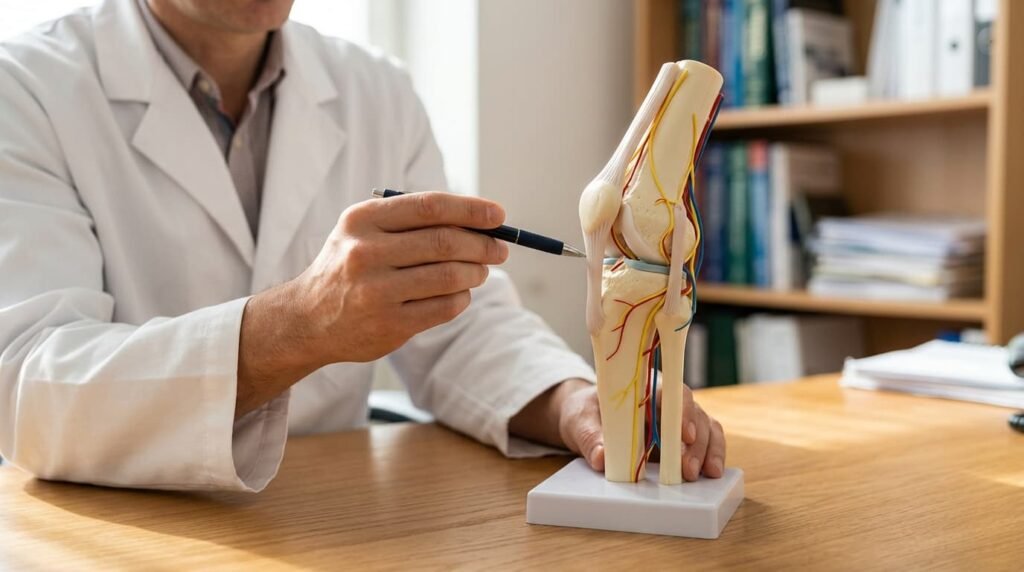
The gel acts inside the joint space. The nerve procedure acts outside the joint, on the wiring. One adds a cushion. The other mutes the alarm. Neither one repairs the underlying wear.
Arthrosamid vs genicular nerve ablation starts with that difference in location. Arthrosamid vs radiofrequency ablation is really a choice between mechanical support and nerve interruption.
Mechanical Pain Versus Nerve-Driven Pain
Mechanical pain flares with load. Stairs, hills and long walks trigger it, and rest settles it. A cushioning gel suits that pattern well.
Many people have more than one pain pattern. A careful clinical assessment separates them. Scans alone rarely explain symptoms.
Why a Nerve Block Often Comes First
A genicular nerve block numbs the same nerves with local anaesthetic. The effect is temporary. Trials usually require at least a 50 per cent pain drop after a diagnostic block before ablation. A clear response suggests the nerves drive much of the pain.
What the Research Says
Both treatments have published trials behind them. The studies differ in size, design and outcome measures.
Evidence for the Hydrogel
A randomised trial found that a single 6 mL injection matched hyaluronic acid over one year. Participants had moderate to severe knee osteoarthritis. A 2026 five-year report from that trial showed WOMAC pain scores falling by a mean of 16.2 points.
A separate five-year extension study followed 49 people, and 27 completed it. Gains in pain, stiffness and function held through those five years. Safety looked favourable.
A systematic review of 463 patient outcomes found the gel safe, with positive results lasting at least two years.
The five-year study was open-label and single-arm, and fewer than 30 people reached the final visit. Those limits call for cautious reading. Arthrosamid success rate figures also differ between studies, because each study defines success differently.
Evidence for Nerve Ablation
A 2026 meta-analysis pooled eight sham-controlled trials with 627 participants. It found meaningful pain and function gains with a favourable safety profile. Conventional monopolar radiofrequency performed best in that analysis. The participants were adults who could not have joint replacement.
A systematic review also compared blocks with ablation. Both reduced pain and function gains looked similar. Genicular nerve ablation vs injection comparisons remain small, though. One trial compared radiofrequency treatment with hyaluronic acid injections in 24 people and favoured the nerve procedure.
The success rate of genicular nerve ablation depends on the definition used, often a 50 per cent pain reduction.
How Trials Measure Pain Relief
Researchers use standard scores to judge benefit. WOMAC covers pain, stiffness and physical function. Visual analogue and numerical rating scales ask participants to rate pain on a numbered line. Many nerve ablation trials count a 50 per cent pain drop as a response. Hydrogel trials more often report average score changes. Different yardsticks make direct comparisons between the two treatments unreliable.
The Missing Head-to-Head Trial
No direct head-to-head trial of Arthrosamid vs genicular nerve ablation appears in the research reviewed here. Each treatment has its own evidence base, built on different participants and different outcome measures. Decisions therefore rest on mechanism, assessment and individual priorities.
What Happens During Treatment and Recovery

Both procedures are short, and most people go home the same day. Preparation and aftercare still differ.
Preparing for Either Visit
Patients usually continue normal medication unless the clinician advises otherwise. Loose clothing gives easy access to the knee. Skin conditions or recent infections need mentioning beforehand. Arranging a lift home is sensible for the first day. The clinician also checks allergies and blood-thinning medicines before any needle goes in.
The Hydrogel Visit
Staff clean the skin and numb the area with local anaesthetic. The clinician then places the gel into the joint, often under ultrasound. Most people walk out the same day.
Patients usually rest the knee and avoid strenuous activity for several days. Benefit builds over weeks. Early soreness does not signal failure. Reported patient experiences describe gradual improvement rather than overnight change.
Genicular Nerve Ablation Recovery
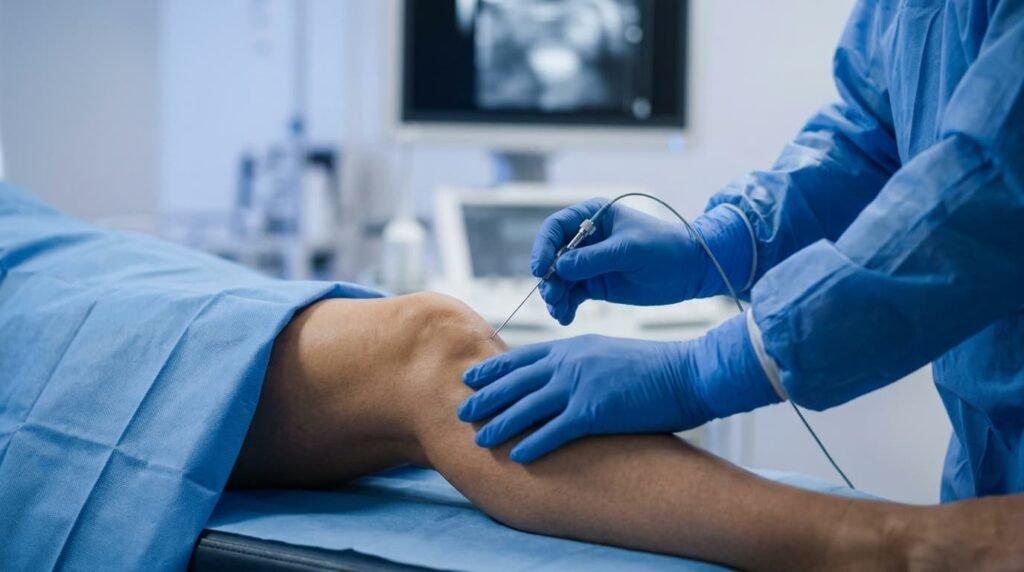
The pathway usually starts with a diagnostic block. If that helps, the ablation follows on a separate visit. Local anaesthetic numbs the skin, and needles go in under imaging. Heat is then applied at each target.
Genicular nerve ablation recovery is often quick. Many people go home the same day. Soreness around the needle sites can last several days.
Side Effects and Risks Compared
Both options carry risks that a specialist should explain beforehand. Most reactions are mild and short-lived.
Arthrosamid Side Effects
Arthrosamid side effects are usually mild and short-lived. Soreness, swelling and stiffness at the injection site are the most common. Infection is uncommon but possible. The five-year extension reported no new adverse device effects.
Increasing pain, redness, heat or fever after any joint injection needs prompt medical attention.
Genicular Nerve Ablation Side Effects
Genicular nerve ablation side effects include temporary soreness, numbness or tingling near the treated area. Rarer risks include skin burns and nerve injury. Imaging guidance helps limit those risks.
Avoiding the inferior lateral branch reduces the chance of foot drop. Both options carry a small infection risk, as any needle procedure does.
How Long Relief Lasts
Duration is where the two options differ most. The evidence for each follows.
Duration After the Hydrogel
In Arthrosamid vs genicular nerve ablation, duration separates the two options most clearly. The gel stays in the joint, and trials track outcomes for years. The five-year extension showed sustained improvement.
Individual results still vary. Pain can return as arthritis progresses, because the gel does not stop that process. Strong muscles help protect the result. Many patients also keep a simple diary of good and bad days. That record helps clinicians judge progress at follow-up.
How Long Does Genicular Nerve Ablation Last?
Nerves can regrow, a bit like weeds in a tidy lawn. Relief therefore fades for many people. It commonly lasts several months to a year, and results vary.
Cutting the pain signal does not rebuild the joint. A specialist decides whether a repeat procedure makes sense.
Who May Suit Which Option
Suitability depends on arthritis stage, pain pattern and overall health. Candidate profiles differ for each option.
Likely Hydrogel Candidates
Typical candidates have mild to moderate knee osteoarthritis. Pain persists despite exercise, weight management and simple painkillers. Steroid or hyaluronic acid injections may already have fallen short.
Specialists follow strict candidate selection criteria before recommending the gel. Severe bone-on-bone arthritis may respond less well. A surgical opinion may then make more sense.
Likely Nerve Ablation Candidates
Candidates usually have chronic knee osteoarthritis pain and a clear response to a diagnostic block. Some people cannot have joint replacement because of other health conditions. Nerve-based treatment offers an option in that group.
When Surgery Enters the Conversation
Joint replacement remains the established option for end-stage arthritis. Specialists discuss it openly when scans and symptoms point that way. Honest advice sometimes means recommending surgery over any injection.
Why Assessment Comes First
Pain felt at the knee does not always start in the knee. Hip problems can refer pain downward, and knee pain from hip problems is often missed without a proper hip check. Both options sit within non-surgical knee osteoarthritis treatment. Neither one replaces a correct diagnosis.
Steroid and Hyaluronic Acid Comparisons
Steroid and hyaluronic acid injections remain the usual comparison points. Each differs from the gel in how quickly and how long it works.
Arthrosamid vs Steroid Injection
Steroids calm inflammation quickly. Relief usually lasts weeks to a few months. Clinicians space repeat doses because of safety limits.
The gel adds cushioning instead, and benefit builds over several weeks. Arthrosamid vs steroid injection is therefore a trade-off between speed and staying power.
Arthrosamid vs Hyaluronic Acid
Hyaluronic acid acts as a lubricant, and the body gradually absorbs it. Arthrosamid vs hyaluronic acid trials found comparable one-year efficacy, but the gel stays in the joint.
Patients whose first injection did not work usually need a different approach, not a repeat.
Everyday Habits That Support Either Treatment
Neither treatment works in isolation. Daily habits shape how well either result holds.
Strength and Movement
Strong thigh and hip muscles share the load that the knee carries. Age-related muscle loss makes that work more valuable. Low-impact options include swimming, flat cycling and straight-leg raises. Physiotherapy adds structure and supervision.
No injection or nerve procedure replaces regular strengthening.
Weight and Pacing
Every kilogram lost reduces the force through the knee during walking. Pacing spreads activity across the day instead of cramming it into one burst. Short walks beat one heroic hike on a bad day. Warm-up movements prepare the joint, and a gentle cool-down settles stiffness. Supportive footwear and a well-fitted brace also help some people feel steadier on uneven ground.
Choosing the Next Step
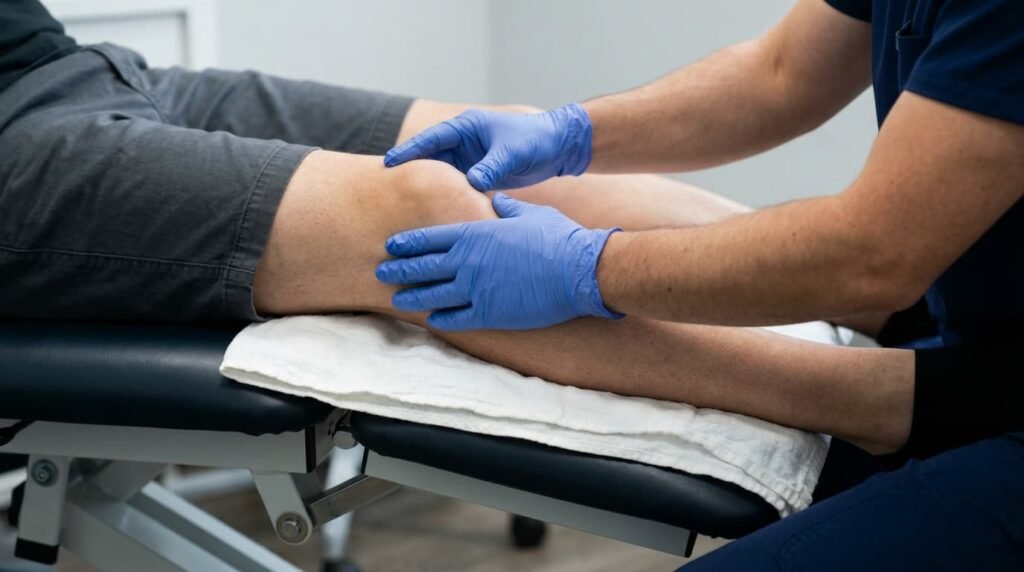
Useful questions cover expected benefit, risks, recovery and the evidence for the specific knee. A hydrogel injection knee option suits mechanical pain, while nerve work suits a nerve-driven pattern. Specialists weigh scans, examination findings and daily goals before recommending Arthrosamid treatment.
A good consultation covers the full history. Specialists ask how long the pain has lasted, which activities trigger it and which treatments have already been tried. Previous dislocations, locking or swelling also matter. Realistic goals keep expectations measurable, such as climbing stairs more comfortably or walking further without stopping.
Arthrosamid vs genicular nerve ablation ultimately depends on pain pattern, health and priorities. For visual explanations of non-surgical joint care, a video on the Dr SNA Clinic YouTube channel adds helpful context.
Frequently Asked Questions
Is Arthrosamid vs genicular nerve ablation a fair comparison?
The two treatments target different pain sources, so the comparison needs care. The gel cushions the joint, while ablation interrupts nerve signals. No direct head-to-head trial exists in the research reviewed here. A specialist assessment matches the option to the pain pattern.
Arthrosamid how long does it last in most patients?
The gel stays in the joint, and a five-year extension study showed sustained improvement. Individual results vary, and pain can return as arthritis progresses. Strength training helps protect the result. Follow-up reviews track progress over time.
How long does genicular nerve ablation last?
Relief commonly lasts several months to a year. Nerves can regrow, so pain may return gradually. Individual results vary widely. A specialist decides whether repeat treatment makes sense.
Does a genicular nerve block predict ablation results?
A diagnostic block numbs the same nerves temporarily. Trials used a pain drop of at least 50 per cent as the entry threshold. A strong response suggests the nerves drive much of the pain. It does not guarantee the same result after ablation.
Which option has fewer side effects?
Soreness or swelling at the injection site is the usual reaction to the gel. Nerve treatment brings temporary numbness, with rare burns or nerve injury. Both carry a small infection risk. A specialist explains the risks before any procedure.
Who should avoid each treatment?
Active infection in the joint or nearby skin delays either procedure. Unexplained swelling needs investigation first. Pain that actually comes from the hip or spine responds poorly to knee-focused treatment. A specialist screens for these situations during assessment.
Can both treatments be combined?
No published trial reviewed here tests combining them. Decisions rest on individual assessment. Anyone considering both should discuss order and timing with a specialist. Neither option replaces exercise and weight management.
Arthrosamid vs genicular nerve ablation is a choice between cushioning the joint and quietening its nerves. The gel has five-year evidence for pain, stiffness and function. Nerve ablation offers meaningful but time-limited relief, especially after a positive block. No head-to-head trial exists, so assessment guides the decision.
Mr Syed Nadeem Abbas is a non-surgical knee and joint pain specialist. Book a consultation for an individual assessment.
Read more: Drug-Free Knee Pain Relief Works Best When Simple Habits Work Together
Read more: Coffee and Arthritis Can Affect Joints Differently in Each Person


