
✅ Medically reviewed
Drug-free knee pain relief starts with understanding what irritates the joint. The knee carries body weight, absorbs impact, and bends thousands of times each day. When cartilage thins or nearby muscles weaken, even a short walk can hurt.
Tablets quieten the pain signal, but they do not change how the joint is loaded. Daily habits do. Exercise, weight control, and education sit at the top of most guidelines for knee osteoarthritis. Supports, heat, and gentle mind-body movement add more choices. Some knees still need a stronger step, such as a targeted injection. A clear order of options saves time and avoids guesswork.
Why Many Patients Look Beyond Tablets First
Common Causes Behind Persistent Knee Pain
Osteoarthritis is the most common cause of long-standing knee pain in adults. Cartilage thins, the joint lining becomes irritated, and bone edges thicken. Other causes include patellofemoral pain, tendon irritation, old ligament or meniscus injuries, and gout.
Each cause responds a little differently to treatment. A correct diagnosis guides the plan and prevents wasted effort. Persistent pain deserves an examination before home treatment begins.
Where Medicines Fit
Painkillers have a place, but side effects limit long-term use. Oral anti-inflammatories can irritate the stomach and strain the kidneys and heart. Older adults often take several medicines already, so extra tablets add risk.
Drug-free knee pain relief rarely means refusing every medicine. Knee pain relief without medication is realistic for mild and moderate symptoms. Medicines still help during flares. Nobody needs to feel guilty about taking them.
What the Guidelines Say
NICE advises exercise, weight management, and education as the core treatments for knee osteoarthritis. The American College of Rheumatology reaches a similar view. It grades every option by the strength of the evidence.
A joint treated early with movement and sensible loading often needs fewer drugs later. Non-surgical orthopaedic treatment also follows a stepped path. It starts with these basics and escalates only when needed.
Start With Movement to Calm Painful Knees
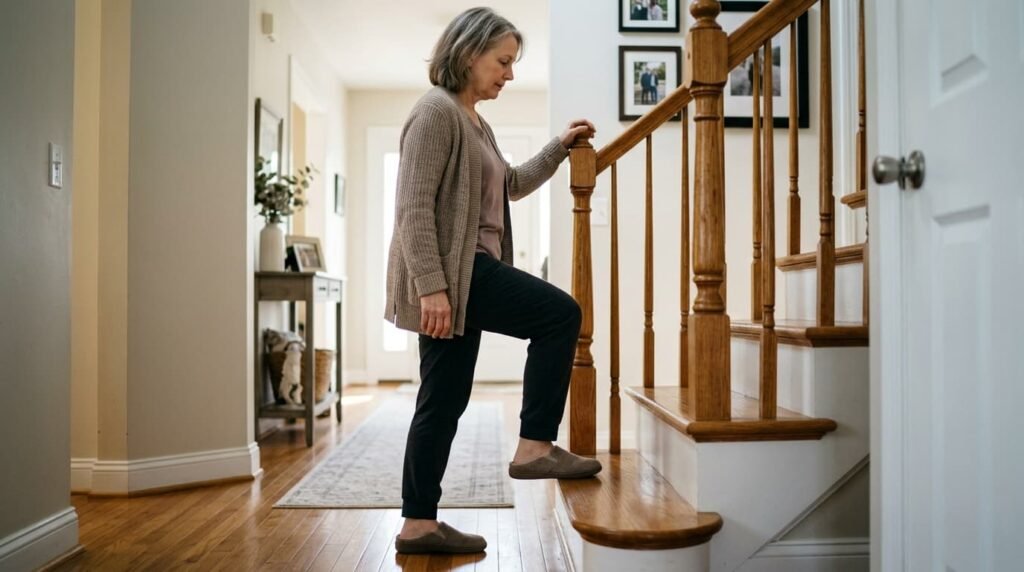
What helps knee pain most often turns out to be regular, gentle movement. Exercise has the strongest evidence of any option. Walking, cycling, swimming, and strength work all help. No single routine wins, so the best choice is the one that gets repeated.
Knee Pain Exercises That Suit Most People
Low-impact movement moves fluid through the joint and loosens stiff tissue. Cartilage has no direct blood supply, so it relies on movement for nutrition. A mild ache that settles within a day is usually acceptable. Sharp pain, swelling, or the knee giving way means stop and reassess.
Drug free knee pain relief improves with steady progress. Start with ten minutes, three times a week. Add two minutes each week. Slow progress beats a heroic first session followed by a sore week. Knees keep score, and they hold grudges.
Strengthening the Thigh Muscles
Many patients describe muscle weakness and knee pain as a loop, since each one worsens the other. Weak thigh muscles pass more force into the joint. A sore joint then discourages activity, and the muscles weaken further.
Sit-to-stands, step-ups, and straight leg raises build strength without equipment. Two short sessions per week make a sound start. Age-related muscle loss makes the loop harder to break, so consistency matters more later in life.
Pacing Through Good and Bad Days
Knee pain rarely stays constant. Good days tempt patients to overdo activity, and bad days tempt them to stop altogether. Both extremes slow recovery.
A steadier approach keeps activity slightly below the limit of what feels possible. On flare days, shorten the session rather than skipping it. Gentle bending and straightening keep the joint from stiffening. Consistency matters more than intensity.
Weight Management Takes Pressure Off Every Step
How Excess Weight Loads the Knee
Body weight multiplies through the knee with each step. Research from Wake Forest followed older adults with knee osteoarthritis and measured joint forces. Each pound lost removed about four pounds of load from the knee per step.
The American College of Rheumatology strongly recommends weight loss for patients with overweight and knee osteoarthritis. A loss of 5% of body weight links to better outcomes. Trials of weight loss knee osteoarthritis programmes also report less pain and better walking.
Surgery and Weight
Many UK surgical teams use body mass index limits. Weight limits for knee replacement can therefore shape later choices. Losing weight keeps more options open.
Gentle Ways to Start
Drug-free knee pain relief gets a boost from even modest weight loss. Small changes add up. Swapping sugary drinks, adding protein, and walking after meals all help. Crash diets cause muscle loss, which strains the knee further.
Gentle Mind-Body Options for Stiff Knees
Drug-free knee pain relief does not need a gym membership or heavy effort. Slow, controlled movement often suits sore knees better than intense training.
Tai Chi for Knee Arthritis
The American College of Rheumatology strongly recommends tai chi. Slow weight shifts train balance and leg strength together. Classes suit stiff knees because the pace stays gentle. Many community centres run beginner sessions.
Yoga Without Strain
Gentle yoga earns a conditional recommendation for knee osteoarthritis. Poses should avoid deep knee bending and twisting. A teacher who understands arthritis can modify each pose. Blocks and cushions reduce load on the joint.
Hydrotherapy for Knee Osteoarthritis
Warm water supports body weight and eases pressure on the joint. A 2025 network meta-analysis in PLOS One ranked hydrotherapy among the best options for knee function. Pools suit patients who find land exercise too sore. Many leisure centres offer warm-water sessions.
Knee Pain Relief at Home With Heat, Cold and Smart Habits
Knee pain relief at home rarely needs special equipment. Learning how to relieve knee pain naturally starts with small, repeatable steps. Most cost little and carry low risk.

Heat or Cold for Knee Arthritis
Heat loosens a stiff knee before a walk. A warm bath or wheat bag for fifteen minutes works well. Cold calms a swollen knee after a long day. Wrap ice in a cloth to protect the skin.
Both options are cheap and low risk. Neither changes the course of arthritis, so they work best alongside exercise.
Daily Habits That Protect the Joint
Short movement breaks beat long spells of sitting. Cushioned, supportive shoes reduce impact on hard floors. Stairs go easier with the stronger leg leading up and the sore leg leading down. Food choices also matter, and a Mediterranean-style pattern supports weight control and general health.
Sleep and Rest Positions
Night pain often reflects poor positioning as much as joint disease. A pillow between the knees keeps the hips and legs aligned for side sleepers. Back sleepers can place a small pillow under the knees for comfort. A short evening stretch eases stiffness before bed.
Supports and Aids Including Braces, Tape and Canes
Drug-free knee pain relief often includes a support, yet supports rarely work alone.
Knee Brace for Arthritis
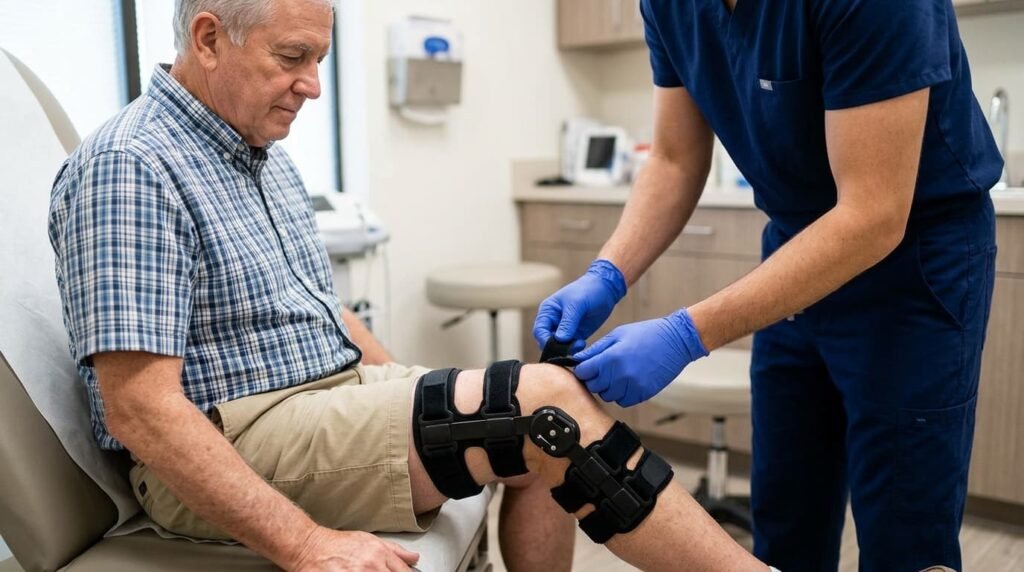
A knee brace for arthritis can steady a wobbly joint and unload one side of the knee. The American College of Rheumatology strongly recommends a tibiofemoral brace when arthritis affects walking. A clinician should check the type of arthritis and the fit first. A poor fit rubs the skin and slips down the leg.
Kinesiology Tape for Knee Arthritis
Kinesiology tape for knee arthritis earns only a conditional recommendation. Tape allows movement, unlike a rigid brace. A 2021 review of eleven trials found no clinically meaningful pain reduction compared with sham tape. The risk of harm is very low, so some patients accept a short trial. Tape works best as a sidekick to exercise, never a replacement.
Cane for Knee Arthritis
A cane held in the opposite hand shifts load away from the painful knee. The guideline strongly recommends it when walking becomes the main problem. Canes carry a stigma that the evidence does not support. Pride never repaired any cartilage.
Natural Knee Pain Relief Beyond Exercise
Natural knee pain relief includes a few useful extras and several options with weak evidence.
Topical NSAIDs for Knee Osteoarthritis
Strictly speaking, anti-inflammatory gels are medicines. They still suit patients who want fewer tablets. Topical NSAIDs for knee osteoarthritis act locally, so far less drug reaches the bloodstream. The American College of Rheumatology strongly recommends them and suggests trying them before oral NSAIDs. A pharmacist can advise on safe use alongside other medicines.
Options With Weaker Evidence
Acupuncture earns only a conditional recommendation, and trial results stay mixed. The guideline recommends against TENS units. Wedge insoles and massage also show little benefit. None cause serious harm, but money and hope work harder on the stronger options above.
Safe Ways to Stay Active With Knee Pain in Older Adults
Knee pain in older adults often comes with balance problems, other conditions, and several medicines. That mix calls for a careful start. Low-impact options such as walking, water exercise, and tai chi suit most people. A physiotherapist can set a starting point and a sensible progression.
Balance work lowers fall risk, which matters as much as pain relief. Longer warm-ups help because tissues stiffen with age. Stiff joints that last beyond thirty minutes each morning deserve a medical check.
Medication Safety
Older adults face higher risks from oral anti-inflammatories. Doctors often prefer gels or the lowest effective dose. Any change should be agreed with a prescriber. Nobody should stop prescribed medicine without medical advice.
Building a Weekly Plan for Knee Pain Management
Knee pain management works best as a routine, not a rescue. A simple week might include three short strength sessions, two gentle cardio sessions, and daily movement breaks. Heat before activity and cold after suit many knees.

Track pain on a simple zero-to-ten scale and note triggers. Patterns usually appear within a month. Review the plan every six weeks to adapt to flares and progress. Daily habits linked to arthritis prevention also protect knees that are already sore.
Drug free knee pain relief becomes easier to keep up when the plan fits real life. Short sessions beat ambitious schedules that collapse by Thursday.
Warning Signs Worth Prompt Attention
Most knee pain is mechanical and safe to treat at home. Some signs point elsewhere. A hot, red, swollen joint with fever may signal infection. Sudden swelling after an injury may signal a tear or fracture. Calf pain with swelling may signal a blood clot. Locking and repeated giving way also need assessment. These signs call for prompt medical advice.
When Non-Surgical Care Needs a Step Up
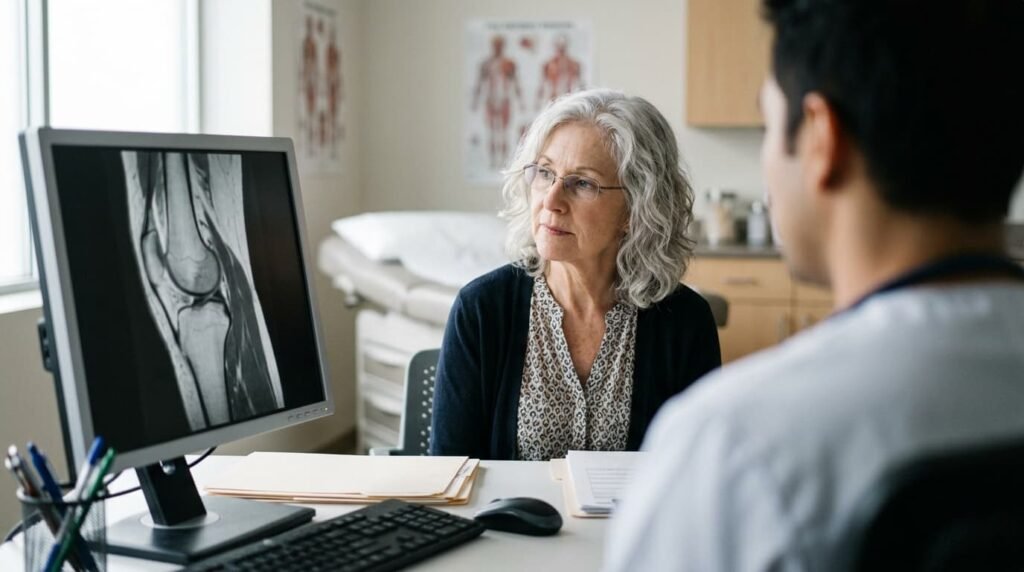
Some knees stay painful despite months of effort. Structural damage, flares, and age-related change can all limit progress. Persistent pain after a fair trial of exercise, weight control, and supports calls for specialist review.
Osteoarthritis Knee Pain Relief Beyond Home Care
Non-surgical knee pain treatment also includes injections, which sit between home care and surgery. Options include steroid, hyaluronic acid, and PRP injections. Polyacrylamide hydrogel is another option.
Arthrosamid injection is a polyacrylamide hydrogel placed inside the knee joint to cushion it. It suits mild to moderate osteoarthritis when other non-surgical care has not helped enough. A specialist assesses suitability through examination and imaging. Suitable Arthrosamid candidates meet strict clinical criteria. Results vary from person to person.
Patients who prefer watching to reading can find video content on the Dr SNA Clinic YouTube channel.
Drug-free knee pain relief remains the right first step for most people, even when an injection follows later.
Frequently Asked Questions
Can arthritic knees improve without tablets?
Many arthritic knees improve with exercise, weight control, and supports. Knee pain relief without medication suits mild and moderate symptoms best. Severe pain often needs a mix of approaches. Any medicine change should be agreed with a prescriber.
What helps knee pain during a flare?
Relative rest, heat or cold, and gentle movement settle most flares. Elevating the leg and wrapping ice in a cloth reduce swelling. A pharmacist can suggest a topical gel if needed. A hot, red knee with fever needs urgent medical help.
Is walking safe for older people with sore knees?
Walking suits most older people when pain stays mild and settles within a day. Shorter, more frequent walks often feel better than one long outing. Supportive shoes and a cane can help on uneven ground. Persistent swelling or giving way needs assessment.
Do braces and tape really work?
A fitted brace has stronger backing than tape in the guidelines. Tape earns only conditional support and carries very low risk. Neither replaces exercise. A clinician can match the support to the type of arthritis.
When should a specialist review the knee?
Pain that lasts beyond three months despite regular effort deserves review. Night pain, locking, and repeated giving way also need assessment. After imaging, a specialist may offer non-surgical knee pain treatment, such as injections. Early review often widens the options available.
What do patients report after Arthrosamid?
Patient experiences with Arthrosamid vary from person to person. Suitability depends on the stage of osteoarthritis and earlier treatment. A consultation explains the likely benefits, risks, and recovery.
Drug-free knee pain relief rests on movement, weight control, and sensible support. Heat, cold, and gentle classes add comfort, while older knees benefit from careful pacing. Some knees need a stronger step, and a specialist review can map the next one.
Mr Syed Nadeem Abbas is a specialist in non-surgical knee and joint pain care. Anyone with persistent knee pain can book a consultation to review suitable options.
Read more: Muscle Loss and Knee Osteoarthritis Are Closely Linked in Later Life
Read more: Knee Pain From Hip Problems Is Often Missed Without a Proper Hip Check


