Acupuncture for Knee Pain: A Practical Guide to Relief and Recovery

✅ Medically reviewed | Updated July 2026
Acupuncture for knee pain is one of the most searched treatments among people trying to avoid long-term reliance on painkillers. Knee pain causes range from muscle tightness to full osteoarthritis, and each cause responds differently to treatment. The American College of Rheumatology conditionally recommends acupuncture for knee osteoarthritis, alongside exercise therapy and weight management. This guide breaks the topic into clear sections, so readers can find exactly what applies to their situation. By the end, most readers should have a clear picture of whether acupuncture for knee pain fits their own circumstances.
What Causes Knee Pain?
Knee pain causes are rarely simple. The knee joint connects the thighbone, shinbone and kneecap, supported by ligaments, tendons and several major muscle groups. When any of these structures tighten, tear or wear down, pain follows.
About the Knee Joint
The knee is the largest joint in the body. It connects the thighbone to the shinbone, stabilised by the fibula alongside a network of ligaments and tendons. Several muscle groups cross the joint from above and below, including the quadriceps, hamstrings and calf muscles. Tightness in any of these groups pulls on the joint structure, which often results in pain that feels local but originates elsewhere.
Muscle Tightness and Trigger Points
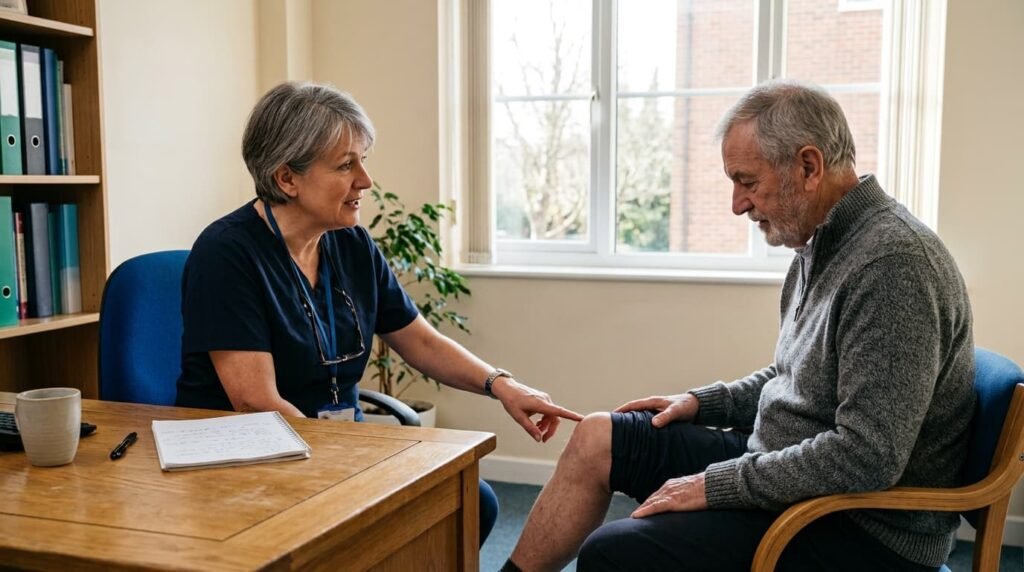
Tight muscles around the knee pull unevenly on the joint. This is a common source of knee pain from tight muscles, particularly in the quadriceps and hamstrings. A tight quadriceps can drag the kneecap out of alignment, producing anterior knee discomfort. When the quadriceps shortens, it draws the hip and knee closer together, straining the joint in the process. Trigger points knee pain often begins in muscles far from the knee itself, which is why treatment needs to look beyond the joint.
Calf muscles, including the gastrocnemius and soleus, connect from below and can refer pain to the back of the knee when tight. The popliteus muscle, tucked behind the joint, is a lesser-known but frequent contributor to posterior knee discomfort. Addressing these muscle groups, rather than the knee alone, often brings faster relief.
Ligament and Cartilage Injuries
An ACL tear typically follows a sudden twist or impact during sport, often accompanied by a popping sensation and rapid swelling. A meniscus tear, by contrast, can develop gradually from repeated strain or suddenly from an awkward pivot. Neither injury always needs surgery. Many patients recover well with structured rehabilitation, particularly when the tear sits in a well-vascularised area.
The medial collateral ligament is another frequently injured structure, often strained by direct impact to the outer knee. Ligament injuries generally respond to a mix of rest, targeted strengthening and, in select cases, complementary therapies such as acupuncture.
Knee Osteoarthritis
Knee osteoarthritis develops when the protective cartilage between bones wears thin over time. This is the leading cause of knee pain in older adults, and it brings stiffness, swelling and reduced range of motion. Bone-on-bone friction, once cartilage has worn away significantly, produces the grinding sensation many patients describe during movement.
Osteoarthritis rarely appears suddenly. It builds gradually, often over years. Symptoms tend to worsen with cold weather, inactivity or excess body weight on the joint.
Patellar Tendonitis and Patellofemoral Pain Syndrome
Patellar tendonitis, sometimes called jumper’s knee, inflames the tendon connecting the kneecap to the shin. It is common among athletes who perform repeated jumping or sprinting movements. Patellofemoral pain syndrome causes a dull ache around or behind the kneecap, often worsened by stairs or prolonged sitting. IT band syndrome adds another layer, causing sharp lateral knee pain during running. Downhill terrain and sudden training increases often trigger flare-ups.
Pes anserine bursitis, affecting the inner knee just below the joint line, is another overuse condition frequently mistaken for a ligament problem. Correct diagnosis matters, since treatment approaches differ significantly between these conditions.
Is Acupuncture Good for Knee Pain?
Is acupuncture good for knee pain, or is it simply a placebo dressed up in tradition? Research suggests real physiological effects, not just perception. Acupuncture stimulates the nervous system and prompts the release of endorphins, which are natural painkillers. This process can reduce inflammation and encourage blood flow to the affected joint.
Runner’s Knee and Knee Pain When Running
Runner’s knee, medically known as patellofemoral pain syndrome, responds well to targeted needling in several trials. One study comparing acupuncture and dry needling for this exact condition found that both approaches reduced pain. Knee function also improved over a structured treatment course. Athletes dealing with knee pain when running often notice reduced tightness in the surrounding muscles after a course of sessions. This does not replace proper footwear or training adjustments, but it can ease the discomfort that limits mileage.
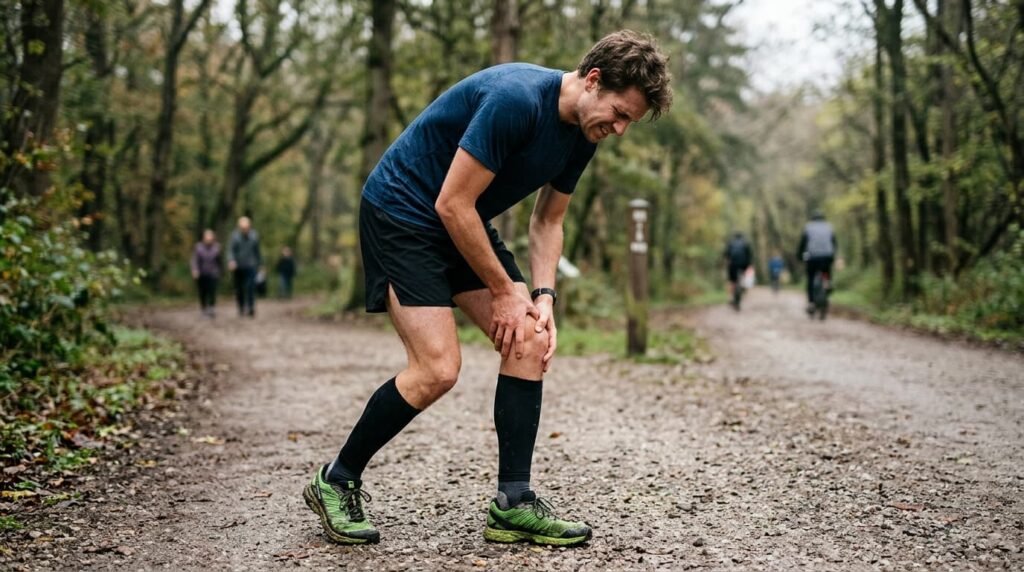
Runners frequently present with a mix of causes, including IT band tightness, weak hip stabilisers and worn footwear. A thorough assessment before starting acupuncture helps identify which factor needs the most attention.
Knee Osteoarthritis Acupuncture
Knee osteoarthritis acupuncture has the strongest evidence base among knee conditions. A review covering ten randomised controlled trials found meaningful pain reduction linked to acupuncture treatment for osteoarthritis. Some results were comparable to standard anti-inflammatory medication, without the gastrointestinal side effects associated with long-term drug use. Improvements in physical function were also recorded, alongside pain scores, suggesting benefits extend beyond simple pain relief.
Patients with moderate osteoarthritis often see the clearest results. The joint retains enough structural integrity to respond well to improved circulation and reduced muscular tension.
Acupuncture for Postsurgical Pain
Acupuncture for postsurgical pain has grown in popularity following total knee replacement procedures. A 2021 study examined total knee replacement pain relief. Acupuncture, used alongside standard care, reduced both pain levels and medication needs during early recovery. Auricular acupuncture, performed on points in the ear, showed similar promise in a review of over two dozen studies. Researchers still called for larger, higher-quality trials.
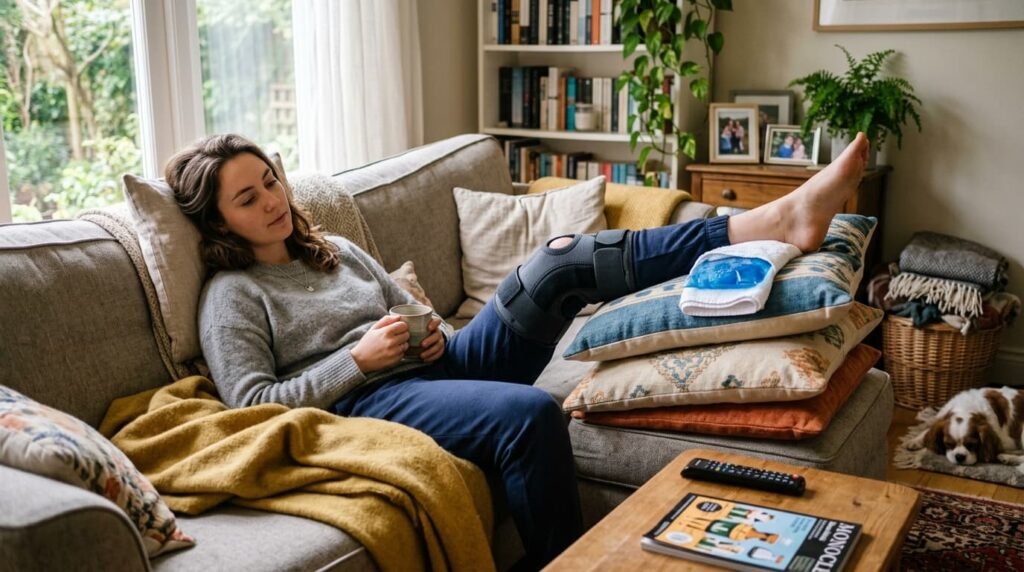
Postsurgical patients often value acupuncture because it reduces reliance on opioid painkillers during recovery. Nausea and constipation are common side effects of those medications.
Acupuncture for Ligament Injury
Acupuncture for ligament injury has thinner research behind it, though case reports describe faster recovery and reduced pain after ACL and meniscus injuries. A broader review of acupuncture for sports injuries found many individual case studies reporting positive outcomes, including less pain and quicker return to activity. Larger trials focused specifically on knee ligaments are still needed before firm conclusions can be drawn. Patients should treat acupuncture as a complementary measure, not a primary fix for a torn ligament.
How Does Acupuncture for Knee Pain Work?
Acupuncture for knee pain works by inserting fine needles into specific points along the body’s meridians. Traditional Chinese medicine links these pathways to nerve function. The needles trigger biochemical responses that calm pain signals and loosen tight tissue. Scientists have not fully mapped every mechanism involved. Evidence points to changes in hormone levels and altered pain perception in the brain after treatment.
Blood flow to the treated area typically increases during and after a session. This additional circulation delivers oxygen and nutrients to strained tissue, supporting the body’s own repair processes alongside any direct pain relief.
Dry Needling for Knee Pain vs Traditional Acupuncture
Dry needling for knee pain targets muscular trigger points directly, using a Western, anatomy-based approach. Traditional acupuncture instead follows meridian points tied to broader energy pathways described in Chinese medicine. Many UK clinics now combine both methods within a single session for knee patients. Trigger point release and meridian-based needling often complement one another.
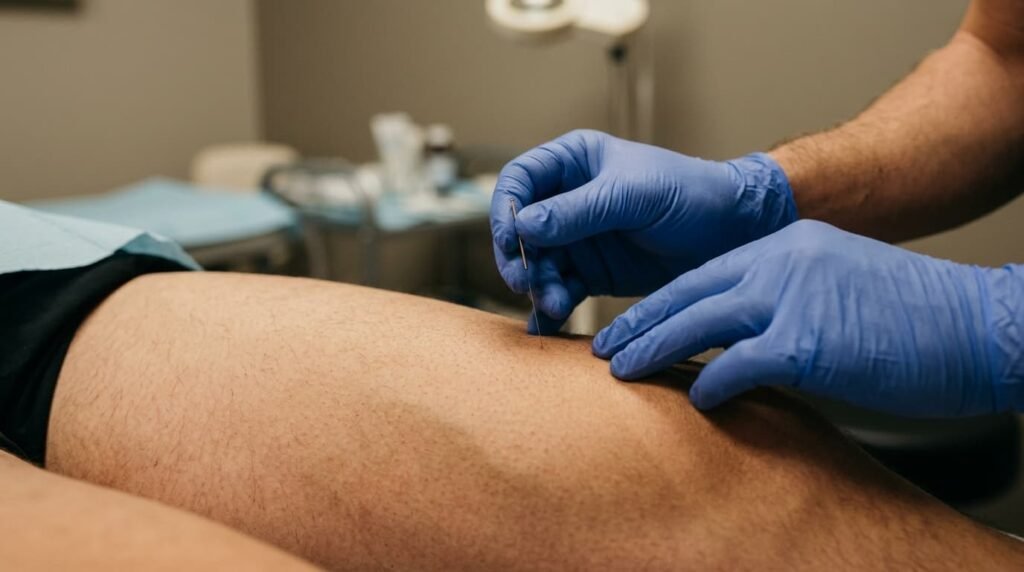
Dry needling tends to produce a stronger, brief muscular twitch response, which some patients find more intense than traditional acupuncture. Both approaches use similarly thin, sterile needles and carry a low risk profile when performed correctly.
Medial and Lateral Knee Pain Patterns
Medial knee pain often traces back to trigger points in the inner thigh muscles, including the sartorius and gracilis. Lateral knee pain frequently stems from the vastus lateralis or the IT band. It can also involve the tensor fasciae latae higher up the thigh. Posterior knee discomfort commonly links to the calf muscles or the popliteus. Buckling knee pain often points to weakness or trigger points in the vastus medialis. Mapping pain location to muscle groups helps practitioners choose the right needling sites, rather than treating the knee joint in isolation.
Acupuncture Points for Knee Pain
Traditional Chinese medicine identifies over 360 points across the body, several of which relate directly to the knee. Common acupuncture points for knee pain include Yin Ling Quan, in the hollow below the inner kneecap. Yang Ling Quan sits below the outer knee, near the top of the shinbone. Dubi and Zusanli sit along the front of the leg, below the kneecap, while Weiyang and Weizhong lie along the crease behind the knee itself.
Practitioners select points based on the specific pain pattern and underlying cause, rather than using a single fixed protocol for every patient. A patient with anterior knee pain from patellar tendonitis will likely receive a different point selection. Someone managing posterior tightness from the calf muscles needs a different approach. This individualised approach is one reason outcomes vary between clinics and practitioners.
Acupuncture for Arthritis and Related Conditions
Acupuncture for arthritis extends beyond the knee, though the knee remains one of the most studied joints. For osteoarthritis specifically, needling appears to calm inflammatory signalling around the joint capsule. This will not reverse cartilage loss, but it can reduce the daily discomfort that limits movement. Many patients use it as a maintenance therapy alongside strengthening exercises.

Rheumatoid arthritis, an autoimmune condition rather than a wear-and-tear process, sometimes responds to acupuncture differently. Inflammation in autoimmune arthritis tends to flare unpredictably, so treatment plans often need closer coordination with a rheumatologist or GP.
Patients exploring non-surgical routes sometimes compare acupuncture with newer injectable options. For those researching longer-lasting joint support, the guide on Arthrosamid treatment for knee arthritis compares a hydrogel injection with more conservative therapies. Diet also plays a supporting role in managing arthritis-related knee pain. The article on knee pain relief foods covers practical dietary adjustments that complement any treatment plan.
How to Get Rid of Knee Pain Fast
How to get rid of knee pain fast depends heavily on the underlying cause. For muscular trigger points, acupuncture and dry needling can bring relief within one to five sessions. For structural issues, such as advanced osteoarthritis, faster relief usually needs a combined approach.
Many patients pair acupuncture with physiotherapy, weight management and, in some cases, injectable treatments. Those comparing regenerative options against synthetic alternatives may find the breakdown in PRP vs Arthrosamid useful before deciding on a longer-term plan. Combining therapies, rather than relying on one method alone, tends to produce the most lasting improvement.
What to Expect During an Acupuncture Session for Knee Pain
A first appointment usually opens with a short consultation. The practitioner reviews medical history, current symptoms and any prior treatment for the knee. This helps narrow down which points and techniques suit the specific pain pattern.
Sessions typically involve four to ten fine needles, inserted near the knee and along related points elsewhere on the leg. Needles stay in place for ten to thirty minutes while the patient rests. Most people feel a dull ache or gentle pressure rather than sharp pain. Some report feeling calm or mildly drowsy afterwards. This routine is fairly typical of acupuncture for knee pain across most UK clinics.
A full course commonly runs to six or twelve sessions across three months. This applies mainly to chronic conditions such as knee osteoarthritis. Acute injuries or isolated trigger points often need far fewer visits. Minor bruising or brief bleeding at the needle site can occur, though the overall complication rate stays low. UK clinics use single-use, sterile needles, which keeps infection risk minimal. A small number of patients feel lightheaded or fatigued for a short time after treatment, particularly following a first session.
Frequently Asked Questions
Does acupuncture help knee pain from osteoarthritis?
Yes. Acupuncture for knee osteoarthritis has shown measurable pain reduction in multiple clinical reviews, alongside improved joint function.
Is acupuncture good for knee pain after surgery?
Acupuncture for postsurgical pain, including total knee replacement pain relief, has reduced pain scores and medication use in several studies. This works best when combined with standard aftercare.
What causes knee pain in runners specifically?
Knee pain when running usually stems from IT band syndrome, patellar tendonitis or runner’s knee, each linked to overuse or muscle tightness.
How is dry needling for knee pain different from acupuncture?
Dry needling for knee pain targets muscular trigger points using anatomical landmarks, while traditional acupuncture follows meridian-based points.
What does acupuncture cost for a typical course of knee treatment?
Acupuncture costs in the UK generally range from £40 to £90 per session, with chronic conditions requiring several sessions over weeks or months.
Can acupuncture help medial or lateral knee pain specifically?
Yes. Medial knee pain and lateral knee pain often trace back to identifiable trigger points, which acupuncture and dry needling can target directly.
Conclusion
Acupuncture for knee pain offers a low-risk option for people managing osteoarthritis, sports injuries or recovery after surgery. Evidence supports its use across several conditions, though results vary by individual and by underlying cause. Combining acupuncture with physiotherapy, weight management, or other treatments often produces the strongest outcome. Patients dealing with persistent knee pain are encouraged to seek a qualified UK practitioner. A treatment plan suited to the specific condition works best. For a closer look at non-surgical options, the Dr SNA Clinic team shares patient guidance on their YouTube channel.
Read more: Gout in the Knee Causes, Symptoms and Effective Treatment
Read more: Iliotibial Band Syndrome Causes Sharp Pain on the Outside of the Knee