Iliotibial Band Syndrome Causes Sharp Pain on the Outside of the Knee

✅ Medically reviewed | Updated July 2026
Iliotibial band syndrome is a common overuse injury affecting the outside of the knee. The condition develops when a thick strip of connective tissue rubs repeatedly against the thigh bone. This tissue runs from the hip down to the knee, supporting movement at both joints. Runners, cyclists and other athletes face the highest risk of this problem. It accounts for a significant share of overuse injuries in endurance sports. Knee pain from ITB syndrome often flares during exercise and settles with rest. It can, however, worsen steadily without proper management. Recognising the pattern early makes recovery faster and considerably less frustrating.
What Is Iliotibial Band Syndrome?
The iliotibial band, or ITB, stretches from the outer hip down to just below the knee. It supports the knee joint during walking, running and cycling. Repeated bending and straightening can cause the band to rub against the femur. This friction leads to inflammation, swelling and pain.
Doctors sometimes call this problem ITB friction syndrome. Newer research points to compression of tissue beneath the band rather than pure friction. Either theory produces a similar result. A sharp ache develops on the outside of the knee and worsens with continued activity.
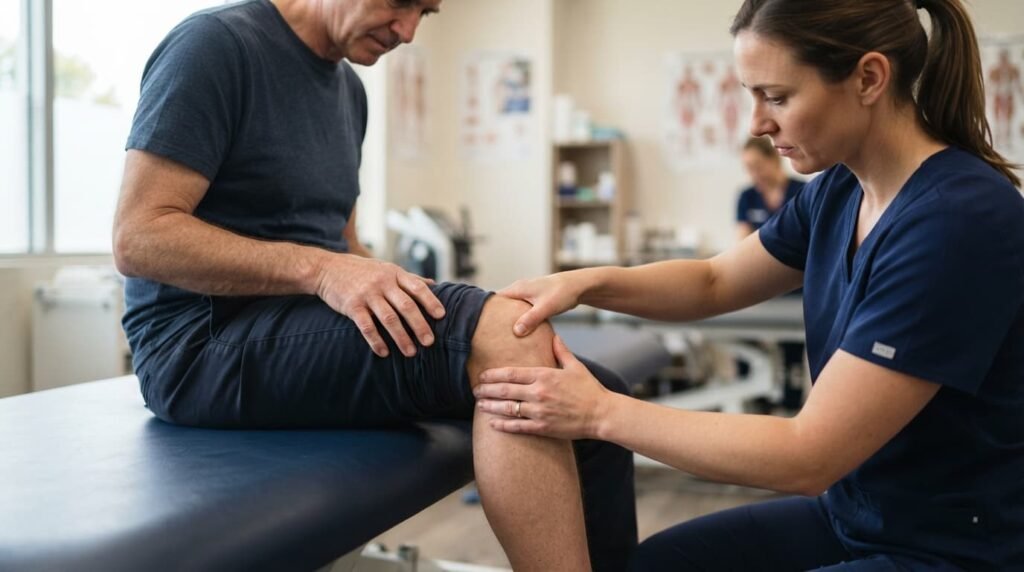
IT band syndrome ranks among the most frequent causes of lateral knee pain in active adults. It rarely appears in people who do not exercise regularly. Understanding the mechanics behind ITBS explains why treatment focuses heavily on movement correction rather than medication alone.
Iliotibial Band Syndrome Symptoms and Warning Signs
Symptoms usually build gradually rather than appearing overnight. Early signs include mild aching after a run that fades within hours.
Early Signs During Exercise
Pain typically starts on the outside of the knee, just above the joint line. Runners often notice it appears at a predictable point in their route. Some notice it after two miles, others later. The area may feel tender when pressed. Some people describe a clicking or snapping sensation during movement. ITB syndrome knee pain often eases quickly once the activity stops. This quick relief can delay people seeking treatment.
Symptoms That Worsen Without Treatment
Left unaddressed, iliotibial band pain outside the knee can spread up or down the leg. Pain may begin earlier in each session and linger after stopping. In advanced cases, walking or climbing stairs becomes uncomfortable. Swelling and warmth around the knee sometimes follow prolonged irritation.
A tight iliotibial band can also cause hip discomfort. This happens because the band attaches near the greater trochanter. Patients occasionally report a snapping sound at the hip, too. This often occurs during single-leg activities such as stair climbing.
What Causes Iliotibial Band Syndrome?
Multiple factors contribute to the condition. Most cases involve more than one cause working together.
Training and Technique Factors
Sudden increases in mileage place an unusual strain on the band. Running downhill repeatedly raises the risk considerably. This position increases contact time between the band and the femur. Worn shoes reduce cushioning and can alter foot mechanics. Training repeatedly on cambered pavements forces one leg to work at an angle. Poor foot mechanics, particularly overpronation, pull the band tighter with every stride.
Anatomical Risk Factors
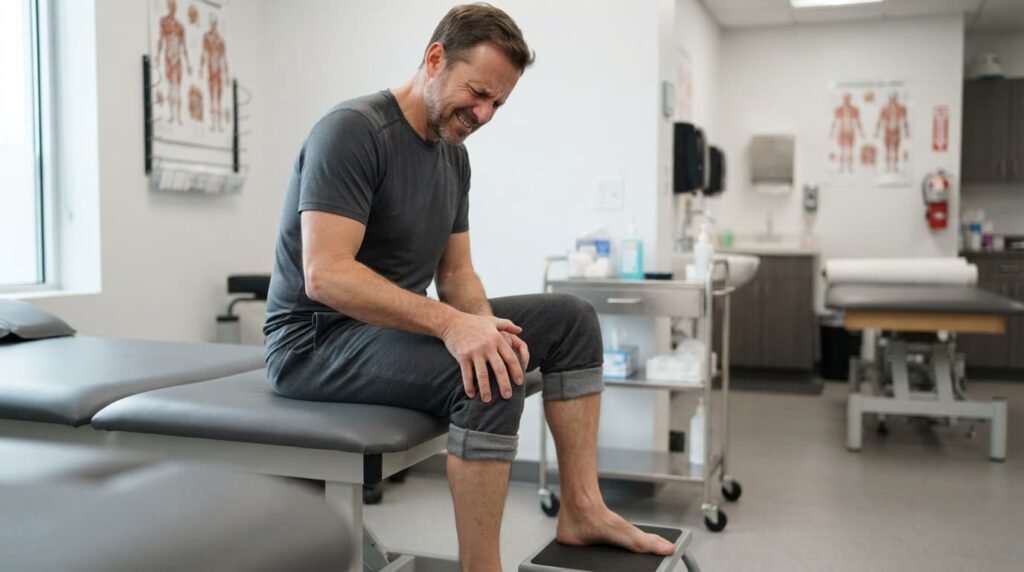
Some people are simply more prone to developing a tight iliotibial band. Their natural build makes them more susceptible. Leg length differences, weak hip muscles and naturally tight connective tissue all increase risk. Weak gluteal muscles force the ITB to compensate during single-leg stance. This adds extra tension with every step. Genu varum, where the knees bow outward, stretches the band further and raises friction against the femur.
Footwear and Surface Factors
Shoe choice matters more than many runners realise. Shoes with worn-out midsoles lose their shock-absorbing properties gradually over months of use. Replacing running shoes every 300 to 500 miles helps maintain consistent support. Running exclusively on one side of a cambered road forces uneven loading through both legs.
ITB Syndrome Causes Linked to Recovery Habits
Cooling down too quickly after exercise leaves the tissue tighter than usual. Skipping rest days between hard sessions does not allow inflammation to settle. Warming up too fast before a session has a similar effect. The band stays less pliable throughout the activity as a result.
ITB Syndrome in Runners: Why Athletes Face the Highest Risk
Distance runners make up the largest patient group affected by this condition. Long-distance training multiplies the number of knee flexions per session. This increases cumulative strain on the band with every stride. Cyclists face similar exposure because pedalling repeats the same joint angle thousands of times per hour. Football, hockey and skiing can also trigger symptoms, though less frequently than endurance sports.
Female athletes appear to show different biomechanical patterns than male athletes. Greater hip adduction during the stance phase is one example. Coaches increasingly screen for these patterns before injury develops. This matters particularly for athletes returning from a break in training. Military recruits also show high rates of the condition. Sudden increases in repetitive marching and running largely explain this pattern. Studies estimate that the condition accounts for around twelve per cent of running injuries overall. This makes it one of the more frequent overuse problems among endurance athletes. Cycling clubs report similar figures among riders who increase weekly distance too quickly.
How Is Iliotibial Band Syndrome Diagnosed?
Diagnosis relies mainly on a detailed history and physical examination rather than scans.
Ober Test and Physical Examination
A clinician typically checks for tenderness at the lateral femoral epicondyle first. The Ober test, an ITB syndrome test used widely in clinics, assesses tightness. It works by moving the hip while the knee stays supported. The Noble test reproduces pain at a specific angle of knee flexion. This helps confirm the diagnosis further.
Questions a Clinician Might Ask
A thorough assessment usually covers training history and recent changes in routine. Typical questions include how far and how often someone trains. Footwear age, running surface and any recent increases in mileage also come up. These details help identify the specific triggers behind each case.
When Imaging Becomes Necessary
Imaging is reserved for cases that do not match a typical pattern. An MRI can help rule out other injuries, such as a meniscal tear. Ultrasound sometimes shows how the band moves during flexion and extension. This adds useful detail in complex or unclear cases.
ITB Syndrome Treatment Options
Treatment nearly always starts with conservative measures. More invasive options only get considered afterwards.
Rest and Self-Care First
Reducing or pausing the aggravating activity allows inflammation to settle naturally. Ice applied for fifteen to twenty minutes, several times daily, can ease early pain. Cross-training with swimming or gentle cycling keeps fitness up. This approach avoids provoking symptoms further during recovery.
ITB Syndrome Physiotherapy
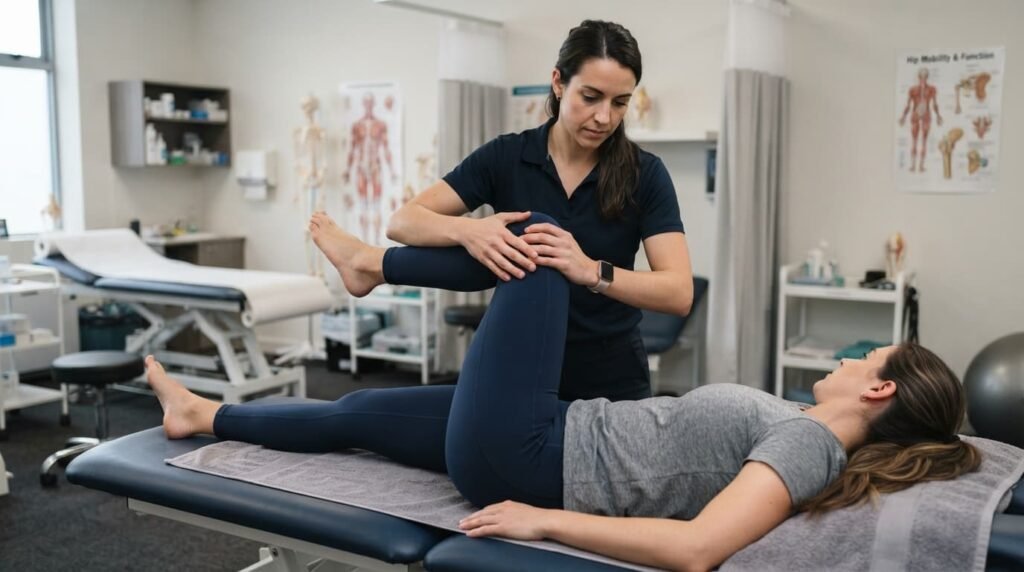
Physiotherapy forms the backbone of recovery for most patients. A physiotherapist assesses hip and knee strength first. A targeted programme is then designed around the findings. Manual therapy, including massage and myofascial release, is often featured early in treatment. Gait analysis on a treadmill can reveal biomechanical issues contributing to the problem. This analysis allows for a more precise correction of running technique.
Medication and Injections
Over-the-counter anti-inflammatory medication can reduce pain and swelling during flare-ups. A doctor may recommend a steroid injection for stubborn inflammation. This applies mainly when rest alone has not helped. Medication addresses symptoms rather than the underlying mechanical cause. It works best alongside physiotherapy rather than instead of it.
Surgery: Rare and a Last Resort
Surgery is uncommon for this condition. It gets reserved for cases resistant to months of conservative care. Procedures typically involve lengthening the band surgically or removing inflamed tissue nearby. Most patients recover fully without ever needing an operation.
Iliotibial Band Syndrome Exercises and Stretches
Targeted exercise addresses the muscular imbalances that often underlie the condition.
Best Stretches
A standing stretch targets the band directly. Cross the affected leg behind the other while leaning sideways to feel it working. Hip flexor and glute stretches also help, since tightness in these areas increases band tension. Holding each stretch for thirty seconds, repeated several times daily, produces the best results. A seated figure-four stretch targets the outer hip and glutes.
Foam Roller Techniques
An iliotibial band foam roller session can reduce tightness considerably. It also improves tissue mobility over time. Rolling slowly along the outer thigh, pausing briefly on tender spots, helps release tension. Foam rolling before and after exercise supports ongoing management once symptoms start to improve. The Dr SNA Clinic YouTube channel offers visual demonstrations of this technique alongside other stretches.
Strengthening Exercises
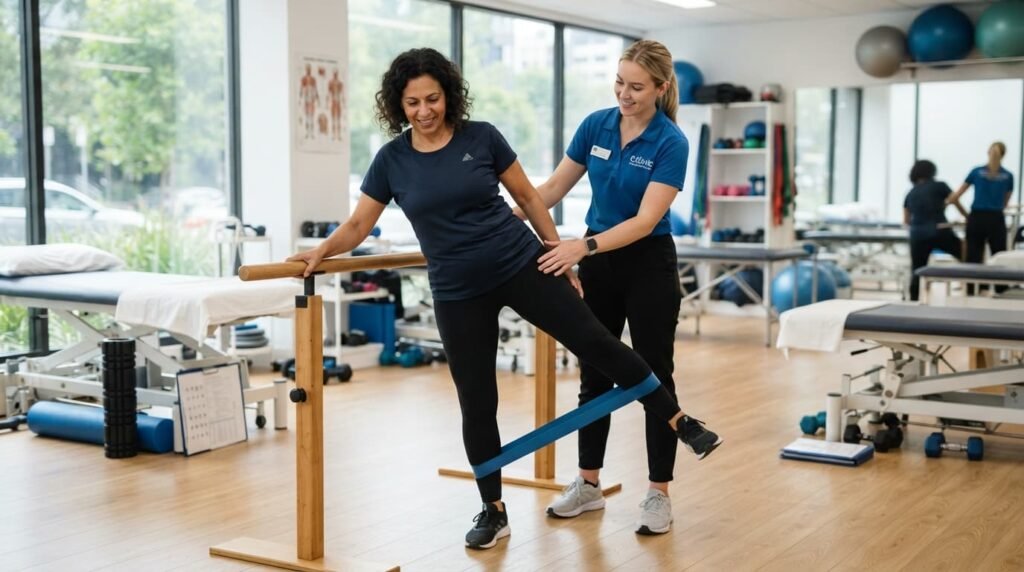
Hip abductor exercises, such as side-lying leg raises and clamshells, address a common underlying weakness. Single-leg squats, performed slowly and with control, improve stability during running and walking. A physiotherapist can progress these exercises gradually as strength improves.

How Often to Stretch and Strengthen
Daily stretching works best during an active flare-up. Strengthening sessions typically suit three times weekly once acute pain settles. Consistency over several weeks matters more than intensity in any single session.
Sample Weekly Routine
- Foam rolling: five minutes daily
- Hip abductor strengthening: three sessions weekly
- ITB and glute stretches: twice daily during flare-ups
- Gradual return to running: after two pain-free weeks
How Long Does ITB Syndrome Take to Heal?
This question comes up frequently during consultations. Most people recover within four to eight weeks with a structured rehabilitation plan. Mild cases sometimes resolve in two to three weeks with adequate rest. ITB syndrome recovery time extends considerably for patients who continue training through pain. Ongoing irritation delays healing and raises the risk of recurrence.
Preventing Iliotibial Band Friction Syndrome From Returning
Prevention focuses on addressing the factors that caused the original problem. Gradually increasing training load reduces recurrence risk significantly. Replacing worn running shoes regularly and maintaining hip and glute strength both help, too. Alternating running direction on cambered tracks and avoiding excessive downhill running also matter. Building strength around the hip remains one of the most effective long-term strategies, according to current physiotherapy research.
Learning how to fix iliotibial band syndrome permanently usually means changing training habits. Simply treating the current flare-up rarely prevents a repeat episode. Patients who address underlying weakness see far lower recurrence rates. This holds true compared with those who rest and return to identical training patterns.
Returning to Running Safely
A gradual return works better than jumping straight back to full mileage. Short, pain-free runs on flat, even surfaces should come first. Mileage can then increase by roughly ten per cent each week. Any return of symptoms signals a need to slow the progression again.
ITB Syndrome and Other Causes of Knee Pain
Knee pain has many possible causes, and distinguishing between them matters for effective treatment. Patellofemoral pain syndrome affects the front of the knee rather than the outer side. It also responds to a different set of exercises. Meniscal tears often follow a specific twisting injury. This differs from the gradual onset typical of ITB problems. Knee osteoarthritis, a degenerative condition more common in older adults, causes broader joint pain rather than a localised lateral ache.
Patients exploring long-term joint support for degenerative knee conditions sometimes research separate options. One example is Arthrosamid treatment for knee arthritis. This treatment addresses a different condition entirely from ITB syndrome.
Living With ITB Syndrome
Most people continue their normal daily life without major disruption once symptoms settle. Low-impact activities such as swimming or gentle cycling usually stay comfortable throughout recovery. Returning gradually to sport, rather than all at once, protects against a relapse. Many athletes use the recovery period to correct long-standing technique issues. Nutrition also plays a supportive role in overall joint recovery, with further details available in this knee pain diet guide. This often leaves patients stronger and less injury-prone afterwards than before the flare-up began.
When to See a Doctor
Persistent pain that does not improve after two weeks of rest deserves proper assessment. Swelling, warmth or a locking sensation in the knee also warrants a review. Anyone unsure whether their knee pain relates to ITB syndrome or another condition should seek a professional opinion. Specialist knee assessment is available through Knee Pain Clinic UK, where early diagnosis generally leads to a shorter recovery overall.
Frequently Asked Questions
What does iliotibial band syndrome feel like?
Most patients describe a sharp or burning pain on the outside of the knee. The discomfort typically worsens with continued activity and eases with rest. Some also notice a clicking sensation or tenderness when pressing the area. Pain sometimes spreads slightly up or down the leg in more advanced cases.
ITB syndrome vs IT band syndrome: is there a difference?
No real distinction exists here. These two names simply describe one single condition. Clinicians and patients use both terms interchangeably across the UK and internationally. The choice of wording does not affect diagnosis or treatment in any way.
Can the condition affect the hip as well as the knee?
Yes. IT band hip pain occurs because the band attaches near the greater trochanter. This area can become irritated alongside the knee, particularly during repetitive hip movement. Some patients notice hip symptoms before knee pain develops, while others experience both together.
What is the typical recovery time?
Most people recover within four to eight weeks. Appropriate rest, physiotherapy and a gradual return to activity all support this timeline. Mild cases sometimes settle in as little as two to three weeks. Recovery takes considerably longer for anyone who continues training through pain.
Which stretches help the most?
Standing ITB stretches, hip flexor stretches, and foam rolling together form the most effective combination for most patients. Consistency matters more than intensity, so daily practice tends to produce better results than occasional long sessions. A physiotherapist can tailor the exact routine to individual tightness and strength levels.
Is surgery ever needed for ITB syndrome?
Surgery is rare and only considered after conservative treatment has failed. This usually means several months without meaningful improvement despite physiotherapy and rest. When needed, procedures usually involve lengthening the band or removing inflamed tissue. Most patients avoid surgery entirely with an early, structured rehabilitation plan.
Can cycling cause the same problems as running?
Yes. Cyclists develop the condition through repetitive pedalling at a fixed knee angle. The mechanism differs slightly from running, but the outcome is similar. Bike fit and saddle height often play a bigger role in cycling-related cases than in running-related ones.
Does a knee brace help with recovery?
A brace can offer temporary comfort but rarely addresses the underlying cause. Physiotherapy and strengthening remain far more effective for long-term relief. Braces may still help some patients feel more confident during an early return to activity. They should not, however, replace a proper rehabilitation programme.
Conclusion
ITB syndrome remains one of the most common overuse injuries among runners and cyclists. Recognising the early symptoms, understanding the underlying causes, and starting physiotherapy promptly all shorten recovery considerably. Targeted stretching, gradual training progression, and proper footwear help prevent the problem from returning. Most patients recover fully within four to eight weeks with the right approach.
Mr Syed Nadeem Abbas, MBBS, MRCSEd, MSc (Distinction), provides specialist orthopaedic assessment for knee and hip conditions. Patients experiencing persistent lateral knee pain can arrange a consultation for personalised diagnosis and treatment.
Read more: Knee Ligament Tear – ACL, MCL and Meniscus Differences
Read more: How Patellofemoral Pain Syndrome Differs From Knee Osteoarthritis