Muscle Loss and Knee Osteoarthritis Are Closely Linked in Later Life

✅ Medically reviewed | Updated september 2026
Muscle loss and knee osteoarthritis often develop side by side in later life, and each worsens the other. In the UK, about one in ten adults has symptomatic, clinically diagnosed osteoarthritis. The knee is the most common site. Estimates for England suggest that roughly one in five adults over 45 has knee osteoarthritis.
Muscle health adds a second layer. One study found sarcopenia in 41.2% of people with knee osteoarthritis, against 26.3% of controls. A 2025 cohort study also tied low baseline muscle health to faster knee osteoarthritis progression and a higher chance of knee replacement.
The quadriceps do far more than fill out trousers. These thigh muscles steady the knee, absorb shock and share the daily load. Strengthening them is one of the few levers that patients control directly. Many patients begin by searching for an Arthrosamid injection London option once pain limits daily movement.
Understanding Age-Related Muscle Loss
Muscle mass peaks in early adulthood. It then declines gradually, and the pace often quickens after midlife. Doctors use the term sarcopenia when the decline damages strength and everyday function.
Muscle loss with age is partly normal. The clinical condition goes further, because strength and physical performance fall too.
How Clinicians Define Sarcopenia
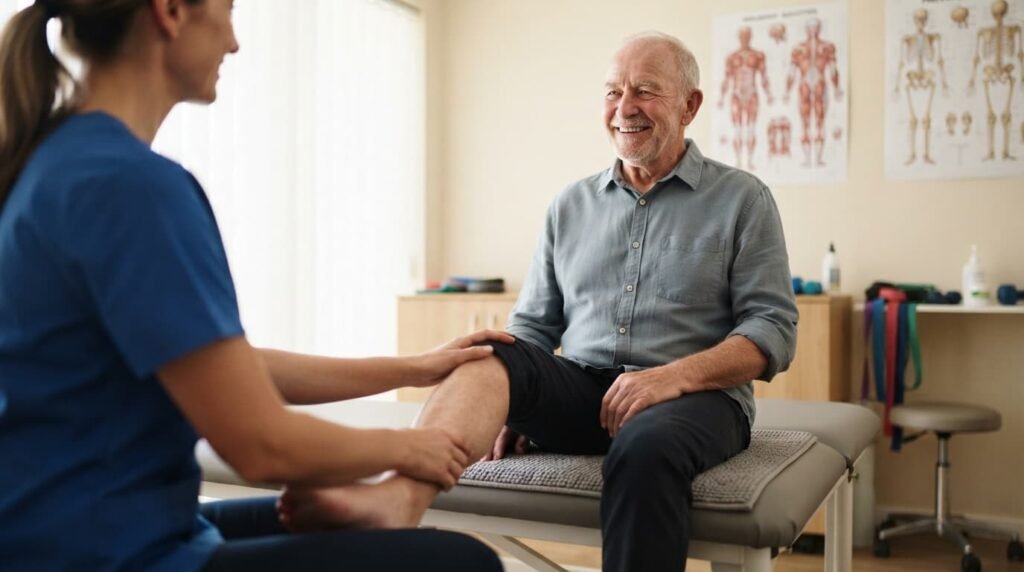
Diagnosis rests on three measures: muscle strength, muscle quantity and physical performance. Clinicians commonly test grip strength, walking speed and chair-rise time. One study defined low strength as more than 15 seconds for five chair rises.
Muscle Decline Starts Earlier Than Expected
Researchers now recognise that the process begins earlier in life. It is not purely a matter of ageing. Inactivity, illness and poor nutrition all speed it up. Regular movement slows it down.
Strength Fades Faster Than Size
Muscle size and muscle strength do not decline at the same speed. Research on ageing muscle shows strength loss running two to five times faster than mass loss. In people aged 75, mass falls by roughly 0.6 to 1 per cent a year. Loss of strength predicts disability and death more consistently than loss of mass. A thigh that looks unchanged can therefore still be getting weaker.
Sarcopenia Symptoms Worth Noticing
Early signs are easy to dismiss. Walking slows down. Rising from a low seat takes two attempts. Stairs feel steeper than before. Grip weakens, and a stubborn jar lid becomes a daily contest. Falls or near-falls become more frequent.
How Pain Leads to Less Movement and Weaker Muscles
Research describes a two-way relationship. Low muscle mass and strength raise the risk of joint damage. Joint pain and limited movement then accelerate further muscle wasting.
Weak Thighs Overload the Joint
The quadriceps and hamstrings act as external stabilisers for the knee. When they weaken, the joint loses dynamic stability. Load spreads unevenly across the joint surface. Cartilage stress rises, and bone changes follow. Over time, this pattern can speed up joint degeneration.
Muscle loss and knee osteoarthritis therefore reinforce each other from the very start.
Joint Pain Drives More Muscle Loss
Pain pushes in the opposite direction. People with painful knees move less and avoid stairs. Unused muscle shrinks. One 2025 study linked knee pain to selective thigh muscle loss in the more painful leg. This creates a loop in which muscle loss and knee osteoarthritis fuel each other.
Muscle Quality: More Than Muscle Size
Size alone does not tell the full story. MRI studies of the vastus medialis, an inner quadriceps muscle, link weakness to a higher share of non-contractile tissue. Fat and fibrous tissue replace working fibre, so strength drops even when the outline looks normal. People with knee osteoarthritis often show quadriceps strength deficits of 20 to 45 per cent against matched controls. Hamstrings and hip muscles are weaker too. Rehabilitation therefore needs to cover the whole leg, not the front thigh alone.
Does Muscle Loss Cause Knee Osteoarthritis? Weighing the Evidence
Evidence points to a strong association and probably a two-way influence. A longitudinal cohort found sarcopenia linked to 2.29 times higher odds of new symptomatic knee osteoarthritis. It showed no clear link with X-ray changes alone.
Not every study agrees, because definitions of the condition vary. In one large cohort, muscle wasting alone added no risk. Combined with obesity, the risk rose. Context matters as much as the muscle measurement itself.
How Often Do the Two Conditions Appear Together?
A recent meta-analysis pooled 35 studies covering 13,528 people with knee osteoarthritis. Sarcopenia was diagnosed in 3,597 of them, just over a quarter. Another review found the condition more than twice as common in knee osteoarthritis as in healthy adults. Researchers now use the term sarcopenic osteoarthritis for this overlap. Figures differ between studies because diagnostic cut-offs differ. Muscle health deserves a check in every knee osteoarthritis assessment.
What Drives the Muscle Decline
Sarcopenia Causes
Several processes combine. Ageing changes nerves, hormones and protein handling. Low-grade inflammation erodes muscle faster than the body rebuilds it. Physical inactivity removes the stimulus that muscle needs. Poor nutrition, including low protein and low vitamin D, adds further pressure.
Sarcopenia Risk Factors
Some risk factors overlap with those for the joint disease. Age, obesity and diabetes appear on both lists. Inactivity and poor nutrition add to the risk. A knee that hurts too much for walking creates its own risk.
Excess weight and previous injury also raise the chance of knee osteoarthritis in men over 60.
Sarcopenic Obesity: Extra Weight on Weak Muscle
Obesity deserves special attention. Excess weight raises the load on the knee, while low muscle reduces the capacity to carry it. Researchers call this pairing sarcopenic obesity. Crash diets can worsen the problem because rapid weight loss strips muscle as well as fat. Gradual weight loss combined with resistance training and adequate protein protects muscle. Weight management therefore works best alongside strengthening, never instead of it.
Thigh Muscle Weakness Knee Pain: Spotting the Signs
Weakness in the thigh often announces itself through daily tasks. Standing from a chair needs arm support. Descending stairs feels unsteady. The knee gives way on uneven ground. One thigh may look thinner than the other.
Quadriceps Weakness and Knee Osteoarthritis: What Studies Show
Studies report weaker quadriceps in people with painful knee osteoarthritis than in the general population. Pain and inflammation can switch muscles off through a reflex called arthrogenic muscle inhibition. The muscle is not lazy. The nervous system is holding it back.
Sarcopenia Knee Pain: Which Problem Drives Which?
Sorting cause from effect needs a clinician. Pain may come mainly from cartilage wear, from weak supporting muscle, or from both. The answer shapes the treatment plan.
How Specialists Assess the Problem
Assessment starts with history and examination. Range of movement, joint stability and walking pattern all matter. Imaging confirms the degree of joint damage. Grip and chair-rise tests reveal the muscle side. A combined view of muscle loss and knee osteoarthritis guides every treatment choice.

Rebuilding Strength Around a Painful Knee
Strength Training for Knee Osteoarthritis
Published treatment guidelines recommend muscle strengthening for knee osteoarthritis. Thigh weakness is also described as a modifiable risk factor. Early data from an American trial protocol show good tolerance of high-intensity training in older adults. Muscle responds to training at any age, so late starters still gain.
Resistance work targets both halves of muscle loss and knee osteoarthritis at once.
Safe Starting Exercises
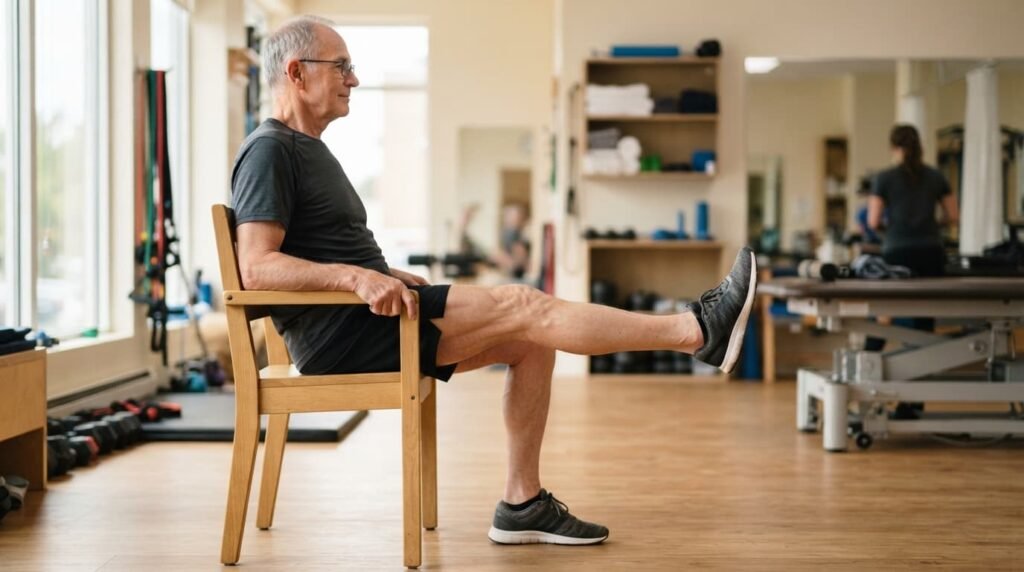
Seated leg raises strengthen the front thigh without loading the joint.
Straight leg raises work the same muscle while lying down.
Sit-to-stand from a firm chair mirrors daily life.
Supported bridges recruit the gluteal and hamstring muscles.
Research highlights both the quadriceps and the gluteus maximus as priority targets. Two or three sessions a week is a sensible start. Add repetitions before adding resistance. Mild aching that settles within a day is usually acceptable. Sharp pain, swelling or giving way calls for a pause and professional advice. A physiotherapist can tailor the programme safely.
Short video explanations on non-surgical joint pain and arthritis from the Dr SNA Clinic channel add useful background.
Building a Weekly Routine
Progression matters more than intensity. Week one can focus on seated and lying exercises, with two sets of eight to ten repetitions. Later weeks can add light ankle weights, resistance bands or step-ups on a low stair. Walking and water-based exercise add aerobic fitness without heavy joint load. Hip and gluteal work deserves equal time, because a randomised trial found hip strengthening eased symptoms. Adherence is the strongest predictor of long-term benefit. A routine that fits daily life beats an ambitious plan abandoned after a fortnight.
Nutrition That Supports Muscle
Protein for Muscle Loss in Older Adults
Protein supplies the building blocks for muscle repair. Older adults often eat too little of it. Researchers have tested protein supplements alongside resistance training in older adults with knee osteoarthritis, tracking recovery of walking speed. Spreading protein across meals usually suits better than one large portion at dinner. Eggs, fish, dairy, pulses and lean meat all contribute.
A GP or dietitian can set a suitable target, especially where kidney disease is present.
Vitamin D and Muscle Loss
Low vitamin D is among the nutritional factors linked to weaker muscle. UK winters offer little sunlight strong enough to make it. NHS guidance advises considering a daily supplement during autumn and winter. A GP blood test confirms whether deficiency exists.
Muscle Strength Before and After Knee Replacement
Muscle health also shapes surgical recovery. Quadriceps weakness is common straight after knee replacement and can persist for months. One trial analysis found that early strength loss after surgery predicted strength at three months. Patients with sarcopenia alongside osteoarthritis may recover more slowly, though data remain limited. Preoperative strengthening, often called prehabilitation, aims to start surgery from a stronger position. Keeping the thigh muscles active helps whichever treatment route is chosen.
Muscle and Knee Pain Myths Worth Dropping
Rest does not protect a painful knee. Prolonged inactivity speeds up thigh wasting. Exercise does not grind cartilage away, and guidelines recommend strengthening for knee osteoarthritis. Age alone does not doom muscle, since training works at any age.
Non-Surgical Knee Osteoarthritis Treatment When Pain Blocks Exercise
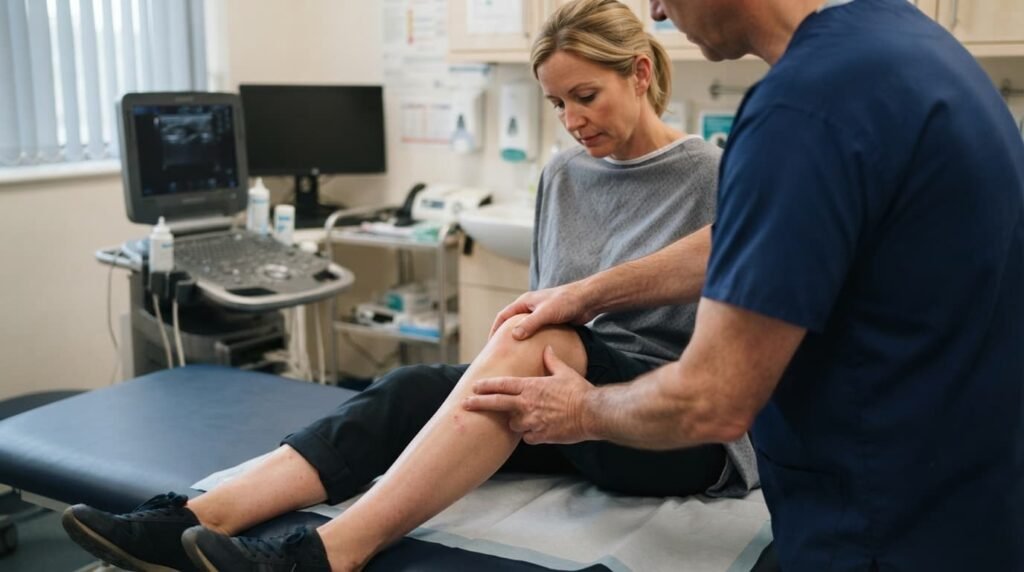
Pain sometimes prevents the very exercise that protects the joint. Non-surgical care aims to reduce pain enough to allow training. Options include physiotherapy, weight management, pain-relieving medicines, walking aids and injections. Each targets a different part of the problem.
Sarcopenia Treatment Priorities
Sarcopenia treatment centres on resistance exercise and good nutrition. Pain control makes both far easier.
Arthrosamid Knee Injection
Arthrosamid is a non-biodegradable hydrogel injection for suitable patients with knee osteoarthritis. A multi-centre observational study is following treated patients for five years. Easing pain may make strengthening more comfortable. Suitability always depends on a proper assessment.
Signs That Justify a Specialist Assessment
Some symptoms should not wait for home exercise to work. Persistent swelling, night pain, repeated giving way and locking all merit assessment. Sudden inability to bear weight needs urgent care. A hot, red, swollen knee with fever needs same-day medical attention. Frequent falls call for review of muscle strength, balance and medication. Early assessment allows treatment to start before muscle loss deepens.
Frequently Asked Questions
Does muscle loss cause knee osteoarthritis?
Research shows a strong association, and the influence probably runs both ways. Low thigh strength raises the risk of painful joint disease. Pain then reduces activity and worsens muscle wasting. Treatment therefore targets both problems together.
What is the difference between sarcopenia and knee osteoarthritis?
Sarcopenia affects muscle mass, strength and function throughout the body. Knee osteoarthritis affects the joint itself, mainly through cartilage wear and inflammation. Muscle loss and knee osteoarthritis share ageing, inflammation and inactivity as drivers. Many older adults have both at once.
Can strength training for knee osteoarthritis make pain worse?
Well-planned training usually reduces pain over time. Starting gently and progressing slowly lowers the chance of a flare-up. Mild muscle soreness is normal. Sharp joint pain, swelling or instability needs review by a clinician.
How are vitamin D and muscle loss connected?
Vitamin D deficiency appears among the factors linked to weaker muscle. A GP can check levels with a simple blood test. NHS guidance suggests considering a supplement in autumn and winter. Correcting a deficiency supports, but does not replace, exercise.
Is an Arthrosamid knee injection suitable for everyone?
No. Suitability depends on diagnosis, imaging and the level of joint damage. The injection is intended for knee osteoarthritis rather than other causes of knee pain. A specialist assessment clarifies whether it fits an individual case.
Can thigh strength be rebuilt in later life?
Yes. Muscle responds to resistance training at any age. Gains usually become noticeable over several weeks of regular sessions. Progress is steadier with supervised guidance and enough protein.
Does weak thigh muscle affect knee replacement recovery?
Weak thigh muscles before surgery can slow recovery afterwards. Prehabilitation aims to narrow that gap. A surgeon or physiotherapist can advise on a suitable plan.
Muscle loss and knee osteoarthritis respond best to early action. Stronger thighs steady the joint, better nutrition supports repair, and pain control keeps exercise possible. Non-surgical care can tie these steps into one plan.
Mr Syed Nadeem Abbas is a non-surgical knee and joint pain specialist. Book a consultation to discuss a personal plan for knee pain and muscle strength.
Read more: Knee Replacement Weight Limit: How BMI Shapes Surgery Eligibility in the UK
Read more: Knee Injection Not Working After The First Attempt Signals A Fresh Treatment Plan