Knee Cartilage Damage Causes Pain Stiffness and Reduced Movement

✅ Medically reviewed | Updated July 2026
Knee cartilage damage affects a significant share of the UK population, with around 20% of adults in England reporting a long-term musculoskeletal problem. Research also shows meniscus tears affect close to 35% of people over 50 in the general population. Many of these tears cause no symptoms at all, yet a significant number lead to genuine pain and reduced mobility. Two types of cartilage cushion the knee: articular cartilage and the meniscus. Both protect the bones during walking, twisting, and everyday movement. When either tissue tears or wears down, the knee loses its natural shock absorption. Pain, swelling, and stiffness usually follow within days.
What Is Cartilage and Why the Knee Needs It
Cartilage is a firm, flexible tissue that lines the ends of bones. Inside the knee, it prevents the bones from grinding against each other. Two structures matter most here: the smooth joint-surface cartilage and the meniscus.
Types of Cartilage in the Knee Joint
Articular cartilage coats the femur, tibia, and the back of the kneecap. It creates a smooth surface so the joint can bend and straighten without friction. The meniscus sits between the thigh bone and shin bone. This C-shaped fibrocartilage cushions the joint and spreads body weight evenly across the knee. Hyaline cartilage forms most of the articular surface, while fibrocartilage gives the meniscus its toughness. Without healthy cartilage, every step would send shock straight into the bone.
Function of Cartilage During Movement
Cartilage absorbs impact, reduces friction, and helps the joint hold its shape under load. This function matters most during running, squatting, and climbing stairs. Forces through the knee multiply several times over during these activities. Elastic cartilage does not appear in the knee. It plays a similar cushioning role elsewhere in the body, such as the ear.
A short video on non-surgical joint and arthritis treatment, available on the DrSNA Clinic YouTube channel, explains how cartilage supports healthy knee movement.
Knee Cartilage Damage Symptoms Worth Recognising
Knee cartilage damage symptoms often develop gradually, though a sudden injury can cause immediate pain. Recognising the pattern early helps prevent further joint damage.
Torn Cartilage in Knee Warning Signs
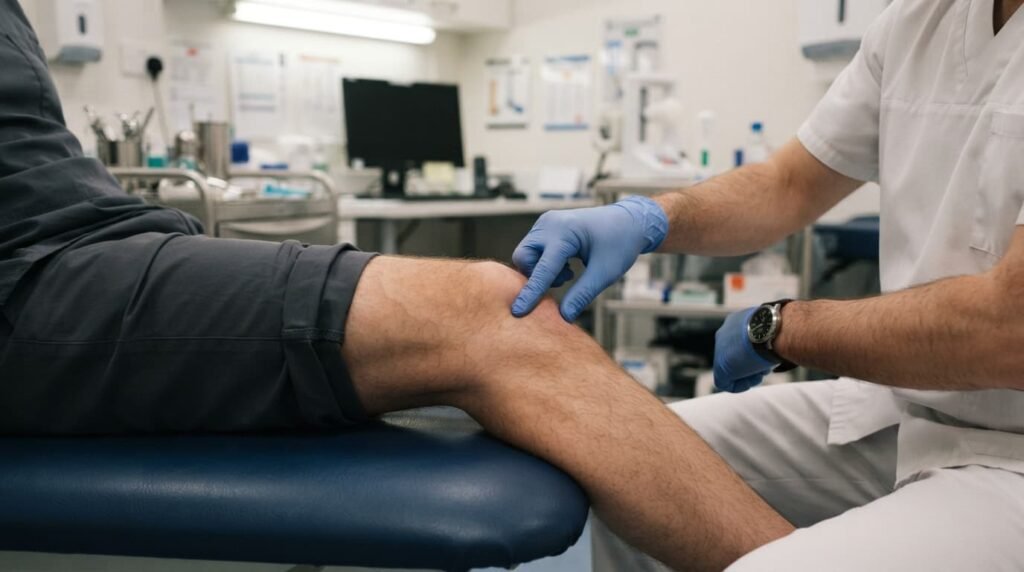
A torn meniscus or articular surface often produces a sharp catching sensation during movement. Patients frequently describe a popping or grating sound when the knee bends. Swelling, stiffness, and a reduced range of motion tend to follow within a day or two. Instability, where the knee feels like it might give way, is another common complaint.
Knee Locking and Catching Sensations
Knee locking and catching happen when a torn fragment of cartilage becomes trapped between the joint surfaces. In severe cases, the knee cannot fully straighten. This mechanical symptom often points toward a meniscus problem rather than simple wear.
Meniscus Tear Symptoms Compared With Articular Damage
Meniscus tear symptoms usually include localised pain along the joint line. Swelling that builds over 24 hours often follows. Articular cartilage damage knee symptoms, by contrast, tend to feel more diffuse. Aching spreads across the whole joint after activity. Both conditions can coexist, and that overlap is why an accurate diagnosis matters more than guesswork.
What Causes Cartilage Damage in Knee Joints
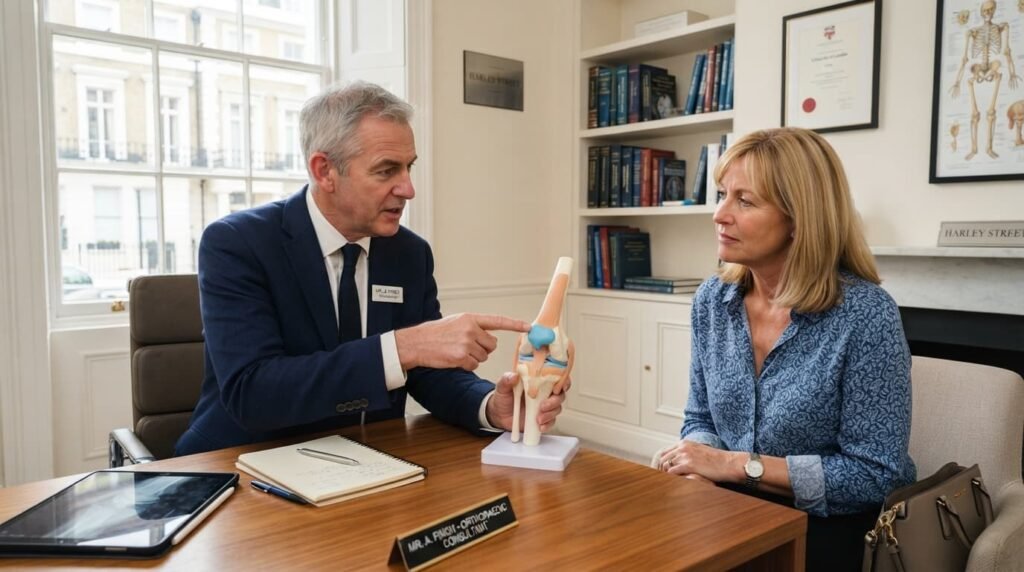
Cartilage damage in knee joints stems from two broad categories. Sudden trauma causes one type, while gradual overuse causes the other.
Traumatic Injury and Meniscus Root Tear
A sudden twist, pivot, or direct blow can tear the meniscus or its root. The root is the point where cartilage anchors to bone. A meniscus root tear disrupts how weight distributes across the joint. Prompt assessment often becomes necessary once this happens. Contact sports such as football and rugby carry a higher risk. Everyday movements, like an awkward step off a kerb, can cause the same injury outside sport entirely.
Knee Cartilage Wear and Tear Over Time
Knee cartilage wear and tear develops slowly through repeated loading, ageing, or existing joint conditions. As tissue thins, the joint loses cushioning, and posttraumatic osteoarthritis knee changes can follow years after an untreated injury. This wear pattern explains why bone-on-bone knee cartilage loss becomes more common with age.
Osteochondritis Dissecans Knee Cases
Osteochondritis dissecans knee injuries occur mostly in younger, active patients. A section of cartilage and the bone beneath it loses blood supply. Over time, this fragment can loosen and eventually break free inside the joint. Symptoms often include vague, activity-related pain rather than a single dramatic moment of injury. Early diagnosis improves the chance of the fragment reattaching without surgery. Imaging plays a central role here, since the condition rarely shows obvious signs on a physical exam alone. Growing bones in adolescents sometimes heal these lesions naturally with rest and activity modification. This is why paediatric cases receive close monitoring before surgery becomes the next step.
Diagnosing Articular Cartilage Damage Knee Conditions
Diagnosis starts with a physical examination comparing the injured knee against the healthy one. Doctors check for swelling, tenderness along the joint line, and range of motion. Imaging follows when the physical exam suggests deeper tissue involvement.
Does an X-Ray Show Cartilage Damage
A standard X-ray does not show cartilage damage directly, since cartilage does not appear on this type of scan. It does reveal bone alignment and narrowing of the joint space, which can hint at advanced wear. Doctors typically order a scan to rule out fractures before deeper investigation.
MRI and Bone-on-Bone Knee Cartilage Loss
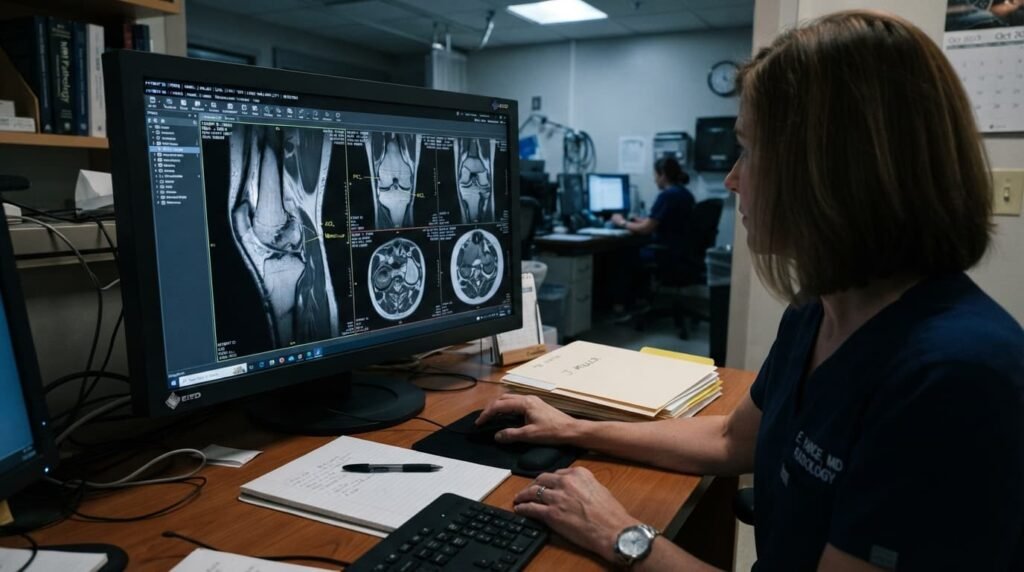
An MRI scan gives a clear picture of soft tissue. It remains the preferred tool for confirming a tear or measuring bone-on-bone knee cartilage loss. This imaging helps guide treatment decisions, particularly when surgery becomes a consideration. Arthrosamid treatment offers a non-surgical route for patients wanting to ease advanced wear before considering an operation. Bone density and alignment also factor into imaging results. Doctors compare both knees during review to spot subtle asymmetry. A clear scan result often shapes the entire treatment conversation that follows.
Can You Walk With Torn Cartilage in Knee Tissue
Most patients can still walk with torn cartilage in knee structures, though pain typically increases with distance and stairs. Walking on flat ground often feels manageable in the early days after injury. Uneven surfaces and descending stairs tend to aggravate symptoms far more than level walking. A locked knee, however, makes walking far more difficult and needs urgent review. Swelling that builds overnight can also limit movement the following morning. Ignoring the problem risks further joint damage, so early assessment remains the safer route. A brief period of reduced activity often helps. Combining rest with proper support tends to prevent a manageable injury from becoming a more serious one. Crutches or a supportive brace can ease pressure through the joint during the first week or two.
Treatment Options for Knee Cartilage Repair
Knee cartilage repair depends heavily on several factors. The size, location, and type of tear all matter, along with the patient’s age and activity level.
Non-Surgical Approaches
Rest, ice, and anti-inflammatory medication reduce swelling in the early stages. Physical therapy strengthens the muscles surrounding the joint. This improves stability without placing extra load on damaged tissue. Because cartilage lacks a direct blood supply, healing takes longer than with muscle or skin injuries. Injection therapies for knee pain, including PRP and Arthrosamid, offer another route for patients hoping to delay surgery. Bracing and activity modification often accompany these early measures. Patients with mild damage frequently avoid surgery entirely through consistent conservative care.
Knee Cartilage Surgery and Regeneration Techniques
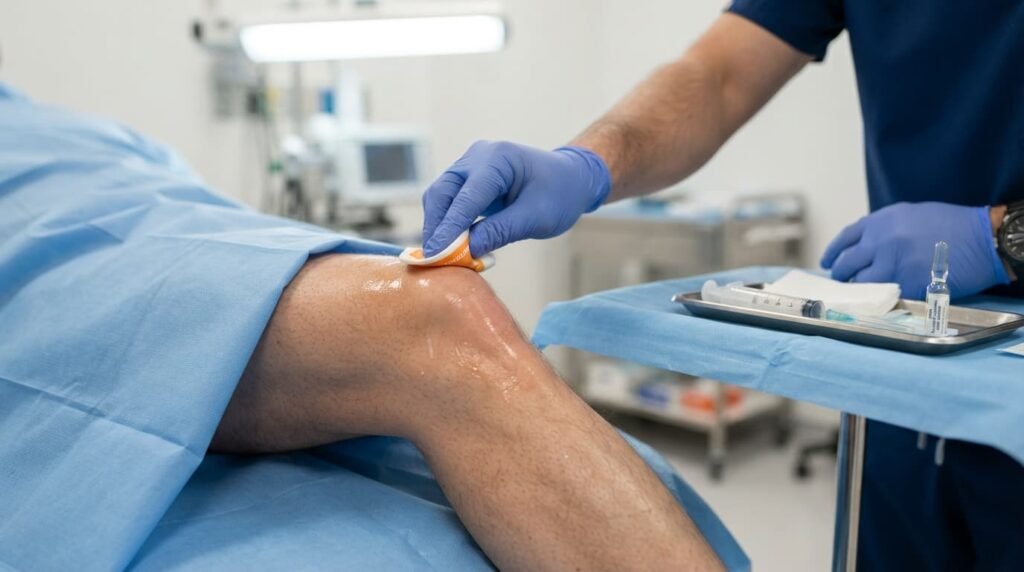
Knee cartilage surgery ranges from arthroscopic trimming to more complex grafting procedures. Surgeons can stimulate the body’s own repair response. Some transplant healthy cartilage from another area of the joint instead. Knee cartilage regeneration techniques continue to improve. Patients with larger defects now have more realistic options than in previous decades. A larger defect usually means a longer, more involved surgical pathway.
Meniscus Surgery Recovery Time
Meniscus surgery recovery time typically runs three to four months for a straightforward repair. Surgeons may shave away a small damaged section, or they may stitch the tear closed with sutures and small anchors. The choice depends on the tear pattern and the blood supply reaching that part of the meniscus. Repairs near the outer rim tend to heal faster than tears closer to the centre. Blood flow thins toward the middle of the tissue, slowing recovery there.
Knee Cartilage Injury Recovery Time
Knee cartilage injury recovery time varies enormously, from six weeks for mild damage to several months for surgical cases.
How Long Does Knee Cartilage Take to Heal
How long knee cartilage takes to heal depends on the tissue involved. A simple meniscus injury can settle within six to twelve weeks with conservative care. Articular cartilage repair, in contrast, often needs nine to eighteen months before the joint reaches full strength. Recovery around the kneecap tends to run even longer than elsewhere in the knee. Patience during this period genuinely affects the long-term outcome. Rushing back into sport before full healing raises the risk of re-injury significantly.
Is Cycling Good for Knee Cartilage Health
Cycling places minimal impact through the joint while still building strength around the surrounding muscles. This makes it a sensible choice during recovery from most cartilage injuries. The smooth, repetitive motion keeps the knee mobile without the jarring forces seen in running or jumping sports. Swimming offers a similar low-impact benefit for patients easing back into activity. Both activities allow the surrounding muscles to strengthen while the joint itself stays protected. A gradual return to higher-impact exercise usually follows once cartilage has settled.
Preventing Posttraumatic Osteoarthritis Knee Damage
Prevention focuses on reducing unnecessary strain while keeping the joint strong and mobile.
Strengthening and Weight Management
Building strength in the quadriceps and hamstrings gives the knee better support during impact. These muscles absorb force that would otherwise pass straight through the joint. Carrying excess weight adds pressure with every step, accelerating cartilage wear and tear. Each extra kilogram multiplies the load felt through the knee during walking and climbing stairs. Losing even a modest amount of weight measurably reduces joint load over time. Combining strength work with gradual weight management tends to produce the most lasting improvement in joint comfort.
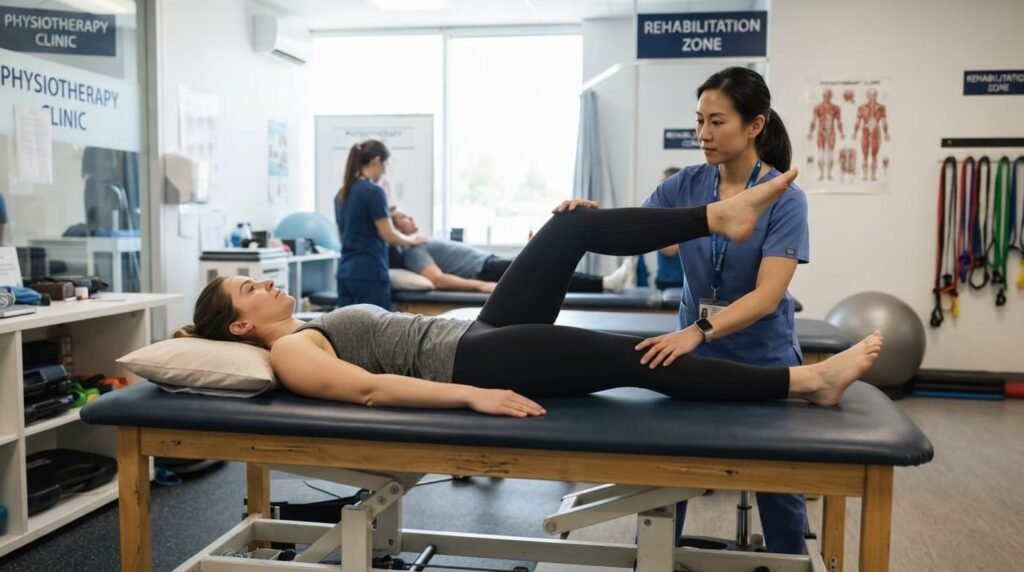
Practical Habit Adjustments
Warming up properly before sport lowers injury risk considerably. Improving technique during twisting movements and avoiding sudden jumps in training intensity help as well. Arthritis pain during colder months can stiffen joints further, so seasonal adjustments are worth combining with these habits. A diet that supports joint health also plays a supporting role in slowing cartilage wear. Small, consistent adjustments tend to outperform dramatic short-term changes over the course of a year. Footwear matters as well, since worn or unsupportive shoes alter how load travels through the knee. Knee pain in men over sixty carries additional risk factors that older adults benefit from monitoring closely.
Frequently Asked Questions
What is cartilage, and what does it do in the knee?
Cartilage is a tough, flexible tissue that cushions the ends of bones and allows smooth joint movement. In the knee, it prevents the femur, tibia, and kneecap from grinding together during activity. Damage to this tissue often leads to pain, swelling, and reduced mobility.
Does cartilage grow back once it is damaged?
Cartilage has limited natural healing ability because it lacks a direct blood supply. Some minor tears settle with rest and physical therapy. Larger defects usually need surgical intervention, such as grafting or stimulation techniques. Full regeneration remains uncommon without medical help.
Is cartilage avascular, and why does that matter?
Yes, cartilage is avascular, meaning it receives no direct blood flow. This explains why knee cartilage injury recovery time runs longer than for muscle or skin injuries. Treatment plans often account for this slower healing pattern from the outset.
How does osteochondritis dissecans differ from a typical tear?
Osteochondritis dissecans involves a section of cartilage and the underlying bone losing blood supply, sometimes breaking loose inside the joint. It mostly affects younger, active patients rather than developing from general wear. Early diagnosis improves the chance of successful non-surgical healing.
Can lifestyle changes really slow cartilage wear and tear?
Yes, maintaining a healthy weight, strengthening supporting muscles, and avoiding repetitive high-impact strain all reduce pressure on the joint. These habits will not reverse existing damage but can meaningfully slow further deterioration. Combining movement with proper recovery time gives the best long-term results.
Knee cartilage damage ranges from minor wear that settles with rest to serious tears needing surgical repair. Recognising symptoms early, understanding the difference between meniscus and articular damage, and following the right recovery timeline all improve long-term joint outcomes. Prevention through strength, weight management, and sensible activity choices remains the most effective long-term strategy.
Mr Syed Nadeem Abbas at London Knee Clinic brings specialist expertise in diagnosing and treating knee cartilage damage, helping patients find the right path back to pain-free movement.
Read more: New non-surgical knee pain treatments in the UK 2026 with Arthrosamid injection
Read more: ACL Injury Requires Early Diagnosis and the Right Treatment Choice