Yoga for Arthritis: A Gentle Path to Pain Relief and Mobility

✅ Medically reviewed | Updated september 2026
Yoga for arthritis is one of the safest ways to keep stiff, painful joints moving without making symptoms worse. Millions of adults with osteoarthritis or rheumatoid arthritis avoid exercise altogether, fearing it will cause more damage. That fear often causes more harm than the movement itself. Gentle, well-modified yoga builds strength, protects joints, and calms the nervous system at the same time.
Gentle, well-modified yoga builds strength, protects joints, and calms the nervous system at the same time. It won’t undo existing joint damage, and it isn’t a cure, but it consistently ranks among the most researched, low-risk activities available for people managing chronic joint pain. The real skill lies in choosing the right style, the right pose, and the right pace for the joint involved, rather than following a generic exercise routine built for a body without arthritis.
What Is Yoga for Arthritis?
Yoga for arthritis is a modified form of Hatha yoga, adapted for people with joint pain, swelling, or reduced range of motion. It blends gentle poses, breathing work, and short relaxation. Traditional yoga can be demanding on the wrists, knees, and hips. A properly adapted class removes that risk while keeping the benefits. Props such as chairs, blocks, straps, and blankets take pressure off vulnerable joints, so the body moves through a safer, smaller range.
Breath plays a bigger role than most beginners expect. Movement is paired with slow inhales and exhales, which helps the nervous system settle and reduces the tension that often builds around a painful joint. Classes usually end with several minutes of stillness, giving the body time to absorb the session rather than rushing straight back into daily activity.
Is Yoga Good for Arthritis? What the Evidence Shows
Is yoga good for arthritis, or is that just wellness marketing? The research says yes, with conditions. A randomised controlled trial at Johns Hopkins found that sedentary adults with knee osteoarthritis and rheumatoid arthritis improved physical function and mood after eight weeks of modified yoga. Benefits such as walking speed and reduced pain were still measurable nine months later.

A systematic review of yoga studies reported reductions in joint tenderness, swelling, and disability, alongside better self-efficacy and mental health. Serious injuries were rare, and mostly linked to unqualified instruction or overly advanced poses. The evidence supports yoga as a genuine complement to medical care, not a replacement for it. Rheumatoid arthritis and osteoarthritis patients should still confirm any new activity with their rheumatologist or GP first, particularly during an active flare.
Benefits of Yoga for Arthritis
The benefits go beyond flexibility.
- Reduced joint stiffness through slow, controlled movement
- Improved balance, lowering fall risk in older adults
- Better sleep and lower stress, both linked to reduced pain perception
- Stronger muscles around the joint, which improves joint stability
- Fewer flare-ups when practice stays within a comfortable range
- Improved mood, since regular movement and breathwork lower anxiety and low-level depression common in chronic pain
One useful, if slightly amusing, side effect: patients who start chair yoga often discover muscles in their feet they forgot they had. Small, seated foot and ankle movements build strength in an area most exercise routines skip entirely.
Best Yoga Style
Not every yoga style suits painful joints. Fast-paced Vinyasa or heated Bikram classes place repeated strain on inflamed tissue and are generally unsuitable. Slower, prop-supported styles work far better.
Iyengar Yoga for Arthritis
Iyengar is widely recommended by rheumatology researchers because it relies heavily on props. Blocks and straps let a stiff shoulder or swollen knee find a safe range without forcing the joint. Poses are held longer, giving muscles time to engage without sudden strain, and alignment is checked carefully before any depth is added.
Chair Yoga for Arthritis
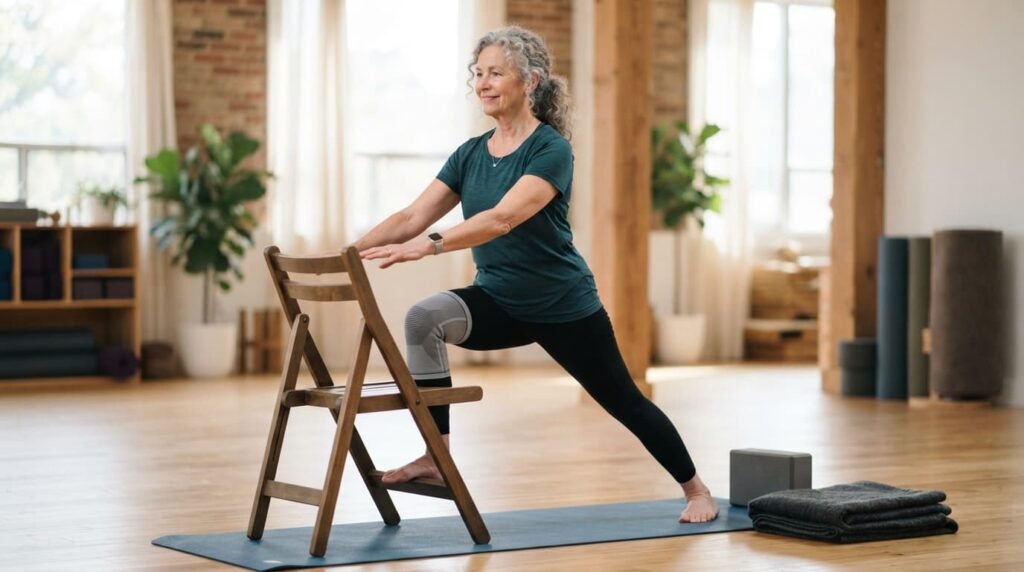
Chair yoga removes the floor entirely. Every pose is done seated or using a chair for support, which suits anyone who struggles to get up and down from the ground. It’s an excellent entry point for beginners and for adults managing significant hip or knee limitations. Many arthritis-specific classes now open and close every session with a short chair-based sequence, even for students who also practise on a mat.
Gentle Yoga for Arthritis
Styles such as Integral, Sivananda, and early-stage Kripalu are built around slow pacing, breath awareness, and short relaxation. These are consistently rated as the best yoga style for arthritis by clinical researchers, since they combine safety with measurable physical benefit.
Yoga Poses for Arthritis, by Joint
Different joints need different modifications, so a general “arthritis-friendly” pose list only goes so far.
Yoga for Arthritis in Knees
Yoga for arthritis in knees, sometimes searched as yoga for knee arthritis, should avoid deep bends and prolonged kneeling. Seated leg extensions, supported bridge pose with a block under the hips, and standing poses with a chair for balance all protect the joint while building the surrounding muscle. Anyone managing more advanced knee osteoarthritis and considering options beyond exercise may also find it useful to read about how non-surgical treatment for joint damage changes as osteoarthritis progresses, which explains where movement-based therapy fits alongside medical options.
Yoga for Rheumatoid Arthritis
Yoga for rheumatoid arthritis needs to flex around flare-ups. On a high-inflammation day, gentle range-of-motion movement and breathing work replace weight-bearing poses. On calmer days, slightly longer holds are appropriate. Consistency matters more than intensity, and skipping a class during a flare is not a setback.
Yoga for Osteoarthritis
Yoga for osteoarthritis focuses on strengthening the muscles that support a worn joint, rather than increasing flexibility for its own sake. Quad and glute strengthening poses, done with support, reduce load on the knee and hip joints during daily activity such as climbing stairs or standing from a chair.
Yoga Poses to Avoid With Arthritis
Certain yoga poses to avoid with arthritis carry unnecessary risk for painful joints.
- Deep knee bends (e.g., full lotus, hero pose without support) stress worn cartilage
- Extreme hip openers, especially for those with hip arthritis
- Unsupported headstands or shoulder stands, risky for the neck and wrists
- Fast, jumping transitions, typical of Vinyasa flow
- Hyperextended backbends, which strain the spine and neck
- Deep wrist-bearing poses such as full plank for anyone with hand or wrist arthritis
A simple rule applies across every style: if a pose causes sharp pain, it is the wrong pose for that day, not a fitness failure. A good instructor always offers an alternative rather than pushing through.
Yoga for Arthritis Beginners: How to Start Safely
Yoga for arthritis beginners benefit most from a slow, supervised introduction rather than jumping into a video series alone.
- Confirm with a rheumatologist or GP before starting, especially with joint replacements
- Choose a “gentle” or “beginner” labelled class, not general yoga
- Tell the instructor about affected joints before the session begins
- Bring props even if the studio provides them, for familiarity
- Stop the moment sharp pain appears, and rest rather than pushing through
- Track how joints feel the next day, not just during the class, since some reactions are delayed
Gentle Yoga for Arthritis Over 60
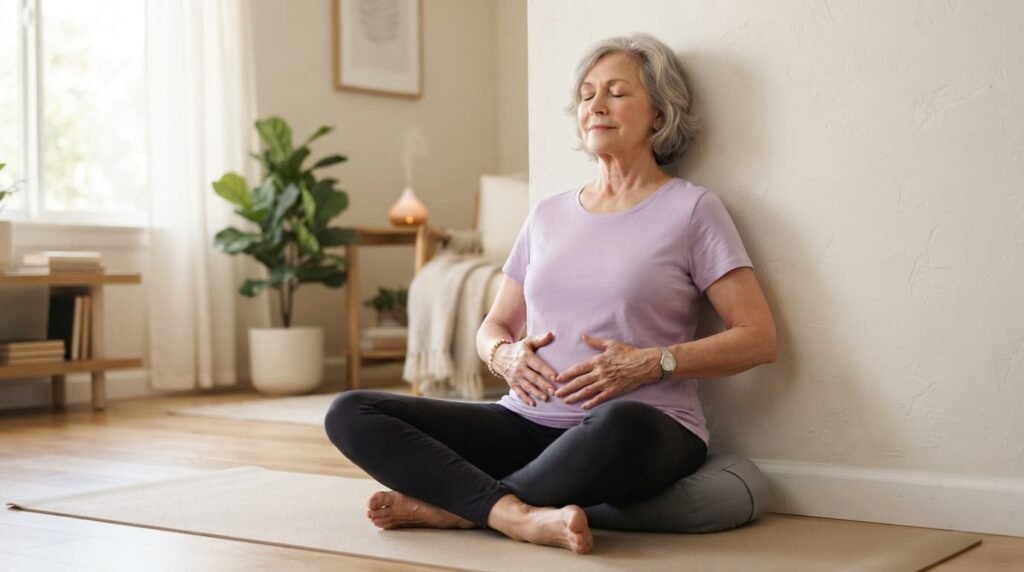
Gentle yoga for arthritis over 60 usually pairs well with chair-based sequences and shorter class lengths of 30–45 minutes. Balance work is especially valuable here, since falls are a leading cause of injury in this age group. Many community centres and hospitals now run classes specifically for older adults with joint conditions, often led by instructors with additional training in working alongside medical limitations.
Yoga Therapy for Arthritis and Finding a Class
Yoga therapy for arthritis differs from a general studio class. A yoga therapist completes advanced training, often over 1,000 hours, and builds an individual programme around a person’s specific joints, medications, and limitations. This route suits anyone with significant limitations or multiple affected joints, or anyone who has tried group classes without success.
Online Yoga for Arthritis and Live Classes
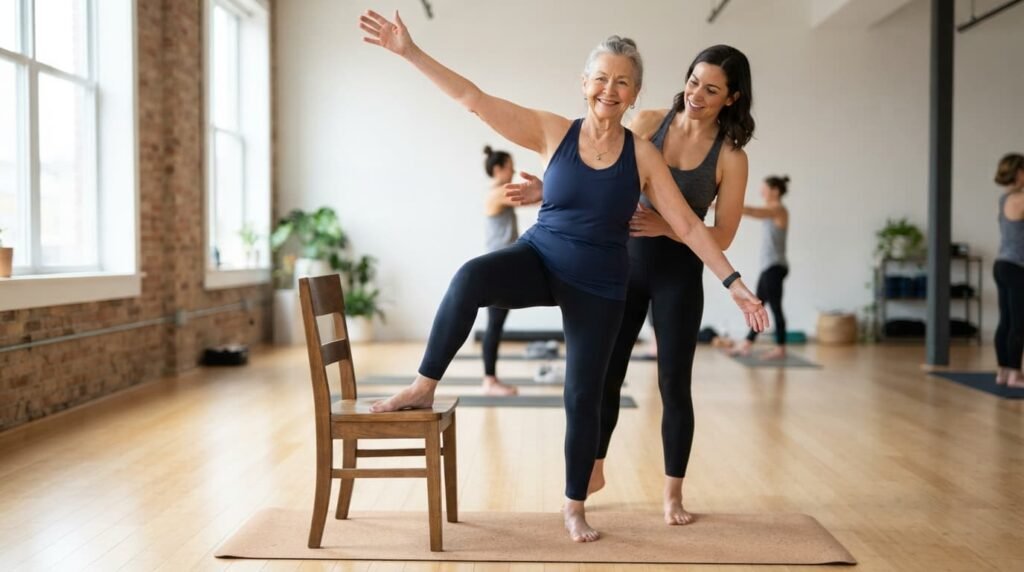
Online yoga for arthritis has expanded significantly, and live online yoga classes now let patients join arthritis-specific sessions from home with real-time correction from a qualified teacher. This matters, since generic recorded videos cannot flag an unsafe pose in the moment. Adaptive yoga classes, run through hospitals, senior centres, and specialist organisations, combine the safety of live instruction with the convenience of home practice.
Working With a Yoga Therapist
A qualified yoga therapist for arthritis will typically request an initial health history, review any joint replacements or active flares, and build sequences around those constraints. Some also correspond directly with a patient’s medical team. For readers managing persistent knee pain alongside their yoga practice, understanding why some knee injections lose effectiveness in advanced arthritis can clarify when movement-based approaches need medical support. For visual learners, a demonstrated chair yoga sequence is available on the DrSNA Clinic YouTube channel, alongside broader joint health guidance.
FAQs About Yoga for Arthritis
Is yoga good for arthritis, or could it make joints worse?
Yoga is generally safe and beneficial for arthritis when poses are modified and taught by a qualified instructor. Problems usually arise from unmodified, advanced poses rather than yoga itself.
What is the best yoga style for arthritis?
Iyengar, chair yoga, and gentle Hatha styles are the most consistently recommended, largely because of their prop use and slower pacing.
Can beginners with no yoga experience start yoga for arthritis pain relief?
Yes. Yoga for arthritis beginners should choose a class labelled “gentle” or “beginner” and inform the instructor of any affected joints beforehand.
Is chair yoga for arthritis effective, or is it too easy to help?
Chair yoga still builds strength, balance, and flexibility. It’s particularly effective for people with significant knee or hip limitations who cannot get up and down from the floor safely.
How is yoga for rheumatoid arthritis different from osteoarthritis?
Rheumatoid arthritis practice adjusts around inflammation flares, while osteoarthritis practice focuses more on strengthening muscles around a worn joint.
Are there yoga poses to avoid in the hips or knees specifically?
Deep knee bends, extreme hip openers, and unsupported inversions carry the most risk and are usually avoided or heavily modified.
How often should someone practise yoga for arthritis pain relief?
Two to three sessions a week is a common starting point, with daily short breathing or gentle stretching on rest days. Frequency should always adjust around flare activity.
Yoga for arthritis will not reverse joint damage, and it isn’t a substitute for medical treatment. What it offers instead is a safe, evidence-backed way to keep moving without triggering more pain. Starting slowly, choosing the right style, and working with a qualified instructor or yoga therapist turn it from an intimidating idea into one of the most practical daily habits available for managing osteoarthritis. Under the expert care of Mr Syed Nadeem Abbas, patients in London have a trusted, non-surgical path to lasting relief from knee osteoarthritis.
Read more: Top Mistakes After Knee Replacement Often Go Unnoticed Until Too Late
Read more: Septic Arthritis Treatment Protects The Joint Through Antibiotics And Surgery