
Morning knee pain and stiffness happen when the joint loses lubrication and warmth overnight, leaving cartilage and surrounding muscles tight until movement restarts circulation. This is the core problem behind the familiar tight, achy, hard-to-bend feeling reported by patients each morning. In most cases, the discomfort eases within an hour as the joint warms up and synovial fluid begins flowing again. For some, though, it lingers for hours and disrupts simple tasks, including walking downstairs or standing up from a chair.
Osteoarthritis, delayed muscle soreness, and rheumatoid arthritis sit behind most cases, each with a distinct pattern worth recognising. Understanding which one applies helps in choosing the right management approach, whether that means gentle stretching, targeted exercise, or a specialist consultation.
What Causes Morning Knee Pain and Stiffness
Several factors contribute to morning knee stiffness. These range from natural ageing to short-term muscle soreness. Identifying the pattern of symptoms narrows down the likely cause considerably. Some patients notice stiffness in one knee only, while others feel it in both. Timing also matters. Stiffness that clears within thirty minutes points to a different cause than stiffness lasting well into the afternoon.
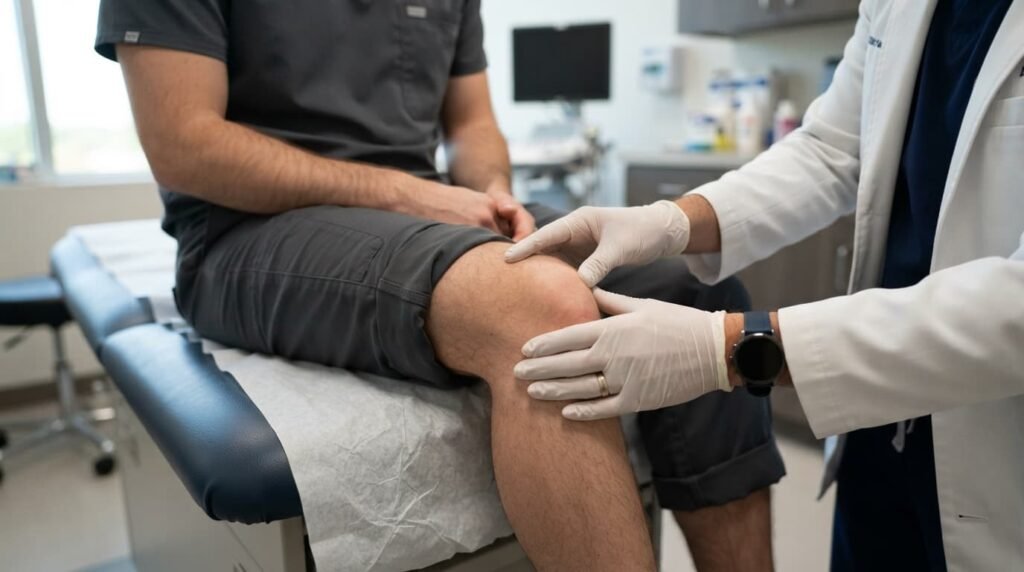
Osteoarthritis and Knee Stiffness
Osteoarthritis knee stiffness develops when cartilage inside the joint gradually wears down. Healthy cartilage cushions the bones and allows smooth, pain-free movement. As it thins, bones begin to rub together, triggering pain and low-grade inflammation. This wear-and-tear process rarely happens overnight; it builds up steadily over the years. Risk increases sharply after the age of 50. Obesity, previous knee injuries, repetitive kneeling, and genetics also raise the likelihood of developing the condition. Many patients first notice symptoms after a long walk or a period of inactivity, such as a long flight or a desk-bound day.
DOMS Knee Pain After Exercise
DOMS knee pain refers to delayed onset muscle soreness. It develops between 24 and 48 hours after unfamiliar or particularly intense exercise. Symptoms usually peak around the 72-hour mark before settling. Microscopic damage to muscle fibres triggers an inflammatory response. This causes soreness around the joint rather than genuine joint damage. Unlike arthritis, DOMS resolves naturally within a few days without lasting harm to the cartilage or surrounding structures. Runners and gym-goers trying a new leg session often describe this pattern precisely.
Rheumatoid Arthritis Knee Symptoms
Rheumatoid arthritis knee symptoms differ from osteoarthritis in both onset and pattern. Rheumatoid arthritis is an autoimmune condition. The immune system mistakenly attacks healthy joint tissue, including the synovial membrane. Symptoms often appear suddenly and tend to affect both knees at once, unlike the one-sided pattern seen with wear-related arthritis. Swelling, warmth to the touch, and morning stiffness lasting beyond an hour are common indicators. Anyone noticing this pattern should raise it with a GP or specialist promptly, since early treatment tends to slow disease progression.
Why Are Knees Stiff After Sleeping
Stiff knees after sleeping happen largely because joints remain still for several hours overnight. Regular movement encourages the production of synovial fluid, a natural lubricant that keeps the joint gliding smoothly. Without motion, this fluid production slows considerably. Surrounding muscles also cool down and tighten during a night of stillness. The combined effect produces knee pain first thing in the morning that eases gradually as circulation improves. What causes knee stiffness overnight, in short, comes down to reduced lubrication and muscle cooling rather than any new injury. This process typically takes between ten minutes and an hour for most people. Arthritic joints, however, may take considerably longer to loosen fully, sometimes stretching into the mid-morning.
Sleeping position can play a role, too. Curling the knee tightly for hours reduces circulation to the joint further. Adjusting sleep posture, alongside gentle movement immediately after waking, often shortens the stiffness window noticeably.
Knee Pain Going Down Stairs vs Climbing Stairs
Many patients notice that knee pain going down stairs feels considerably worse than climbing them, particularly first thing in the morning.
Knee Pain Going Down Stairs
Descending stairs places significantly more load through the knee joint than ascending does. Every step down forces the knee to absorb body weight against gravity, straining already stiff cartilage. Reduced lubrication in osteoarthritic knees means less natural shock absorption. This amplifies discomfort noticeably during descent, especially before the joint has warmed up. Morning grogginess can also slightly affect balance and coordination. This adds a mild slip risk when negotiating stairs before full alertness returns.

Knee Pain Climbing Stairs
Knee pain climbing stairs tends to be less severe because the movement doubles as a natural warm-up. Muscle activation increases blood flow through the leg. Synovial fluid production also ramps up as the body becomes more active. Improved circulation delivers oxygen and nutrients to the joint, gradually easing stiffness with each step upward. This explains why many people manage the walk upstairs far more comfortably than the walk down, even within the same short journey.
Knee Osteoarthritis vs Rheumatoid Arthritis
Comparing knee osteoarthritis vs rheumatoid arthritis helps clarify which condition might explain persistent symptoms.
| Feature | Osteoarthritis | Rheumatoid Arthritis |
| Onset | Gradually, over the years | Often sudden |
| Cause | Mechanical wear of cartilage | Autoimmune inflammation |
| Joints affected | Usually, one knee first | Frequently both knees |
| Morning stiffness | Under 30 minutes typically | Often over an hour |
| Common age group | Over 50 | Any adult age |
Both conditions can cause knee locking and swelling during flare-ups, though the underlying mechanism differs considerably. Osteoarthritis tends to worsen with activity and improve with rest. Rheumatoid arthritis often does the reverse, easing somewhat as the day progresses and joints move more freely.
Knee Arthritis Symptoms Requiring Medical Advice
Knee arthritis symptoms worth flagging to a specialist include persistent swelling, warmth around the joint, and a locking sensation during movement. A grinding or crackling noise when bending the knee is another common sign. Difficulty bending the knee fully, combined with pain that fails to settle within an hour of waking, also warrants assessment. Ignoring these signs for months often allows the underlying condition to progress further. An accurate diagnosis guides appropriate treatment, whether that path stays conservative or moves toward interventional options. Imaging, such as ultrasound or X-ray, typically confirms the extent of joint damage present. Video explanations of common assessment steps are available on the clinic’s YouTube channel for those wanting more context.
Exercises for Morning Knee Stiffness
Exercises for morning knee stiffness focus on gentle mobilisation before more demanding movement, such as stairs, begins.

Stretching and Warm-Up Routines
Gentle stretches targeting the quadriceps, hamstrings, and calves loosen tight tissue around the joint. A warm shower beforehand can further relax stiff muscles and improve early mobility. Five to ten minutes of stretching each morning often reduces stiffness noticeably within a few weeks of consistent practice. Slow, controlled knee bends while seated also help without placing weight through the joint.
Strengthening Exercises for Knee Arthritis
Exercises for knee arthritis, such as straight leg raises and controlled mini squats, build supportive muscle around the joint. Stronger thigh muscles reduce the mechanical load passing directly through the knee with every step. A physiotherapist can tailor a programme based on individual joint conditions and current fitness level. This avoids movements likely to aggravate symptoms while still building meaningful strength over time. Consistency matters more than intensity when managing a stiff or arthritic knee.
Knee Stiffness Treatment Options
When exercise and lifestyle changes provide limited relief, several knee stiffness treatment pathways exist, ranging from injections to surgery.
Hyaluronic Acid Injection for the Knee
A hyaluronic acid injection for the knee replicates the joint’s natural lubricant. Research shows it reduces pain and supports better function, making everyday tasks noticeably more comfortable. This includes descending stairs, a movement many patients find particularly troublesome. The treatment particularly benefits patients whose natural synovial fluid production has diminished due to osteoarthritis.
Ultrasound Guided Knee Injection
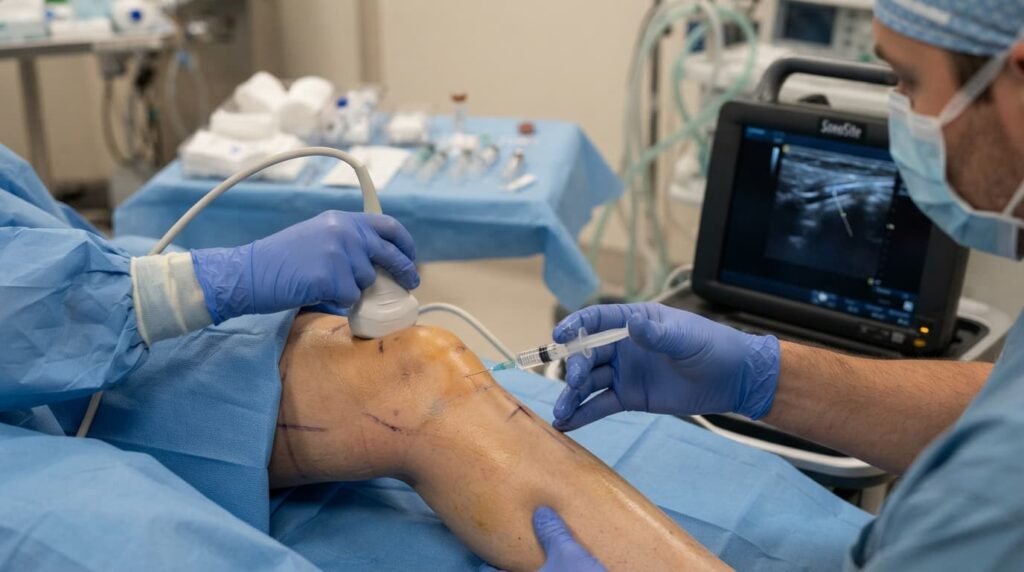
An ultrasound-guided knee injection allows precise placement of medication directly into the affected area of the joint. This imaging-led approach improves accuracy compared with a landmark-guided technique. Greater precision reduces discomfort during the procedure and tends to improve overall treatment outcomes. Musculoskeletal specialists commonly combine this method with hyaluronic acid or other injectable therapies for a more targeted result.
Arthrosamid Injection
Arthrosamid injection is a newer, non-surgical option for knee osteoarthritis. Unlike hyaluronic acid, it forms a lasting hydrogel cushion within the joint lining. Clinical evidence supports the benefit lasting several years following a single injection. Patients considering long-term relief without surgery often research this option carefully. Those weighing up alternatives may also find it useful to compare Arthrosamid against PRP injections before deciding on a treatment path.
Partial vs Total Knee Replacement Surgery
When conservative treatment and injections no longer manage symptoms effectively, partial vs total knee replacement becomes a consideration. Partial replacement addresses damage limited to one section of the joint, preserving healthy surrounding tissue. Total replacement resurfaces the entire knee, suited to more widespread joint damage. Surgery typically follows once daily function becomes significantly restricted despite other treatments. Both approaches can substantially improve mobility and reduce pain over the long term, though recovery and rehabilitation timelines differ.
Preventing Knee Stiffness in Old Age
Knee stiffness in old age is not inevitable, even though risk naturally rises with time. Maintaining a healthy weight reduces the mechanical load carried by the joint with every single step. Regular low-impact activity, such as swimming or cycling, keeps knee joint lubrication flowing without excessive strain on the cartilage. Staying consistently active throughout the day, rather than sitting for long stretches, helps prevent joints from stiffening further. A sensible knee pain diet also plays a supporting role in overall joint comfort.
Common Myths About Morning Knee Stiffness
Several myths surround morning knee pain and stiffness, often delaying proper care. One common belief holds that stiffness always signals arthritis, though DOMS and simple inactivity frequently explain milder cases. Another myth suggests rest alone cures stiffness fastest. In reality, gentle movement restores lubrication far quicker than prolonged stillness does. Some assume cracking or popping sounds always indicate damage. Occasional joint noise without pain or swelling is usually harmless. A further misconception claims that injections are only a last resort before surgery. Hyaluronic acid and Arthrosamid are increasingly used earlier, as part of a broader, non-surgical management plan rather than a final step.
Frequently Asked Questions
Why are my knees stiff when I wake up?
Joints remain still overnight, which slows synovial fluid production and allows surrounding muscles to tighten. Movement after waking restarts lubrication and gradually eases stiffness within an hour for most people.
Is knee pain first thing in the morning always arthritis?
Not always. Osteoarthritis and rheumatoid arthritis are common causes, though DOMS following exercise or simply an awkward sleeping position can also trigger temporary stiffness that resolves quickly.
Does knee stiffness treatment always involve injections?
No. Many patients manage symptoms successfully with stretching, strengthening exercises, weight management, and physiotherapy before considering injectable treatments such as hyaluronic acid or Arthrosamid.
Can exercises for morning knee stiffness make symptoms worse?
Gentle, appropriately guided exercise generally improves stiffness rather than worsening it. A physiotherapist can adjust intensity to suit joint condition, avoiding movements likely to aggravate an already sensitive knee.
How long does morning knee pain and stiffness usually last?
Most people find symptoms ease within ten minutes to an hour. Stiffness persisting well beyond this window, particularly with swelling, is worth discussing with a specialist.
Is an ultrasound-guided knee injection painful?
Most patients describe only mild, brief discomfort. Ultrasound guidance improves accuracy, which generally makes the procedure quicker and more comfortable than a landmark-guided alternative.
Conclusion
Morning knee pain and stiffness commonly stem from osteoarthritis, DOMS, or occasionally rheumatoid arthritis. Stairs often highlight the problem, with descending proving harder than climbing due to increased joint load. Stretching, strengthening exercises, and steady weight management ease symptoms for many patients over time. When conservative measures fall short, options such as hyaluronic acid or Arthrosamid injections provide further relief without surgery.
Mr Syed Nadeem Abbas is a consultant and specialises in diagnosing and treating persistent knee conditions using advanced non-surgical techniques.
Read more: New non-surgical knee pain treatments in the UK 2026 with Arthrosamid injection
Read more: Knee Arthritis Exercises to Avoid That Increase Knee Pain


