Septic Arthritis Treatment Protects The Joint Through Antibiotics And Surgery

✅ Medically reviewed | Updated september 2026
Septic arthritis treatment usually begins with hospital admission, since this joint infection can damage cartilage within days if left untreated. Joint infections affect an estimated 4 to 10 people per 100,000 in the UK each year. Knees remain among the most commonly affected joints, alongside hips and shoulders. Septic arthritis develops when bacteria, and less often fungi, invade the fluid inside a joint. Early recognition and swift septic arthritis treatment reduce the risk of permanent joint damage significantly. Older adults, young children and people with weakened immune systems face the highest risk. Understanding how this infection is spotted and managed helps patients seek help without delay.
What Is Septic Arthritis?
Septic arthritis is a joint infection that triggers sudden, severe inflammation. Unlike degenerative joint disease, this condition is curable once the infection clears. It usually affects a single joint, most often the knee or hip. Occasionally, the infection spreads to two or three joints at once, particularly in infants.
The inflammation stems directly from an active pathogen rather than years of mechanical wear. This means symptoms tend to appear far more suddenly than in most other joint conditions. Prompt attention gives the joint the best chance of a full recovery.
Infectious Arthritis Versus Other Joint Conditions
Infectious arthritis differs from autoimmune or wear-and-tear arthritis because a live pathogen drives the inflammation. Removing the infection resolves the joint symptoms in most cases. This distinction matters because delayed antibiotic treatment allows bacteria to destroy cartilage rapidly. Rheumatoid arthritis and gout, by comparison, involve the immune system or crystal deposits rather than infection. Correctly identifying which type of joint disease is present guides every treatment decision that follows.
Recognising Septic Arthritis Symptoms
Symptoms typically appear suddenly rather than building gradually over weeks. Most people notice a rapid change in how a single joint looks and feels within a day or two.
Symptoms In Adults
Common warning signs include:
- Severe pain in one joint, often the septic arthritis knee presentation
- Swelling, warmth and redness around the joint
- Fever and chills
- Difficulty bearing weight or moving the joint at all
- General fatigue or feeling unwell
A joint that becomes hot, swollen and acutely painful within hours deserves urgent medical assessment, not a wait-and-see approach. People with weakened immune systems sometimes experience milder pain despite a serious underlying infection. This can make the condition easy to underestimate.
Septic Arthritis In Children
Septic arthritis in children can present differently. Infants may simply refuse to move the affected limb or become unusually irritable. Fever may be absent in very young babies, which sometimes delays diagnosis. Older children may limp or complain of pain without describing exactly where it hurts. Parents should seek prompt medical review if a child avoids weight on one leg. A low mood or reduced appetite can be additional warning signs.
What Causes Septic Arthritis?
Common septic arthritis causes include bacteria reaching the joint through the bloodstream. Direct injury, or occasionally a joint injection or surgical procedure, can also introduce infection. Once inside the joint, bacteria multiply quickly within the synovial fluid. This triggers the body’s inflammatory response, producing the classic pain and swelling.
Bacterial Arthritis And Common Pathogens
Bacterial arthritis is far more common than infections caused by other organisms. Staphylococcus aureus causes most cases in adults. Streptococcus species and, in sexually active adults, Neisseria gonorrhoeae are also recognised causes. A skin wound, throat infection or dental procedure can sometimes act as the entry point for these bacteria.
Some strains of bacteria resist common antibiotics. This is why laboratories test the joint fluid sample against several drugs before confirming the best treatment. This process, known as sensitivity testing, usually takes a few days. Doctors often start with a broad-spectrum antibiotic in the meantime, then narrow the choice once results arrive.
Fungal Arthritis
Fungal arthritis is rare. It tends to affect people with weakened immune systems or those who have had recent joint surgery. It progresses more slowly than bacterial infection but still requires prompt treatment. Doctors usually suspect it when standard antibiotics fail to improve symptoms.
Septic Arthritis Risk Factors
Certain groups face higher risk of developing septic arthritis, including:
- People over 80 years old
- Those with rheumatoid arthritis or an artificial joint
- Anyone with a weakened immune system or diabetes
- People who inject recreational drugs
- Patients recovering from recent joint surgery or injection
- Babies and young children, whose immune systems are still developing
Smoking and heavy alcohol use also raise the risk slightly. Both can affect how well the immune system fights off bacteria. None of these factors guarantees that infection will develop, but they do explain why doctors ask about them during assessment.
Diagnosing Septic Arthritis
Accurate diagnosis depends on testing joint fluid directly, since blood tests alone cannot confirm this diagnosis. A doctor will also ask about recent injuries, infections or surgery, and examine the affected joint closely.
Joint Aspiration And Arthrocentesis
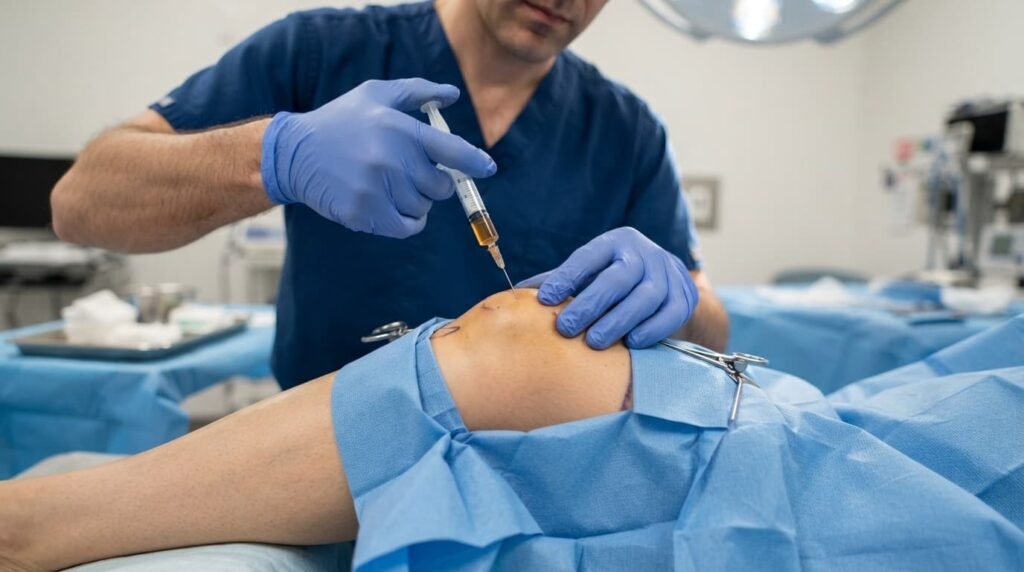
Joint aspiration, also called arthrocentesis, removes fluid from the affected joint using a fine needle. Laboratory analysis of this fluid identifies bacteria and white blood cell counts. Crystal patterns in the same sample separate septic knee cases from gout or pseudogout. This single test often provides the clearest answer, and results can guide antibiotic choice even before formal culture results return.
What To Expect During Assessment
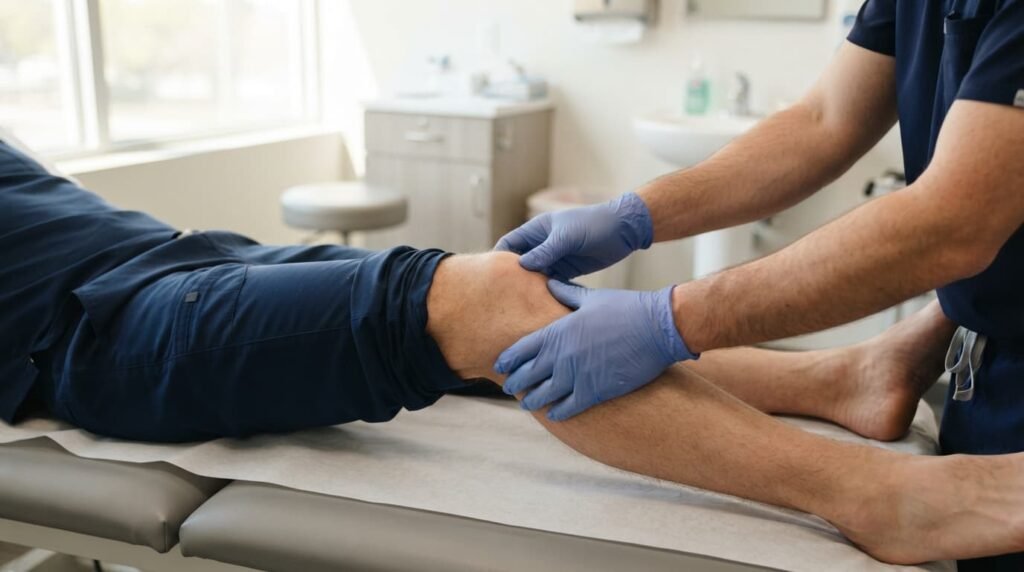
A typical assessment starts with questions about when symptoms began. The doctor will also ask about any recent injury, surgery or infection elsewhere in the body. Next comes a physical examination, checking the joint for warmth, swelling and range of movement. Comparing it with the unaffected side often helps. This initial examination often strongly suggests infection before any test results return. Treatment can then start without unnecessary delay.
Blood Tests And Imaging
Blood tests measure inflammatory markers such as CRP and ESR, alongside a full blood count. Imaging, including X-ray, ultrasound or MRI, helps assess joint damage and rules out other causes of pain. Ultrasound can also guide the needle during a difficult aspiration, particularly in smaller or deeper joints.
A combination of these tests, together with joint fluid analysis, gives doctors the clearest picture before starting treatment. Results from blood tests sometimes take longer than the initial fluid analysis. Treatment often begins before every result is back. Waiting for perfect certainty would risk allowing the infection to spread further.
Septic Arthritis Treatment Options
Septic arthritis treatment combines antibiotics, drainage and, in many cases, surgery. The exact approach depends on the joint involved, the organism identified and how quickly symptoms began.
How Septic Arthritis Antibiotics Work
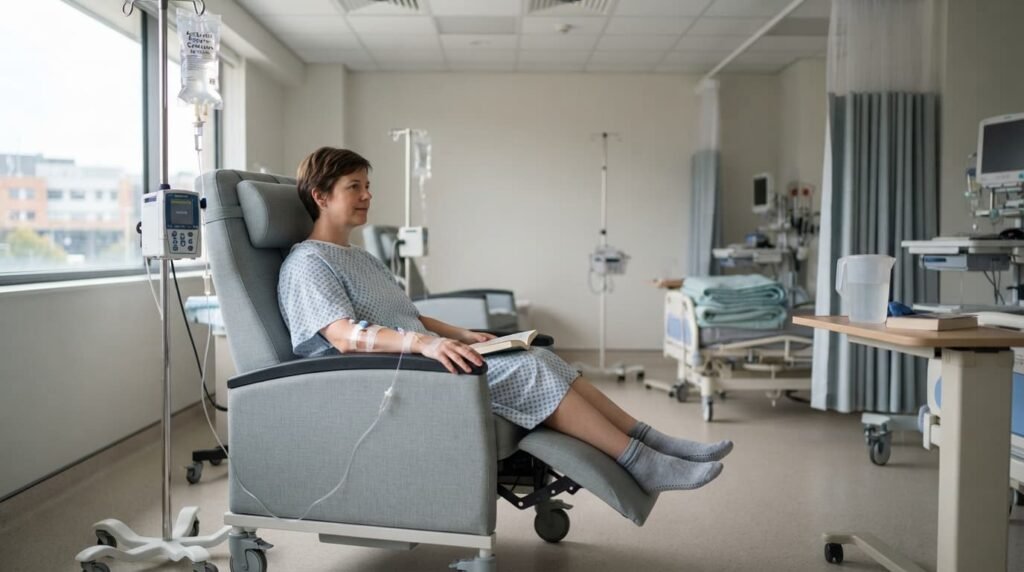
Septic arthritis antibiotics usually start intravenously in hospital to control the infection quickly. Once symptoms improve, patients often switch to oral antibiotics for two to four further weeks. The precise antibiotic choice depends on laboratory culture results. Doctors adjust the medication once they know exactly which organism is responsible. This ensures the most effective drug is used throughout recovery.
Septic Arthritis Surgery And Joint Drainage
Septic arthritis surgery removes infected fluid and damaged tissue from the joint. Surgeons may use arthroscopy, a minimally invasive technique, or open surgery for more extensive infections. Repeated drainage is sometimes necessary to fully clear stubborn infections. The goal throughout is to protect the cartilage and preserve as much normal joint function as possible.
Recovery time after surgery tends to be slightly longer than with antibiotics and aspiration alone. The joint needs time to heal from the procedure itself, as well as from the infection. A short hospital stay usually follows surgery, allowing the care team to monitor early healing and manage pain before discharge.
Treating Septic Arthritis Knee Cases
The knee’s large joint space can hold significant infected fluid, making drainage especially important. Prompt septic arthritis treatment for knee involvement often prevents the need for more invasive surgery later. Because the knee bears so much daily weight, doctors monitor recovery closely to catch any setback early.
Weight-bearing is usually restricted for a short period while inflammation settles. Crutches or a knee brace can help protect the joint during this early stage. Physiotherapy typically follows once the acute infection has settled, helping restore strength and range of motion. A gradual return to normal activity, guided by a physiotherapist, reduces the chance of re-injury or lingering stiffness.
Septic Arthritis Recovery Time And Outlook
Septic arthritis recovery time varies from several weeks to a few months, depending on how early treatment began. Most people notice steady improvement within the first fortnight of starting antibiotics.
Factors Affecting Recovery
Recovery speed depends on:
- The type of organism causing the infection
- How much joint damage occurred before treatment started
- Age and overall health
- Whether surgery was required
Most patients regain good joint function when septic arthritis treatment starts within the first day or two of symptoms. Delays of several days, by contrast, raise the chance of lasting stiffness or reduced movement.
Structured rehabilitation supports this recovery phase once the acute infection has settled. Gentle, non-surgical movement exercises help rebuild strength without straining the healing joint. Patient education videos covering non-surgical joint pain and arthritis management sit on the DrSNA Clinic YouTube channel. These offer visual guidance on safe movement during this stage.
Preventing Complications
Simple precautions lower risk. These include prompt treatment of skin infections, careful wound hygiene, and quick medical review of sudden joint swelling. People with an artificial joint should mention any new infection to their doctor promptly. Bacteria can occasionally settle around a prosthesis.
Following the full antibiotic course, even after symptoms improve, matters just as much as starting treatment early. Stopping medication too soon allows surviving bacteria to multiply again, sometimes leading to a harder-to-treat relapse. Attending all follow-up appointments allows doctors to confirm the infection has genuinely cleared before declaring recovery complete.
Rehabilitation After Treatment
Once antibiotics finish and swelling settles, attention turns to rebuilding strength around the affected joint. A physiotherapist usually designs a gradual programme, starting with gentle range-of-motion exercises before progressing to strengthening work. Rushing this stage can strain a joint that is still healing internally. This risk remains even when the joint looks and feels much better on the surface.
Most people regain near-normal function within a few months of finishing treatment. A small number experience lingering stiffness, particularly if diagnosis was delayed or if significant cartilage damage occurred before antibiotics began. Ongoing physiotherapy and, occasionally, further orthopaedic review can help manage this longer-term stiffness.
Septic Arthritis Vs Osteoarthritis: Key Differences
Septic arthritis vs osteoarthritis comparisons often confuse patients because both cause joint pain and swelling. Osteoarthritis develops gradually over years through cartilage wear. Septic arthritis, by contrast, appears suddenly and stems from active infection rather than mechanical wear. Fever accompanies this infection far more often than osteoarthritis. Correct diagnosis matters because osteoarthritis management differs completely from urgent infection treatment. Someone with long-standing knee pain that suddenly worsens alongside fever should not assume it is a simple flare-up. Infection needs ruling out first.
When To See A Specialist
Sudden joint pain with fever, warmth or swelling warrants same-day medical review rather than a routine appointment. Delayed treatment increases the risk of permanent cartilage loss and, rarely, sepsis. Specialist orthopaedic input helps confirm diagnosis quickly and guides the right combination of antibiotics and surgical care. Anyone recovering from recent joint surgery who develops new pain or swelling should mention it immediately. Post-surgical infection needs the same urgent approach.
A specialist can also advise on longer-term joint health once the acute infection has resolved. This includes guidance on returning to sport, work or daily activities safely. It also covers recognising early signs should any complication arise later. Ongoing communication between patient and specialist supports the best possible long-term outcome.
Living With A Joint After Septic Arthritis
Most people return to their usual activities once treatment finishes and rehabilitation is complete. A small number notice mild aching in cold weather or after long periods of activity. This can feel similar to how an old injury sometimes acts up. It does not usually signal ongoing infection. Even so, any new swelling, warmth or fever should always prompt a fresh medical review. It should never be dismissed as a leftover effect.
Regular, low-impact movement such as swimming or cycling can help maintain joint strength once you have full clearance. Building activity back up gradually works better than returning to intense exercise immediately. This approach gives the joint the best chance of staying strong long term.

Frequently Asked Questions
What are the first septic arthritis symptoms to watch for?
Sudden joint pain, swelling, warmth and fever are the earliest warning signs. A septic knee often becomes too painful to bear weight on within hours.
How is septic arthritis in children different from adults?
In younger patients, the infection may show as refusal to move a limb rather than clear fever.
Do all cases need septic arthritis surgery?
Not every case requires surgery. Milder infections sometimes respond to septic arthritis antibiotics combined with repeated aspiration of the joint alone. More extensive infections, or those affecting an artificial joint, are more likely to need surgical drainage.
What is the usual septic arthritis recovery time?
Most people recover within several weeks, though healing can take longer when surgery or extensive joint damage is involved.
How does septic arthritis vs osteoarthritis differ in onset?
Septic arthritis begins suddenly and includes fever, while osteoarthritis develops slowly over years without infection.
Can bacterial arthritis or fungal arthritis come back after treatment?
Recurrence is uncommon once the full antibiotic course finishes. People with artificial joints or weakened immune systems carry a slightly higher risk. Ongoing follow-up is often recommended for these groups.
Is septic arthritis contagious?
No. Septic arthritis itself does not spread from person to person. The infection stays confined to the joint rather than being airborne or passed through casual contact.
Can physiotherapy start before the infection fully clears?
Gentle movement is sometimes encouraged early to prevent stiffness. More active rehabilitation usually waits until inflammation has settled and antibiotics have taken effect.
Septic arthritis remains a serious but treatable joint infection when caught early. Antibiotics, drainage and, where needed, surgery form the backbone of recovery, supported by structured rehabilitation afterwards. Recognising the warning signs quickly gives the affected joint the best chance of a full recovery. Seeking assessment without delay makes the biggest difference.
Mr Syed Nadeem Abbas, MBBS, MRCSEd, MSc, brings extensive orthopaedic experience to the diagnosis and management of complex knee conditions. His approach combines evidence-based treatment with close attention to each patient’s recovery.
Read more: How Hydrogel Injection for Knee Osteoarthritis Works Inside the Knee Joint
Read more: Knee Bursitis Symptoms Often Develop After Repeated Kneeling or Injury