✅ Medically reviewed
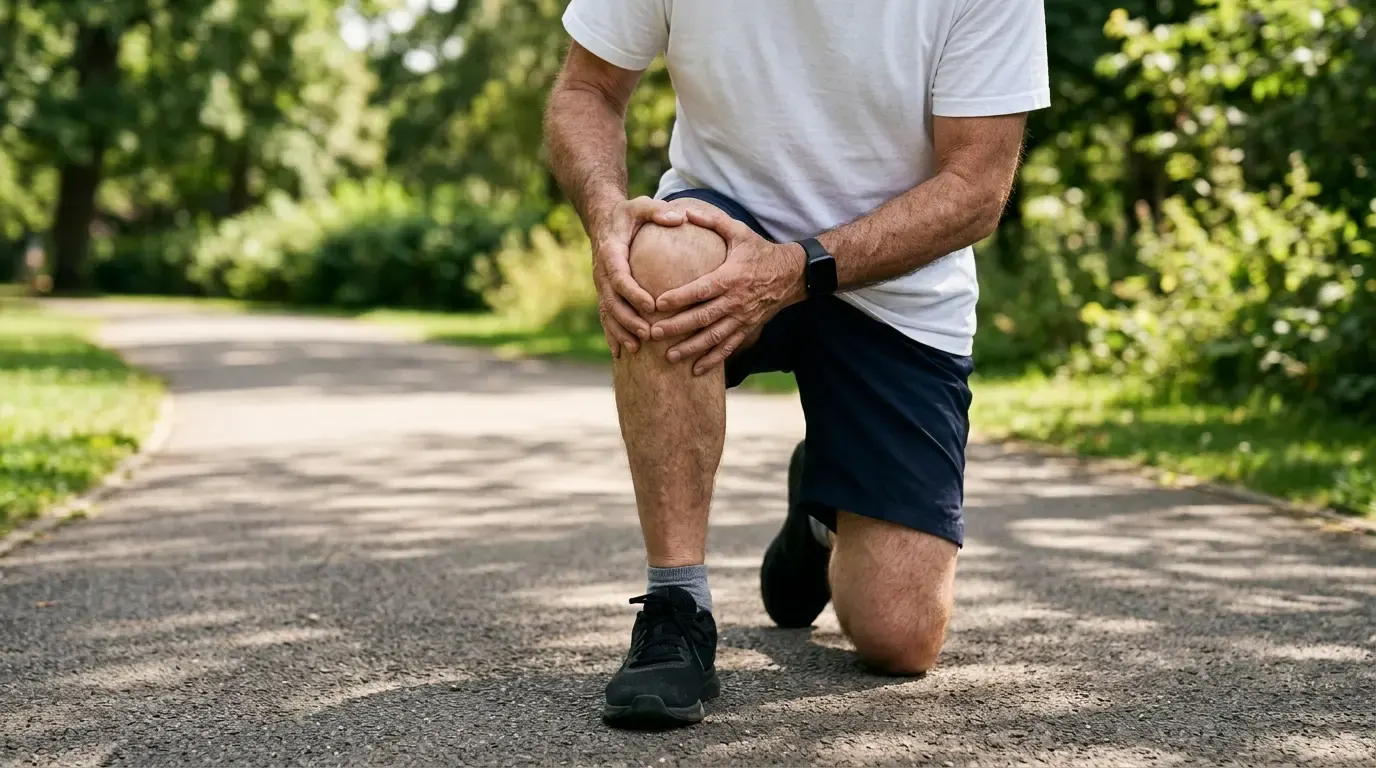
Kneeling knee pain often points to an underlying joint or soft tissue problem. Versus Arthritis estimates that 5.4 million people in the UK live with knee osteoarthritis. Many of them notice the first twinge on a hard floor, a garden path or a prayer mat. Bursitis, tendon irritation, kneecap pain and meniscus damage account for many other cases.
Pain on kneeling is a clue, not a nuisance. The location, the timing and the swelling reveal which structure is under strain. A clear picture guides sensible treatment and prevents needless fear of movement.
Why Kneeling Hurts the Knee in the First Place
Kneeling looks simple, yet it asks a great deal of the knee. Deep bending, direct pressure and a hard surface combine in a single position. That load explains most pain patterns.
How Kneeling Loads the Kneecap and Joint
Deep bending presses the kneecap firmly against the thigh bone. Doctors call this compression. It rises with body weight and with uneven kneeling habits. A person who always favours one knee overloads that side.
The front of the knee has very little natural padding. Pressure therefore reaches the bursa and the patellar tendon almost directly. The problem starts when that load outpaces what the tissue can tolerate.
Why Pain Can Linger After Kneeling
Irritated tissue rarely settles as soon as you stop. Knee pain after kneeling often appears later that evening or the next morning. Swelling and stiffness may add to the ache.
Tissues stay sensitive until inflammation calms down. Repeated sessions keep that cycle going. Knees don’t negotiate; they just file a complaint.
Who Is Most at Risk
Certain jobs and life stages raise the odds. Floor layers, plumbers, gardeners and cleaners kneel for hours at a time. Prayer and playing with young children add regular sessions too. Frequency matters more than any single long session.
Age plays a part as well. Cartilage thins gradually, and thigh muscles weaken without regular use. Osteoarthritis is also more common in women over 50. Earlier knee injuries, flat feet and uneven leg strength add further risk.
Knee Pain When Kneeling: Six Common Culprits
Several structures can trigger pain in this position. The pain location usually points to the likely cause. Six conditions explain many cases seen in clinic.
Prepatellar Bursitis (Housemaid’s Knee)
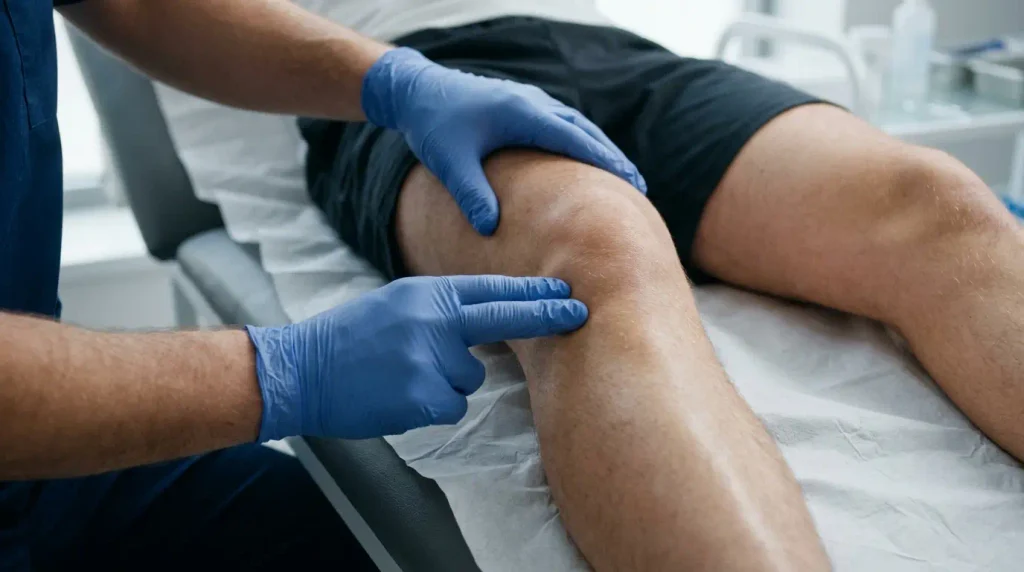
Bursae are small fluid-filled sacs that cushion tendons and bone. The prepatellar bursa sits directly in front of the kneecap. Repeated pressure inflames it. Knee bursitis when kneeling is common in gardeners, tilers, plumbers and carpet fitters.
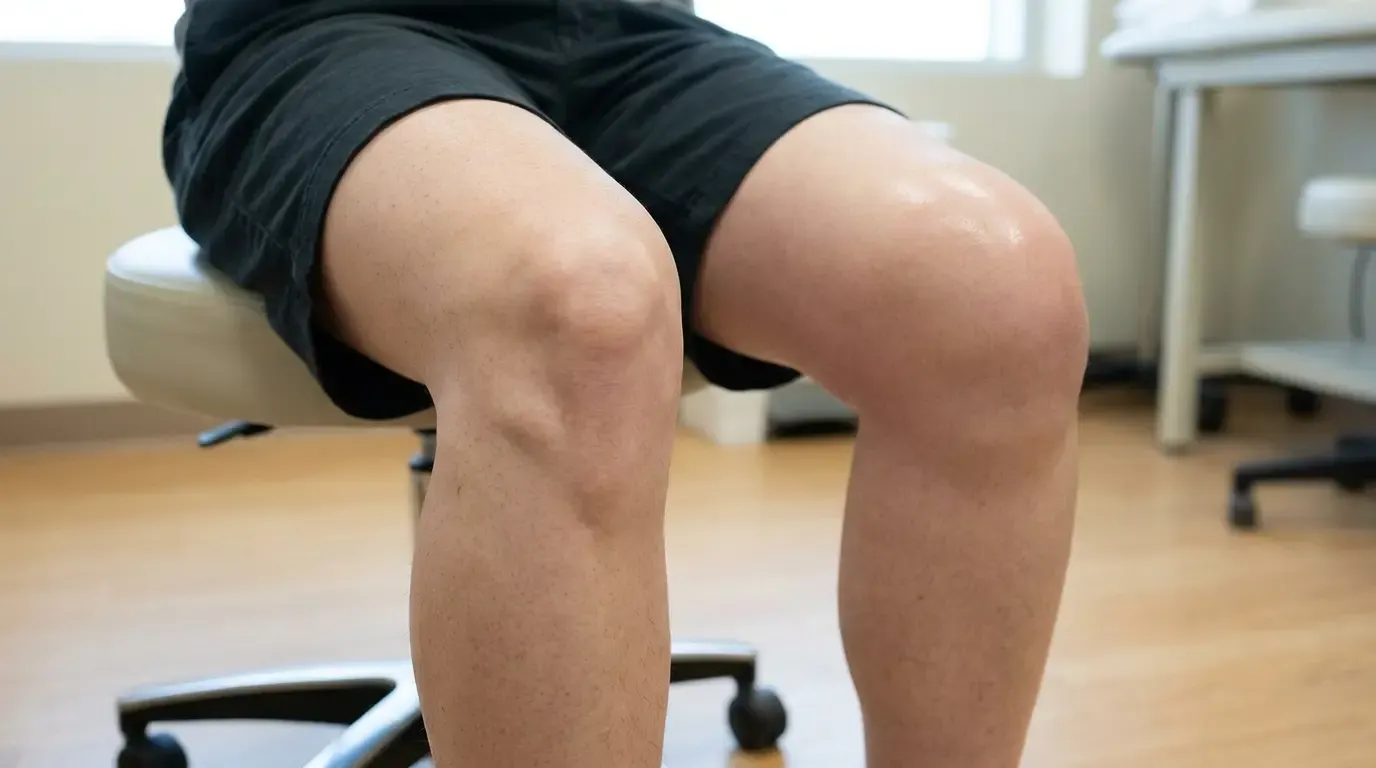
Swelling over the kneecap, warmth and tenderness are typical signs. A soft, egg-like lump on the front of the knee strongly suggests bursitis. Bursitis just below the kneecap is called infrapatellar bursitis, or clergyman’s knee.
Patellar Tendonitis (Jumper’s Knee)
The patellar tendon links the kneecap to the shin bone. Overuse inflames it, especially after jumping, running or heavy manual work. Doctors see patellar tendonitis complaints in athletes and tradespeople alike.
Pain sits just below the kneecap and sharpens under load. Stiffness often follows long periods of sitting. Tendon pain responds best to gradual loading rather than complete rest.
Kneecap Pain and Patellofemoral Pain Syndrome
Pain around or behind the kneecap is the main sign. Stairs, squatting and long periods of sitting also provoke it. Many people with patellofemoral pain syndrome kneeling on hard floors feel a dull ache behind the kneecap.
A direct knock can also irritate the joint surface. Kneecap pain when kneeling may then settle slowly.
Knee Osteoarthritis and Arthritis
Osteoarthritis gradually wears down the smooth surface of the joint. Stiffness, grinding and aching follow. Knee pain when kneeling in arthritis cases is usually osteoarthritis, which affects adults over 50 most often.
Clinicians often need to separate arthritis and joint pain by checking swelling, duration and stiffness. Stiffness after rest that eases within half an hour fits osteoarthritis. Rheumatoid arthritis and gout can also inflame the knee.
Meniscus Tear and Joint Line Pain
The menisci are two C-shaped cushions between the thigh bone and shin bone. Twisting injuries tear them, and age-related wear can do the same. Meniscus tear pain when kneeling usually sits along the inner or outer joint line.
Catching, locking or giving way strengthens the suspicion of a tear. Deep bending and twisting tend to make a torn meniscus worse. Swelling often builds over a day or two.
Lifestyle Factors That Raise the Risk
Body weight, weak thigh muscles, poor sleep and chronic stress all influence pain sensitivity. Tight calves and hips can change how the knee bends. Floor-based jobs add repeated pressure.
Small changes in these areas often reduce symptoms noticeably. Even modest weight loss lightens the load on the joint. Better sleep also lowers pain sensitivity.
Reading the Pain: Symptom Patterns
Location offers the quickest clue. The table below links common patterns with likely causes. It supports a discussion with a clinician but does not replace an assessment.
| Where it hurts | Typical extras | Likely cause |
| Front of the kneecap | Swelling, warmth, tenderness | Bursa irritation |
| Just below the kneecap | Sharp on loading, stiff after sitting | Patellar tendon strain |
| Around or behind the kneecap | Dull ache, worse on stairs | Patellofemoral pain |
| Whole joint | Morning stiffness, grinding | Osteoarthritis |
| Inner or outer joint line | Catching, locking, swelling | Meniscus tear |
If the knee hurts when kneeling on one side only, a local problem is likely. Pain that appears only on contact points toward pressure-sensitive tissue. Pain during deep bending without contact points toward the joint itself. Persistent kneeling knee pain deserves a proper assessment either way.
When to See a Doctor About Kneeling Knee Pain
Most flare-ups of knee pain when kneeling settle with simple care. Some signs demand faster action. Advice on knee pain when to see a doctor is simple, and the lists below set the threshold.
Urgent Warning Signs
- A hot, red, swollen knee with fever or feeling unwell
- Inability to put weight on the leg
- A misshapen knee after an injury
- A knee that locks or gives way suddenly
Infected bursitis needs same-day medical care. NHS 111 or an emergency department can advise.
Reasons to Book a Routine Appointment
- Swelling that lasts longer than a week or two
- Pain that continues beyond six weeks
- Night pain or pain at rest
- Repeated flare-ups that limit work or hobbies
Early assessment usually shortens the route to recovery.
How Doctors Diagnose the Cause
Diagnosis begins with a conversation and an examination. Scans add detail only when needed. This stepwise approach avoids unnecessary tests.
Clinical Assessment First
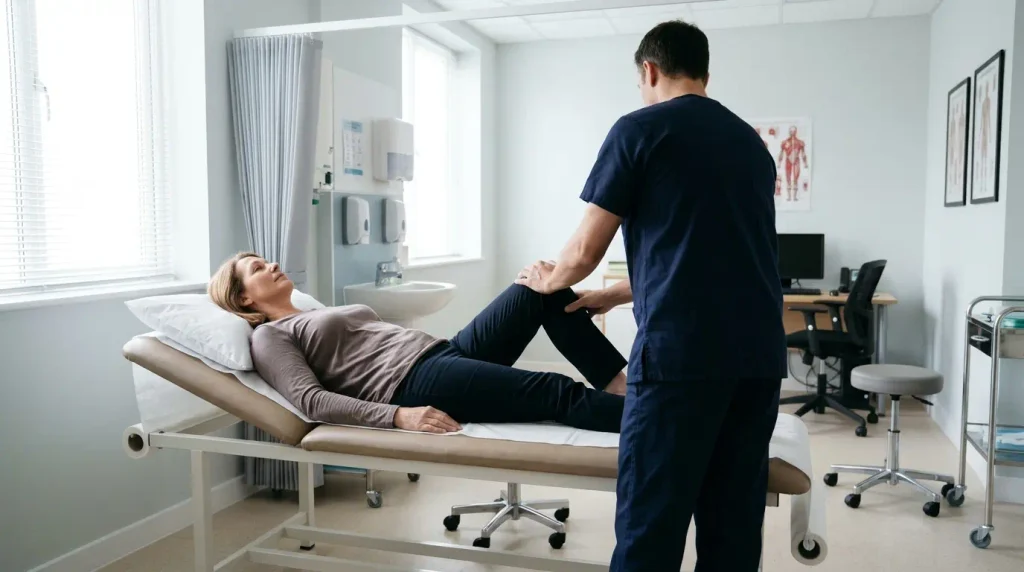
A clinician starts with a clinical assessment before any scan. The questions cover when pain began, which tasks trigger it and whether any injury occurred. Examination checks swelling, tenderness, movement and stability. Special tests probe the meniscus and ligaments.
Doctors build a picture of kneeling knee pain from the history before they order anything. Work patterns, hobbies and past injuries matter as much as the knee itself.
X-ray, Ultrasound and MRI
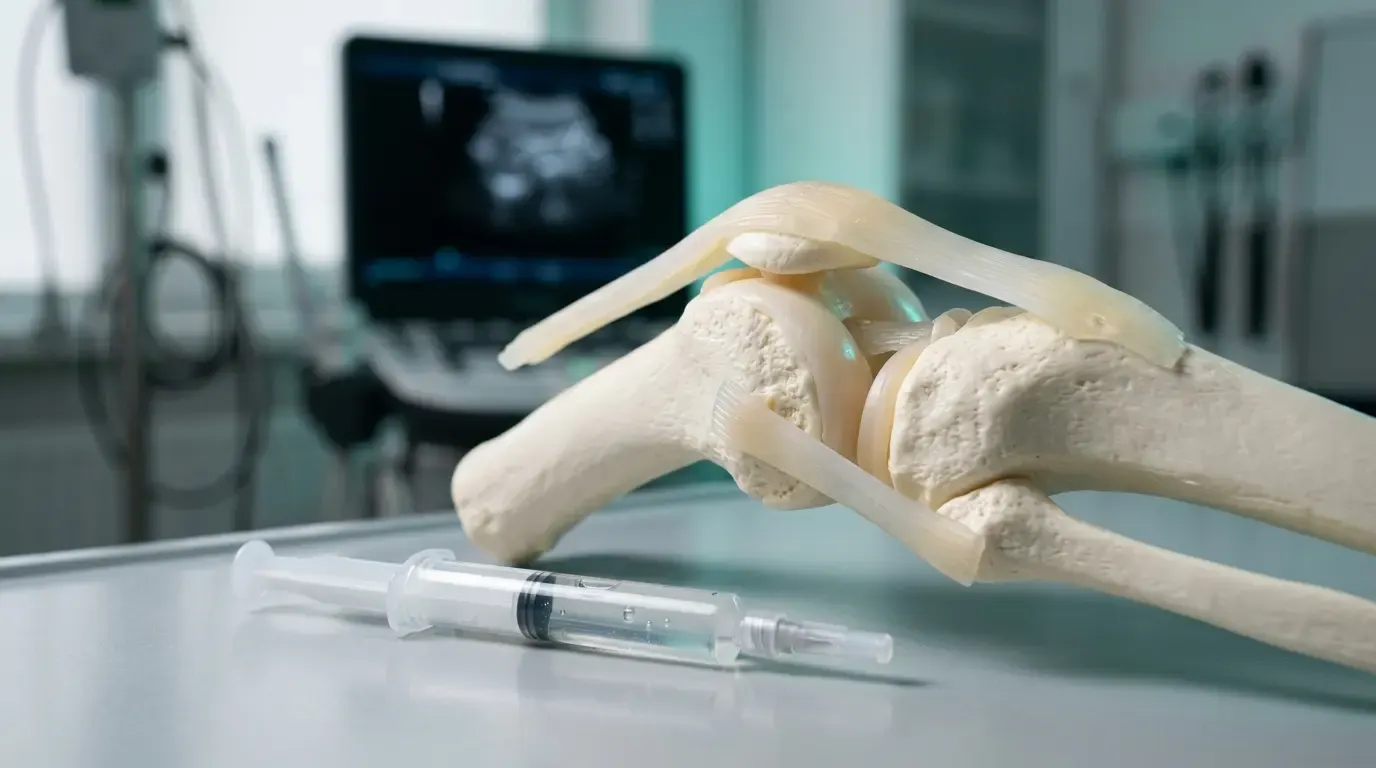
Not every case needs a knee pain diagnosis X-ray, MRI work-up. An X-ray shows joint space narrowing and bony changes from osteoarthritis. Ultrasound reveals fluid in a bursa or thickening in a tendon.
MRI shows soft tissue such as the meniscus, tendon and ligaments. Fluid from a swollen bursa may be sampled when infection is suspected.
Knee Pain When Kneeling Treatment: From Home Care to Specialist Options
Most kneeling knee pain responds to simple measures first. Treatment depends on the underlying condition. Early changes stop small problems from becoming stubborn ones.
How to Get Rid of Knee Pain From Kneeling at Home
Home care works best when started early. These steps suit most mild flare-ups.
- Rest smartly: swap kneeling jobs for standing or seated ones.
- Cool the area: use a cloth-wrapped cold pack for 10 to 15 minutes.
- Pad every surface: cushion unavoidable kneeling with foam or a folded towel.
- Keep moving: gentle walking and stretching prevent stiffness.
A pharmacist can advise on suitable pain relief.
Physiotherapy and Medical Treatment
Physiotherapy builds strength and mobility around the joint. A supervised programme also corrects movement habits that overload the knee. Clinicians may drain a swollen bursa or prescribe antibiotics for infection.
A steroid injection can calm stubborn inflammation, although pain sometimes returns. Surgery is rarely needed for bursitis. Osteoarthritis calls for a longer plan that combines exercise, weight management and pain relief.
Each kilogram lost removes roughly four kilograms of load from the knee during walking.
What Recovery Usually Looks Like
Mild bursitis often settles within two to three weeks once pressure stops. Tendon and kneecap pain usually need six to twelve weeks of steady strengthening. Arthritis symptoms rise and fall, so long-term management matters. Consistency beats intensity every time. Setbacks are normal. Progress is best judged over weeks rather than days.
Protecting the Knees at Work
Many jobs demand kneeling for hours. Small workplace changes cut the daily load without slowing the work.
Set Up the Job Site Smartly
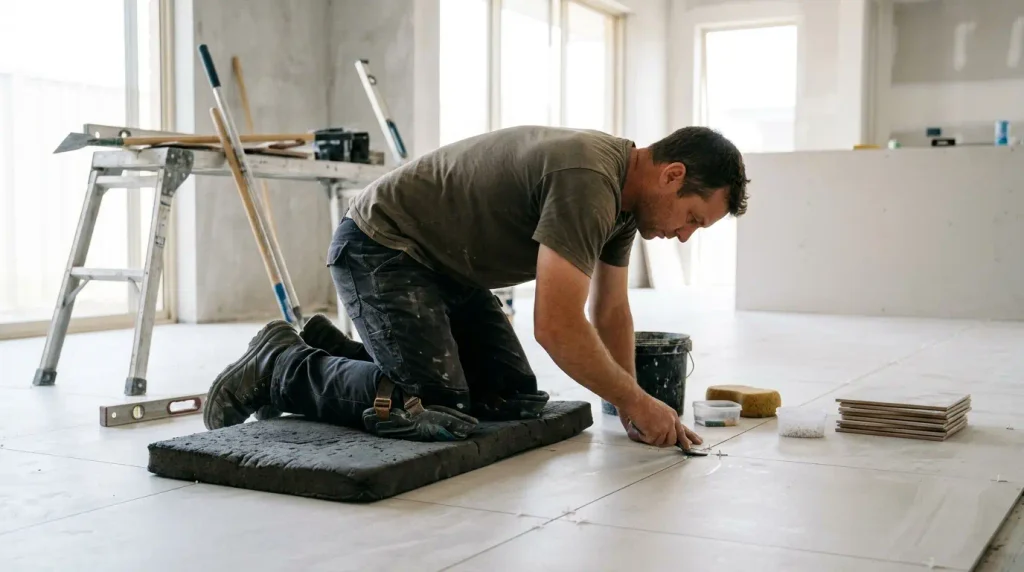
Raise the task where possible. Benches, trestles and long-handled tools keep work off the floor. Lifting the job is easier than lowering the body. A padded mat on concrete or tile makes a clear difference.
Rotate Tasks and Take Short Breaks
Alternate floor tasks with standing ones. A two-minute stand and stretch every 15 to 20 minutes resets the tissues. Employers often welcome these changes, because sick days cost more than mats.
Speak Up Early
Persistent pain affects safe work. Occupational health teams can advise on adjusted duties and protective equipment. Reporting early protects long-term earning power. Early action keeps careers on their feet, quite literally.
How to Kneel Without Knee Pain
Smart technique reduces pressure on the front of the knee. Padding and pacing do the rest. Small habits add up quickly.
Step-by-Step Kneeling Technique
- Choose the softest surface available.
- Place one hand on a sturdy support, such as a table or bench.
- Step one foot back and lower slowly onto that knee.
- Bring the second knee down only if the task needs it.
- Rise by reversing the movement and pushing through the front heel.
Change position every five to 10 minutes. Switch between both knees, one knee and hands and knees. Stand briefly and stretch. Kneeling knee pain often eases once position changes become routine.
Knee Pads and Cushioning
Knee pads for knee pain when kneeling should be wide, firm and secure. Dense foam or gel spreads pressure across the whole kneecap. Straps must never squeeze behind the knee.
A folded towel, thick yoga mat or foam kneeler also works well. Cushioning helps most with bursitis and kneecap irritation.
Gardening and Floor Work
Knee pain when gardening, kneeling on lawns and borders is common among keen gardeners. A kneeler stool, raised beds and long-handled tools reduce time on the ground. Alternating tasks every 10 minutes helps. The weeds can wait; the knees cannot.
Knee Pain When Kneeling Exercises: Strengthening and Stretching
Strong, flexible muscles share the load and calm irritated tissue. Strong muscles reduce kneeling knee pain by sharing that load. Strength matters more with age, because muscle loss and knee osteoarthritis often develop together.
Strengthening Moves
Straight leg raise. Lie on your back with one knee bent. Tighten the thigh of the straight leg, then lift it slowly. Hold for two seconds. Repeat ten times.
Mini squat. Hold a counter for balance. Bend the knees about a quarter of the way down. Rise slowly. Repeat ten times.
Glute bridge. Lie on your back with knees bent. Lift the hips until shoulders, hips and knees line up. Lower with control.
Stretches That Ease Tightness
Tight muscles make kneeling positions harder. Hold each stretch for 30 seconds on both sides.
- Quad stretch: stand, hold one ankle and draw the heel toward the buttock.
- Calf stretch: press the heel down with the leg straight behind.
- Hip flexor stretch: lunge forward gently with the back knee padded.
Rules for Safe Exercise
Mild discomfort is acceptable. Sharp pain means stop. Progress gradually over several weeks. Patients can also watch video guidance on non-surgical joint care on the Dr SNA Clinic YouTube channel.
Frequently Asked Questions
Why does kneeling hurt when walking feels fine?
Kneeling bends the knee deeply and presses directly on its front. Walking loads the knee differently, with less bend and no direct pressure. The bursa, tendon and kneecap therefore react first in kneeling. A clinician can identify which structure is involved.
Do knee pads help with knee pain when kneeling?
Knee pads spread pressure and shield the bursa from hard surfaces. They do not treat arthritis, tendon or meniscus problems. Combined with position changes and strengthening, they reduce flare-ups. Wide, firm pads with secure straps work best.
Is kneeling safe with knee osteoarthritis?
Kneeling is not forbidden with osteoarthritis. Many people manage it with padding, shorter sessions and stronger thigh muscles. Pain that lingers for hours signals overload. Reducing the duration usually helps.
Can a meniscus tear cause pain on kneeling?
Yes. Meniscus tear pain when kneeling often sits along the joint line and may come with catching or locking. Twisting on a bent knee makes it worse. A clinical examination and MRI confirm the diagnosis.
How long does kneeling pain take to settle?
Mild bursitis or overuse pain often eases within a few weeks with rest and padding. Pain beyond six weeks needs assessment. Hot, red swelling needs urgent care. Strengthening speeds recovery of tendon and kneecap pain over several weeks.
Kneeling knee pain usually comes from bursitis, tendon irritation, kneecap problems, arthritis or a meniscus tear. Early assessment, smarter kneeling habits and steady strengthening protect the joint. Persistent or severe symptoms deserve a proper diagnosis rather than guesswork.
Mr Syed Nadeem Abbas is a non-surgical knee and joint pain specialist. Anyone with lasting symptoms can book a consultation for a clear diagnosis.
Read more: Synovial Fluid in the Knee Explained With Its Causes and Treatment
Read more: Knee Pain in Women Is Not the Same as Knee Pain in Men