Knee Injections Fail In Advanced Arthritis For Several Clear Reasons

✅ Medically reviewed | Updated september 2026
Knee injections fail in advanced arthritis more often than many patients expect. Osteoarthritis affects more than eight million people across the UK, and the knee remains the joint most commonly involved. Steroid, hyaluronic acid and PRP treatments often help during early or moderate disease. Relief becomes shorter and less reliable once cartilage loss reaches a severe stage. Persistent pain despite repeated injections usually signals that the joint has moved past what these treatments can manage. Understanding the structural reasons behind this shift helps patients set realistic expectations before choosing a next step. Arthrosamid injection London consultations increasingly involve patients whose previous injections have stopped working.
How Knee Osteoarthritis Progresses To An Advanced Stage
Early And Moderate Stage Changes
Cartilage cushions the joint between the femur and tibia. In early osteoarthritis, this cushion thins gradually rather than disappearing. Pain tends to appear after activity and settles with rest. Moderate disease brings more frequent discomfort and a visible narrowing of joint space on imaging. Small bone spurs may begin to form around the joint margins during this period. Injections generally perform well across both stages, since some cartilage still separates the bones.
Doctors often describe this progression using a four-point grading system, running from grade 1 through to grade 4. This grading gives clinicians a shared language for describing severity during a consultation. Grade 1 involves minor bone spur formation with little or no joint space loss. Grade 2 shows possible narrowing of the joint space alongside early bone spurs. Grade 3 brings clear joint space narrowing, more bone spurs and mild bone changes. Each step up this scale tends to shorten the benefit of an injection.
What Marks Stage 4 Knee Arthritis
Stage 4 knee arthritis describes the most severe form of the condition on this scale. Cartilage loss becomes extensive, and the joint space narrows sharply on X-ray. Many patients develop bone-on-bone contact, where the femur and tibia touch directly. Bone spurs, swelling and visible deformity often accompany this stage. Movement becomes noticeably restricted, and pain frequently persists at rest as well as during activity. Patients at this stage often describe a knee that feels unstable rather than simply painful.
Advanced Arthritis Knee Pain
Several structural factors explain why knee injections fail in advanced arthritis. Each treatment type targets a specific mechanism. Severe joint damage limits what that mechanism can realistically achieve, regardless of which injection type is chosen.
Severe Cartilage Loss Limits The Benefit
Steroid, hyaluronic acid and PRP injections work within the remaining joint space. Once cartilage has almost disappeared, that space narrows or closes completely. Injections cannot rebuild lost cartilage, regardless of type. The mechanical problem remains even when inflammation temporarily settles. A joint with little cushioning left has very little room for an injected fluid to act within.
Bone-On-Bone Contact Changes The Picture
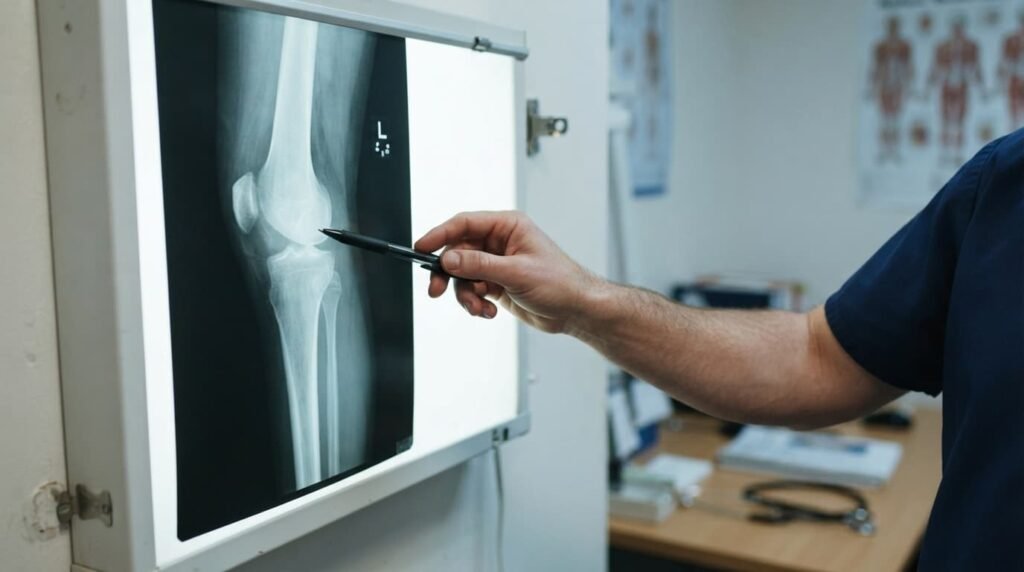
Bone-on-bone knee arthritis removes the cushioning that injections rely on. Friction between exposed bone surfaces continues after treatment. Pain often returns within days or weeks in this situation. Structural damage, rather than inflammation alone, drives ongoing symptoms. Nerve endings within the exposed bone surface can also become more sensitive over time. This partly explains why pain feels sharper at this stage compared with earlier disease.
Reduced Response After Repeated Injections
Many patients report that knee injections not working for arthritis becomes a pattern over time. Each round of treatment tends to bring less relief than the last. Disease progression and cumulative joint damage both contribute to this decline. Cortisone injections for knee arthritis patients have relied on for years often show this trend clearly. Some clinicians also limit repeat steroid courses, since frequent use may affect cartilage quality over the long term. A shrinking window of relief between injections is usually the first clue.
Joint Deformity And Alignment Problems
Advanced arthritis can cause bowing of the legs, known as varus or valgus deformity. Uneven weight distribution places extra strain on the more damaged side of the joint. Bone spurs may restrict the normal range of motion further. These structural changes cannot be corrected by any injection. Alignment problems usually need a different assessment pathway, often involving imaging beyond a standard X-ray.
Who Tends To Experience Injection Failure Earlier
Patient factors help explain why knee injections fail in advanced arthritis sooner for some people than others. Some factors make earlier injection failure more likely. Age is one factor, since cartilage naturally thins over decades of use. A higher body weight increases mechanical load through the knee with every step. Previous knee injury, including ligament or meniscus tears, can accelerate cartilage wear. Physically demanding occupations and certain sports also raise the risk over time. A family history of osteoarthritis can play a role as well.
None of these factors guarantees injection failure on their own, but they shift the odds. A thorough history helps a clinician judge how quickly a particular knee is likely to change. Smoking and poorly controlled blood sugar are two further factors that can affect joint healing capacity. Patients with several of these factors together often notice a shorter window of relief from each injection.
Living With Advanced Knee Arthritis Day To Day
Daily activities often change noticeably once arthritis reaches an advanced stage. Stairs, kneeling and longer walks tend to become harder first. Sleep quality can suffer when pain flares overnight or after activity. Many patients adjust footwear, seating or daily routines to manage symptoms in the meantime. These adjustments can help comfort, but they do not address the underlying joint damage. A proper assessment remains the clearest way to understand what treatment options still apply.
Steroid, Hyaluronic Acid And PRP Injections Explained
Cortisone Injections Knee Arthritis Relief Often Fades
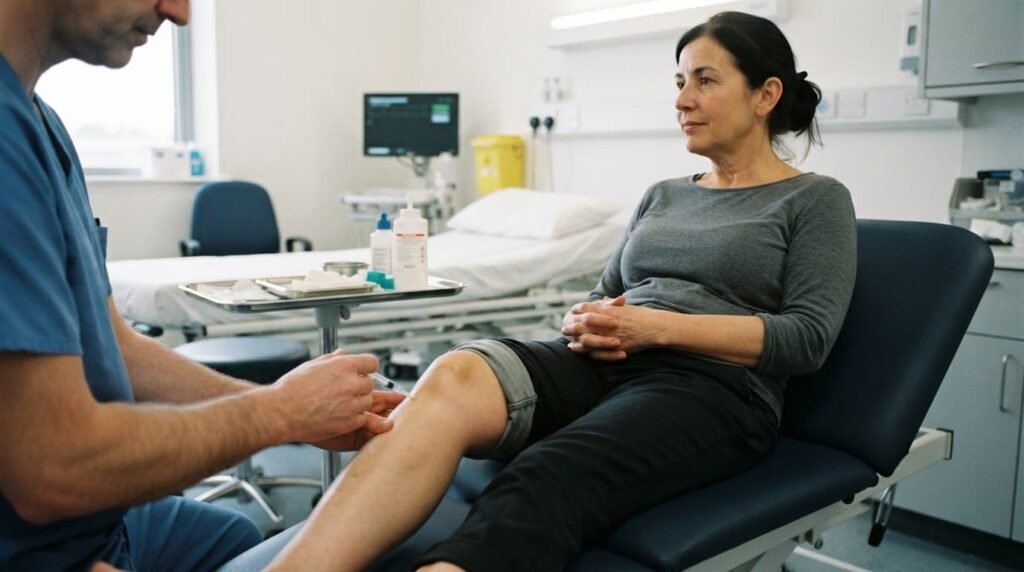
Cortisone reduces inflammation and swelling within the joint. Relief can arrive quickly, sometimes within a few days. The effect is anti-inflammatory, not structural, so it does not last indefinitely. Repeated courses may become less effective as arthritis advances. Most courses are spaced several months apart for this reason, partly to protect the joint from overuse of steroids.
Hyaluronic Acid Lubrication Has Its Limits
Hyaluronic acid injections for knee treatments aim to improve joint lubrication. The gel mimics natural synovial fluid and reduces friction during movement. Benefits typically last a few months in suitable candidates. In advanced disease, cartilage loss outweighs any lubrication benefit. The joint environment changes enough that improved gliding alone cannot solve the pain.
PRP Injections Knee Arthritis Response Varies By Stage
PRP injections for knee arthritis use concentrated platelets from a blood sample. Growth factors within the platelets may reduce inflammation and support healing. Early-stage patients often notice a meaningful benefit over several months. Once joint damage becomes severe, that benefit tends to shrink considerably. Results also vary depending on how the platelet sample is prepared and delivered.
Signs That Knee Injections Are No Longer Working
Certain patterns suggest advanced arthritis has moved beyond what injections can manage:
- Pain relief lasting only a few weeks after each injection
- Discomfort returning quickly, sometimes within days
- Persistent swelling or stiffness between treatments
- Growing difficulty with stairs or longer walks
- Knee pain disturbing sleep regularly
- A noticeable change in walking pattern or confidence
These signs often point toward treatment options after knee injections fail, rather than another repeat course. A shrinking gap between treatment and symptom return is usually the clearest signal of all.
Arthrosamid Injection London As A Different Approach
How The Hydrogel Works Inside The Joint
Arthrosamid takes a different mechanical route compared with steroid, hyaluronic acid or PRP treatments. The hydrogel is made from water and cross-linked polyacrylamide. It integrates with the synovial lining rather than sitting purely within the joint space. Part 7 of the clinic’s knee osteoarthritis video series explains this process in more depth. That video, available on the Dr SNA Clinic YouTube channel, covers how Arthrosamid behaves once injected. Once in place, the hydrogel is designed to remain rather than break down like hyaluronic acid.
Who May Be Considered For Arthrosamid Injection Near Me

Suitability depends on individual assessment, not on symptoms alone. Patients typically considered include those with confirmed knee osteoarthritis and ongoing pain. A history of limited relief from steroid, hyaluronic acid or PRP treatments is common among candidates. Imaging review and medical history both shape the final decision. The procedure itself is usually completed within around thirty minutes under local anaesthetic.
What Arthrosamid Cannot Promise In Very Advanced Cases
Arthrosamid does not reverse existing joint damage, and results vary between patients. Very advanced arthritis, including cases with direct bone contact, needs a more careful discussion before treatment proceeds. Some patients in this category remain suitable after full assessment. Others are guided toward a different pathway based on imaging and symptoms. Setting realistic expectations before treatment remains an important part of every consultation.
Treatment Options After Knee Injections Fail
Once knee injections fail in advanced arthritis, treatment planning usually shifts toward a broader set of options.
Physiotherapy And Supportive Measures
Physiotherapy strengthens the muscles surrounding the knee joint. Stronger supporting muscles can reduce pressure on damaged cartilage. Bracing may help redistribute load across the joint during daily activity. Weight management can also ease mechanical strain on the knee over time. Walking aids offer short-term support while other options are being explored. These measures often work alongside other treatment decisions rather than replacing them entirely.
Surgical Options For Severe Joint Damage
Partial or total knee replacement remains the most reliable option for severe structural damage. Surgery replaces the damaged joint surfaces with artificial components. Recovery generally spans several weeks, with physiotherapy supporting the process throughout. This route becomes more relevant once non-surgical options, including Arthrosamid, are unlikely to help. Readers weighing this decision may find common mistakes after knee replacement useful when planning recovery.
What A Knee Assessment Usually Involves
A structured assessment reviews symptoms, imaging and previous treatment history together. The clinician typically asks which activities are affected, such as walking, stairs or sleep. Swelling and joint effusion sometimes need addressing before any injection decision is made. The assessment then outlines whether Arthrosamid, another non-surgical route, or surgical referral fits the case best. A private consultation to check Arthrosamid suitability typically forms the starting point for this decision. Bringing existing imaging or clinic letters to the appointment can help speed up the process considerably. Patients are also usually asked about allergy history and any previous reactions to injections. This information helps rule out safety concerns before any treatment is agreed.

What Happens If Advanced Arthritis Is Left Unassessed
Delaying assessment does not usually stop arthritis from progressing further. Pain and stiffness tend to increase gradually without intervention. Muscle weakness around the joint can also develop from reduced activity over time. An earlier assessment generally means more treatment options remain on the table.
Frequently Asked Questions
Can Arthrosamid help with bone-on-bone knee arthritis?
Some patients with this level of joint damage remain suitable after full assessment. Others need a different pathway due to the extent of structural damage. A private consultation, including imaging review, determines suitability on an individual basis.
Do hyaluronic acid injections knee treatments still help once arthritis reaches an advanced stage?
Benefit tends to reduce significantly by the time arthritis reaches this advanced grade. Lubrication alone cannot compensate for extensive cartilage loss at this point. Many patients explore alternative treatment options once this happens.
What treatment options after knee injections fail are usually considered?
Physiotherapy, bracing, and an Arthrosamid injection London consultation are common non-surgical options. Partial or total knee replacement remains an option for severe structural damage. The right choice depends on imaging, symptoms and individual goals.
How is this advanced stage of knee arthritis usually confirmed?
An X-ray usually shows the extent of joint space narrowing and any bone spurs present. An MRI may add further detail about cartilage and soft tissue condition. A clinical examination alongside imaging gives the fullest picture of severity.
Is it normal for pain to return quickly after a knee injection?
A fast return of pain often signals that arthritis has progressed significantly. It does not automatically rule out every non-surgical option. A fresh assessment helps clarify which treatments still make sense.
Knee injections fail in advanced arthritis largely because they cannot rebuild lost cartilage or reverse bone-on-bone contact. Steroid, hyaluronic acid and PRP treatments each have a role in earlier disease, with clear limits once damage becomes severe. Mr Syed Nadeem Abbas, an orthopaedic specialist in non-surgical knee care, reviews each case before recommending next steps.
Read more: PRP For Knee Osteoarthritis Offers A Non-Surgical Route To Lasting Relief
Read more: Golf and Knee Health Facts: Every Golfer Should Know Before the Next Round