
✅ Medically reviewed
Patellar tendinopathy is a common overuse problem of the tendon just below the kneecap. It causes pain at the front of the knee during jumping, squatting, running and climbing stairs. Most people know it as jumper’s knee, although desk workers and gardeners get it too. The outlook is positive. Most cases settle with smart load control and steady strengthening. This guide explains symptoms, causes, tests, exercises, recovery time and prevention in plain language. It draws on NHS and clinical guidance, then adds practical detail that short leaflets often skip.
What Is Patellar Tendinopathy?
The patellar tendon links the kneecap to the shin bone. It passes thigh muscle force into every step, jump and squat. When repeated load outpaces recovery, the tendon becomes painful and less tolerant of stress.
How the Patellar Tendon Works
The quadriceps sit at the front of the thigh. They straighten the knee during walking, running and standing from a chair. The tendon carries that force across the kneecap to the shin bone. A healthy tendon copes with several times body weight during a jump. Tendons adapt slowly, however. Sudden spikes in load create tiny structural changes. Those changes build up, and pain follows.
Tendonitis, Tendinitis or Tendinopathy?
Clinicians once blamed inflammation alone. That history explains the older “itis” endings. Patellar tendonitis remains a common label in clinics and online. Doctors also write patellar tendinitis in notes and letters. Research now shows structural change in long-standing cases, with little true inflammation. Patellar tendinopathy therefore describes persistent problems more accurately. Searches for tendonitis in the knee usually lead to this same diagnosis.
Patellar Tendonitis Symptoms and Warning Signs
Symptoms usually creep in slowly. Pain often starts as a nuisance during sport, then appears in daily tasks. Spotting the pattern early shortens recovery.
Pain Below the Kneecap When Squatting or Climbing Stairs
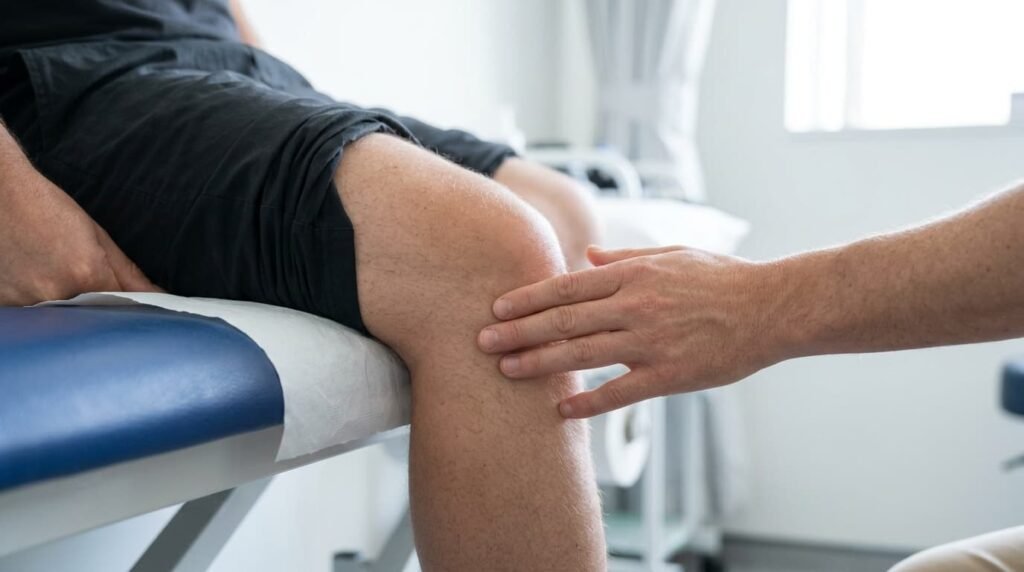
The classic sign is pain below the kneecap that worsens with load. It sits over the tendon, roughly a finger-width under the patella. Squats, lunges, jumps, and landings provoke it. Pain below the kneecap when squatting or climbing stairs often brings people to a clinic. Light pressure over the tendon usually feels tender.
Stiffness and Warm-Up Pain
Knee stiffness in the morning can appear, though it usually eases within minutes. Pain often fades during warm-up, then returns after activity. That pattern helps clinicians separate tendon pain from joint pain. Stiffness lasting longer than half an hour deserves a check for arthritis, as this guide to stiff joints explains. Some people notice mild swelling or a slightly thickened tendon. Thigh strength may also feel weaker on the affected side.
Running and Stair Triggers
Knee pain when running often follows a jump in mileage, a switch to hills or new shoes. Knee pain going up and down stairs appears because the tendon works hard to control the knee. Downhill walking and deep sitting produce similar pain. Pain that builds during a session and lingers the next day signals an overloaded tendon.
Other Causes of Front-of-Knee Pain
Several problems mimic tendon pain. Patellofemoral pain, fat pad irritation, bursitis and meniscal tears all hurt at the front of the knee. Hip problems can also refer pain to the knee. Knee osteoarthritis behaves differently. It brings joint-line pain, swelling and longer stiffness. Treatment differs too. Arthrosamid injection suits selected osteoarthritis cases rather than tendon pain.
Jumper’s Knee Causes and Risk Factors
Tendon pain rarely appears from nowhere. It follows a mismatch between load and capacity. Several factors tilt that balance.
Load Without Enough Recovery
Jumper’s knee causes usually start with training errors. A new sport, extra sessions or a sudden rise in hill work can trigger it. Repeated jumps, sprints and direction changes add stress. Year-round training without a rest period compounds the problem. Heavy manual jobs with repeated kneeling and stairs create the same pattern.
Body and Lifestyle Factors
NHS Lanarkshire lists tight thigh muscles, weak quadriceps and higher body weight as contributors. Sudden weight gain, worn footwear and hard surfaces also play a part. Muscle loss with ageing lowers the tendon’s safety margin. Small daily habits change tendon load more than most people expect.
Who Develops It
The condition appears most often between ages 15 and 30. Older active adults develop it too. Cleveland Clinic also lists males, people over 40 and jumping-sport athletes as higher-risk groups. The idea that only athletes get this injury is a myth. Anyone with repetitive knee load can develop it.
How Clinicians Diagnose Patellar Tendinopathy
Diagnosis rests on history and examination. Scans help in selected cases only. An early diagnosis speeds up a targeted plan.
Clinical Assessment
A clinician asks about onset, training changes and aggravating tasks. Pressing over the tendon reproduces the pain. A single-leg squat or jump test recreates symptoms. The clinician compares both knees and checks hips, thigh strength and foot posture. A thorough clinical assessment sits behind most accurate knee diagnoses.
When Scans Help
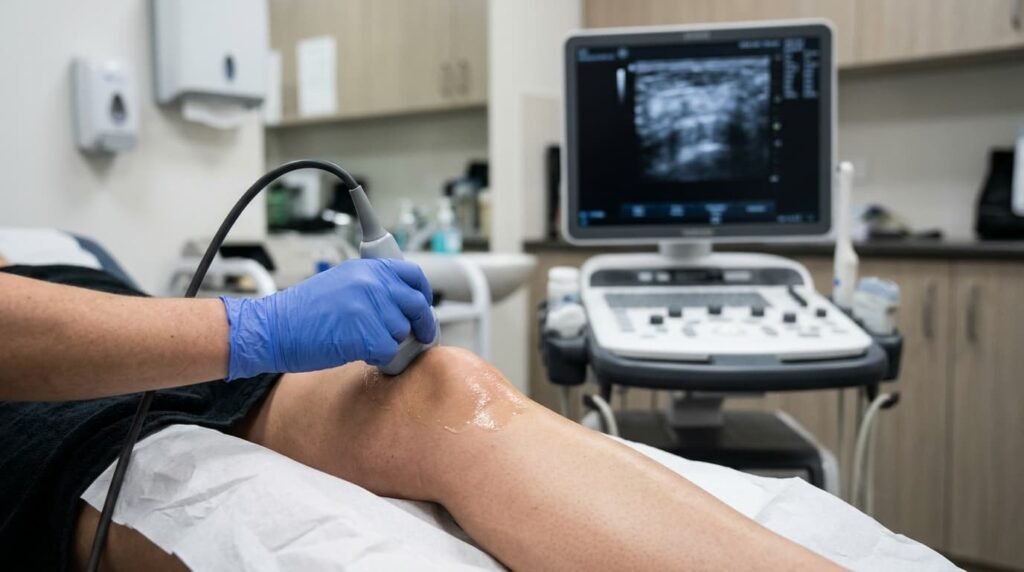
Ultrasound shows tendon thickness and blood flow. MRI maps the tendon, cartilage and menisci. A knee MRI scan can rule out other damage. Scan findings do not always match pain. Many pain-free tendons look abnormal. Clinicians therefore treat the person, not the picture.
Jumper’s Knee Treatment: First-Line Care
Most people recover without surgery. Care combines load control, strengthening and patience. The first days focus on calming pain.
POLICE Protocol Injury Care
The POLICE protocol injury approach covers the first 24 to 72 hours. It stands for protection, optimal loading, ice, compression and elevation. Optimal loading replaces older rest-only advice. Gentle, controlled movement supports healing better than total rest. Compression should stay light. Bandages must never stay on overnight.
Ice or Heat for Knee Tendonitis
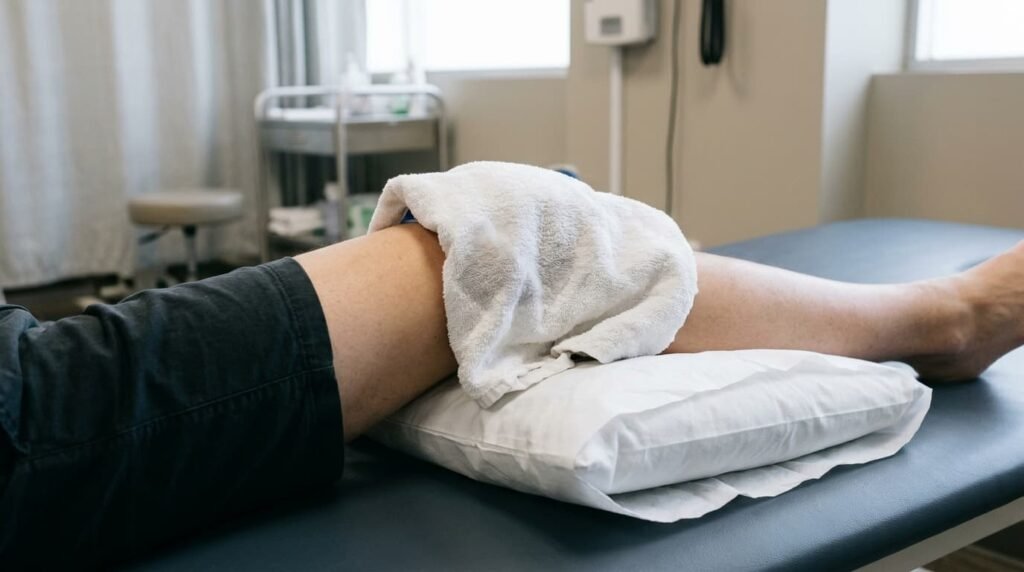
Ice suits the first few days or a flare-up. Wrap crushed ice or frozen peas in a damp towel. Apply it for 10 to 20 minutes, two to three times daily. Avoid ice over numb skin or open wounds. After two or three days, gentle heat may feel more soothing. Use an insulated hot water bottle for 10 to 15 minutes.
Pacing and Spacing
Pacing and spacing in pain management keep activity within tolerable limits. Spacing spreads demanding tasks across the week. A baseline helps. It means the amount manageable on a good or bad day without a flare. Plans then grow from that baseline.
Pain Activity Ladder
The pain activity ladder grades activities as green, amber or red. Green means mild irritation. Red means severe pain. NHS Lanarkshire advises keeping pain below 3 out of 10 during activity. Pain should also settle within 24 hours. A red-zone result signals overload, so the next session needs less volume.
Paracetamol vs Ibuprofen for Knee Pain
Paracetamol eases pain without reducing swelling. Ibuprofen, an NSAID, also reduces inflammation. NSAIDs do not suit everyone, including some people with asthma, stomach ulcers, kidney disease or heart conditions. Medicines can help movement, but they do not rebuild the tendon. A pharmacist or GP can advise on safe choices.
Patellar Tendinopathy Rehabilitation and Exercises
Graded exercise sits at the centre of recovery. NHS physiotherapists report that 6 to 12 weeks of specific exercise may pass before pain changes. A full programme can exceed three months. Pain response, not the calendar, decides progression.
Stage One: Isometric Holds
Patellar tendonitis exercises usually begin with isometric holds. The muscle works hard while the knee stays still. Examples include a wall sit or a seated leg extension hold. Physiotherapists often prescribe several holds lasting 30 to 45 seconds. These holds may calm pain in the early phase. Each exercise should feel easy before progression.
Stage Two: Strengthening
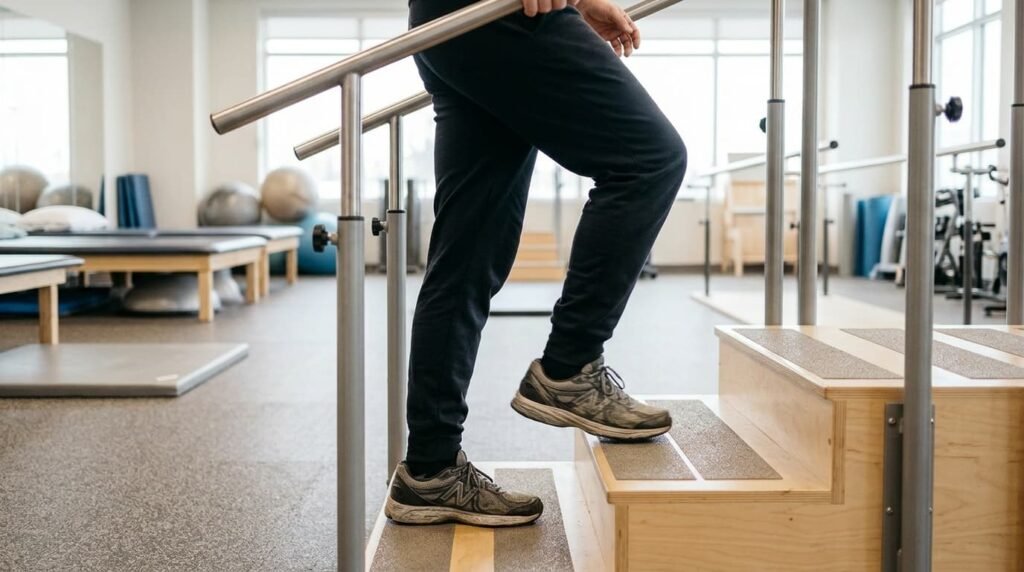
Patellar tendinopathy strengthening exercises follow. Slow, heavy resistance work loads the tendon progressively. Leg press, squats and step-downs are common choices. Many programmes use three sessions weekly, with a slow lowering phase. Jumper’s knee exercises also include balance work plus calf and hip strengthening. A stronger chain absorbs force before the tendon does.
Stage Three: Return to Jumping
Late-stage work trains the tendon to store and release energy. Skipping, hopping, and low jumps come first. Sport-specific drills follow. Readiness means pain in the green zone, near-equal leg strength and confident landing. Rushing this stage often causes setbacks.
Patellar Tendonitis Physical Therapy
Patellar tendonitis physical therapy adds a structured plan and expert feedback. A therapist checks technique, footwear and training load. NHS pathways in many areas allow self-referral, and GPs can refer too. Private physiotherapy often offers quicker appointments. NHS Lanarkshire suggests referral if symptoms persist after 6 to 12 weeks. Massage may ease muscle tightness around the knee. Drug-free habits also support the plan.
Taping and Knee Braces
Supports may reduce pain during activity. They do not heal the tendon.
Patellar tendonitis taping aims to offload the tendon or change kneecap position. Evidence remains limited, so results vary. A knee brace for patellar tendonitis, such as an infrapatellar strap, presses over the tendon. Some people feel less pain during sport with one. Clinicians suggest the type that fits each case. Supports work best alongside strengthening, not instead of it.
Walking, Cycling and Speed: Common Questions
Everyday activity questions come up constantly. Short, practical answers follow.
Is Walking Bad for Patellar Tendonitis?
Usually not. Gentle walking keeps the knee moving and reduces stiffness. Pain should stay in the green zone. Steep hills and long stair sessions load the tendon more. Stop if sharp pain appears.
Is Cycling Good for Patellar Tendonitis?
Often yes. NHS guidance names cycling and swimming as low-impact options. A saddle set too low increases knee bend and tendon load. Raising it slightly may help if the front of the knee aches.
How to Fix Patellar Tendonitis Fast
How to fix patellar tendonitis fast has an honest answer. No shortcut exists. The quickest route is early load control plus steady strengthening. Complete rest often delays recovery. Rushing the return sets it back.
Will Patellar Tendonitis Heal Itself?
Sometimes, in mild cases. The tendon needs reduced stress to recover. Pain that continues despite rest usually needs a plan.
Patellar Tendonitis Recovery Time: How Long to Heal?
Recovery varies widely. Mild cases often improve within a few weeks after load reduction. Severe or long-standing cases take months. NHS Lanarkshire quotes more than three months for a full exercise programme. Flare-ups usually settle within six weeks. Patellar tendinopathy recovery time shortens with early care, steady strengthening and sensible pacing. Smoking and higher body weight may slow tissue recovery. Symptoms lasting beyond 6 to 12 weeks despite self-care deserve professional review.
Complications: Tendon Tear, Rupture and Surgery
Serious tendon injury is rare. Warning signs still deserve attention.
Patellar Tendon Tear and Rupture
A patellar tendon tear is uncommon. Continued loading through pain raises the risk. Patellar tendon rupture is a sudden injury. Typical signs include a pop or snap, severe pain, swelling and inability to straighten the knee. NHS advice is to call 111 urgently. A hot, red, swollen knee with fever also needs same-day medical advice.
Patellar Tendonitis Surgery
Patellar tendonitis surgery is rare. Specialists consider it after months of well-delivered rehabilitation fail, or when a tear exists. Most people never need it.
Prevention
Prevention mirrors rehabilitation. Gradual load and regular strength work protect the tendon.
- Warm up before sport and cool down afterwards
- Increase training load gradually
- Schedule rest days and off-season breaks
- Keep thigh and hip strength up all year
- Choose supportive footwear and softer surfaces where possible
- Manage body weight
- Stop playing through pain
Fear of movement can slow progress after injury. Graded loading rebuilds both tendon strength and confidence.
Frequently Asked Questions
What are the main patellar tendinopathy symptoms?
Pain below the kneecap leads the list. Tenderness and stiffness follow. Symptoms worsen with jumping, squatting and stairs.
Which jumper’s knee treatment works best?
A graded loading programme has the strongest support. Activity changes, pacing and strengthening form the core. Medicines and supports play a secondary role.
How long does patellar tendinopathy physiotherapy take?
Noticeable change often needs 6 to 12 weeks. A full programme can last over three months. Progress depends on pain response and consistency.
Is patellar tendon pain serious?
Usually not. Persistent pain still deserves assessment. A sudden pop with severe pain needs urgent care.
Can patellar tendonitis lead to a tear?
Rarely. Playing through worsening pain raises the risk. Early load control lowers it.
Do patellar tendinopathy exercises hurt?
Mild discomfort is acceptable within the green zone. Sharp or lingering pain signals too much load.
Patellar tendinopathy responds well to patient, structured care. Load control, pacing and progressive strengthening form the foundation. Medicines, taping and braces add short-term comfort. Recovery takes weeks to months, but most people return to full activity. Warning signs such as a sudden pop or a hot, swollen knee need urgent attention.
Mr Syed Nadeem Abbas brings trauma and orthopaedic training to every consultation. He reviews symptoms, history and imaging before recommending the next step.
Read more: Radiotherapy for Arthritis Calms Painful Joints Using Very Low Doses of Radiation
Read more: No Proven Treatment Makes Knee Cartilage Grow Back in Osteoarthritis


