
✅ Medically reviewed
Fear of movement osteoarthritis describes a worry that moving a painful knee will cause further harm. Versus Arthritis estimates that 5.4 million people in the UK live with knee osteoarthritis. Many of them avoid walking, stairs and exercise because activity hurts or feels risky.
Research supports this picture. A University of North Carolina study assessed 350 people with knee osteoarthritis. Of these, 77% agreed with at least one fear-of-movement statement. Overall, 36% endorsed three or more.
Pain triggers fear, fear triggers rest, and rest weakens the knee. A weaker knee then hurts more, and the cycle tightens. Clear information, gradual activity and the right clinical support can break it.
What fear of movement looks like in knee osteoarthritis
Clinicians call this response kinesiophobia. It means an intense fear of movement, based on a belief that activity will cause pain or injury. The fear is not laziness. It is a learned protective response to real pain.
Fear versus sensible caution
A cautious patient still walks on a good day. A fearful patient avoids stairs, shops and the garden altogether. Caution bends with the day, while fear stays fixed.
Everyday signs worth noticing
Fear of exercise: knee osteoarthritis tends to show itself through small daily habits.
- Avoiding stairs, kerbs and uneven ground
- Skipping a walk after one painful day
- Limping or guarding the knee without sharp pain
- Gripping handrails and furniture too tightly
- Cancelling plans that involve standing or walking
Fear of exercise with joint pain often starts after a single flare. The memory of that flare then shapes every later decision. Long rest also brings stiff joints, which seem to confirm that movement is unsafe.
Knee osteoarthritis symptoms that feed the fear
Knee osteoarthritis symptoms vary from day to day. Pain usually rises with activity and eases with rest. Stiffness after sitting is common, and the knee may swell, creak or feel unsteady.
Each symptom can look like a warning to a worried patient. Most of these signs reflect a joint under strain, not one falling apart. A clear explanation of each sign removes much of its threat.
What research shows about fear of movement in knee osteoarthritis

Two studies explain why the fear is so common. One measured conscious fear, and the other measured hidden beliefs.
University of North Carolina findings
The study appeared in Arthritis Care & Research. It recorded pain, daily activity, balance, injury history and depressive traits. Age, activity level, depression history and exercise capacity all shaped how fearful patients felt. The report linked this fear to lower activity and poorer quality of life.
University of South Australia findings
A 2024 study used a test that detects unconscious beliefs. It found that 69% of people with knee pain held stronger hidden beliefs that exercise is more dangerous than for pain-free people. Even patients who denied any fear showed the bias.
Fear of movement in osteoarthritis therefore operates below conscious thought. A patient can agree that exercise helps and still avoid it. This explains why reassurance alone often fails.
Who is most likely to develop the fear
Certain factors raise the odds. Older age, long-standing pain and low daily activity all play a part. A history of depression adds to the risk, as the North Carolina team reported.
Previous falls or a knee that has given way can also leave a lasting fear. Spotting these factors early lets clinicians offer support before avoidance sets in.
Why the avoidance cycle keeps knee pain going
Fear of movement knee osteoarthritis behaves like a feedback loop. Each avoided activity removes a chance to prove that movement is safe.
How long-term pain changes the nervous system
Persistent pain can sensitise the nervous system. Pain signals then grow louder, even when the joint has not worsened. The brain learns to expect pain, and that expectation can raise pain itself. Harmless movements start to feel like threats.
How inactivity weakens the knee
Muscles shrink quickly without use. Weaker thigh muscles absorb less load, so the joint takes more strain. Muscle loss in later life often develops alongside knee osteoarthritis, which makes a hard problem harder.
Fear of falling
Some patients also fear falling. A knee that gives way, or balance that wobbles, feeds that fear. Strength and balance work reduces the risk and rebuilds trust.
How osteoarthritis and mental health affect movement
Mood and movement influence each other. Fear of movement, osteoarthritis and low mood often reinforce one another. Patients who feel afraid to exercise with arthritis also report isolation.
Osteoarthritis and depression
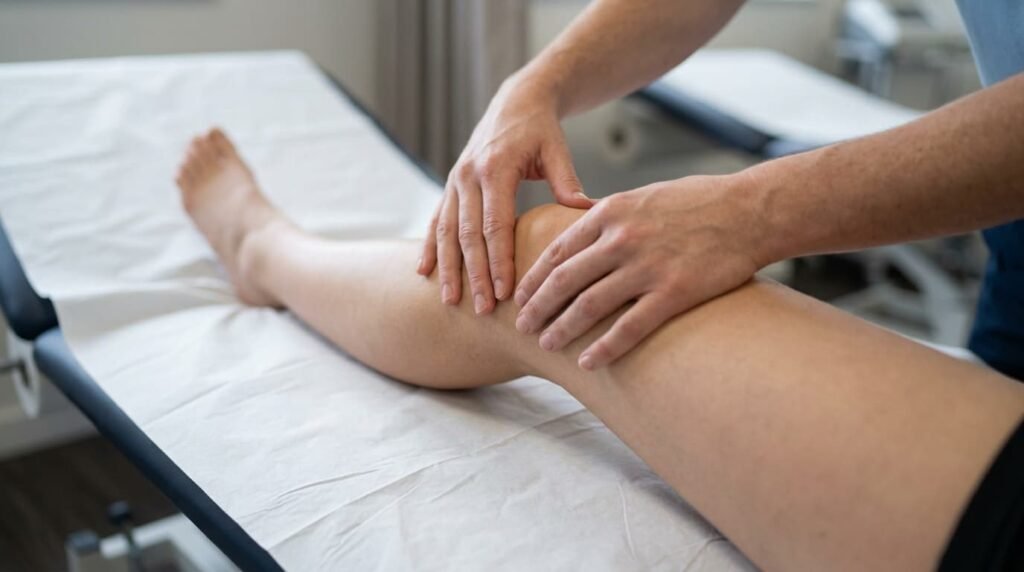
Long-term joint pain raises the risk of low mood. The North Carolina team found that depression history shaped fear levels. Treating low mood forms part of treating the knee. A GP can assess persistent low mood and discuss support.
Why pain education helps
Understanding pain science lowers the sense of threat. Hurt does not always equal harm, and patients who grasp this tend to move more freely. Patients who prefer watching to reading can also find clinic video content on the Dr SNA Clinic YouTube channel.
Is exercise good for osteoarthritis? What the evidence says
Short answer: yes. NICE recommends therapeutic exercise as a core treatment for osteoarthritis. Strong muscles share joint load, and movement circulates synovial fluid, which lubricates the joint.
What movement does inside the knee
Movement pushes synovial fluid around the joint, which lubricates it and reduces friction. Stronger muscles absorb shock before it reaches the joint. Better circulation also eases stiffness and supports sleep and mood. These benefits build through regular use, not single heroic sessions.
Can exercise make osteoarthritis worse?
Well-chosen exercise does not wear a knee out. Joints adapt to graded load. A knee is a hinge, not a vase. It tolerates steady use far better than prolonged rest. Sudden jumps in activity can still irritate the joint, so progress must stay gradual.
Safe discomfort versus warning pain
A simple traffic-light rule helps patients judge symptoms during activity.
- Green: a mild ache that settles within a day. Continue.
- Amber: moderate pain lasting longer than a day. Reduce intensity.
- Red: sharp pain, locking, giving way, or a hot, swollen knee. Stop and seek advice.
Persistent red signs deserve a proper clinical assessment before activity resumes.
Low impact exercises for arthritis that rebuild confidence
Exercise for arthritis does not need a gym or special kit. Gentle options let patients test the knee under low load. Small successes rebuild confidence faster than heavy effort does. Fear of movement with osteoarthritis eases when patients watch their own knee cope.
Seated exercises for arthritis
Seated work removes the fear of falling and reduces load. Heel slides, seated marching and gentle knee extensions suit a stable chair. Five minutes still counts.
Water walking for arthritis

Water supports a large share of body weight, so the knee works under far less load. Walking waist-deep in a pool lets patients practise a normal gait with less pain. Swimming for arthritis suits patients who dislike land walking, since it works the whole body without impact.
Gentle yoga and stationary cycling
Gentle yoga sessions improve flexibility and body awareness. Yoga for arthritis works best with props, such as blocks and a chair. Stationary cycling adds smooth knee bending while the saddle carries body weight.
Water aerobics and tai chi
Water aerobics for arthritis adds gentle resistance, since water pushes back against every movement. Classes also bring company, which helps patients who feel isolated.
Tai chi for arthritis uses slow, flowing movements that train balance and calm the mind. Both options give structure without strain. Group sessions turn exercise into a social outing rather than a medical task.
Knee osteoarthritis exercises for strength
Strong thigh muscles protect the joint, so strengthening deserves a place in every routine. Three simple moves cover the basics.
- Sit-to-stand from a firm chair
- Straight leg raises, lying or sitting
- Heel raises while holding a counter
Start with eight repetitions and add more over several weeks. Rest days matter too, because muscles recover and grow between sessions. Little and often beats long and rare.
A graded plan for moving again with confidence
Graded exposure means repeating a feared activity in small, safe doses. Each success teaches the brain that the movement is safe. Physiotherapists use this method for fear of movement in osteoarthritis.
Five steps to restart
Step 1: start tiny
Choose one feared activity, such as stairs. Practise it for five minutes a day. Exercise with knee pain works best when the starting dose feels almost too easy.
Step 2: prepare the joint
Warm the muscles with a short walk or a warm shower. Light massage can loosen tight thigh muscles before activity.
Step 3: add time before effort
Lengthen sessions slightly each week. Add effort only when the routine feels easy.
Step 4: track wins, not pain scores
Log minutes walked or stairs climbed. Evidence of progress calms the body’s alarm system.
Step 5: plan for flare-ups
A flare is not failure. Drop back to the previous level for a few days, then resume.
A sample first fortnight
A realistic plan keeps early goals small. Week one might include five minutes of seated exercises daily and one short indoor stroll. Week two can add a pool session or a gentle yoga video.
The knee will not file a complaint over a seven-minute stroll. Rest days stay in the plan, because recovery protects progress. A missed day simply means carrying on the next one.
Professional support that moves feel safer
Self-help works for many patients, but some need expert input. Professional care addresses fear of movement in osteoarthritis directly, alongside pain and strength.
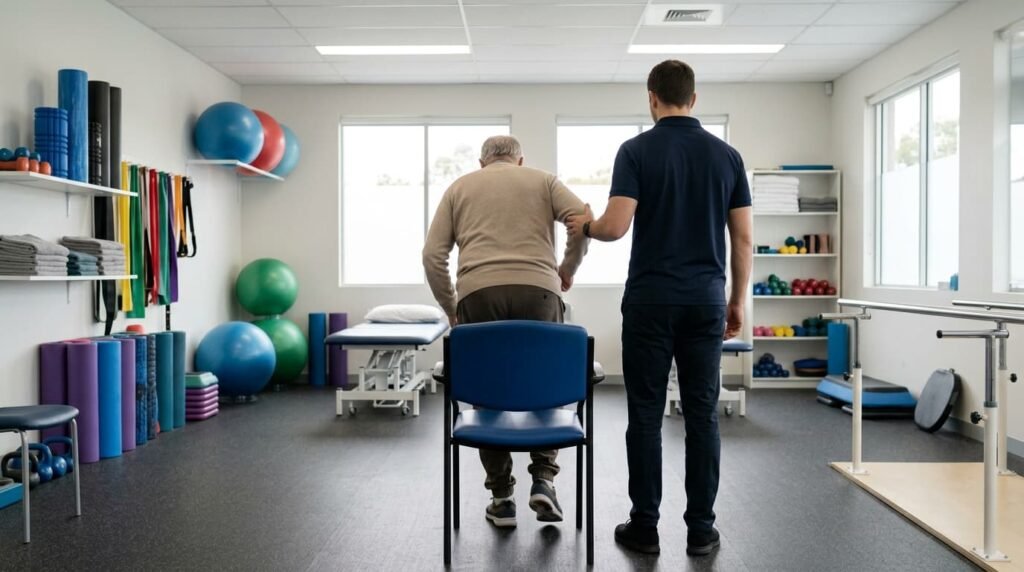
Physio for joint pain
A physiotherapist builds a graded programme, checks technique and sets realistic goals. Supervision reassures patients that each exercise is safe. Supervised practice turns a feared movement into a familiar one.
Osteoarthritis pain management options
Pain control makes practice possible. Options include topical or oral pain relief on GP advice, weight management, walking aids and injections. A clinician can match options to the stage of disease.
Arthrosamid injection for suitable patients
Arthrosamid injection is a non-surgical option for adults with mild-to-moderate knee osteoarthritis. Specialists select suitable candidates using strict clinical criteria. Reduced knee osteoarthritis pain often makes activity feel safer.
Talking openly with a clinician
Patients often hide the fear because it feels embarrassing. It is neither unusual nor silly. Naming the avoided activities lets the clinician build a plan around those exact tasks.
Family members can help by walking alongside rather than urging a patient to push on. Encouragement works better than pressure. Honest conversation shortens the road back to normal movement.
When to seek specialist advice
Some symptoms need prompt review. A hot, red, swollen knee with fever needs urgent medical attention. Sudden inability to bear weight also needs urgent review. Locking or repeated giving way warrants an orthopaedic assessment.
Fear of movement osteoarthritis that limits daily life for more than a few weeks also merits a consultation.
These answers cover the questions patients raise most often. Each one reflects current UK guidance on activity and osteoarthritis.
What is fear of movement osteoarthritis?
It is a persistent worry that activity will damage an arthritic joint. Clinicians also call it kinesiophobia. Patients avoid movement even when exercise would help. The fear is common and responds well to graded activity.
Which low impact exercises for arthritis feel safest at the start?
Seated exercises, water walking and stationary cycling carry the lowest load. Five minutes a day is enough to begin. A physiotherapist can adjust the programme to the knee’s condition. Comfort matters more than speed.
Can exercise make osteoarthritis worse when the knee already hurts?
Gentle, graded activity rarely causes harm. Sudden large increases can irritate the joint. Mild aches that settle within a day are acceptable. Sharp pain means stopping and seeking advice.
Does fear of movement mean the knee is badly damaged?
No. Fear reflects learned expectation, not the amount of joint damage. Scans and symptoms often differ in osteoarthritis. A clinical assessment gives a clearer picture.
Can a knee injection help with movement confidence?
Less pain often makes activity feel safer. Arthrosamid injection suits selected adults with mild-to-moderate disease, and a consultation confirms suitability. Reported patient experiences show what relief can realistically look like.
Which knee osteoarthritis exercises build strength safely?
Sit-to-stand, straight leg raises, and heel raises build thigh and calf strength with low risk. Eight repetitions a day is a sensible start. Gradual progress matters more than speed. A physiotherapist can adjust each move to the individual knee.
Fear of movement with osteoarthritis is common, measurable and treatable. Avoidance weakens the knee and lowers mood, while graded, low-impact activity restores confidence. Professional support adds pain control and reassurance where self-help falls short.
Mr Syed Nadeem Abbas is a non-surgical knee and joint pain specialist. Booking a consultation is a practical first step for anyone whose knee pain limits daily life.
Read more: Coffee and Arthritis Can Affect Joints Differently in Each Person
Read more: Arthrosamid Patient Experiences Reveal What Knee Relief Actually Looks Like


