
✅ Medically reviewed
Massage for knee pain gives many people short-term relief from stiff joints, tight muscles and everyday soreness. Arthritis is common across the UK, and the knee is among the joints most often affected.
Medication, exercise and injections all have a place in care. Hands-on techniques add a low-risk option for the days between appointments. A randomised trial found that a thigh-focused routine improved pain, stiffness and function in adults with knee osteoarthritis. Massage cannot rebuild worn cartilage, but it can calm the muscles around a painful joint. Used with sensible limits, it earns a place in a home care routine.
What Science Says About Massage for Knee Pain
Massage for knee pain has a modest but consistent evidence base. Most trials are small, so conclusions stay cautious. Even so, the overall pattern points in a helpful direction.
How Massage Eases Sore Knees
Pressure on the skin and muscle stimulates nerve receptors. Those signals may compete with pain messages travelling to the brain. Gentle strokes also warm the tissue and improve local blood flow.
Relaxed thigh muscles place less strain on the knee with every step. That matters on stairs, where knees put in plenty of unpaid overtime. Tension that builds around the joint often feeds stiffness and discomfort. Regular massage helps interrupt that cycle.
Is Massage Good for Knee Pain? What Trials Show
A randomised trial in the International Journal of Therapeutic Massage and Bodywork tested a thigh self-massage routine. It enrolled adults with diagnosed knee osteoarthritis. Participants massaged for 20 minutes, twice a week. Pain, stiffness and physical function scores improved compared with a waiting-list group. Range of movement did not change.
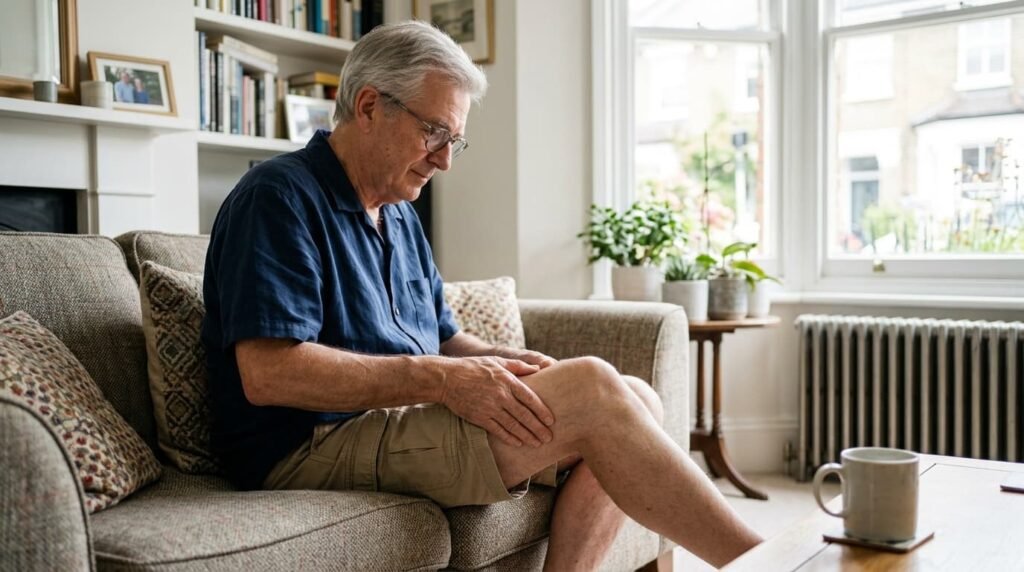
A trial in Archives of Internal Medicine also reported benefits from regular therapist-led massage. A paper in Pain Medicine described massage as supportive care within a wider pain plan. Massage works best as one tool in a broader plan, never as a standalone cure.
Which Knee Problems Respond Best to Massage
Massage for knee pain suits muscle-related stiffness better than structural damage. The cause of the pain shapes the benefit. Two common situations show the difference.
Massage for Knee Arthritis and Osteoarthritis
Osteoarthritis wears down cartilage gradually, and no massage reverses that wear. Hands-on care can still ease the muscle tightness and joint stiffness that travel with the condition.
Knee osteoarthritis massage works mainly through the thigh muscles. Weak quadriceps often accompany joint wear, and muscle loss and knee osteoarthritis tend to develop together in later life. Massage therapy for knee osteoarthritis also appears in research as a low-risk, supportive option. Inflammatory flares and gout behave differently, so a proper diagnosis comes first.
Self-massage for knee arthritis works best when the joint is calm. Learning how to massage the knee for arthritis safely means light pressure over the joint itself. Firmer strokes belong on the thigh muscles above it.
A warm shower beforehand helps, because warm muscles respond more readily. Pain during a stroke is a signal to ease off at once.
Massage for Knee Swelling and General Soreness
Massage for knee swelling needs a light touch and no deep pressure. Raise the leg on a cushion first. Then stroke gently from the knee up the thigh to encourage fluid movement.
Swelling with heat, redness, or fever needs a doctor, not massage. General soreness after a long walk or a day on your feet usually settles with simple strokes and rest. A sore knee after a shopping marathon is usually asking for attention, not surgery.
Massage Techniques for Knee Pain Explained
Different strokes suit different problems. Most home routines rely on four simple movements. Pressure stays moderate throughout.
Knee massage techniques fall into two groups: soothing strokes and firmer working strokes. Soothing strokes come first. Firmer work follows only once the muscle feels warm.
Knee self-massage keeps the routine simple, because every stroke uses only the hands. Learning one stroke at a time prevents rushed, heavy-handed attempts. Slow and steady beats quick and rough.
Effleurage Strokes for the Knee and Thigh
Effleurage means long, smooth gliding strokes. An effleurage massage knee routine starts above the joint with light pressure. The hand glides from mid-thigh down to the top of the kneecap.
These strokes warm the tissue and soften tight muscle fibres. The heel of the hand works well. A gentle rocking motion uses body weight and saves the wrist.
Kneading and Tapping
Kneading lifts and squeezes the thigh muscle gently, much like working dough. Tapping with a loose fist stimulates circulation. Both strokes prepare the muscle for firmer work.
Knee Friction Massage
Friction uses short, firm movements with the fingertips. Knee friction massage targets tight spots beside the kneecap and along the tendons above and below it. Each movement stays small, and pressure stays firm but comfortable.
Skip lotion for this stroke, because the fingers need grip on the skin. Stop at once if sharp pain appears.
Deep Tissue Massage for Knee Pain
Deep tissue work uses slow, firm pressure on the deeper layers of the thigh and calf. A trained therapist usually performs it. It suits tight muscles and overuse, not an inflamed joint.
Some tenderness is normal during treatment. Sharp pain is not. Firm pressure should always leave the knee feeling looser, never angrier.
How to Massage Knee Pain at Home Step by Step
A home routine takes about 15 minutes and needs no special equipment. A firm chair, loose clothing and a little lotion are enough. Learning how to massage knee pain safely starts with preparation.
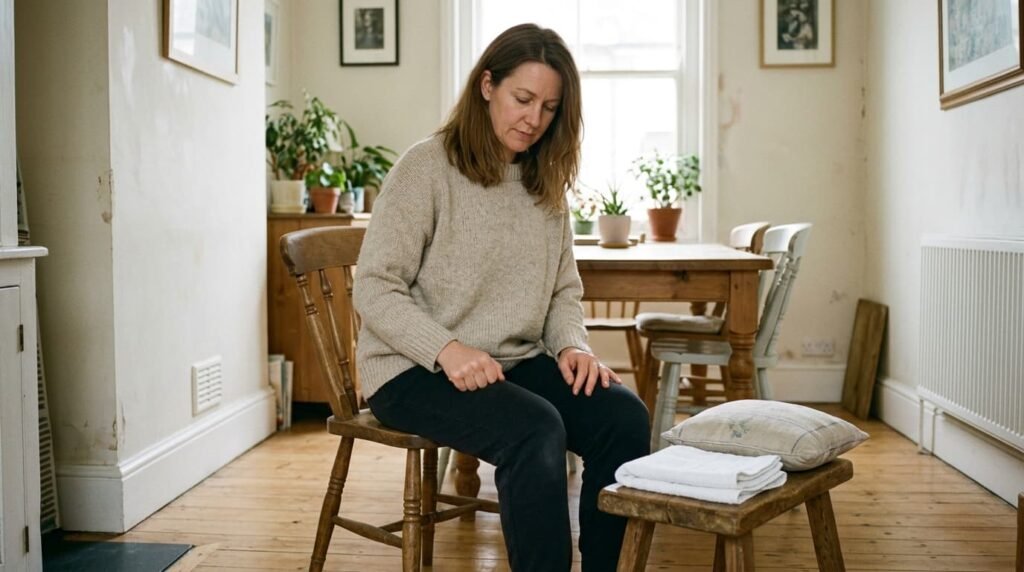
Set Up Before the First Stroke
Sit upright with the foot flat on the floor and the thigh fully exposed. Loose shorts work well, while jeans and wool do not. Warm the muscles first with a short walk or a warm shower.
Self massage for knee pain works best on relaxed muscles. Calm hands also beat hurried ones. Take three slow breaths before starting.
Quadriceps Self Massage Routine
The quadriceps cover the front of the thigh and control knee bending and straightening. Quadriceps self-massage targets this large muscle first because it shapes how the joint handles load. Complete the five steps on one leg, then repeat on the other.
Step 1: Tap the Thigh
Tap the front of the thigh with a loose fist, moving from hip to knee. Repeat ten times and take three slow breaths.
Step 2: Glide Down the Front
Place the heel of one hand on top of the thigh. Glide down to the top of the kneecap, then release. Repeat five times.
Step 3: Glide Along the Sides
Repeat the same glide along the outer thigh, then along the inner thigh. Keep the pressure moderate. Pain means ease off.
Step 4: Apply Friction Around the Kneecap
Press four fingertips into the soft tissue beside the kneecap. Move the skin in short strokes above, below and on both sides. Avoid pressing hard on the bone itself.
Skip the back of the knee, where nerves and blood vessels sit close to the surface.
Step 5: Finish With Light Glides
Rest both hands on the thighs. Glide lightly over the knee and back up the outer thigh. Finish with three deep breaths. A calm finish helps the muscles settle after firmer work.
Knee Pain Self-Massage at Home: Position and Support
A firm chair, a folded towel and a cushion are all that a home session needs. Sitting with the heel resting on the floor keeps the thigh relaxed. Lying down works too, with a rolled towel under the knee for support.
Massage for knee pain relief is usually temporary, so regular short sessions matter more than one long session. Stop if numbness, tingling or sharp pain appears.
Thigh Massage for Knee Pain
Tight hamstrings and an overworked outer thigh also pull on the knee. Thigh massage for knee pain therefore covers the back and sides as well as the front.
Seated with the leg straight, knead the outer and back thigh with the palms. Short sessions after exercise stop tension building up.
Oils, Creams and Warmth: What Actually Helps
Add-ons feel pleasant, and some may help. Research is limited, so expectations should stay modest. A plain lotion already reduces friction.
Essential Oils for Knee Pain
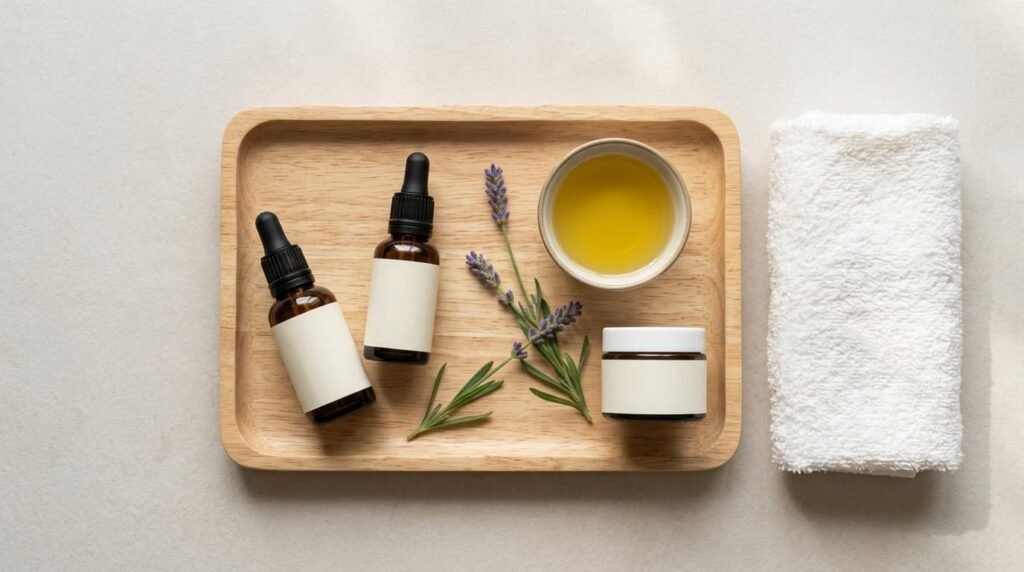
Evidence for essential oils for knee pain remains thin. Many people still enjoy the scent and the warming feel. Always dilute oils in a carrier such as sweet almond or coconut oil.
Test a small patch of skin first and wait a day. Avoid broken skin. Pregnant women, people with asthma and anyone on regular medication should ask a pharmacist first.
Lavender Oil for Knee Pain
Lavender is a gentle choice because the scent promotes relaxation. Relaxed shoulders and hands may make the massage itself more effective. Eucalyptus and peppermint feel cooling or warming, though they irritate sensitive skin more often.
Use a few drops at most, diluted well. A fragrant oil is a pleasant extra, never the main treatment.
How Often to Massage Knee Muscles and for How Long
Frequency matters more than intensity. Most trials used sessions of 10 to 20 minutes, two or three times a week. Protocols differ, so no single rule fits everyone.
Knee pain massage sessions of 10 minutes suit most beginners. A few minutes daily is usually fine if the knee stays comfortable. Pain that rises after a session means lighter pressure or a rest day.
Consistency beats intensity every time. A routine fits neatly between the kettle boiling and the toast popping. Hands-on care also works better after a warm-up and before gentle exercise.
Knee Massage to Improve Mobility in Daily Life
Massage can ease stiffness, yet mobility depends on movement. Short sessions before gentle exercise often feel easier. Trial evidence on joint range of movement remains mixed.
Massage works best as a warm-up for gentle movement. Heel slides, straight-leg raises, and short walks follow naturally. Gentle yoga also keeps stiff knees moving without heavy impact.
Massage for knee pain complements strengthening exercise rather than replacing it. Stronger thigh muscles share the load with the joint. Thigh muscles earn a little appreciation for their daily workload.
Knee Massage Safety and When Not to Massage
Massage is gentle, yet some knees need rest instead of rubbing. A few warning signs rule it out completely. Safety checks take only seconds.
Situations When Not to Massage Knee Tissue
Knee massage safety starts with a quick check of the joint itself. Skip massage in these situations:
- A hot, red or rapidly swelling knee, especially with fever
- Calf pain, warmth or swelling that could signal a blood clot
- A recent injury, suspected fracture or ligament tear
- Open wounds, skin infection, rashes or fresh surgical scars
- Recent knee surgery, unless the surgical team has approved massage
- Blood-thinning medication with firm pressure, because bruising risk rises
Warning Signs That Need Medical Review
Massage for knee pain should never mask a problem that needs treatment. Seek prompt advice for a locked knee, repeated giving way or night pain. Pain that worsens after massage also needs review.
Sudden swelling, fever or inability to bear weight needs urgent care. A knee MRI scan can reveal soft tissue damage that plain X-rays miss.
When Massage Is Not Enough
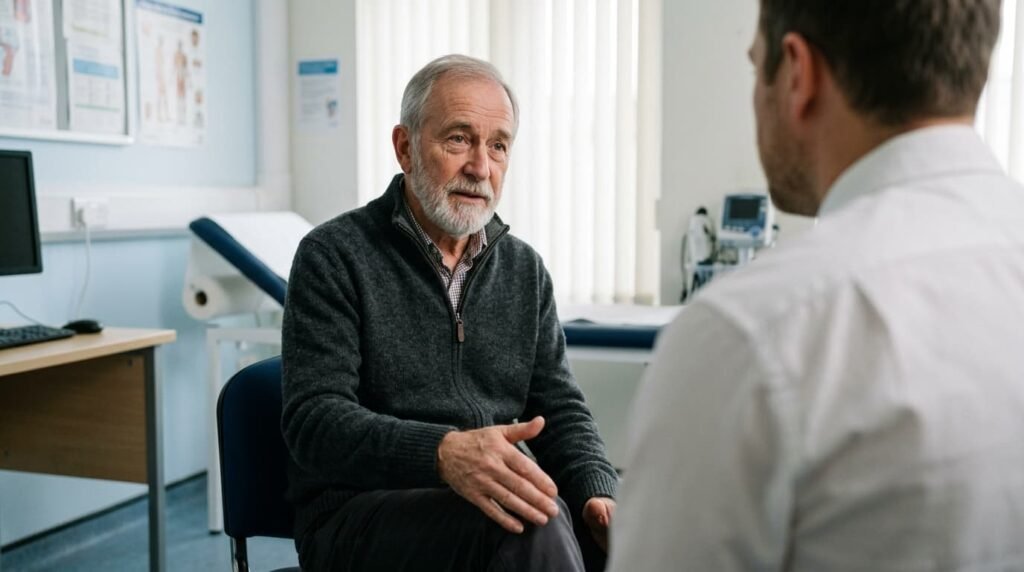
Pain that lasts several weeks deserves a proper assessment. Massage manages symptoms. Cartilage damage needs a different approach.
Massage for knee pain eases symptoms without repairing cartilage. Non-surgical orthopaedic treatment ranges from exercise and weight management to injections, depending on the level of joint damage.
A specialist can confirm the cause, arrange imaging and discuss suitable options. Educational video content on arthritis and joint care is also available on the Dr SNA Clinic YouTube channel.
Frequently Asked Questions
Is massage good for knee pain?
Massage often helps muscle tension, stiffness and everyday soreness around the knee. A randomised trial reported better pain and function scores in adults with knee osteoarthritis. Benefits are usually short-term. Massage works best alongside exercise and medical advice.
Does massage work for every type of knee problem?
No. Muscle tightness and mild stiffness respond best. Torn ligaments, infection and advanced joint damage need medical care instead. A clinician can confirm the cause before any hands-on treatment begins.
How often to massage knee muscles when pain is ongoing?
Most trials used sessions of 10 to 20 minutes, two or three times a week. A few gentle minutes each day may also suit comfortable knees. Pain that increases afterwards means lighter pressure or a rest day. Persistent pain beyond a few weeks needs assessment.
Can massage for knee arthritis replace medical treatment?
No. Massage eases muscle tension but does not repair worn cartilage. Specialists may discuss an Arthrosamid injection for suitable patients when simpler measures stop working. Regular reviews keep the treatment plan matched to the joint.
Is lavender oil for knee pain worth trying?
Lavender oil is a low-risk option when diluted and patch tested. The scent may help the body relax during massage. Evidence for direct pain relief remains limited. Anyone with sensitive skin should stop at the first sign of irritation.
Can massage for knee swelling make things worse?
Yes, if the swelling comes from infection, a blood clot or a fresh injury. Gentle strokes suit only mild swelling after activity. Heat, redness, fever or sudden swelling need urgent medical advice. Deep pressure on a swollen knee should always be avoided.
Massage for knee pain suits tight, sore and stiff knees best. Short thigh-focused routines, moderate pressure and regular timing give the most reliable results. Swelling with heat or persistent pain needs medical review before any more massage.
Mr Syed Nadeem Abbas is a specialist in non-surgical knee and joint pain care.
Read more: New Treatments for Knee Osteoarthritis Offer UK Patients a Wider Range of Non-Surgical Pain Relief
Read more: A Knee MRI Scan Reveals Soft Tissue Damage That Plain Films Cannot Show


