
✅ Medically reviewed
Knee pain in women is common, and it is frequently explained away as a normal part of getting older. UK figures show why that habit carries risk. Rheumatoid arthritis affects about 1.4 per cent of people in England, roughly 580,000 adults, with 26,000 new cases each year. The condition affects two to three times as many women as men. Diagnosis most often occurs after the age of 40. Osteoarthritis, the wear-related form of joint disease, is also more frequent in women and tends to rise after menopause. Ageing may contribute, but ageing alone rarely accounts for a swollen, stiff or locking knee. Identifying the true cause early opens more treatment options and protects long-term mobility. The sections below separate normal age-related change from disease. They describe the conditions most often missed and explain how diagnosis and treatment work in the UK.
Why ageing is a poor explanation for knee pain
Ageing changes the knee gradually. Cartilage thins, muscles lose bulk, and tissues recover more slowly after strain. Those changes can exist without causing any symptoms. Scans of people with no knee pain often show cartilage wear and meniscal degeneration. Persistent pain, swelling and stiffness therefore signal something beyond background change.
The ageing label also delays action. A woman told that stiffness is expected may stop reporting symptoms. Inflammatory conditions then progress while joint damage accumulates. Delay matters most in rheumatoid arthritis, where early treatment protects the joint. Pain also teaches people to guard the knee. Fear of movement in osteoarthritis can then weaken the muscles that support the joint.
Menopause is often blamed as well. A British Orthopaedic Association journal review reports symptoms in up to 70 per cent of women around menopause. That figure explains why joint aches are so easily attributed to hormones. It does not prove that hormones cause each case.
What the hormone research does and does not show
Researchers studying menopause and cartilage report that knee osteoarthritis is twice as common in postmenopausal women as in men. Oxford researchers reviewing musculoskeletal pain at menopause also note that arthritis-related joint pain is about twice as common in women. These figures show an association. They do not prove that hormone loss is the sole driver.
Hormones are only one part of the picture. Anatomy, body weight, activity patterns and family history also explain why women experience more knee pain across different life stages.
The evidence on hormone therapy conflicts. A Korean national survey of 4,766 postmenopausal women found lower rates of symptomatic knee osteoarthritis among users. A UK Biobank analysis of 211,345 women found the opposite pattern. Over a median 13.6 years, 7.0 per cent developed knee osteoarthritis, with higher risk among current and former users. Both studies are observational, so neither proves cause and effect. Decisions about hormone therapy and knee pain should rest on menopausal symptoms and overall health, discussed with a GP.
Conditions that the ageing label commonly hides
Several diagnoses produce similar early symptoms. Each needs different management, which is why a precise diagnosis matters more than a general explanation.
Knee osteoarthritis
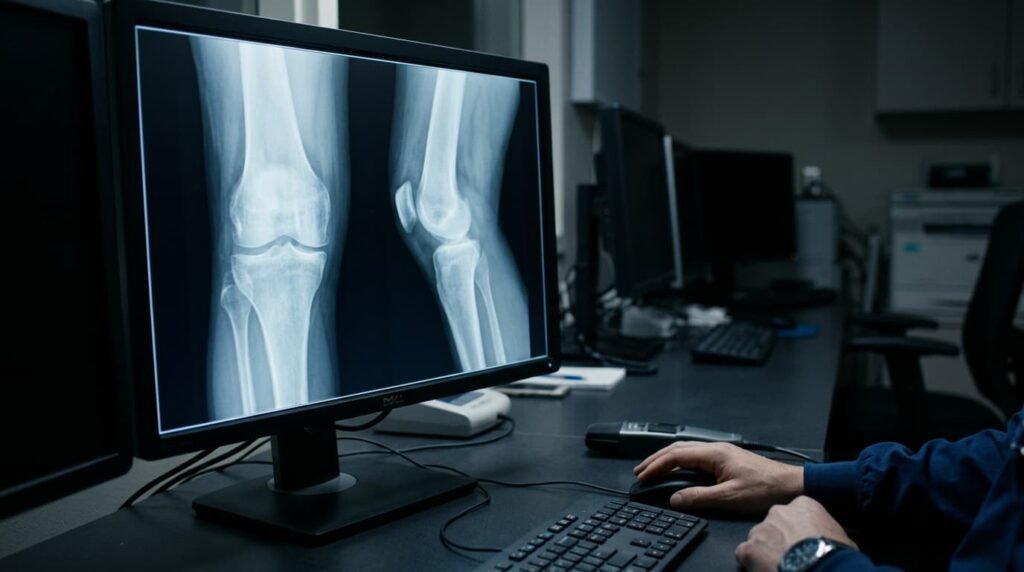
Pain appears on stairs, after sitting, or at the end of a long day. Morning stiffness settles quickly, swelling comes and goes, and the joint may grind or click. X-rays show narrowed joint space and bony changes in established disease. Early disease may look normal on X-ray, so a clear film does not exclude osteoarthritis. Symptoms and examination findings carry more weight than the image alone.
Cartilage damage in osteoarthritis does not currently have a proven repair route. Claims about cartilage regrowth outpace the evidence. Treatment therefore aims to reduce pain, protect function and slow the burden of symptoms.
Inflammatory arthritis, including rheumatoid arthritis
Rheumatoid arthritis is an autoimmune disease in which the immune system attacks the joint lining. Rheumatoid arthritis in the knee often affects both sides at once. Warmth, swelling and fatigue commonly accompany the pain. The hands and feet are frequently involved too.
This condition needs rheumatology care rather than routine knee management. Disease-modifying medicines work best when started early. Joint damage that has already occurred cannot be reversed, which makes speed essential.
Patellofemoral pain
Patellofemoral pain produces an ache around or behind the kneecap. Stairs, squatting, hills and long periods of sitting provoke it. The problem is common in women of all ages, not only athletes.
Wider hips and a larger Q angle are often blamed. Research suggests the Q angle is a weak predictor of injury on its own. Muscle strength, movement control and training load appear to matter at least as much. Targeted strengthening of the thigh and hip muscles is the usual starting point.
Meniscal and ligament injuries
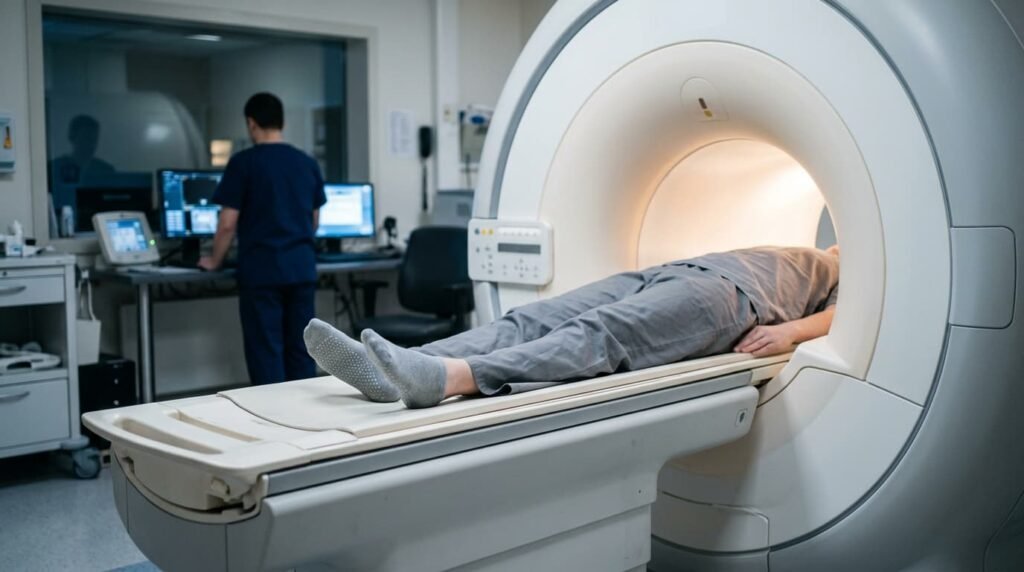
The menisci are two rubbery cushions between the thigh bone and shin bone. A minor twist can tear a meniscus that has already degenerated with age. Catching, locking and pain along the joint line suggest this injury. A knee MRI scan shows soft tissue damage that plain X-rays cannot reveal.
Ligament injury is also relevant. Several studies report that women face roughly 3.5 times the risk of non-contact anterior cruciate ligament injury compared with men. Sports such as netball, football and skiing carry the highest exposure. A knee that gives way needs prompt assessment.
Crystal arthritis
Gout and pseudogout cause sudden, hot, swollen joints, and the knee is a common target. Gout becomes more frequent in women after menopause. Pseudogout results from calcium crystals and becomes more common with age. Both conditions can mimic infection, so clinical assessment is essential.
Referred pain from the hip or spine
Pain felt in the knee does not always start there. Hip osteoarthritis can refer pain to the front or inside of the knee. A trapped nerve in the lower spine can do the same. In these cases, the knee itself may look and move normally. Examination of the hip and back therefore forms part of a thorough assessment. Treating the knee alone would miss the true source.
How osteoarthritis and rheumatoid arthritis differ in the knee
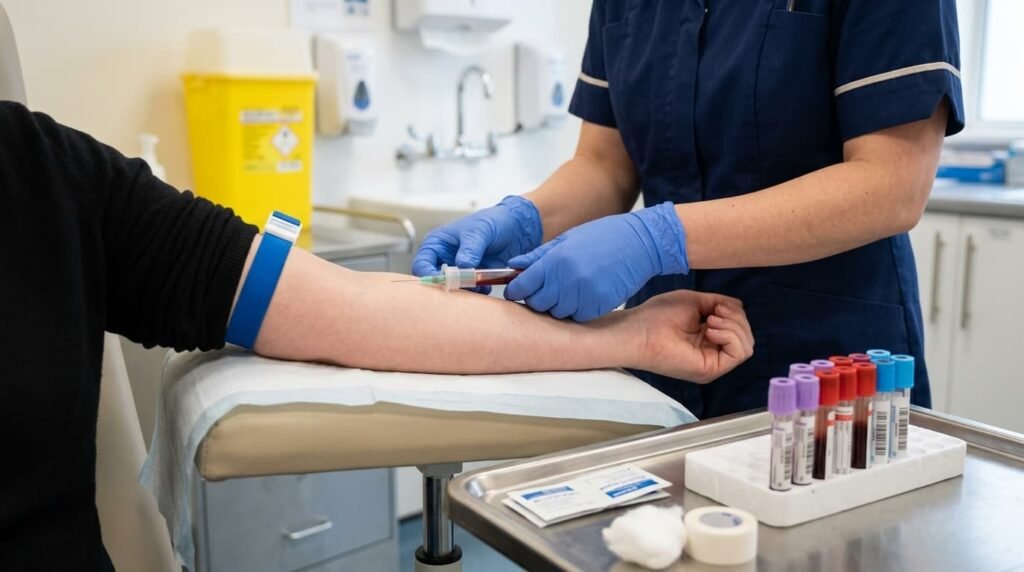
The two conditions can look alike in the early months. Several features help separate them.
Osteoarthritis typically affects one knee more than the other. Morning stiffness in the knee usually eases within about 30 minutes. Pain worsens with activity and improves with rest. Swelling appears after heavy use.
Inflammatory arthritis behaves differently. Stiffness often lasts longer than 30 minutes and may last for hours. Pain can be worse at rest or during the night. A swollen knee that feels warm, together with fatigue and symptoms in other joints, raises suspicion. Blood tests and specialist review then become the priority.
Both conditions can coexist. A woman with long-standing osteoarthritis can still develop inflammatory arthritis. New features such as prolonged stiffness or warmth should therefore never be dismissed as the old problem returning.
Other inflammatory types also involve the knee. Psoriatic arthritis can follow skin or nail changes, sometimes years later. Lupus and related autoimmune conditions occasionally present with joint pain before other signs appear. A careful history of rashes, eye inflammation and bowel symptoms helps clinicians choose the right tests.
How persistent knee symptoms affect daily life
Knee pain in women rarely stays confined to the joint. Pain on stairs changes how a woman shops, commutes and cares for family. Night pain fragments sleep, and poor sleep lowers pain tolerance the next day. Reduced activity then weakens the thigh muscles and can add weight, which loads the knee further. This cycle explains why symptoms often worsen faster than expected.
Mood and confidence follow the same pattern. Avoiding walks, classes and social plans is common, and fear of reinjury reinforces the avoidance. Early treatment interrupts the cycle before muscle loss and deconditioning become established. Many women only seek help after months of quiet adaptation. Knee pain in women is therefore often under-reported rather than under-experienced.
Warning signs that call for prompt medical review
Most knee symptoms are not emergencies. Some signs need rapid attention.
- A hot, red, swollen knee with fever needs same-day urgent assessment. Joint infection can damage the joint quickly.
- A knee that locks, or repeatedly gives way, suggests a mechanical problem.
- Swelling that follows an injury, even a minor one, warrants examination.
- Stiffness lasting more than 30 minutes, especially with several joints involved, suggests inflammatory disease.
- Pain that persists beyond a few weeks or wakes the sleeper at night should be reviewed.
Content on arthritis and non-surgical joint pain care helps women prepare questions before an appointment.
How a proper diagnosis should proceed
Assessment begins with a detailed history. The clinician asks about onset, pattern, stiffness, other joints, menopausal status, family history and medicines. Examination then checks swelling, range of movement, ligament stability and the hip, which can refer pain to the knee.
The diagnosis of knee osteoarthritis rests mainly on history and examination. X-rays confirm joint space loss and bony change. Blood tests, including rheumatoid factor, anti-CCP antibodies, CRP and ESR, help when inflammatory disease is suspected. Ultrasound and MRI answer specific questions about soft tissue.
Early arthritis diagnosis depends on women being heard at the first visit. A Dutch study spanning three decades tracked referral delay in rheumatoid arthritis. Excess delay for women narrowed after GP education and easy-access screening clinics. Median referral delay in 2011 to 2020 was similar in women and men. That result shows that systems can improve.
A symptom diary strengthens any consultation. Recording the timing of stiffness, swelling episodes and activity limits gives clinicians clear evidence. A GP referral for persistent knee pain is reasonable when symptoms follow a pattern or fail to settle.
Treatment options across a stepped pathway
Self-management and physiotherapy
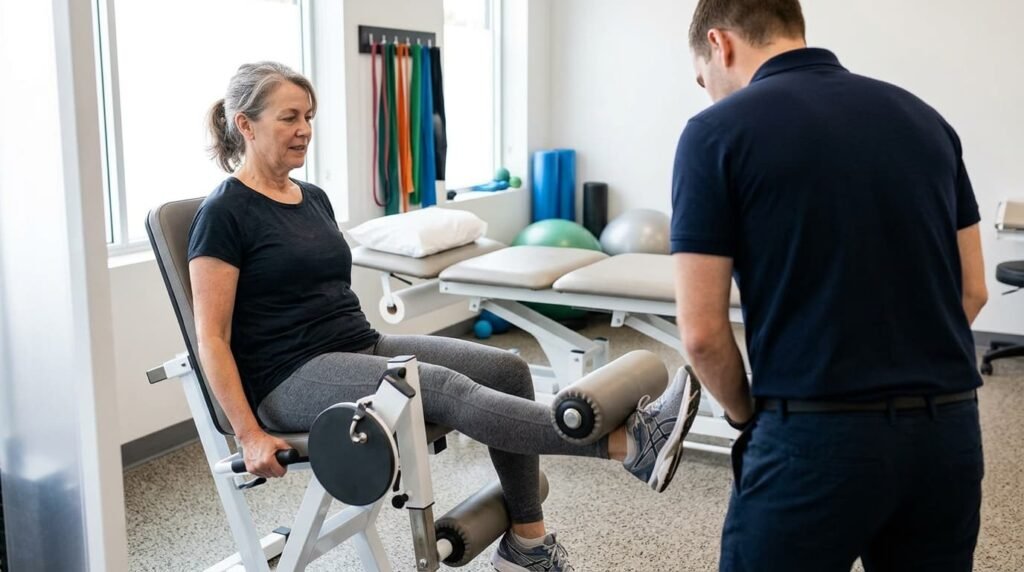
UK guidance places exercise, weight management and education at the centre of knee osteoarthritis care. Quadriceps strengthening and hip exercises improve load sharing around the joint. Cycling and swimming add low-impact conditioning. Activity pacing prevents flare-ups caused by sudden increases in effort. Combining several habits works better than relying on one, as the principles of drug-free knee pain relief show.
Physiotherapy provides a structured programme and corrects movement habits. Supervised sessions raise resistance gradually, which protects painful joints. Even modest weight loss reduces load through the knee during walking. Cushioned footwear can lessen impact, and a walking stick held in the opposite hand offloads the painful side. Heat eases stiffness, while cold packs can calm a swollen knee after activity. Effective management of knee pain in women combines these measures with regular review.
Medicines have a supporting role. Topical anti-inflammatory gels are usually the first choice for knee pain. Oral anti-inflammatories carry stomach, kidney and heart risks and need medical advice. Rheumatoid arthritis requires disease-modifying drugs under rheumatology supervision.
Injections and newer options
Corticosteroid injections can ease a flare for a limited period. NICE guidance does not currently recommend hyaluronic acid injections for osteoarthritis. Newer approaches continue to emerge, and new treatments for knee osteoarthritis now offer UK patients a wider range of choices.
Arthrosamid injection in London is one non-surgical option. The product is a polyacrylamide hydrogel placed into the knee joint, usually as a single injection under local anaesthetic. Its purpose is to reduce osteoarthritis pain, not to rebuild cartilage. Suitability depends on diagnosis, imaging and symptoms, so assessment always comes first.
Surgery has a place in advanced disease. Knee replacement is considered when non-surgical options no longer control pain or function. Most women, however, benefit from earlier non-surgical knee pain treatment that is matched to the correct diagnosis.
Questions worth raising at a GP appointment
Preparation makes short appointments more productive. Useful questions include:
- Which condition best explains the symptoms, and what else needs excluding?
- Do blood tests for inflammatory arthritis make sense at this stage?
- Would an X-ray or scan change the treatment plan?
- Which exercises suit the knee, and should a physiotherapy referral follow?
- Which symptoms should prompt an urgent review?
Clear answers shorten the route to treatment. Persistent symptoms justify a request for referral to musculoskeletal services or a specialist. Knee pain in women deserves the same structured work-up as any other joint problem.
How these topics connect
The central theme, knee pain in women, links several ideas covered above. Hormonal change explains the timing of many symptoms, which is why hormonal explanations feature so often in consultations. Timing alone does not identify the cause. Knee osteoarthritis in women, inflammatory arthritis and structural injury can each appear at the same age.
Each section above supports the same message. Normal ageing explains stiffness that eases quickly and causes no swelling. Disease explains pain that persists, wakes the sleeper or changes the shape of the joint. Hormones may influence the timing, while anatomy and activity influence the load. Only assessment reveals which factor dominates in an individual knee.
That overlap explains why accurate diagnosis sits at the heart of care. Correct identification directs treatment towards effective knee pain relief rather than guesswork. Joint pain in women therefore calls for structured assessment, not assumption. Women who understand the warning signs, the tests and the treatment steps can discuss options with confidence.
FAQs
Is knee pain in women over 40 normal?
Knee pain in women becomes more common after 40, but common does not mean normal. Pain that lasts more than a few weeks, causes swelling or limits daily activity deserves assessment. Many causes respond well to treatment when identified early. Dismissing the pain as ageing wastes that opportunity.
Why is joint pain in women sometimes dismissed?
Joint pain in women is common, and age or menopause offers a quick explanation. Inflammatory arthritis can look mild at first, and normal blood tests do not always exclude it. Older studies found women with rheumatoid arthritis were referred later than men, though recent research shows that gap narrowing. A clear description of symptom pattern helps clinicians weigh the possibilities.
How does rheumatoid arthritis feel in the knee?
Pain is usually accompanied by warmth, swelling and prolonged stiffness. Both knees are often affected, and the hands or feet may be involved too. Fatigue is common. Blood tests and specialist review confirm the diagnosis.
Which tests find the cause of knee pain?
Assessment starts with history and examination. X-rays show joint space loss and bony change. Blood tests look for inflammatory disease, while MRI or ultrasound examines ligaments, menisci and tendons. The clinician chooses tests according to the symptoms.
Can exercise make knee pain worse?
Well-chosen exercise rarely harms an arthritic knee. Mild, short-lived soreness after new activity is common and usually settles within a day. Sharp pain, new swelling or a knee that gives way needs review before the programme continues. A physiotherapist can adjust load and technique to suit the diagnosis.
Can an injection help osteoarthritis of the knee?
Several injections exist, with different aims and evidence. Corticosteroid injections provide short-term relief, while Arthrosamid injection is a hydrogel option intended to reduce osteoarthritis pain. Suitability depends on diagnosis and scan findings. A specialist consultation clarifies which approach fits.
Knee pain in women deserves a diagnosis, not a shrug. Osteoarthritis, rheumatoid arthritis, patellofemoral pain, meniscal injury and crystal arthritis all mimic ageing. Early assessment protects joint function and widens treatment choices. Mr Syed Nadeem Abbas is a specialist in non-surgical knee and joint pain. Book a consultation to discuss persistent knee symptoms and suitable treatment options.
Read more: Arthrosamid Candidate Selection Follows Strict Clinical Criteria
Read more: Knee Replacement Weight Limit: How BMI Shapes Surgery Eligibility in the UK


