
Lower back pain from sitting affects a large share of UK office workers. Prolonged desk hours are cited as a leading trigger of spinal discomfort. Roughly one in three UK adults reports back pain within a given year. Desk-based roles feature heavily among the contributing causes. Sitting places sustained pressure on spinal discs and tightens surrounding muscles. Posture gradually deteriorates over the course of a working day without conscious correction. Stiffness builds slowly and often peaks by late afternoon or early evening. Related knee pain in desk job settings frequently develops alongside back discomfort. Hip and knee alignment shift the moment the spine loses its natural curve.
What Causes Lower Back Pain From Sitting
Several mechanical factors combine to create lower back pain from sitting. Most stem from posture rather than sudden injury.
Poor Posture And Spinal Compression
A slouched sitting position rounds the lower spine and shifts weight onto spinal discs. This compresses the lumbar region more heavily than standing does. Studies on seated posture show noticeably higher internal disc pressure during slouched sitting. Over several hours, this pressure irritates nerves and soft tissue near the spine. Slouching also pushes the head forward, adding further strain further down the back. A forward head position can add a significant extra load to neck and upper back muscles.
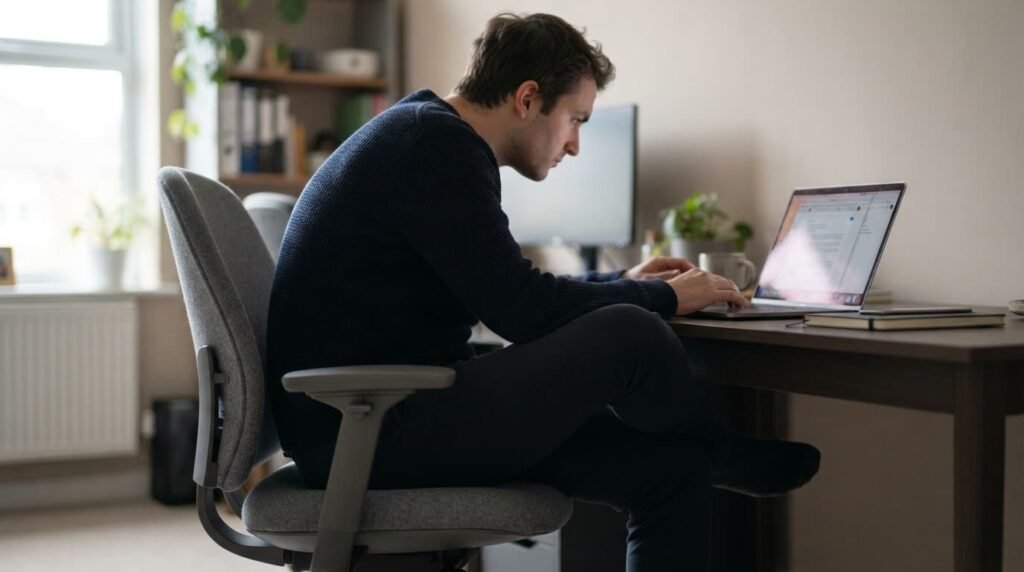
Small posture corrections throughout the day ease much of this cumulative load. Adjusting the chair angle every hour prevents the spine from settling into one fixed curve. Classic research on seated disc pressure, dating back to Nachemson’s early spinal studies, still informs modern ergonomic guidance today. That research found seated disc pressure often exceeds standing pressure by a meaningful margin. Modern ergonomic recommendations build directly on these long-standing biomechanical findings.
Weak Core Muscles And Prolonged Inactivity
Sedentary lifestyle effects extend well beyond the back itself. Sitting for long stretches weakens the abdominal and lower back muscles that support the spine. Weaker core muscles mean the spine bears more direct load during ordinary movement. Lifting a bag or bending to pick something up becomes riskier over time. This creates a cycle: reduced activity leads to weaker support, and weaker support increases pain during activity. Regular movement breaks interrupt this cycle before it becomes chronic. Even brief walks around an office restore some of the muscular support lost through sitting.
How Prolonged Sitting Affects The Whole Body
Sitting does not damage the back in isolation. Hips, knees and legs absorb much of the same strain.
Tight Hip Flexors And Hamstrings
Tight hip flexors and hamstrings develop naturally from hours spent in a seated hip angle. Shortened hip flexors pull the pelvis forward, increasing curvature in the lower spine. This altered pelvic tilt is a frequent contributor to lower back pain from sitting. Tight hamstrings compound the issue by limiting how far the pelvis can rotate during standing. A limited pelvic range often shows up as stiffness during the first few steps after sitting. Loosening these muscle groups through regular stretching often brings noticeable relief within days.
Knee Pain from a Desk Job And Office Sitting
Knee pain in desk job settings frequently traces back to the same postural chain reaction as back pain. A bent knee position held for hours reduces circulation and stiffens the surrounding tissue. Managing knee pain at work often starts with the same ergonomic fixes used for the spine. Numbness in the legs from sitting too long is another common complaint linked to reduced blood flow.
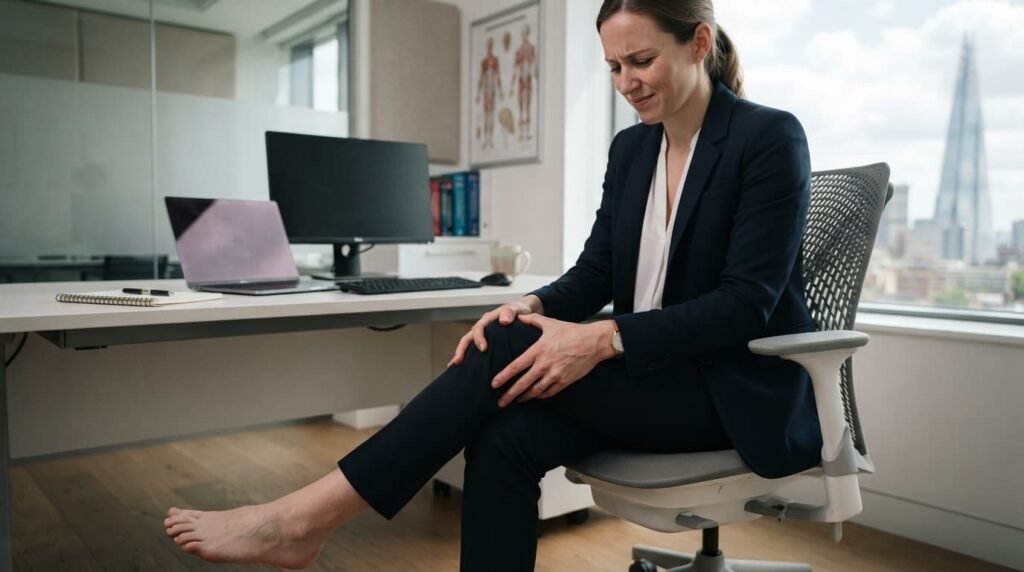
Tingling in the feet during long meetings usually points to the same seated pressure pattern. Addressing posture holistically tends to ease both knee pain, office job symptoms and back discomfort together. Treating one area in isolation rarely resolves symptoms that share a common postural root.
Warning Signs: Sitting Posture Is Damaging The Spine
Certain symptoms suggest sitting posture has moved beyond ordinary stiffness. Persistent aching that worsens through the afternoon points to cumulative disc pressure. Pain radiating into the buttocks or legs may indicate nerve involvement rather than simple muscle fatigue. Difficulty standing upright immediately after sitting is a common early warning sign. Morning stiffness that eases only after movement often reflects reduced spinal mobility overnight. Sharp pain triggered by a specific movement, rather than gradual dull discomfort, deserves closer attention.
A noticeable loss of flexibility when bending forward can also signal building strain. Weakness in one leg, or a tendency to favour one side while walking, is worth noting too. These signs do not always mean a serious condition exists. Many resolve fully once posture, movement and workstation setup improve together. Ignoring them for months, however, rarely leads to improvement without intervention. Symptoms that persist despite consistent changes usually warrant a proper clinical opinion rather than further waiting.
Ergonomic Desk Setup For Back And Knee Support
An ergonomic desk setup remains one of the most effective long-term interventions for sitting-related pain.
Chair, Footrest, and Monitor Position
Chair height should allow feet to rest flat on the floor. Hips should sit level with, or slightly higher than, the knees. A lumbar cushion supports the natural inward curve of the lower spine. A footrest for desk use helps shorter individuals maintain this alignment comfortably. Monitor height matters too, since screens positioned below eye level encourage forward head posture. The top of a screen should sit roughly at eye level, an arm’s length away. Armrests should support the elbows at approximately ninety degrees, easing shoulder and upper back tension. These adjustments take only minutes but compound into meaningful relief across a working week.
Ergonomic Workstation For Knee Pain
An ergonomic workstation for knee pain typically mirrors back-friendly adjustments, since both target the hip and knee angles. Knees should form a right angle with feet flat, avoiding prolonged crossed-leg positions. Crossing legs, knee strain builds gradually and worsens existing hip tightness over weeks. A knee support cushion placed under the desk can maintain gentle alignment during long calls. Desk height should allow forearms to rest parallel to the floor while typing. These small changes rarely cost much but deliver consistent, measurable comfort gains over time. A cushion with a slight forward tilt can further reduce pressure behind the knee joint. Testing several configurations across a week helps identify which combination suits an individual’s body shape best.
Best Stretches And Exercises For Desk Workers
Movement remains one of the most reliable tools against sitting-related pain. It requires no special equipment or gym membership.
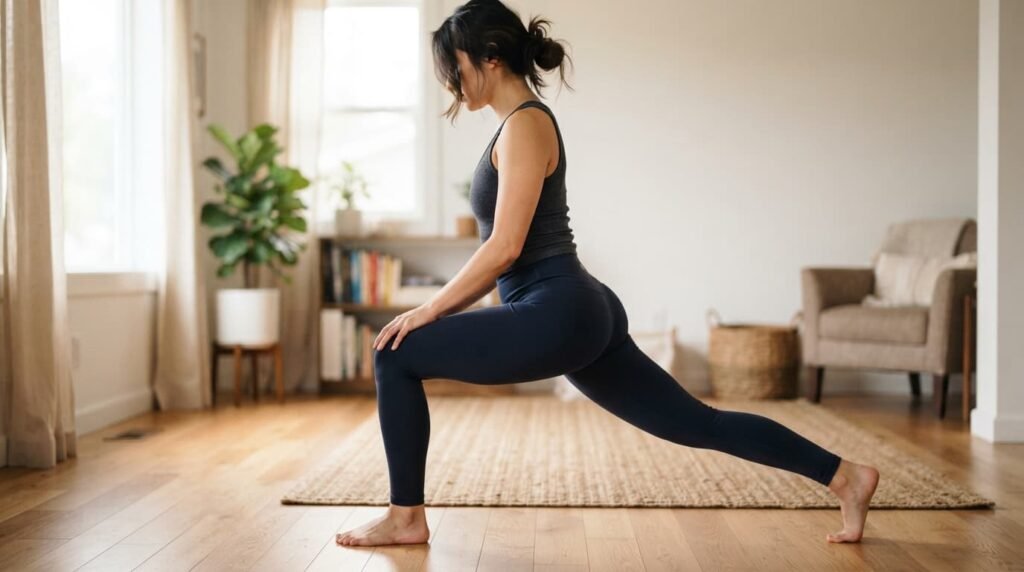
Standing Quad Stretch And Hip Flexor Release
A standing quad stretch loosens tightened thigh muscles that pull on the pelvis after sitting. Holding one ankle behind the body for twenty to thirty seconds targets both quadriceps and hip flexors. A kneeling hip flexor stretch, performed gently, further releases tension built up throughout the day. These movements take under a minute and fit easily between meetings. Consistency matters more than intensity when working through tight hip and thigh muscles.
Quadriceps And Hamstring Stretches For Office Workers
Quadriceps and hamstring stretches for office workers address the two muscle groups most shortened by seated hip angles. A seated forward fold, keeping the back straight, stretches the hamstrings without straining the spine. Stretches for desk workers should always stay gentle rather than forceful, since cold muscles tear more easily. Warming up briefly with a short walk before stretching reduces this risk considerably. Pairing stretches with short walks around the office increases blood flow to both the back and legs. Consistency across the working week matters more than stretch intensity on any single day.
Daily Habits To Prevent Desk Job Syndrome
Desk job syndrome describes the cluster of aches, stiffness and fatigue linked to prolonged, low-movement office work. Small daily habits prevent this cluster from developing into chronic pain.
Movement Breaks And Standing Desk Benefits
Standing every thirty to sixty minutes interrupts the pressure buildup that causes pain from sitting all day. Standing desk benefits include reduced lumbar disc pressure and improved circulation throughout a working shift. Alternating between sitting and standing, rather than standing continuously, tends to suit most people best. Continuous standing can create its own fatigue if not balanced with periodic sitting. Setting a simple timer removes the need to remember these breaks manually.
Supportive Shoes And Knee Support Cushion
Supportive shoes for knee pain distribute weight evenly and reduce strain during the walk to and from a desk. Flat, unsupportive footwear can undo much of the benefit gained from ergonomic adjustments. Hydration also plays a quiet but real role, since dehydrated tissue stiffens more readily. Drinking water regularly throughout the day supports joint lubrication and general tissue flexibility. Poor posture and sitting habits often creep back in without periodic self-checks. A brief posture review each hour helps maintain progress made through other changes.
Workplace Culture And Long-Term Prevention
Long-term relief from lower back pain from sitting depends on workplace habits as much as individual effort. A single ergonomic chair rarely solves a problem built from years of static posture. Employers increasingly recognise that movement-friendly policies reduce absence linked to musculoskeletal complaints. Simple measures, such as encouraging walking meetings, cost little and support both back and knee health. Flexible workstations that allow sitting, standing, and short movement breaks suit most job roles. Hybrid working patterns, where feasible, naturally reduce continuous seated hours across a working week.

Sitting knee pain relief often improves alongside back pain once workplace habits shift together. Group stretch breaks or short guided sessions can help teams build consistency more easily than individual effort alone. Even small cultural changes, sustained over months, tend to outperform occasional intensive fixes. A movement-friendly office culture protects long-term spinal and joint health far more reliably than posture alone. Left unaddressed, static desk culture allows lower back pain from sitting to return even after short-term improvement.
When Sitting Pain Signals A Deeper Problem
Most sitting-related discomfort responds well to posture and movement changes. Some cases, however, need closer clinical assessment.
Arthritis, ACL Tears, and Meniscus Injuries
Arthritis knee pain often intensifies with prolonged sitting because joints stiffen without regular movement. Older injuries, including ACL tears and meniscus injuries, can resurface as ongoing discomfort during long seated periods. Common causes of knee pain in these cases include cartilage wear, previous trauma and joint inflammation. Scar tissue from an old injury can also tighten further during prolonged periods of inactivity. Patients managing arthritis frequently notice that stiffness worsens during colder months. This seasonal pattern is explored further in the clinic’s guide to arthritis pain in cold weather. A knee brace for knee pain may offer short-term support alongside broader lifestyle changes. Non-surgical treatment options for joint pain, including arthritis care, are explained further on the practice’s YouTube channel.
Chronic Knee Pain Causes And When To Seek Consultation
Chronic knee pain causes range from mechanical wear to inflammatory joint conditions. Age plays a measurable role in how frequently these conditions appear. Joint-related discomfort becomes more common with age. This pattern is outlined in the clinic’s overview of knee pain in men over 60. Where conservative measures fail to help after several weeks, a knee pain consultation allows for proper diagnostic imaging. A focused treatment plan can then follow based on those findings. For patients with more advanced joint wear, specialists sometimes discuss options such as arthrosamid treatment for knee arthritis. This non-surgical route suits selected patients seeking longer-lasting relief. Early assessment generally leads to simpler, less invasive treatment overall.
Frequently Asked Questions
Does sitting all day cause permanent back damage?
Sitting itself rarely causes permanent damage on its own. Years of poor posture without correction, however, can accelerate disc wear over time. Most sitting-related back pain improves once posture, movement and ergonomic factors are addressed properly. Persistent pain lasting beyond several weeks deserves a proper clinical assessment rather than continued self-management.
How often should someone stand up during a working day?
Standing every thirty to sixty minutes is generally recommended by ergonomic guidance. Even a short two-minute walk restores circulation and reduces spinal disc pressure noticeably. Consistency across the working week matters more than any single long break. A simple reminder or timer makes this habit easier to maintain.
Can knee pain and lower back pain from sitting be connected?
Yes, tight hip flexors from sitting alter pelvic position. This shift affects both the spine and the knees. Correcting posture and stretching regularly often improves both areas together. A knee pain consultation can help when knee symptoms persist despite postural changes.
What is the fastest way to relieve sitting-related back pain?
Standing, walking briefly and performing a gentle hip flexor stretch offer the fastest short-term relief. Longer-term improvement depends on workstation ergonomics and consistent daily movement habits. Pain that does not ease with these simple steps should prompt a professional review. Waiting too long before seeking advice can allow symptoms to become more established.
When should someone see a specialist about sitting-related pain?
A specialist review makes sense when pain persists beyond several weeks despite ergonomic and lifestyle changes. Numbness, radiating pain or knee locking are signs that warrant prompt assessment. Early consultation typically leads to simpler, more conservative treatment options overall. Delaying assessment can allow manageable issues to develop into more complex ones.
Lower back pain from sitting develops gradually through posture, muscle weakness and reduced movement rather than sudden injury. Ergonomic adjustments, regular stretching and short movement breaks address most cases effectively over time. Persistent or worsening symptoms, particularly alongside knee discomfort, deserve proper clinical assessment rather than prolonged self-management. Small, consistent changes to posture, movement and workstation setup deliver the most reliable long-term results. Mr Syed Nadeem Abbas provides specialist assessment for sitting-related back and knee pain.
Read more: Meniscus Tear Explained From Symptoms to Surgery Options
Read more: Common Types of Arthritis and How to Recognise Them


