
Gel injections for knee pain have become one of the most researched non-surgical treatments for osteoarthritis in the UK. Around 18% of adults over 45 in England report persistent knee pain, according to national health survey data. Many of these patients eventually explore this treatment before considering surgery. It works by restoring lubrication inside the joint, rather than simply masking discomfort. Patients often ask whether the results justify the cost and the wait for full effect. The evidence, combined with growing clinical experience, gives a clearer picture than most marketing claims suggest.
What Gel Injections For Knee Pain Actually Do
Knee gel injections contain hyaluronic acid, a substance naturally present in healthy joint fluid. Osteoarthritic joints lose this natural lubrication over time. That loss increases friction between the bones during movement. A hyaluronic acid injection for the knee replenishes the fluid and cushions the joint surfaces.
The gel does not reverse existing cartilage damage. Instead, it changes the mechanical environment inside the joint. Reduced friction means less pain during walking, climbing stairs, and standing from a seated position. Many patients notice steadier movement within a few weeks of treatment.
How Viscosupplementation Restores Joint Function
Viscosupplementation is the clinical term for this process. It does not directly repair damaged cartilage. The treatment changes the mechanical environment inside the joint, reducing friction and easing pain during weight-bearing activity. The gel also appears to encourage the joint lining to produce better-quality natural fluid over subsequent weeks. This secondary effect may explain why benefits sometimes continue to build after the initial course ends.
Synovial Fluid Injection Knee Mechanics
A synovial fluid injection knee treatment works because thicker fluid absorbs shock more effectively than thin, degraded fluid. Healthy synovial fluid has an egg-white consistency. Arthritic joints often produce fluid that is thinner and less protective. Restoring that thickness explains why relief builds gradually rather than appearing overnight.
Are Gel Injections For Knee Pain Worth It
For most patients with mild to moderate osteoarthritis, this treatment delivers meaningful relief without surgery or a long recovery. Results are not universal, though. Expectations should stay realistic before starting treatment.
Kellgren-Lawrence Grade Knee Osteoarthritis And Response
Doctors often use the Kellgren-Lawrence grade knee osteoarthritis scale to predict outcomes. This scale runs from grade 1, showing minimal change, to grade 4, showing severe joint damage. Patients graded 2 or 3 tend to respond best. Their joint space is narrowed but still present, leaving room for the gel to distribute properly. Grade 4 patients, with bone-on-bone contact, can still improve. Results at this stage are simply less predictable.
Who Benefits Most From Knee Joint Lubrication Injection Treatment
Ideal candidates have tried physiotherapy, weight management, and anti-inflammatory medication first. Patients wanting to delay surgery are often strong candidates. Those hoping to stay active without repeated steroid use also tend to respond well. A knee joint lubrication injection suits people who want to keep walking, gardening, or playing sport during treatment, since there is no real downtime.
Patients unlikely to benefit include those with:
- Active joint infection at the injection site
- Rheumatoid arthritis or other inflammatory joint conditions
- Expectations of instant, dramatic relief within days
Honest expectations matter here. The gel reduces pain and improves function. It does not regenerate cartilage or reverse decades of joint wear.
How Long Do Gel Injections Last
Most patients experience six to twelve months of improvement from a single course. Some formulations and patient factors extend that window further. Lower body weight, moderate activity levels, and earlier-stage osteoarthritis all tend to support longer-lasting results.
Knee Gel Injection Recovery Time And Aftercare
Knee gel injection recovery time is short. Mild soreness or swelling can appear for a day or two after treatment. Rest and ice usually settle these symptoms quickly. Strenuous activity should wait 24 to 48 hours. Most daily tasks, including gentle walking, resume immediately. Repeat courses every six to twelve months often produce longer-lasting benefit than the first round. This cumulative pattern is one of the more encouraging findings in long-term outcome studies.
Cortisone Vs Gel Injections Knee Comparison
Cortisone and hyaluronic acid work through entirely different mechanisms. Both happen to share a delivery method, since each is given as a knee injection.
Gel Injections Vs Cortisone Shots Onset And Duration
Cortisone shots vs gel shots differ mainly in speed and staying power. Cortisone reduces inflammation within days. It rarely lasts beyond six to twelve weeks, though. Repeated cortisone use has been linked to cartilage thinning in clinical research. Gel injections take two to four weeks to show full benefit. The relief then lasts considerably longer, without evidence of cartilage damage.
| Factor | Cortisone | Gel Injections |
| Onset | 2-3 days | 2-4 weeks |
| Duration | 6-12 weeks | 6-12 months |
| Repeat safety | Limited | Generally safe |
| Best for | Acute flare-ups | Ongoing management |
Patients receiving frequent steroid injections for chronic osteoarthritis often discuss switching treatments with their consultant. Some choose longer-acting hydrogel options, such as Arthrosamid treatment, instead of returning for steroid top-ups every few months.
PRP Vs Hyaluronic Acid Injections For Knee Pain
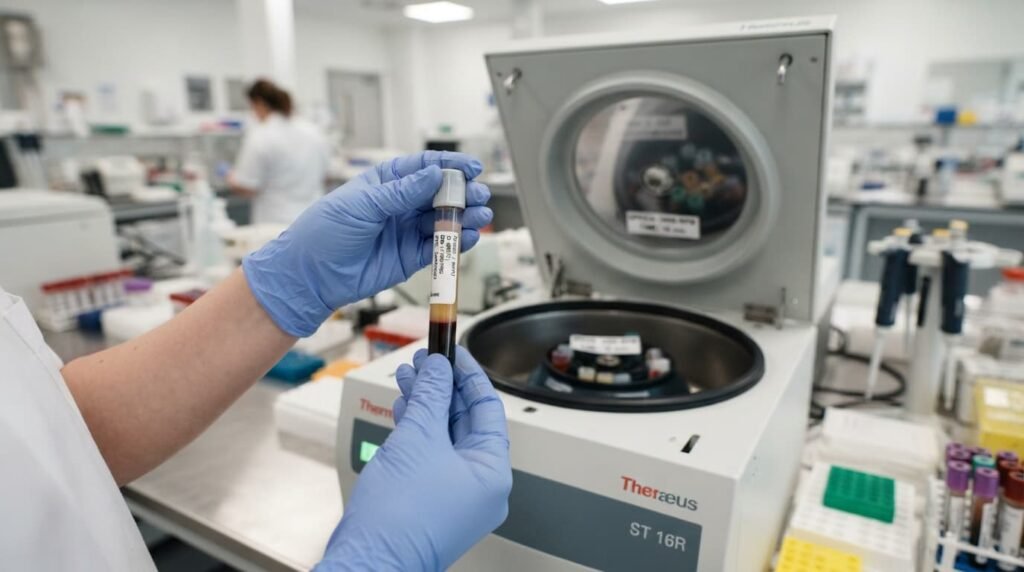
Platelet-rich plasma uses concentrated platelets from a patient’s own blood. The aim is tissue repair, rather than simple joint lubrication. A clinician draws a small blood sample and spins it to separate the platelets. That concentrate is then injected back into the knee.
Some studies suggest PRP results last longer than standard treatment with hyaluronic acid. Evidence remains mixed, though, and PRP is not always covered by insurance. Both approaches outperform cortisone on duration. A detailed comparison of PRP against a hydrogel option sets out how the two biological approaches differ in practice, including cost and expected longevity.
Gel Injections Vs Knee Replacement As A Genuine Alternative
Knee replacement surgery involves general anaesthesia and months of rehabilitation. It also brings permanent anatomical change. Gel injections offer a same-day, low-risk option worth exhausting first in appropriate patients.
Knee Replacement Alternative Considerations
Research suggests a meaningful share of knee replacements happen before less invasive options were fully tried. A genuine trial of viscosupplementation, physiotherapy, and weight management often changes the surgical calculation. If these measures provide adequate relief, surgery becomes unnecessary for years, sometimes indefinitely. If they do not, surgery becomes a well-informed decision rather than a default one.
Bone-on-Bone Knee Treatment Without Surgery
Bone-on-bone knee treatment without surgery remains possible for many patients. This holds even at advanced Kellgren-Lawrence grades. Precise needle placement becomes especially important here, since the joint space narrows considerably at this stage. Men experiencing this pattern later in life may find further detail in coverage of persistent joint pain after 60, including which non-surgical options tend to help most.
Fluoroscopy-Guided Injection Versus Ultrasound-Guided Knee Injection
Accuracy determines whether treatment succeeds or disappoints. Studies show unguided injections miss the knee joint space in a notable share of cases. This happens even among experienced clinicians working from anatomical landmarks alone.
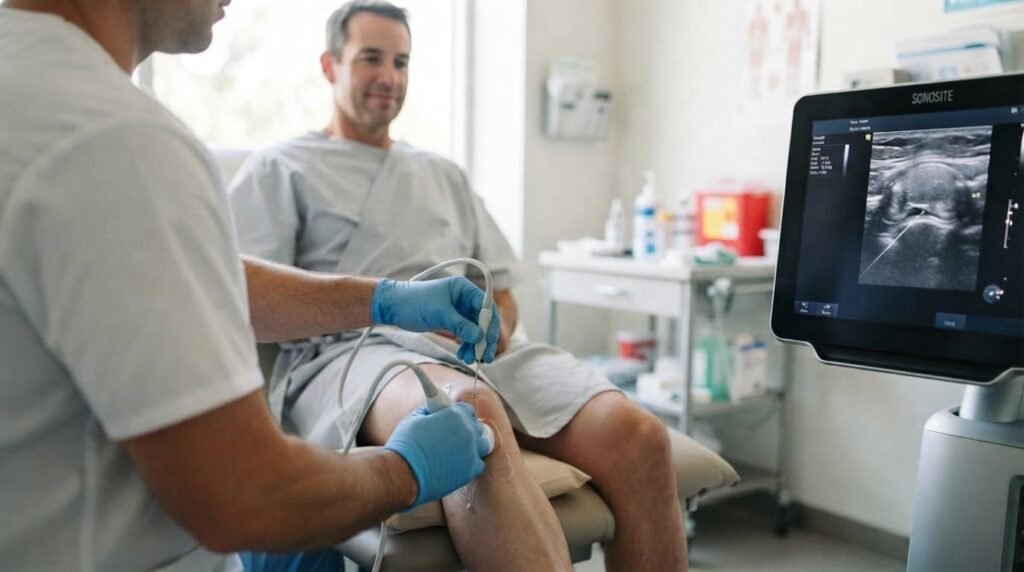
A fluoroscopy-guided injection uses live X-ray imaging. The clinician watches the needle enter the joint in real time on a screen. An ultrasound-guided knee injection offers similar precision without radiation exposure. It uses sound waves to visualise soft tissue and confirm needle placement. Both approaches outperform blind, landmark-based technique. This matters most in patients with narrowed joint space, prior injection failures, or a larger body frame, where anatomical guesswork becomes less reliable.
Types Of Knee Gel Shots And Brand Options
Several hyaluronic acid brands exist on the market. They differ in molecular weight, number of injections required, and source material.
Synvisc, Euflexxa, Durolane And Other Brand Options
A Synvisc injection course may run as a single shot or three weekly injections. The single-shot version suits patients who prefer fewer appointments. The three-injection course may distribute the gel more evenly across the joint. Euflexxa injection and Monovisc injection products are non-animal-derived. These suit patients who wish to avoid animal-sourced material altogether. Durolane knee injection and orthovisc injection formulations are typically single-dose treatments. Hyalgan injection and supartz injection courses often span three to five weekly visits instead.
Rooster Comb Injections And Bird Allergy Considerations
Several formulations derive from rooster combs, earning the informal name rooster comb injections. Anyone with a known bird allergy or hyaluronic acid sensitivity should flag this before treatment begins. Alternative, non-animal formulations are widely available for these patients, so allergy history should never rule out the treatment entirely.
Arthrosamid Injection: A Longer-Acting Alternative
Arthrosamid injection is a polyacrylamide hydrogel, distinct from standard hyaluronic acid formulations. Given as a single injection, it is designed to integrate with the joint lining rather than gradually absorb like traditional gel treatments. This makes it a practical option for patients cycling through frequent steroid injections or finding standard hyaluronic acid courses wear off too quickly.
Risks, Side Effects And The Pseudoseptic Reaction
Most side effects are mild. Brief soreness, swelling, or warmth at the injection site are the most common complaints. These usually settle within a day or two without intervention.
A rare pseudoseptic reaction knee injection complication that can mimic infection. Redness and swelling appear suddenly, causing understandable alarm. This reaction usually resolves within one to two weeks with rest and ice. Further injections in that particular course are typically paused as a precaution. Active joint infection remains a firm contraindication for treatment of any kind. The joint must be fully clear of infection before any injection proceeds.
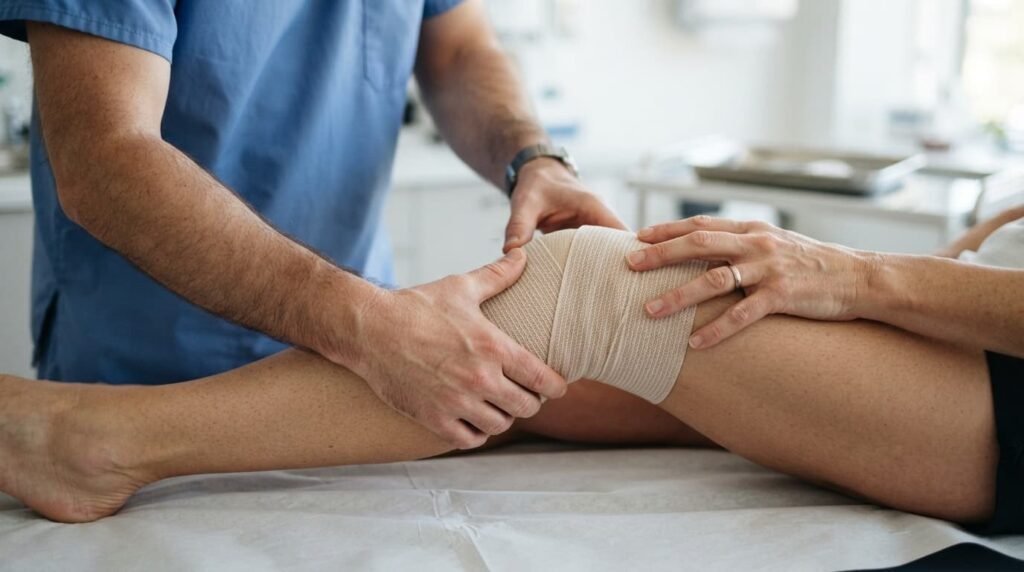
Physiatrist knee injections, alongside those delivered by sports medicine consultants and orthopaedic specialists, form the standard route for this care in the UK. Most patients begin with an initial consultant assessment before any injection is scheduled.
Gel Shots For Knee Pain Cost And UK Insurance Considerations
Gel shots for knee pain cost varies by clinic, formulation, and whether treatment involves a single dose or several visits. Prices also depend on whether imaging guidance is included as standard.
Does insurance cover knee gel injections is a common question, and the answer depends entirely on the policy. Many UK private plans include some coverage once conservative treatments have already been tried. Others exclude viscosupplementation entirely from their standard terms. Checking coverage directly with the insurer before booking avoids unexpected bills further down the line.
Frequently Asked Questions About Gel Injections For Knee Pain
Are gel injections worth it for everyone with knee pain?
Whether gel injections are worth it depends on osteoarthritis severity, prior treatment, and realistic expectations. Mild to moderate cases tend to respond best, while very advanced or inflammatory arthritis often needs a different approach.
How long do gel injections last compared with cortisone?
How long do gel injections last is typically six to twelve months. Cortisone shots, by comparison, usually last only six to twelve weeks before symptoms return.
Is a fluoroscopy-guided injection necessary for every patient?
Fluoroscopy guidance is not compulsory for every case. It is strongly recommended for advanced arthritis, narrowed joint space, or previous injection failures, where precision matters most.
Can gel injections replace a knee replacement entirely?
For some patients, exploring a knee replacement alternative through repeated courses and physiotherapy delays or removes the need for surgery. For others with advanced joint damage, surgery eventually becomes the better path.
What is the difference between viscosupplementation and PRP?
Viscosupplementation lubricates the joint using hyaluronic acid. PRP instead uses a patient’s own blood platelets to encourage tissue repair, working through a biological rather than mechanical process.
Does the type of brand used affect results?
Formulation, molecular weight, and injection schedule can all influence outcomes slightly. A consultant will usually select the brand best suited to individual joint condition and any relevant allergy history.
Gel injections for knee pain offer a well-evidenced, low-risk option for osteoarthritis patients who have exhausted first-line treatment. Relief builds gradually, typically lasting six to twelve months, and compares favourably with cortisone on duration and cartilage safety. Accuracy of placement, whether by fluoroscopy or ultrasound guidance, remains central to success. Mr Syed Nadeem Abbas, consultant specialising in non-surgical knee and joint treatment, advises patients on whether this therapy suits their specific stage of osteoarthritis.
Read more: Knee Pain Without Injury and What It Really Means for Joint Health
Read more: ACL Injury Myths Continue To Mislead Patients Considering Treatment Choices


