
ACL injury myths continue to shape treatment decisions for thousands of UK patients every year. Around 30 people per 100,000 sustain an anterior cruciate ligament injury annually, most commonly during football, skiing, or netball. Despite decades of research, outdated beliefs still dominate conversations between patients and clinicians. Many assume surgery is the only realistic option after a tear. Others believe a torn ligament can never heal, or that skipping an operation guarantees long-term joint damage. These assumptions often go unchallenged, shaping decisions before a patient has reviewed the full evidence. Recent studies from orthopaedic and physiotherapy research groups tell a more nuanced story. Spontaneous ligament healing, safe non-surgical rehabilitation, and successful return to sport without reconstruction all feature in current literature.
Myth One: A Torn ACL Can Never Heal Without Surgery
A common assumption holds that a ruptured ligament can never heal without surgery. Research now challenges this claim directly. Ihara et al. (1996) found spontaneous healing in 74% of complete ACL ruptures within three months, without any surgical intervention. Later studies produced more mixed results. Healing rates ranged from 14% to over 50%, depending on tear location and follow-up period. Whether a torn ligament heals without surgery depends heavily on the tear location. Management choices in the weeks after injury matter too. Tears near the femoral attachment tend to heal more reliably than tears at the tibial end. ACL healing without surgery appears possible across several tear patterns.
What The KANON Trial Revealed
The KANON trial, a landmark study comparing surgical and non-surgical ACL management, offered further evidence. A secondary analysis confirmed that 30% of completely ruptured ligaments healed within two years on MRI. Among patients who avoided early reconstruction, that figure rose to 53%. These findings directly challenge the assumption that ACL tears heal on their own only in rare cases. KANON trial ACL data suggests meaningful healing occurred without a single operation for many participants.
Blood Supply and Ligament Repair
Sceptics often argue the ligament lacks sufficient blood supply to heal itself. Orthopaedic research disputes this claim. The ACL contains a rich network of blood vessels and anastomoses capable of supporting repair across most tear locations. ACL blood supply healing research suggests circulation may even increase following injury. This supports the body’s natural repair process. It explains why an ACL tear can heal on its own in many cases.
Bracing Protocols Support Natural Healing
A structured ACL bracing protocol can improve healing odds further. One study immobilised the knee at 90 degrees of flexion for four weeks, gradually increasing movement over twelve weeks. This approach produced healing in 90% of participants, positioning the torn ends closer together and encouraging reconnection. Bracing alone, without any surgical input, has produced healing rates rivalling many post-surgical outcomes.
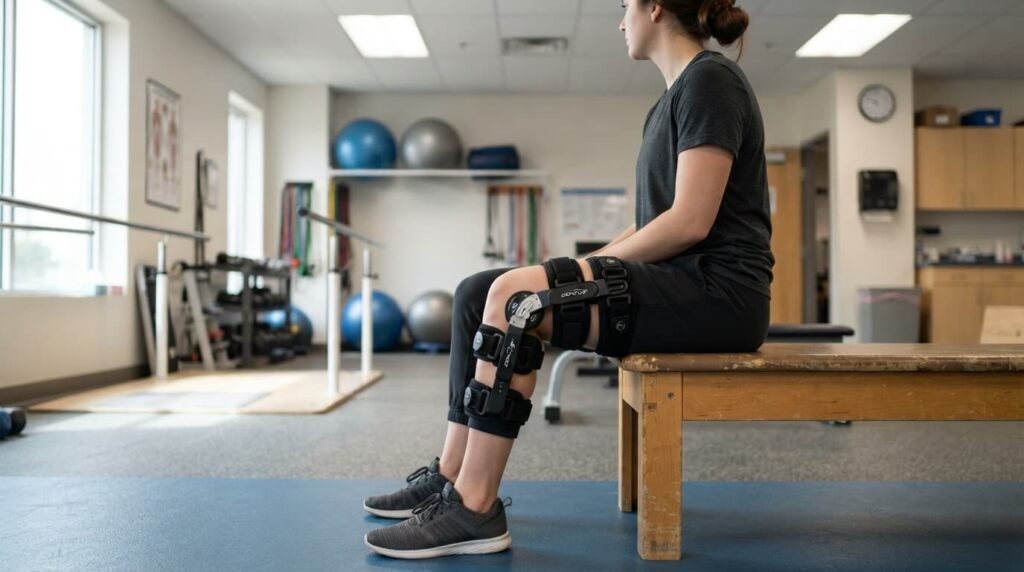
Anticoagulant medication often accompanies extended bracing periods to reduce clotting risk during immobilisation. Patients considering this route should discuss both benefits and practical limitations with a specialist beforehand. Long periods of restricted movement carry their own challenges, including muscle deconditioning if not carefully managed. A structured bracing protocol still requires close clinical supervision, even without surgical involvement.
Myth Two: Surgery Always Beats Rehabilitation
Another persistent belief claims surgery outperforms rehabilitation in every case. This ranks among the more repeated ACL injury myths in orthopaedic circles. Comparative research disagrees with this assumption. A study by Grindem et al. (2012) tracked return to pivoting sport a year after injury across surgical and non-surgical groups. Return rates were nearly identical, and the non-surgical group scored better on hop tests and knee function scales. Choosing ACL rehab without surgery does not automatically mean a worse functional outcome.
Weighing ACL Reconstruction Risks
Every surgical procedure carries inherent risk. ACL reconstruction risks commonly include:
- Infection at the surgical site
- Graft failure or re-rupture
- Prolonged joint stiffness
- Recovery lasting six to twelve months
Non-surgical ACL treatment avoids these surgical complications entirely, relying instead on structured strengthening and neuromuscular retraining. Conservative management ACL tear pathways typically involve staged physiotherapy, beginning with range-of-motion work before progressing to strength and balance training.
Comparing Reconstruction And Rehabilitation Outcomes
The debate between ACL reconstruction vs rehabilitation rarely produces a universal winner. Outcomes depend on activity level, knee stability, age, and personal goals rather than a single correct pathway. ACL rupture rehabilitation programmes that emphasise quadriceps and hamstring strength often restore functional stability even without an intact ligament. The Medial Collateral Ligament, when uninjured, can also help compensate for reduced ACL support during rehabilitation. The debate between ACL reconstruction vs rehabilitation rarely produces a universal winner. Outcomes depend on activity level, knee stability, age, and personal goals rather than a single correct pathway.
ACL rupture rehabilitation programmes that emphasise quadriceps and hamstring strength often restore functional stability even without an intact ligament. The Medial Collateral Ligament, when uninjured, can also help compensate for reduced ACL support during rehabilitation. Similar principles apply broadly across knee care, including non-surgical treatment pathways used for other joint conditions. The Dr SNA Clinic YouTube channel features discussions on conservative arthritis and joint pain management.
Recovery Timelines And Practical Factors
Recovery timelines differ significantly between the two approaches. Practical factors worth weighing include:
- Surgical patients typically follow a structured six-to-twelve-month rehabilitation programme
- Non-surgical patients often begin functional strengthening within weeks, provided the knee remains stable
- Cost and time away from work factor heavily into many patients’ final decisions
- Insurance coverage, occupation demands, and family circumstances all shape which pathway feels most practical
Myth Three: Sport Becomes Impossible Without ACL Surgery
Many patients believe professional-level sport becomes impossible without reconstruction. Real-world cases contradict this belief repeatedly. Several elite athletes have competed successfully with a fully absent ligament. One NBA player continued a high-level professional career for years after both ligaments ruptured and failed to reconnect. A professional rugby player returned to competitive matches within two weeks of injury. He later won a Man of the Match award.

Evidence From Sport Research
Return to sport without ACL surgery also appears in structured research, not just anecdote. Myklebust et al. (2003) followed professional handball players for six to eleven years. Among those treated without surgery, 82% returned to their pre-injury level, compared with 58% of surgically treated patients. Whether someone can play sports without an ACL depends far more on rehabilitation quality than on the surgical decision itself.
Why Physiotherapy Drives The Outcome
ACL tear physiotherapy plays the central role in these outcomes. Structured programmes progress through several stages:
- Strength work targeting the quadriceps and hamstrings
- Balance and proprioception drills
- Sport-specific movement patterns
- Hop testing and agility assessment before full clearance
Skipping this structured progression, regardless of surgical status, remains one of the most common causes of repeat injury.
Mental Readiness Matters Too
Psychological readiness matters just as much as physical strength during this process. Fear of re-injury sometimes lingers long after physical benchmarks have been met. Sports psychologists increasingly work alongside physiotherapists to address this confidence gap. Athletes who feel mentally prepared tend to perform more naturally once cleared for full training.
Myth Four: Non-Surgical Patients Face Higher Meniscus Damage
A frequently repeated claim suggests that avoiding surgery increases the chance of tearing the meniscus. Systematic reviews consistently fail to support this. Ekas et al. (2020) concluded there was insufficient evidence that early reconstruction helps patients avoid new meniscal tears compared with non-operative treatment. Three further reviews reached the same conclusion, finding no significant difference in subsequent meniscal damage between surgical and non-surgical groups.

What Actually Drives Meniscus Risk
ACL tear meniscus risk without surgery appears driven by inadequate rehabilitation, not by the absence of an operation. The greatest risk factor for further knee damage remains insufficient strengthening, not a missed surgical appointment. Studies comparing surgery against no treatment whatsoever, rather than against structured rehabilitation, have historically distorted this picture.
Telling Meniscus And Ligament Symptoms Apart
Distinguishing meniscus symptoms from ligament instability remains essential for accurate diagnosis. ACL, MCL, and meniscus tears often produce overlapping symptoms. Careful examination still separates ACL, MCL, and meniscus injury differences accurately. Persistent swelling or locking often signals meniscus tear symptoms and treatment options rather than ligament damage.
Myth Five: Skipping Surgery Guarantees Osteoarthritis
Patients often hear that avoiding reconstruction inevitably leads to arthritis later in life. Long-term data complicates this narrative considerably. A twenty-year follow-up study found osteoarthritis in 80% of surgically treated patients. Non-operative patients showed 68%, a difference considered statistically insignificant. An umbrella review evaluating thirteen systematic reviews similarly found no long-term reduction in osteoarthritis risk following reconstruction.
What The Statistics Actually Show
ACL surgery statistics from several large reviews show a slightly higher incidence of osteoarthritis among operated patients rather than lower. The original injury itself appears to drive long-term joint changes far more than the surgical decision that follows it. Quadriceps weakness and meniscus removal both correlate more strongly with osteoarthritis risk than treatment choice. Patients managing early joint changes sometimes explore options such as Arthrosamid injections. This suits cases where surgery is not preferred. Comparing regenerative options like PRP against Arthrosamid offers further insight for patients managing post-injury joint changes conservatively.
Scans Do Not Always Match Symptoms
Radiographic osteoarthritis on a scan does not always translate into daily symptoms or pain. Many patients with visible joint changes continue normal activity levels without significant discomfort. Regular strength maintenance appears to slow symptomatic progression more effectively than treatment choice alone. Lifestyle factors, including weight management and activity levels, also influence long-term joint comfort considerably.
Myth Six: Open Chain Exercises Damage The ACL
A widely repeated warning claims open chain knee extensions loosen a healing or reconstructed ligament. This is one of the more technical ACL injury myths circulating among rehab professionals. Comparative studies find no such effect. Fleming et al. (2005) and Perriman et al. (2018) both studied this question directly. Neither found a measurable difference in knee joint laxity. Results were consistent whether patients avoided open chain exercises or performed them regularly.
Walking vs Leg Extension: Comparing Strain
Open chain exercises: ACL research also reveals a surprising comparison point. Ligament strain during ordinary walking measures two to three times higher than strain produced during controlled open-chain quadriceps work. If walking poses no meaningful danger to a healing ligament, a supervised leg extension rarely does either.

Why Leg Extensions Work Well In Rehab
Leg extension after ACL injury offers a specific advantage over compound movements like squats:
- Isolated knee extension prevents the hip from compensating for weaker quadriceps
- Unilateral leg extensions help identify strength imbalances between the injured and uninjured leg
- A mid-range knee flexion angle suits early-stage loading
- Full range of motion can be introduced gradually as strength improves
Why These ACL Injury Myths Persist
Financial And Cultural Factors
Misinformation around ligament injuries rarely spreads by accident. ACL reconstruction surgery generates substantial global revenue each year, creating little financial incentive to promote non-surgical pathways. Surgeons who advocate conservative management sometimes face scepticism from colleagues trained under older, surgery-first paradigms. Media coverage also favours dramatic surgical recovery stories over quieter, less newsworthy rehabilitation successes.
Gaps In Research Design
Research culture compounds the issue further. Very few randomised controlled trials compare ACL surgery directly against structured non-surgical treatment. Most surgical studies instead compare one graft type or technique against another. This leaves a genuine evidence gap around the surgery-versus-rehabilitation question. This gap in comparative research allows outdated assumptions to persist far longer than the evidence actually supports. Patients researching treatment options online frequently encounter one-sided messaging that overstates surgical benefits while downplaying non-surgical success rates.
The Role of Shared Decision Making
What Shared Decision Making Involves
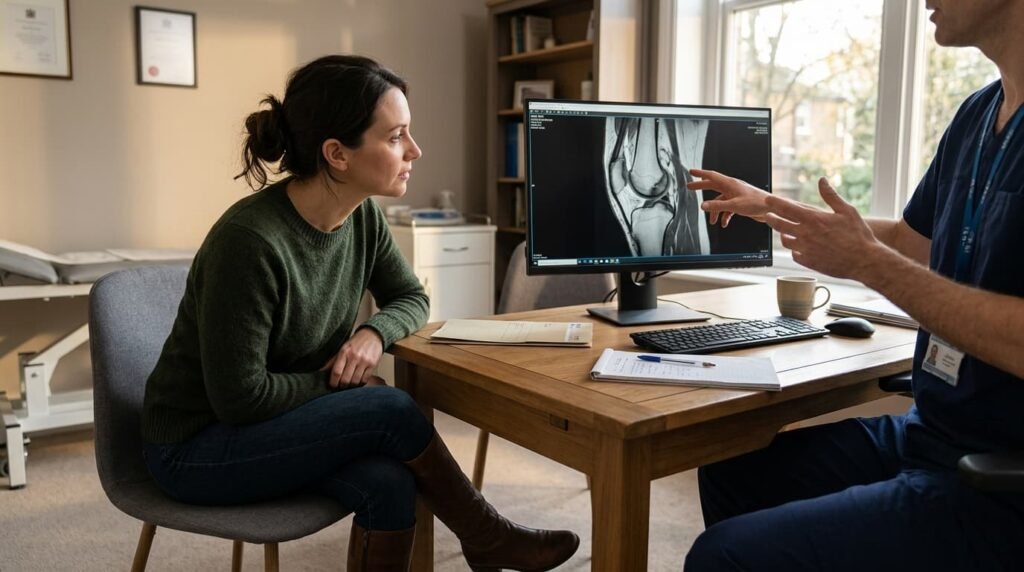
Deciding between surgery and rehabilitation should never rest on outdated assumptions. Shared decision-making ACL surgery conversations involve reviewing imaging, activity goals, knee stability, and personal circumstances together with a specialist. A well-informed decision considers evidence rather than fear-based assumptions passed between patients.
Is Surgery Always Necessary?
Patients often wonder whether ACL surgery is truly necessary, expecting a simple yes-or-no answer. The honest response depends on multiple variables rather than a fixed rule:
- Younger, highly active patients pursuing competitive pivoting sports may benefit from earlier reconstruction
- Others achieve strong, stable outcomes through structured rehabilitation alone
- A thorough assessment helps clarify which pathway suits an individual case
Frequently Asked Questions
Can ACL heal without surgery?
Evidence shows many ACL ruptures, including complete tears, can heal without surgery. Healing rates vary depending on tear location, bracing protocol, and rehabilitation quality. Regular imaging helps confirm progress throughout the recovery process.
Does an ACL tear heal on its own without any bracing?
Some tears heal without any bracing, though structured protocols significantly improve healing rates. Femoral-end tears tend to heal more reliably than tibial-end tears. Tibial-end tears often need closer monitoring throughout recovery.
Is ACL surgery vs no surgery a straightforward decision?
No single answer applies to every patient. Activity level, knee stability, and personal goals all influence whether surgery or rehabilitation suits an individual case better. A specialist assessment usually clarifies the most suitable pathway.
Can sport continue without an ACL?
Many patients return to pivoting and contact sports without an intact ligament. Structured physiotherapy and strength training play the largest role in this outcome. This directly answers whether sport remains possible without an ACL. Muscle strength and neuromuscular control often matter more than the ligament itself.
Do open chain exercises ACL protocols cause harm?
Research shows no measurable increase in joint laxity from open chain exercises. Ligament strain during walking actually measures higher than during controlled leg extensions. Supervised programmes remain the safest way to introduce these exercises.
Does non-surgical ACL treatment increase osteoarthritis risk?
Long-term data show no significant increase in osteoarthritis risk from avoiding surgery. Quadriceps weakness and meniscus removal correlate more strongly with later joint changes. Maintaining strong surrounding muscles offers meaningful long-term joint protection.
ACL injury myths continue to influence treatment decisions long after research has moved on. Spontaneous healing, safe non-surgical rehabilitation, and successful sporting return all feature strongly in current evidence. Surgery remains valuable for specific cases involving persistent instability or high sporting demands. Choosing between pathways depends on individual circumstances rather than outdated assumptions.
Mr Syed Nadeem Abbas brings extensive consultant-level experience in non-surgical knee osteoarthritis management, including Arthrosamid treatment for long-term joint support. His approach favours evidence-based, individualised care over one-size-fits-all treatment pathways.
Read more: Knee Pain Without Injury and What It Really Means for Joint Health
Read more: Knee Pain Treatment Options That Actually Relieve Discomfort


