IT Band Syndrome And Knee Pain Often Develop Together In Active People

✅ Medically reviewed | Updated september 2026
IT band syndrome and knee pain frequently appear together in runners, cyclists, and anyone who repeats the same knee-bending motion for long periods. The condition affects the outer thigh and the outside of the knee. A thick strip of tissue rubs against bone during repeated movement. Understanding IT band syndrome and knee pain together helps patients tell this overuse injury apart from arthritis, meniscus tears, or other joint problems.
Early recognition supports faster, simpler recovery and prevents months of frustrating trial and error with the wrong treatment approach. Patients who understand the pattern early tend to modify training sooner and recover with far less disruption to their routine.
What Is IT Band Syndrome
The iliotibial band, often shortened to IT band, runs along the outer thigh from the hip to just below the knee. It stabilises the knee joint during walking, running, and cycling. What is IT band syndrome, in simple terms? It is inflammation and irritation that develops when this band repeatedly rubs against the outer part of the knee bone.
Repetitive knee bending creates friction that the tissue was never designed to absorb in large volumes. Over weeks or months, that friction produces swelling, tenderness, and pain concentrated on the outside of the knee. The condition rarely results from a single injury. It builds gradually through repeated movement.
Doctors sometimes describe IT band syndrome and knee pain as a single package rather than two separate problems. This is because the discomfort almost always centres on the same lateral point. Recognising this pattern early makes self-management far more effective. Waiting until pain becomes constant tends to extend the recovery timeline considerably. A four-week problem can quietly turn into a three-month one. IT band syndrome and knee pain respond far better to early, small adjustments than to prolonged inaction.
Why The IT Band Rubs Against The Knee
Several structural factors explain why friction builds at this specific point on the knee:
- The band crosses a bony prominence on the outer thigh bone during knee bending
- Repeated bending and straightening creates a sliding motion across this bony point
- Tight surrounding muscles increase the pressure of that sliding motion
- Insufficient recovery time between sessions prevents irritated tissue from settling
What Causes IT Band Syndrome
IT band syndrome causes are mostly mechanical rather than traumatic. Training habits, biomechanics, and muscle imbalances all play a part. These factors often combine rather than act alone. This is one reason two runners with similar weekly mileage can experience very different outcomes. IT band syndrome and knee pain rarely trace back to a single trigger.

Running And Cycling Habits Linked To IT Band Syndrome
IT band syndrome running injuries commonly follow a sudden increase in mileage, frequent downhill running, or worn-out footwear. Runners who increase distance too quickly overload the tissue before it adapts. Downhill sections place extra strain on the knee because the band absorbs greater force with each bent-knee landing.
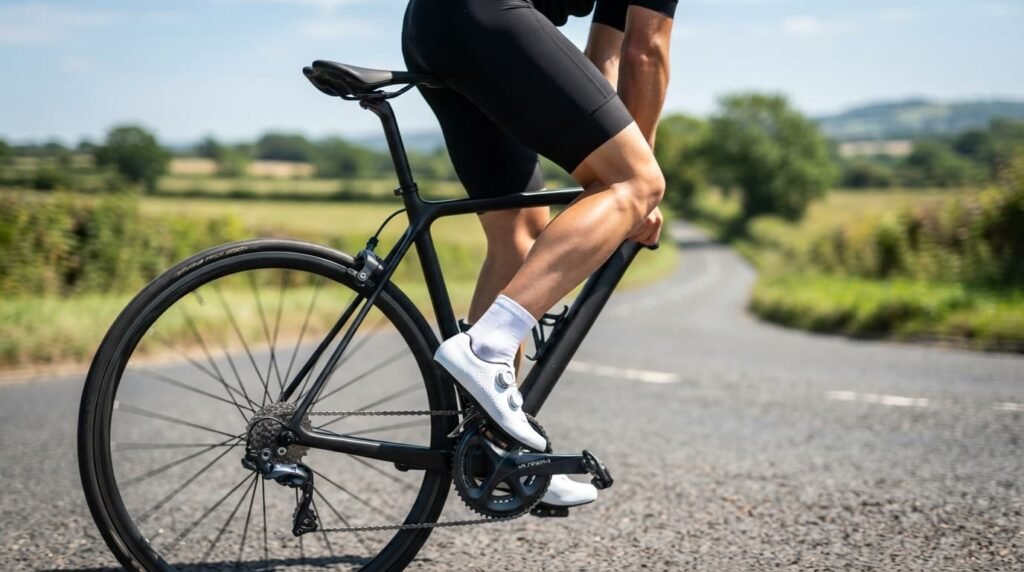
IT band syndrome: cyclists face a related risk from saddle height set too low. A low saddle forces repeated knee flexion under load throughout every pedal stroke. Cleat alignment and pedalling cadence can add further strain too. Both factors force the knee to track slightly inward during each rotation.
Small technical adjustments often prevent months of avoidable discomfort. Rest days between high-mileage sessions give tissue time to recover before facing the next demand.
Muscle And Alignment Factors Behind Lateral Knee Pain
Lateral knee pain causes extend beyond training volume alone. Weak hip abductor muscles allow the thigh to rotate inward during activity. This inward rotation increases tension along the IT band with every stride during a run.
Tightness in the band itself, combined with limited hip mobility, raises friction at the knee. Slight leg-length differences and a bowed knee alignment can also contribute to the problem. A runner with tight hips and rapidly increasing mileage faces a meaningfully higher risk than either factor alone would suggest.
Recognising IT Band Syndrome Symptoms
IT band syndrome symptoms typically centre on the outer knee rather than the front or inside of the joint. Pain usually begins as a mild ache during activity. It progresses to a sharper, more persistent sensation if training continues unchanged.
Common signs include:
- A sharp or burning pain on the outside of the knee
- Tenderness when pressing the outer knee area
- Pain that worsens with downhill running or prolonged cycling
- A clicking or snapping sensation near the knee
- Pain that eases with rest in early stages
Symptoms typically appear a short time after activity begins in the early stages. As the condition progresses, pain can start earlier in a session and linger longer afterwards. Some patients notice pain during simple daily activities such as climbing stairs. This usually happens once the irritation has been present for several weeks without treatment.
Can IT Band Syndrome Cause Knee Swelling
Can IT band syndrome cause knee swelling in more advanced cases? Yes, mild swelling and warmth around the outer knee sometimes accompany ongoing irritation. This tends to happen once pain persists beyond the activity itself. Swelling is usually localised rather than affecting the whole joint. This localised pattern helps distinguish the condition from more diffuse arthritic swelling. Arthritic swelling typically spreads across the entire joint rather than staying confined to one side.
A Simple IT Band Syndrome Self Test

An IT band syndrome self-test can offer an early indication before a clinical assessment. Bending the knee to roughly thirty degrees while pressing on the outer knee often reproduces the characteristic pain. Straightening the leg slowly from this bent position often brings the pain back. This reaction, appearing at a predictable point in the movement, is a useful sign. It suggests the IT band is genuinely involved rather than another structure nearby.
This quick check should guide the decision to seek assessment, not replace one. A physiotherapist or doctor confirms the diagnosis through a full examination. This examination often includes a review of training history and current footwear condition.
IT Band Syndrome Versus Knee Osteoarthritis And Other Conditions
IT band syndrome vs knee osteoarthritis comparisons matter because the two conditions require different management. Osteoarthritis pain tends to affect the whole joint and worsens gradually over years. It often includes stiffness after periods of rest.
IT band syndrome concentrates on the outer knee instead. It links closely to specific repetitive activities such as running or cycling rather than developing from cumulative joint wear. Age patterns differ too. IT band syndrome affects younger, active populations far more often than older patients dealing with gradual degenerative change.
Patients managing broader joint degeneration alongside overuse symptoms may benefit from reviewing options such as hydrogel-based knee treatment. This treatment addresses osteoarthritis specifically rather than overuse-related friction.
IT Band Syndrome Versus Lateral Meniscus Tear
IT band syndrome vs lateral meniscus tear confusion is common because both cause outer knee pain. A meniscus tear often follows a twisting movement. It may cause locking or a feeling of the knee giving way during weight-bearing activity.
IT band syndrome develops gradually and rarely locks the joint. Sudden mechanical symptoms point toward a structural tear rather than a friction-based overuse injury. An accurate distinction between the two conditions changes the entire treatment plan. A meniscus tear may eventually need imaging or referral for a specialist opinion.
How To Fix IT Band Syndrome
How to fix IT band syndrome usually starts with activity modification rather than complete rest. Reducing mileage, avoiding downhill terrain temporarily, and adjusting bike saddle height address the root mechanical cause directly. Complete rest without addressing the underlying trigger often leads to the same pain returning once activity resumes.
IT Band Syndrome Treatment Options
IT band syndrome treatment typically progresses through several stages. Initial care focuses on reducing inflammation through rest from aggravating activity. Ice application for fifteen to twenty minutes at a time supports this early phase. Over-the-counter anti-inflammatory medication may ease pain during flare-ups.
Persistent cases benefit from structured physiotherapy rather than prolonged rest alone. Surgery remains rare and is reserved for cases that fail to respond after several months of conservative treatment. Patients managing IT band syndrome and knee pain alongside a demanding training schedule need patience. The process usually involves several small adjustments rather than one single fix.
IT Band Stretches For Knee Pain
IT band stretches for knee pain target the outer thigh and hip region rather than the knee joint directly. A standing IT band stretch, crossing one leg behind the other while leaning sideways, gently lengthens the tissue. Holding each stretch for twenty to thirty seconds works well. Repeating the stretch several times daily supports gradual flexibility gains over several weeks of consistent practice. A hip flexor stretch, performed in a gentle lunge position, works well alongside this. It complements the standing IT band stretch by loosening surrounding tissue at the same time. This pairing supports a more complete recovery.
IT Band Syndrome Exercises For Strength And Stability
IT band syndrome exercises usually target the hip abductors and glutes. Weakness in these muscle groups often underlies the friction problem in the first place. Side-lying leg raises and clamshells build early strength. Standing hip abduction with resistance bands then adds the stability needed to reduce strain on the band itself.
Strengthening the hip, rather than stretching the knee alone, addresses the mechanical root of the problem. A physiotherapist adjusts exercise progression to match individual strength levels and activity goals over time.
IT Band Foam Rolling Technique
IT band foam rolling remains a popular self-management tool. Evidence on its direct effect on the band’s own structure is mixed. Rolling the outer thigh slowly, pausing on tender points for twenty to thirty seconds, may ease surrounding muscle tightness. This benefit occurs even where the band’s own tissue changes very little. Foam rolling works best alongside strengthening exercises rather than as a standalone fix for persistent symptoms.
IT Band Syndrome Physiotherapy And Recovery Timeline
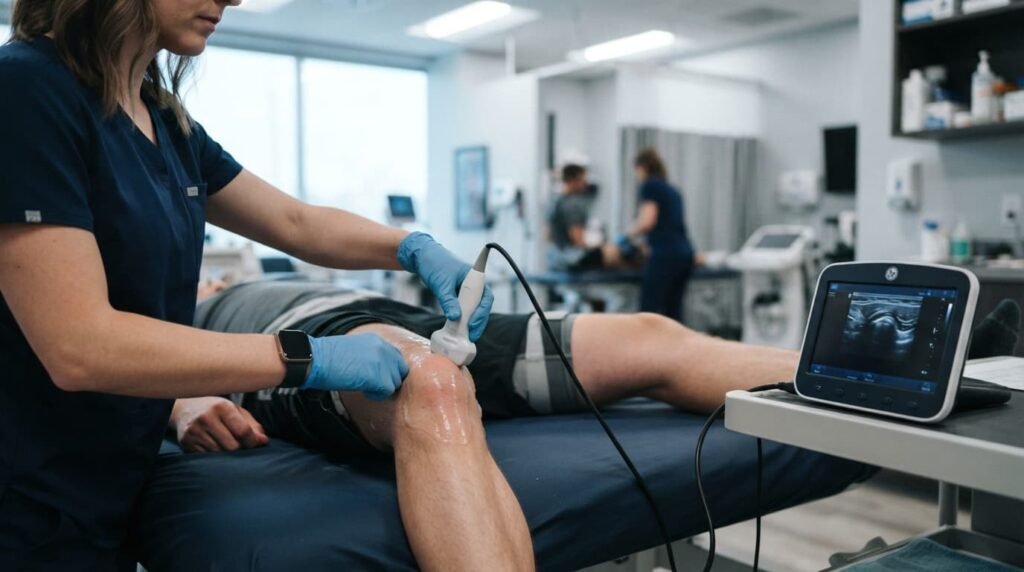
IT band syndrome physiotherapy combines manual therapy, targeted stretching, and progressive strengthening under professional guidance. A physiotherapist assesses running gait, hip strength, and flexibility. This assessment shapes an individual recovery plan matched to the patient’s specific activity type.
How long IT band syndrome take to heal varies by severity and how early treatment begins. Mild cases often improve within four to six weeks of activity modification and physiotherapy. Recovery can take up to eight weeks or longer for cases with significant strength deficits or delayed treatment.
Returning to running or cycling too quickly risks symptom recurrence. A gradual return, guided by pain response rather than a fixed calendar date, produces more reliable long-term outcomes. Physiotherapy demonstrations covering hip and knee strengthening are available through the DrSNA Clinic YouTube channel. These offer visual guidance for patients alongside their in-person care.
When To See A Knee Specialist For Lateral Knee Pain
Persistent pain beyond six to eight weeks of self-management warrants specialist assessment. Locking, giving way, or significant swelling suggest a structural problem. These signs point toward imaging rather than continued conservative care alone.
Patients over fifty with gradually worsening pain should also rule out osteoarthritis. Management for broader knee pain patterns in older patients differs meaningfully from overuse-injury care. An accurate diagnosis prevents months of ineffective self-treatment and misdirected exercise programmes.
A knee specialist combines physical examination with imaging where needed. This combination confirms whether IT band syndrome, meniscus damage, or osteoarthritis best explains a patient’s symptoms.
Bringing a clear activity history to the appointment speeds up diagnosis considerably. Details on recent mileage changes, footwear age, and terrain changes all help. A specialist can connect symptoms to a likely cause quickly with this information. Patients who track when pain starts during a run or ride often provide the most useful diagnostic clue of all.
Frequently Asked Questions
What is IT band syndrome?
IT band syndrome is inflammation caused by repeated friction between the iliotibial band and the outer knee bone. It is common in runners and cyclists.
What are the main IT band syndrome symptoms?
The most typical warning signs include sharp outer knee pain during activity, tenderness, and occasional clicking near the joint.
How to fix IT band syndrome quickly?
There is no true shortcut, but reducing aggravating activity, applying ice, and starting hip-strengthening exercises early supports faster recovery.
Can IT band syndrome cause knee swelling?
Mild, localised swelling around the outer knee can occur, especially once irritation has persisted for several weeks.
How long does IT band syndrome take to heal?
Most mild cases heal within four to six weeks of activity modification and physiotherapy, though more severe cases take longer.
Is IT band syndrome the same as knee osteoarthritis?
No. IT band syndrome vs knee osteoarthritis differ in cause, pain pattern, and age group affected. Osteoarthritis involves broader joint degeneration rather than localised friction.
Does foam rolling cure IT band syndrome?
IT band foam rolling eases surrounding muscle tightness. It works best combined with targeted strengthening rather than used alone.
IT band syndrome and knee pain on the outer knee usually stem from repetitive friction rather than structural damage. Most cases respond well to activity modification, stretching, and targeted strengthening within a matter of weeks. Distinguishing this condition from osteoarthritis or meniscus injury ensures the right treatment path from the start.
Mr Syed Nadeem Abbas, MBBS, MRCSEd, MSc, brings consultant-level orthopaedic expertise to knee pain assessment and treatment planning. His practice focuses on accurate diagnosis and evidence-based, non-surgical management of persistent knee conditions.
Read more: Knee Aspiration Removes Fluid to Ease a Swollen and Painful Knee
Read more: Knee Bursitis Symptoms Often Develop After Repeated Kneeling or Injury