Cycling With Arthritis Can Ease Knee Pain and Improve Mobility

✅ Medically reviewed | Updated July 2026
Cycling with arthritis often raises concern, since many patients assume pedalling will worsen joint pain. Evidence points in the opposite direction. Cycling is widely regarded as one of the most joint-friendly exercises available for people managing knee arthritis. Properly understanding cycling with arthritis can make a real difference to long-term joint health. Avoiding it out of caution often does more harm than good.
Arthritis of the Knee
Arthritis of the knee develops when the protective cartilage lining the joint begins to wear down. Cartilage acts as a cushion between bones. As it thins, bones move closer together and friction increases. This leads to inflammation, stiffness, and pain during everyday movement.
Two forms of arthritis most commonly affect the knee. Osteoarthritis results from gradual wear over time. It typically appears from the mid-40s onwards, though injury can bring it on earlier. Rheumatoid arthritis works differently. It is an autoimmune condition where the immune system mistakenly attacks the joint lining. This causes swelling and gradual joint damage, and it can develop at any age.
Both conditions share overlapping symptoms, but their underlying causes and patterns of progression differ. A specialist assessment helps confirm which type is present before deciding on the right management plan.
Symptoms of Knee Arthritis
Symptoms of knee arthritis vary depending on severity, but common signs include:
- Aching or throbbing pain during or after movement
- Stiffness, particularly first thing in the morning
- Swelling around the joint
- A grinding or clicking sensation when bending the knee
- Reduced range of motion over time
- Weakness in the muscles surrounding the joint
Recognising symptoms of knee arthritis early allows for better management before the condition progresses. Left unaddressed, arthritis can gradually limit mobility and independence. Early diagnosis also opens up a wider range of treatment options, from lifestyle changes to non-surgical injections.
Does Exercise Help Arthritis?
A common myth suggests exercise damages arthritic joints further. In reality, movement is one of the most effective ways to manage symptoms. Joints rely on motion to keep cartilage lubricated. Regular activity also keeps the muscles around a joint strong enough to support it properly.
Does exercise help arthritis in practical terms? Research consistently shows that appropriate, low-impact activity reduces stiffness and improves function. Inactivity, by contrast, often makes arthritis symptoms worse. Weak supporting muscles place more pressure directly on the joint itself, accelerating discomfort.
Not every form of exercise suits every patient, however. Selecting joint-friendly exercises that avoid repeated high-impact stress matters for long-term comfort. Cycling with arthritis fits this description well, since resistance and pace stay fully within the rider’s control. A physiotherapist or specialist can help identify which activities suit a particular stage of arthritis.
Is Cycling Good for Knee Arthritis?
Is cycling good for knee arthritis? The short answer is yes, for most patients. Cycling supports body weight through the saddle and pedals rather than through the joints directly. This differs from running or jumping sports, which land repeated force straight through the knee. Cycling significantly reduces the load placed on the joint with every movement.
Cycling and osteoarthritis research shows a consistent pattern. Patients who cycle regularly report reduced pain compared with those who remain sedentary. They also report improved joint function over time. The repetitive, controlled motion of pedalling encourages the production of synovial fluid. This natural lubricant reduces friction inside the joint and supports smoother movement.
Does cycling help knee arthritis beyond pain relief alone? It also builds strength in the quadriceps, hamstrings, and calves. These muscles all help stabilise the knee joint during daily activity. Stronger supporting muscles reduce strain on the cartilage itself. Over time, this can help slow further deterioration of the joint.
Is cycling good for arthritis more broadly, beyond the knee? The same principles apply to hips and ankles. Cycling distributes effort across several joints instead of concentrating it in one place.
How Cycling Supports Joint-Friendly Movement
Cycling keeps the knee moving through a smooth, controlled range of motion. This differs from stop-start activities that place sudden stress on the joint. The circular pedalling motion avoids sharp directional changes that can aggravate arthritic pain.
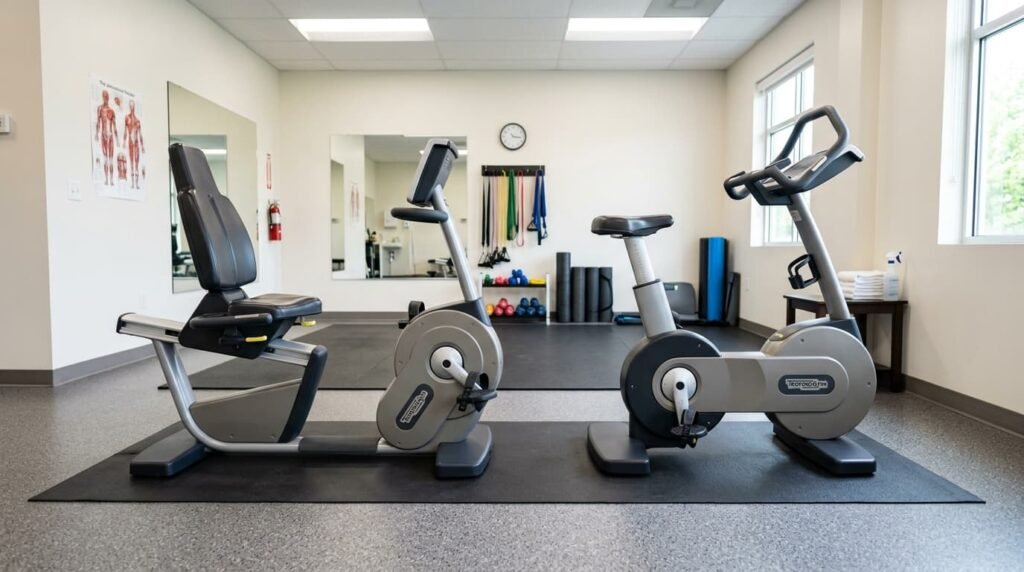
Regular sessions on a bike can lead to noticeable knee arthritis stiffness relief. This effect tends to improve when combined with proper warm-up and steady pacing. Many patients notice improved flexibility within a few weeks of consistent, gentle cycling.
Cycling for Osteoarthritis and Rheumatoid Arthritis
Cycling for osteoarthritis tends to focus on reducing joint load. At the same time, it helps rebuild strength around a joint that has already lost some cartilage. This combination of reduced impact and increased strength makes cycling particularly well suited to osteoarthritis management.
Cycling for rheumatoid arthritis works slightly differently, since inflammation levels can fluctuate day to day. Patients with rheumatoid arthritis are generally advised to cycle during periods of lower disease activity. Intensity should be adjusted based on how the joints feel on any given day. During a flare-up, shorter and gentler sessions are usually more appropriate than a full routine.
In both cases, consistency matters more than intensity. Short, regular rides tend to produce better long-term results than occasional, strenuous sessions.
Best Exercise for Arthritic Knee: Choosing the Right Bike
Selecting the right bike setup makes a considerable difference to comfort and safety. The best exercise for arthritic knee pain typically involves adjustable resistance. A supportive, upright riding position also helps reduce unnecessary strain.
Stationary Bike for Knee Pain vs Outdoor Cycling
A stationary bike for knee arthritis offers a controlled environment. There is no traffic, no uneven terrain, and no weather to plan around. Resistance and duration can be adjusted precisely, which suits patients just beginning an exercise routine.
Outdoor cycling, meanwhile, offers fresh air and varied scenery. Many patients find this more motivating than an indoor session. Flat, paved routes such as local parks make ideal starting points. Hills add extra strain and are best avoided in the early stages.
An exercise bike knee pain routine should start gently. Ten minutes at low resistance is a sensible opening point. Duration and intensity can increase gradually as strength and confidence build over several weeks.
Electric Bike and Recumbent Bike Options for Arthritis
An e-bike for arthritis provides pedal assistance, reducing the effort required on inclines. This makes cycling accessible to patients with more advanced joint damage or limited stamina. Electric bike knee pain concerns often ease once pedal assistance takes over some of the workload.
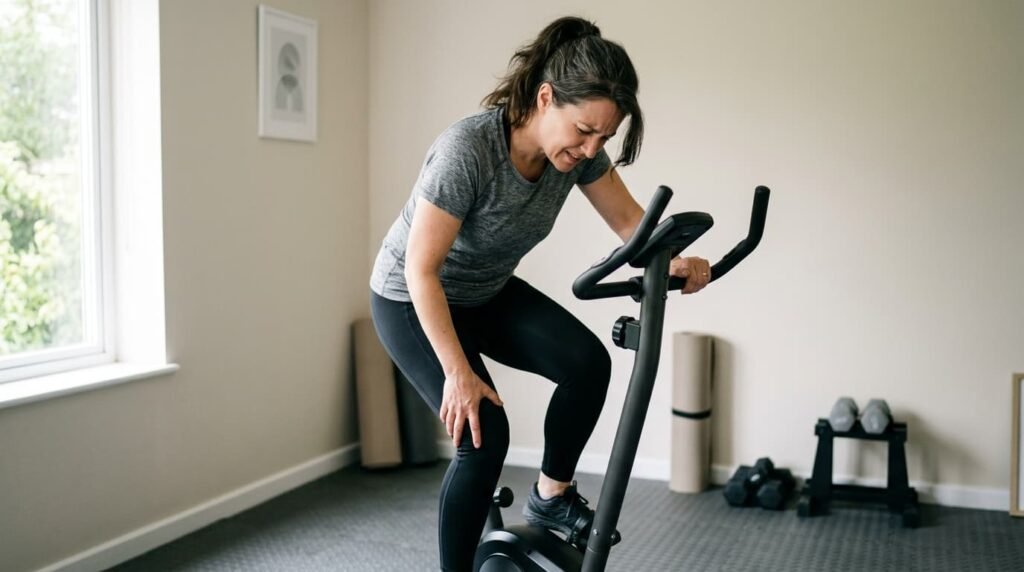
A recumbent bike for arthritis offers a reclined, supported seating position. This reduces pressure on the lower back as well as the knees. This style suits patients who find upright bikes uncomfortable, or those with balance concerns.
The best bike for arthritic knees ultimately depends on individual mobility, balance, and comfort levels. Trying a few different styles before committing to one purchase is a sensible approach. Many local bike shops offer test rides for exactly this reason.
Indoor Cycling for Arthritis: A Low-Impact Starting Point
Indoor cycling for arthritis removes several variables that can complicate an outdoor ride. Uneven pavements and unpredictable weather are no longer a concern. It also allows for training through colder months, which matters since cold conditions can thicken synovial fluid.
Thicker synovial fluid increases stiffness, making outdoor rides less appealing during winter. Beginners often find an indoor setup less intimidating than heading straight outside. Building confidence indoors first, then transitioning outdoors once strength improves, works well for many patients.
Knee Arthritis Exercises to Avoid
Not every activity suits an arthritic knee. Certain knee arthritis exercises to avoid include:
- Deep knee bends under heavy load
- High-impact running on hard surfaces
- Repeated jumping or plyometric drills
- Contact sports involving sudden twists or pivots
- Prolonged kneeling without support or cushioning
What exercise is bad for knee arthritis usually shares one feature. Repeated impact combined with poor joint alignment causes the most trouble. Activities that load the knee suddenly, rather than gradually, tend to aggravate symptoms. Avoiding these high-risk movements does not mean giving up on fitness altogether. It simply means choosing more suitable alternatives, such as cycling or swimming.
How to Strengthen Knee Joints Safely While Cycling
Building strength safely takes a structured approach. Understanding how to strengthen knee joints without triggering flare-ups protects long-term joint health.
Warm-up, Pacing and Stretching Routine
Gentle stretching before and after cycling prepares muscles and joints for activity. It then helps them recover once the session ends. Stretching before cycling arthritis routines matters just as much as the ride itself. Focus should fall on the quadriceps, hamstrings, calves, and hip flexors. A few slow, controlled stretches beat a rushed warm-up every time.
A sensible target involves around 30 minutes of moderate cycling. Spreading this across three to five days each week works well for most patients. Longer rides can be split into shorter ten-minute sessions if that feels more comfortable at first.
Joint pain cycling benefits increase with consistency rather than intensity. Pushing through sharp pain should always be avoided. Discomfort of this kind signals the need to slow down or stop the session entirely.
For patients exploring non-surgical treatment options alongside exercise, the Dr SNA Clinic YouTube channel offers helpful context. Its videos cover joint pain and arthritis management without surgery. These resources sit well alongside an active, cycling-based lifestyle.
Arthritis and Weight Loss: The Cycling Connection
Excess weight places additional pressure on the knee joints with every step taken. Arthritis and weight loss are closely linked, since even modest weight reduction can meaningfully ease joint strain. A small drop in body weight often translates into a noticeable drop in daily discomfort.
Cycling burns calories while remaining gentle on the joints. This makes it a practical addition to a weight-management plan. Combined with dietary changes, this approach can reduce pressure on arthritic knees more effectively than diet alone. Patients interested in nutrition may find it useful to explore knee-friendly foods. These foods can help reduce inflammation and support cartilage health.
Is Walking Good for Knee Arthritis?
Is walking good for knee arthritis, compared with cycling? Walking offers similar joint-friendly benefits, though it places slightly more direct load through the knee with each step. For patients with more advanced arthritis, cycling often proves more comfortable over longer distances than walking.
Both activities count as low-impact exercise for joints and can be combined for variety. Alternating between walking and cycling helps prevent overuse while keeping the joint consistently mobile. Neither activity needs to replace the other entirely; many patients benefit from doing both across the week.
How to Exercise With Arthritis Safely
Understanding how to exercise with arthritis safely reduces the risk of flare-ups or injury. A few practical arthritis exercise tips include:
- Starting slowly and increasing intensity gradually over several weeks
- Choosing supportive, well-fitted footwear or a properly adjusted bike
- Wearing a knee support if additional stability feels necessary
- Stopping immediately if sharp pain develops during a session
- Consulting a specialist before beginning any new exercise programme
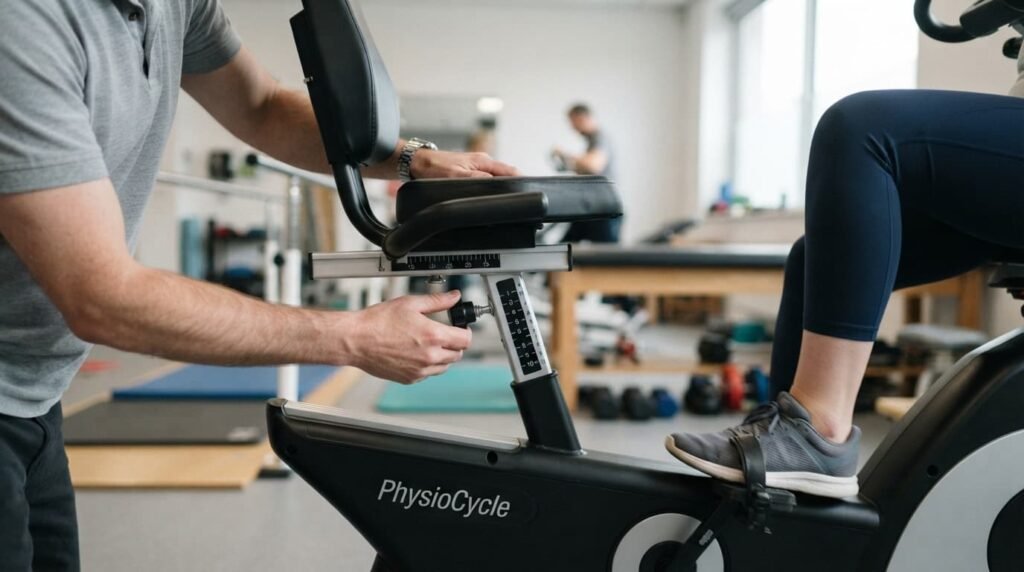
Age and general health both influence what feels manageable day to day. Patients over 60 sometimes need a more gradual build-up, particularly where knee pain has already affected daily mobility. Cold weather can also increase stiffness, so extra warm-up time is often worthwhile during colder months.
When to Seek Specialist Advice
Most patients can begin cycling with arthritis safely after a general check-up with their GP. A brief assessment beforehand helps confirm that cycling with arthritis is a suitable starting point for the individual joint involved. Certain signals, however, call for a specialist opinion before starting or continuing an exercise routine.
These include sudden swelling, locking of the joint, or pain that persists well beyond a normal recovery period. Night pain that disrupts sleep is another signal worth flagging to a specialist. A knee that feels unstable or gives way during daily activity also warrants closer assessment.
A specialist consultation can confirm the stage of arthritis present and rule out other contributing factors. This allows an exercise plan, including any cycling routine, to be built around the actual condition of the joint. For patients already managing significant cartilage loss, additional treatment options may be worth discussing alongside a cycling programme.
Frequently Asked Questions
Is cycling good for knee arthritis?
Cycling is widely considered one of the safest forms of exercise for knee arthritis. It strengthens supporting muscles while placing minimal direct pressure on the joint itself. Most patients notice reduced stiffness after a few weeks of consistent, gentle sessions.
What is the best exercise for arthritis, including the knee?
Cycling, swimming, and walking are generally regarded as strong options. Their shared low-impact nature protects the joint from unnecessary strain. Cycling tends to suit patients with more advanced joint damage. Body weight rests on the saddle rather than the knees.
What exercise is bad for knee arthritis?
High-impact activities involving running, jumping, or sudden pivoting typically worsen symptoms. Deep squats under heavy load and prolonged kneeling can also aggravate an already inflamed joint. Contact sports carry similar risks due to sudden twisting movements.
How often should someone cycle with arthritis?
Most guidance suggests around 30 minutes of moderate cycling. Spreading this across three to five days weekly tends to work best. Shorter, more frequent sessions often suit beginners better than longer, infrequent rides.
Is walking or cycling better for knee arthritis?
Both offer genuine benefits, though cycling places less direct load through the joint. Patients with more severe arthritis often find cycling more comfortable over longer distances. Combining both across the week can offer the most balanced approach.
Is an exercise bike for arthritis worth trying at home?
Yes, a home exercise bike allows precise control over resistance and duration. It suits patients who prefer privacy, flexible timing, or simply want to avoid unpredictable weather.
Cycling remains one of the safest, most effective ways to manage knee arthritis and protect long-term mobility. A structured approach turns cycling into a genuine ally rather than a risk. The right bike and a sensible pace make the difference. Mr Syed Nadeem Abbas offers specialist assessment and guidance for patients looking to manage knee arthritis safely.
Read more: Overweight Knee Pain Relief for Arthritis and Joint Health
Read more: Knee Arthritis Exercises to Avoid That Increase Knee Pain