
Knee osteoarthritis affects a large share of the UK population. Around 8.5 million people live with some form of the condition. Research shows knee pain increases the risk of reduced mobility, falls, and low mood among older adults. Movement remains one of the most effective tools for managing joint symptoms day to day. Regular osteoarthritis exercises support cartilage nutrition, reduce stiffness, and strengthen the muscles that protect the knee joint. Avoiding activity often worsens symptoms rather than protecting the joint long term. This guide explains which movements help most, how often to practise them, and which patterns deserve caution.
What Is Knee Osteoarthritis and Why Movement Matters
Osteoarthritis develops when the smooth cartilage lining the knee gradually thins over time. Bone surfaces then move with less cushioning, producing pain, stiffness, and visible swelling. The condition tends to worsen slowly across years rather than appearing suddenly. Weight-bearing joints such as the knee carry the greatest mechanical burden during this process.
Cartilage lacks a direct blood supply, so it depends partly on joint movement for nutrition. Synovial fluid circulates during activity, delivering nutrients to cartilage cells throughout the joint. A joint left still for long periods becomes stiffer and more painful, not less. This explains why gentle, consistent movement supports joint health more effectively than complete rest.
Muscle weakness often develops alongside cartilage loss, since pain naturally discourages movement. Reduced muscle activity then accelerates joint instability, creating a difficult cycle for many patients. Breaking this cycle usually starts with small, manageable movements rather than dramatic changes. A gradual, structured approach tends to build confidence alongside physical improvement.
Inflammation within the joint also contributes to pain and stiffness during flare-ups. Gentle movement helps regulate this inflammatory response better than complete inactivity in most cases. Patients often find that a short walk eases symptoms more than prolonged sitting does.
Benefits of Osteoarthritis Exercises for Joint Health
Structured exercise programmes deliver several measurable benefits for people living with knee arthritis. Muscles surrounding the joint absorb force that would otherwise pass directly through damaged cartilage. Stronger quadriceps and hamstrings improve joint stability and reduce the sensation of the knee giving way during daily tasks.
Movement also supports weight management, since carrying excess weight adds pressure with every step taken. Each extra kilogram multiplies load through the knee during walking and stair climbing. Reducing body weight through activity and diet lowers this mechanical strain considerably over time.
Beyond the physical benefits, exercise supports better sleep and reduces anxiety linked to chronic pain. Consistent movement often improves mood and daily function alongside physical symptoms. Many patients report greater confidence in daily tasks after building a routine that includes regular osteoarthritis exercises.
Improved circulation also supports tissue healing throughout the joint and surrounding structures. Better blood flow delivers oxygen and nutrients that cartilage and muscle tissue both depend on. This circulatory benefit builds gradually with consistent practice rather than appearing after a single session. Patients who stay active often describe fewer flare-ups during colder months as well.
Range of Motion Exercises for Stiff Knees
Range of motion work forms the foundation of any sensible exercise plan for arthritic knees. These movements keep the joint mobile without placing heavy load through damaged cartilage tissue. Gentle knee bends, heel slides, and seated leg extensions all encourage fluid circulation within the joint capsule.
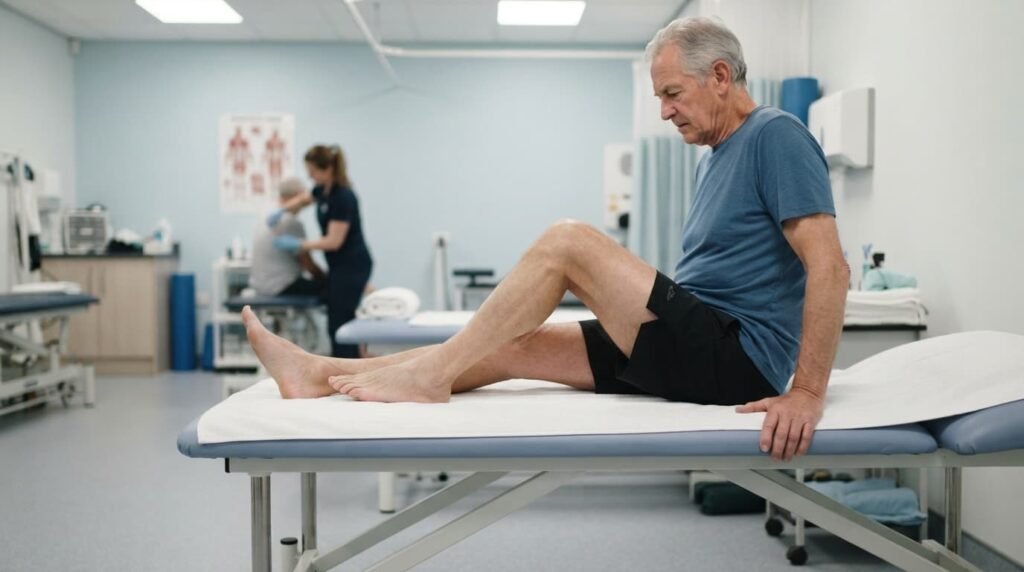
Morning stiffness responds particularly well to slow, controlled range-of-motion routines. Five to ten minutes of gentle stretching before standing can ease the first difficult steps of the day. Holding each stretch for twenty to thirty seconds allows tissue to lengthen safely and gradually.
Range-of-motion exercises should never force the joint into a painful end position. Mild discomfort during stretching is common, but sharp pain signals the need to stop immediately. Building flexibility gradually reduces the risk of aggravating an already sensitive joint.
A seated marching exercise, where the knee lifts slowly toward the chest while sitting, suits most fitness levels. Ankle circles performed alongside knee movements help maintain mobility throughout the whole lower limb. Combining several gentle movements into a short daily routine keeps the joint consistently mobile. This routine works well first thing in the morning, before stiffness has a chance to settle in.
Strengthening Exercises for Knee Support
Strengthening exercises for knee osteoarthritis target the muscles that stabilise the joint during daily activity. Building support around the joint reduces strain during walking, stairs, and standing tasks.
- Straight leg raises – build quadriceps strength without bending the knee
- Wall sits – hold a supported squat position to load the thigh muscles safely
- Seated leg extensions – strengthen the front of the thigh from a chair
- Hamstring curls – balance strength across the back of the thigh
- Glute bridges – support hip and knee alignment through the lower body
- Isometric holds – press the knee into a rolled towel without joint movement
Quadriceps strength osteoarthritis research links stronger thigh muscles with slower cartilage deterioration over time. A study published in Arthritis & Rheumatism suggested a correlation between quadriceps strength and knee cartilage health. Researchers observed that stronger thigh muscles were associated with reduced cartilage loss in part of the joint. Building thigh strength may help protect the joint from further mechanical wear.
Resistance bands offer a practical way to progress strength gradually within a home setting. Starting with light resistance and increasing gradually prevents overload on an already sensitive joint. Core strengthening exercises also help, since a stable trunk reduces uneven loading through the knee during movement.
Isometric exercises, where muscles contract without joint movement, suit patients with more severe pain. These static holds allow strength gains without the joint moving through a painful range. Progressing from isometric holds to fuller movements usually happens once pain settles.
Low-Impact Aerobic Exercise Choices
Aerobic activity supports cardiovascular health and helps manage body weight alongside targeted strength work. The following options place minimal strain through an arthritic knee while still building fitness.
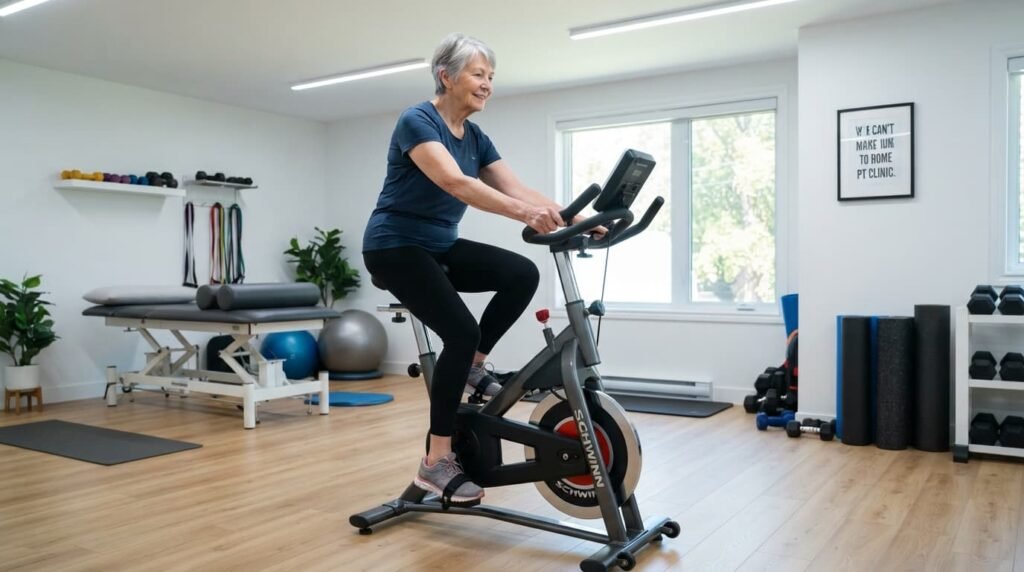
- Walking – start with short, flat routes and increase distance gradually over several weeks
- Cycling – the smooth, repetitive pedalling motion keeps the knee mobile without jarring forces
- Swimming – buoyancy reduces effective body weight, easing pressure on painful joints considerably
- Tai Chi – slow, controlled movement builds strength while protecting the joint from sudden strain
- Chair-based exercise – offers a suitable starting point for limited mobility or significant pain
- Elliptical training – keeps both feet supported throughout the movement, unlike running
Slow, controlled movement patterns build strength while protecting the joint from sudden strain. A gradual increase in duration and resistance across any of these options builds fitness safely over time.
Balance Training for Joint Stability
Balance exercises reduce fall risk, which becomes more important as knee stability declines with osteoarthritis. Standing on one leg near a sturdy support builds proprioception gradually and safely. Heel-to-toe walking and gentle weight shifts also improve joint awareness over several weeks of practice.
Pilates-based movements often incorporate balance and core control together within a single session. Improved balance reduces the compensatory strain that unstable joints place on surrounding structures. Progressing slowly from supported to unsupported positions keeps these exercises safe for most patients.
A simple weight-shifting drill, moving slowly from one foot to the other, builds confidence early on. Adding gentle arm movements while balancing challenges coordination without increasing joint load. These drills work well alongside strengthening and range of motion routines within a broader plan.
Standing near a kitchen worktop or sturdy chair provides a safe anchor point during early practice. As confidence grows, reducing reliance on this support gradually increases the challenge appropriately. Consistent balance practice over several months tends to produce the clearest improvement in stability.
Foam Rolling and Recovery Support
Foam rolling targets the muscles surrounding the knee rather than the joint itself. Rolling the quadriceps, hamstrings, and calves gently can ease tightness that builds after activity. This technique works best as a recovery tool alongside, rather than instead of, structured exercise.
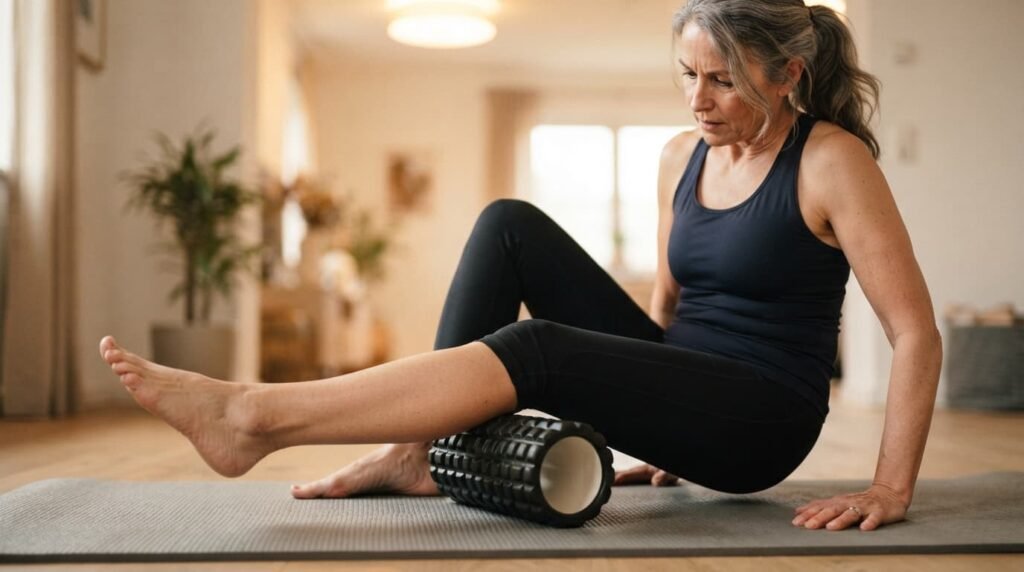
Applying gentle, sustained pressure along the muscle length often feels more comfortable than rapid rolling. Recovery work supports the muscles that protect the knee during the next exercise session. A few minutes after walking or strengthening work can reduce next-day stiffness noticeably.
Patients with significant joint pain should avoid rolling directly over the kneecap itself. Focusing on the muscle bellies above and below the joint keeps this technique comfortable and effective.
A firm foam roller suits most patients, though a softer version helps those with sensitive tissue nearby. Rolling sessions lasting five to ten minutes typically feel sufficient without causing additional soreness. Combining this recovery work with regular stretching often produces the most noticeable comfort between sessions.
Knee Arthritis Exercises to Avoid
Certain movements place excessive strain on an already compromised joint and deserve particular caution.
- Deep squats and full-range lunges – place considerable compressive force through the front of the knee
- High-impact jumping – sends repeated shock through cartilage that is already thinning
- Running on hard surfaces – can aggravate symptoms considerably over time
- Sudden pivoting or twisting – common in some sports, raises injury risk substantially
- Repeated stair climbing during flare-ups – can worsen symptoms in some patients
Exercises that cause sharp or lasting pain should stop immediately, regardless of the activity involved. Pain that persists for more than a few hours after exercise suggests the intensity was too high. Working with a physiotherapist helps tailor a safe programme around individual limitations and goals. Modifying these movements, rather than eliminating exercise, usually offers a better long-term outcome.
Signs a Routine Is Working
Reduced morning stiffness often appears within the first few weeks of consistent practice. Patients frequently notice easier stair climbing and less discomfort during longer walks soon after. Steady, gradual improvement matters more than dramatic change within the first few sessions.
Better sleep quality and improved mood sometimes appear alongside physical gains. Tracking pain levels, stiffness, and activity tolerance in a simple diary helps highlight this progress. Reviewing this record with a physiotherapist can guide when to progress a programme further.
Getting Started Safely
Beginning a new routine works best with a gradual, structured approach rather than an ambitious start. A short assessment with a physiotherapist can identify which movements suit current pain levels and joint stiffness. This assessment also highlights any underlying instability that needs attention before strength work begins.
Warming up with five minutes of gentle walking prepares the joint before deeper stretching or strengthening. Cold muscles and stiff joints respond poorly to sudden, unprepared exertion. Cooling down afterwards with light stretching helps the joint settle comfortably after activity.
Footwear plays a supporting role during any programme of osteoarthritis exercises. Supportive, cushioned shoes reduce jarring impact through the knee during walking and standing work. Replacing worn footwear regularly protects the joint from unnecessary additional strain.
How Often to Practise Osteoarthritis Exercises

Most guidance recommends at least 150 minutes of moderate activity across the week for general joint health. Strengthening work fits well into two or three sessions weekly, allowing muscles time to recover between sessions. Range of motion routines can happen daily, since gentle movement rarely requires significant recovery time.
Consistency matters more than intensity when building a sustainable, joint-friendly routine. Short, regular sessions tend to produce better long-term results than occasional intense workouts.
A brief video on non-surgical joint and arthritis treatment explains how structured movement supports knee health. This resource, available on the DrSNA Clinic YouTube channel, sits alongside other treatment approaches discussed during consultation. Tracking progress through a simple diary can help patients notice improvement over several weeks. Small, steady gains in flexibility and strength often matter more than dramatic short-term change.
Frequently Asked Questions
What are the best osteoarthritis exercises for beginners?
Gentle range of motion movements, seated leg extensions, and short walks suit most beginners well. Starting slowly and increasing duration gradually reduces the risk of flare-ups. A physiotherapist can tailor a starting programme around individual pain levels and joint stiffness.
Does exercise help arthritis or make it worse?
Appropriate, well-paced movement generally improves arthritis symptoms rather than worsening them over time. Strengthening the muscles around the knee reduces load on damaged cartilage during daily activity. High-impact or excessive activity, however, can aggravate pain and should be approached carefully.
How long before results appear from a new routine?
Many patients notice reduced stiffness within a few weeks of starting a consistent routine. Strength improvements typically become noticeable after six to eight weeks of regular practice. Results vary depending on baseline fitness, joint severity, and consistency of practice.
Can walking alone manage knee arthritis symptoms?
Walking supports cardiovascular health and joint mobility but works best alongside targeted strengthening. Combining walking with quadriceps and hamstring exercises offers more complete joint support. A varied routine tends to produce better long-term outcomes than any single activity alone.
Are resistance bands safe for knee osteoarthritis?
Resistance bands generally suit most patients when introduced gradually and with correct technique. Starting with light resistance reduces the risk of overloading a sensitive joint too quickly. A physiotherapist can recommend suitable band strength based on individual joint condition.
Is swimming better than walking for knee arthritis?
Both activities offer genuine benefit, though swimming reduces joint load more than walking does. Swimming suits patients with significant pain or limited weight-bearing tolerance particularly well. Walking remains valuable for building bone density and everyday functional strength over time.
When should exercise stop and medical advice be sought?
Sharp, worsening, or persistent pain during or after activity warrants a pause and professional review. Sudden swelling, locking, or a feeling of instability also justify prompt knee assessment. Ongoing symptoms despite a consistent routine may point toward further knee osteoarthritis treatment options.
Building a safe, consistent exercise habit remains one of the most effective ways to manage knee osteoarthritis. Range of motion work, targeted strengthening, low-impact aerobic activity, and balance training each play a distinct supporting role. A gradually progressing routine, adjusted to individual pain levels, tends to produce the most lasting improvement in comfort and function.
Mr Syed Nadeem Abbas brings specialist expertise in diagnosing and treating knee osteoarthritis, helping patients build safe, effective movement plans. Patients receive tailored guidance that reflects individual joint health and activity goals.
Read more: Cycling With Arthritis Can Ease Knee Pain and Improve Mobility
Read more: Physical Therapy For Arthritis Improves Movement And Reduces Pain


