Knee Pain at Night and How to Sleep Better With Osteoarthritis

✅ Medically reviewed | Updated August 2026
Knee pain at night is a common and disruptive symptom of knee osteoarthritis. About one in five adults over 45 in England live with this condition. Knee involvement is the most frequently reported joint. Nighttime discomfort differs from daytime pain in several important ways. Inflammation, falling cortisol levels and reduced movement combine when the body settles into rest. Poor sleep then increases pain sensitivity the following day, creating a difficult cycle.
What Causes Knee Pain at Night
Several overlapping factors explain why joints ache more once the day winds down. Reduced daytime distraction, hormonal shifts and inflammation all play a role. Understanding these mechanisms helps patients respond appropriately rather than simply enduring discomfort.
Osteoarthritis and Nighttime Joint Sensitivity
Cartilage wear associated with osteoarthritis exposes nerve endings within the joint capsule. Lying still for extended periods allows inflammatory fluid to pool around the knee. This pooling increases pressure and heightens sensitivity. Many patients notice discomfort intensifies within an hour of settling into bed. The knee joint has limited capacity to redistribute this fluid while immobile, unlike during daytime movement.
Cortisol and Pain During the Night
Cortisol is a hormone that naturally suppresses inflammation during waking hours. Levels drop sharply early in the night, reducing this protective effect. Lower cortisol overnight allows inflammatory processes to intensify, which explains why joints often feel worse before dawn. This hormonal dip is one reason cortisol and pain are closely linked in osteoarthritis research. Researchers studying circadian rhythms in joint disease have documented this pattern across multiple patient groups.
Why the Knee Hurts More at Night
Daytime activity keeps muscles warm and joints moving, which limits stiffness. Once movement stops, synovial fluid circulates less efficiently. Reduced circulation, combined with falling body temperature, contributes to worsening symptoms after dark. Patients frequently ask why their knee hurts more once they lie down, and reduced movement is usually the central answer. Cooler bedroom temperatures can further stiffen the surrounding muscles, adding to the sensation.

The Role of Posture and Mattress Support
Sleeping position influences how much pressure builds around the knee joint overnight. A worn or unsupportive mattress can allow the leg to twist slightly during sleep. This subtle rotation places extra strain on already sensitive cartilage. Knee pain at night is sometimes traced back to an ageing mattress rather than the joint itself. Replacing the mattress and pillow support every few years is a simple, often overlooked step.
Knee Osteoarthritis Symptoms and Flare-Up Signs
Recognising typical symptoms helps patients distinguish ordinary discomfort from a genuine flare-up requiring medical attention.
Recognising the Condition’s Symptoms
Common knee osteoarthritis symptoms include swelling, a grinding sensation, reduced range of motion and localised warmth. Symptoms often worsen with weather changes, a pattern also explored in this clinic’s guide to cold weather arthritis pain. Pain typically builds gradually rather than appearing suddenly. Some patients also notice a sensation of the joint giving way during weight-bearing activity.
Osteoarthritis Flare-Up Symptoms
During a flare, joints swell more noticeably, and stiffness intensifies. Osteoarthritis flare-up symptoms usually include sharper pain, visible swelling and a temporary loss of mobility. Flares can last several days before settling back to baseline discomfort. Identifying triggers, such as overexertion or cold weather, helps reduce flare frequency. Keeping a simple pain diary can reveal patterns that are otherwise easy to miss.
Morning Stiffness After Disturbed Sleep
Waking with stiff, difficult-to-move joints is common after a poor night. Osteoarthritis stiffness in the morning tends to ease within thirty minutes of gentle movement. Persistent stiffness lasting longer may indicate inflammatory activity rather than simple mechanical wear. Gentle stretching before rising often shortens this warming-up period. A warm shower first thing can also help loosen tight muscles around the joint.

Osteoarthritis and Sleep Quality
Sleep and joint pain interact in both directions, with each factor capable of worsening the other. This relationship sits at the centre of most modern osteoarthritis management plans.
How Poor Sleep Worsens Joint Pain
Osteoarthritis and sleep are closely connected because pain disrupts rest, and poor rest amplifies pain sensitivity the next day. Research suggests interrupted sleep can lower a person’s pain threshold considerably. This means identical joint damage may feel more painful after a bad night. Addressing pain and sleep together is therefore a legitimate treatment target, not merely a comfort measure. Clinicians increasingly assess sleep quality as part of routine osteoarthritis reviews. A short conversation about pain and sleep at each check-up can flag problems early, before they become entrenched.
Trouble Sleeping with Arthritis
Trouble sleeping with arthritis often stems from difficulty finding a comfortable position. Pressure on an inflamed knee can cause repeated waking throughout the night. Some patients report waking every one to two hours during a flare. Addressing positioning and mattress support frequently improves this pattern. A mattress that is too soft can allow the knee to rotate awkwardly, adding strain overnight.
Osteoarthritis and Insomnia
Osteoarthritis and insomnia frequently coexist, particularly among older adults. Persistent pain delays sleep onset and shortens total sleep duration. Over time, this pattern can develop into chronic insomnia independent of the original joint pain. Sleeping with osteoarthritis pain therefore requires strategies addressing both the physical and behavioural aspects of sleep. Cognitive behavioural techniques for insomnia have shown promise in patients with long-standing joint pain. Sleeping with osteoarthritis pain rarely improves through willpower alone. Structured techniques tend to work better than simply trying harder to rest.

Fatigue and Osteoarthritis
Daytime tiredness is a frequently overlooked consequence of ongoing joint pain. It deserves as much clinical attention as pain itself.
Does Osteoarthritis Cause Fatigue
Does osteoarthritis cause fatigue is a common question among newly diagnosed patients. The answer is yes, through several combined mechanisms. Osteoarthritis fatigue results from disrupted sleep, chronic low-grade inflammation and the physical effort of moving painful joints. Fatigue should be treated as a genuine symptom rather than dismissed as unrelated tiredness. Clinicians assessing osteoarthritis fatigue often look at sleep diaries alongside standard pain scores.
Tiredness and Arthritis Through the Day
Tiredness and arthritis often peak in the afternoon, after a night of fragmented sleep. Reduced physical activity caused by pain further lowers overall energy levels. Breaking this cycle usually requires improving sleep quality alongside appropriate pain management. Gentle daytime movement, where tolerated, can help sustain energy levels. Short rest breaks scheduled throughout the day may also prevent the steep afternoon energy dip many patients describe.
Psychological and Hormonal Influences on Pain
Pain perception is shaped by more than joint damage alone, and these additional factors are worth understanding.
Pain Catastrophizing and Central Sensitisation Pain
Pain catastrophizing describes a pattern of anxious, exaggerated thinking about pain severity. This thinking pattern can heighten the nervous system’s response to ordinary signals. Central sensitisation pain occurs when nerve pathways become overactive, amplifying pain beyond what joint damage alone would suggest. Recognising this process helps explain why some patients experience severe pain despite modest imaging findings. Structured relaxation techniques have been shown to reduce catastrophizing scores over several weeks. Breathing exercises and mindfulness practice are two accessible starting points many patients find manageable.
Arthritis and Depression
Arthritis and depression are linked through shared pathways involving sleep disruption and chronic stress. Persistent pain and poor rest can lower mood over time. Addressing sleep and pain together may reduce the psychological burden of long-term osteoarthritis. Support from a healthcare professional is recommended when low mood persists. Speaking openly with a GP about mood changes tends to produce better outcomes than managing symptoms alone. Combined pain and mood support, delivered together, often works better than treating either issue in isolation.
How to Sleep with Osteoarthritis
Practical adjustments can meaningfully reduce nighttime discomfort for many patients. Small, consistent changes often outperform occasional dramatic efforts.
Sleep Hygiene for Pain Relief
Sleep hygiene for pain includes consistent bedtimes, a cool bedroom and limited screen use before bed. Avoiding caffeine in the evening supports easier sleep onset. Consistent routines train the body to associate certain cues with rest, which can shorten the time needed to fall asleep. These habits form a foundation before considering other interventions. Dimming household lights an hour before bed can also support the body’s natural wind-down process.
Pillow Positioning for Knee Comfort
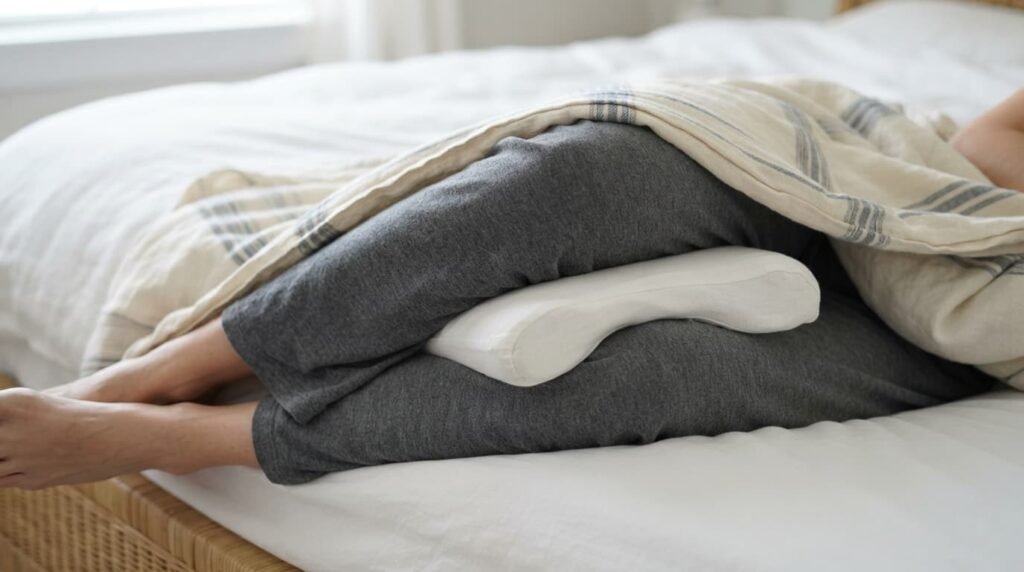
Placing a pillow between knees for pain relief helps maintain neutral hip and spine alignment during side sleeping. This small adjustment reduces pressure on the inner knee joint. Side sleepers often notice reduced discomfort within a few nights of trying this method. Combining this with a supportive mattress improves results further. A firmer pillow tends to hold its shape better through the night than a soft one.
Sleep Apnea and Arthritis Overlap
Sleep apnea and arthritis can coexist, particularly in patients carrying excess weight around the joints. Undiagnosed apnea fragments sleep independently of pain, compounding fatigue. Patients with loud snoring or witnessed breathing pauses should discuss screening with their doctor. Treating apnea alongside joint pain often produces meaningful improvement in daytime energy. A referral for a home sleep study is usually a straightforward first step.
Gentle Movement Before Bed
Light stretching or a short walk earlier in the evening can ease stiffness before bedtime. Avoiding vigorous exercise too close to sleep prevents overstimulation of the nervous system. Low-impact movement such as swimming or cycling tends to suit sensitive knee joints well. Building a short, consistent evening routine often reduces the severity of knee pain at night over several weeks.
Diet and Weight Considerations
Carrying additional weight increases load through the knee joint with every step. A balanced diet featuring anti-inflammatory foods can support joint health alongside sleep improvements. Further detail on suitable meal choices is available in this clinic’s guide to knee-friendly foods. Modest, sustained weight reduction has been shown to meaningfully reduce joint loading over time. Even a small reduction in body weight can noticeably ease pressure on an arthritic knee.
Building a Realistic Routine
Consistency matters more than any single technique when addressing knee pain at night. Patients who combine two or three strategies, such as pillow positioning and better sleep habits, tend to see steadier improvement. Progress is often gradual, with noticeable change appearing after two to three weeks. Keeping a simple sleep and pain log helps track what genuinely works for each individual. Reviewing this log after a fortnight often reveals patterns that would otherwise go unnoticed. These patterns give useful direction for the weeks ahead.
When Specialist Support Helps

Non-surgical options like Arthrosamid injections at London clinics offer an alternative for patients wishing to avoid surgery. Comparing regenerative approaches can help patients understand available choices. This clinic’s PRP versus Arthrosamid comparison covers the evidence in detail. Educational content on non-surgical joint pain management is also available through the Dr SNA Clinic YouTube channel. These videos offer further context for patients researching their options. A consultant-led assessment can clarify which non-surgical pathway best suits an individual’s symptoms. Imaging and a thorough clinical history usually guide this decision alongside a discussion of realistic expectations.
Frequently Asked Questions
Why does knee pain feel worse once the day ends?
Reduced movement, falling cortisol levels and pooled inflammatory fluid all intensify symptoms once the body settles for rest. Daytime activity keeps joints warm and moving, which masks discomfort that becomes noticeable later. Many patients describe pain building gradually after lying down for around an hour. Osteoarthritis pain at night can also feel sharper because there are fewer distractions once the household settles for the evening. Attention naturally shifts toward physical sensations once external activity fades away.
Does osteoarthritis cause fatigue as well as pain?
Yes, osteoarthritis fatigue is a recognised symptom linked to disrupted sleep, inflammation and the physical effort of managing painful joints. Fatigue often persists even on days with relatively mild pain. Addressing sleep quality frequently improves daytime energy levels alongside pain control.
What helps with trouble sleeping with arthritis?
Good sleep hygiene, supportive pillow positioning and a consistent bedtime routine all help reduce nighttime disturbance. A pillow between the knees can ease pressure on the inner joint during side sleeping. Persistent difficulty should prompt a discussion with a healthcare professional about further options.
Can osteoarthritis flare-ups happen without an obvious trigger?
Osteoarthritis flare-up symptoms sometimes appear without a clear cause, though weather changes and overexertion are common triggers. Flares typically settle within several days with rest and gentle movement. Tracking patterns over time can help identify personal triggers.
Is disrupted sleep a sign that treatment is needed?
Nighttime joint pain that regularly disrupts sleep is a reasonable reason to seek specialist assessment. Non-surgical options can often reduce symptoms significantly before surgery becomes necessary. Early assessment tends to produce better long-term outcomes for most patients.
Knee pain at night stems from a combination of falling cortisol, reduced circulation and inflammatory changes within the joint. Addressing sleep hygiene, positioning and daytime activity levels can meaningfully ease symptoms for many patients. Persistent or worsening pain deserves proper clinical assessment rather than prolonged self-management. Small, consistent changes to routine and posture often make a genuine difference over several weeks.
Mr Syed Nadeem Abbas specialises in non-surgical treatment of knee osteoarthritis, including advanced injection therapies. His consultant-led approach focuses on personalised, evidence-based care for patients experiencing ongoing joint pain.
Read more: Is Osteoarthritis Genetic in Nature or Driven by Everyday Habits?
Read more: Physical Therapy For Arthritis Improves Movement And Reduces Pain